Artist, writer and art historian Susan Isaacs speaks with Collette Fu about her massive pop-up book “Noodle Mountain’ on view at Temple’s Charles Library.
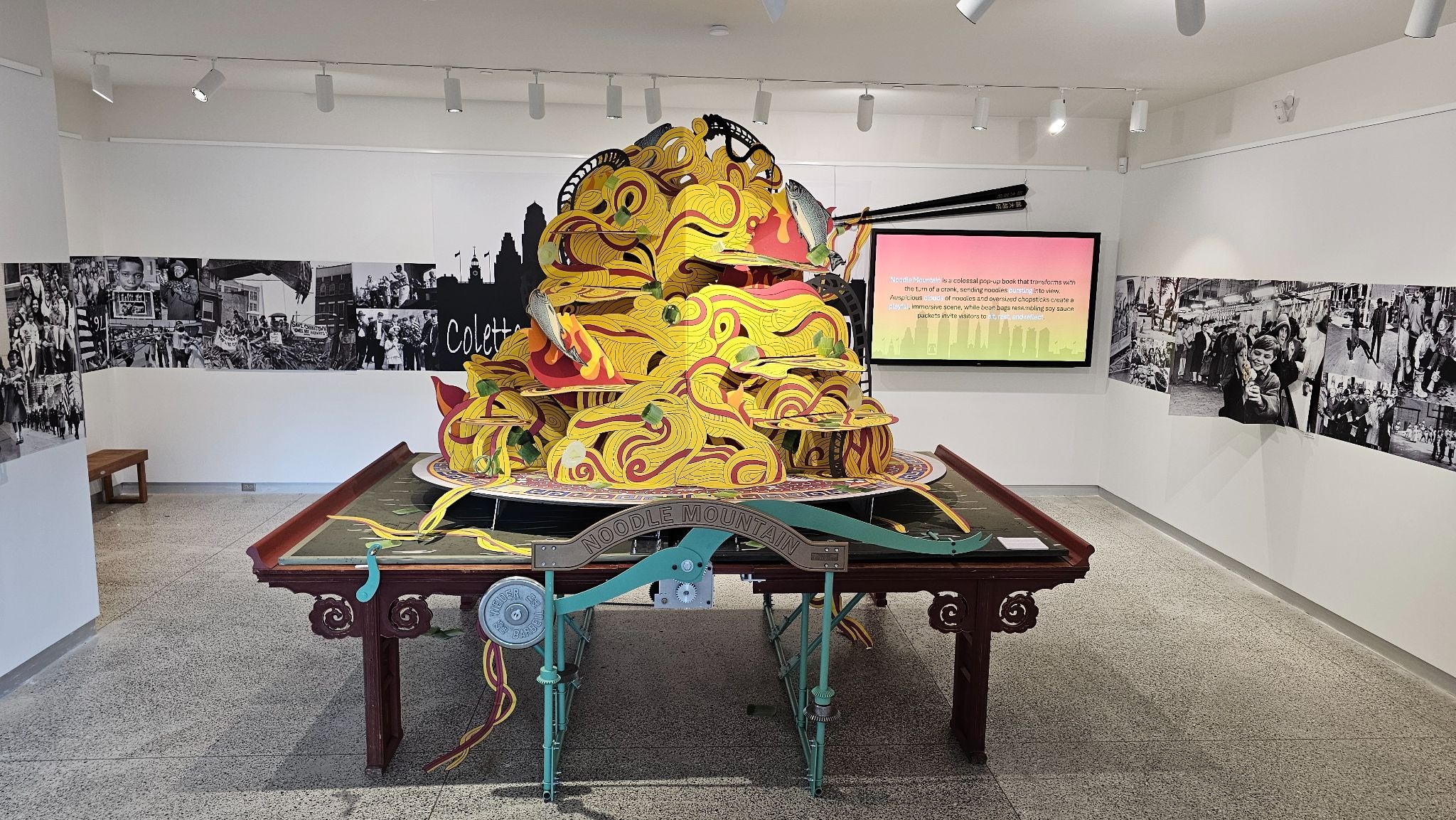
Educational institutions often present unique exhibitions that have a character different from that of a commercial gallery, contemporary art space, or a museum. This is especially true of exhibitions connected to special collections in research universities. “Colette Fu: Philadelphia Unfolded” a collaboration between the artist and the Temple University Director of the Special Collections Research Center, Melissa VandeBurgt, and Reading Room and Exhibits Supervisor Ann Mosher demonstrates the possibilities when a contemporary artist works with a rich archive and collaborative partners.
Especially exciting is that in addition to the usual case exhibitions found in libraries, the Charles Library includes an actual gallery space next to the Special Collections Research Center. The result is a fascinating exhibition that combines the work of a major book artist with photographs and information in the Temple University Libraries’ Special Collections from the Philadelphia Evening Bulletin Collection, the Urban Archive Collection, the Charles L. Blockson Afro-American Collection, the Philadelphia Jewish Archive, and the Templana Collection.
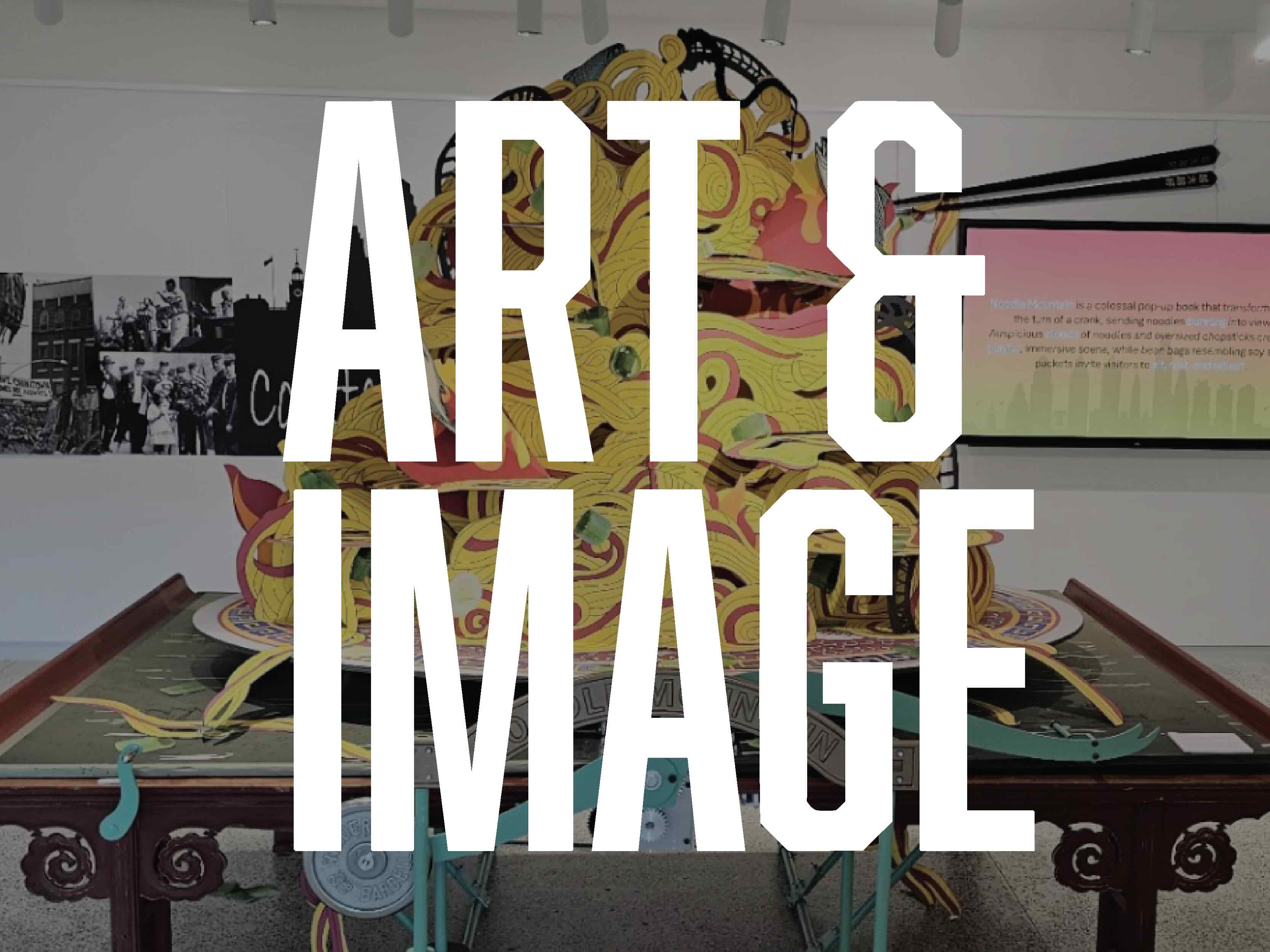
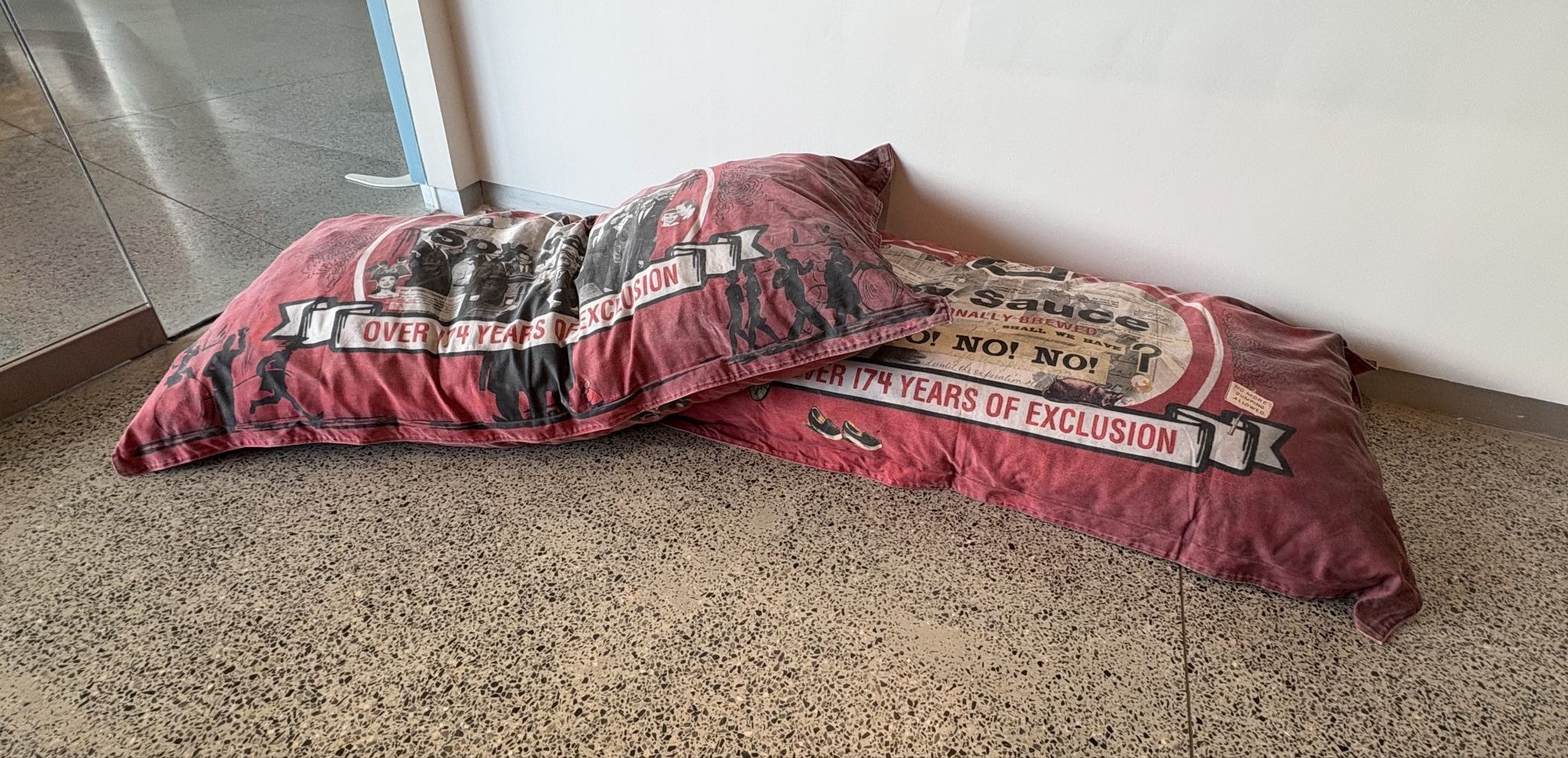
The initial idea to present a major work by Fu, “Noodle Mountain” from 2024, originally commissioned by Grounds for Sculpture in New Jersey and Monument Lab in Philadelphia, ultimately evolved into a collaboration with VandeBurgt and Mosher that employed the archives. The interview below with Colette Fu explains how the show developed. It is important to understand that the massive pop-up book, with its attendant elements of bean bags that look like soy sauce packets, oversized chopsticks, and mounds of noodle images represents both memories of popular culture by the artist, such as the children’s song “On Top of Spaghetti” and personal biography, as well as the history of Asians in America, including the hardships they endured from racism to violence. To learn about how Fu came to create pop up books and to hear more about “Noodle Mountain” and her family see the brief documentary “Colette Fu,” in the PBS series “Craft in America.”
In addition to installing “Noodle Mountain,” Fu also animated many of the other photographs chosen for the exhibition by Mosher and VandeBurgt that circle the gallery resulting in dimensional elements in what could otherwise have been visually flat. This decision connects “Noodle Mountain” to the surrounding photos from the Special Collections archives.
Susan: My first question is, how did the commission come about? Did you make a proposal? Did they contact you?
Colette: Melissa VandeBurgt had previously visited my studio to acquire books for Temple University’s Special Collections. While working on ‘Iron and Paper” for ArtPhilly, a pop-up book about the history of Philadelphia’s Chinatown, I visited Temple’s archives to conduct research because Temple now houses several archives, including the Asian Arts Initiative Archives, which contain a lot of historic photographs, articles, and ephemera related to Chinatown.
Melissa later invited me to exhibit “Noodle Mountain” as part of the library’s 250th anniversary exhibition. When she and Ann described their plans to create wallpaper using images from the archives, I immediately imagined some of those images popping right out of the walls.
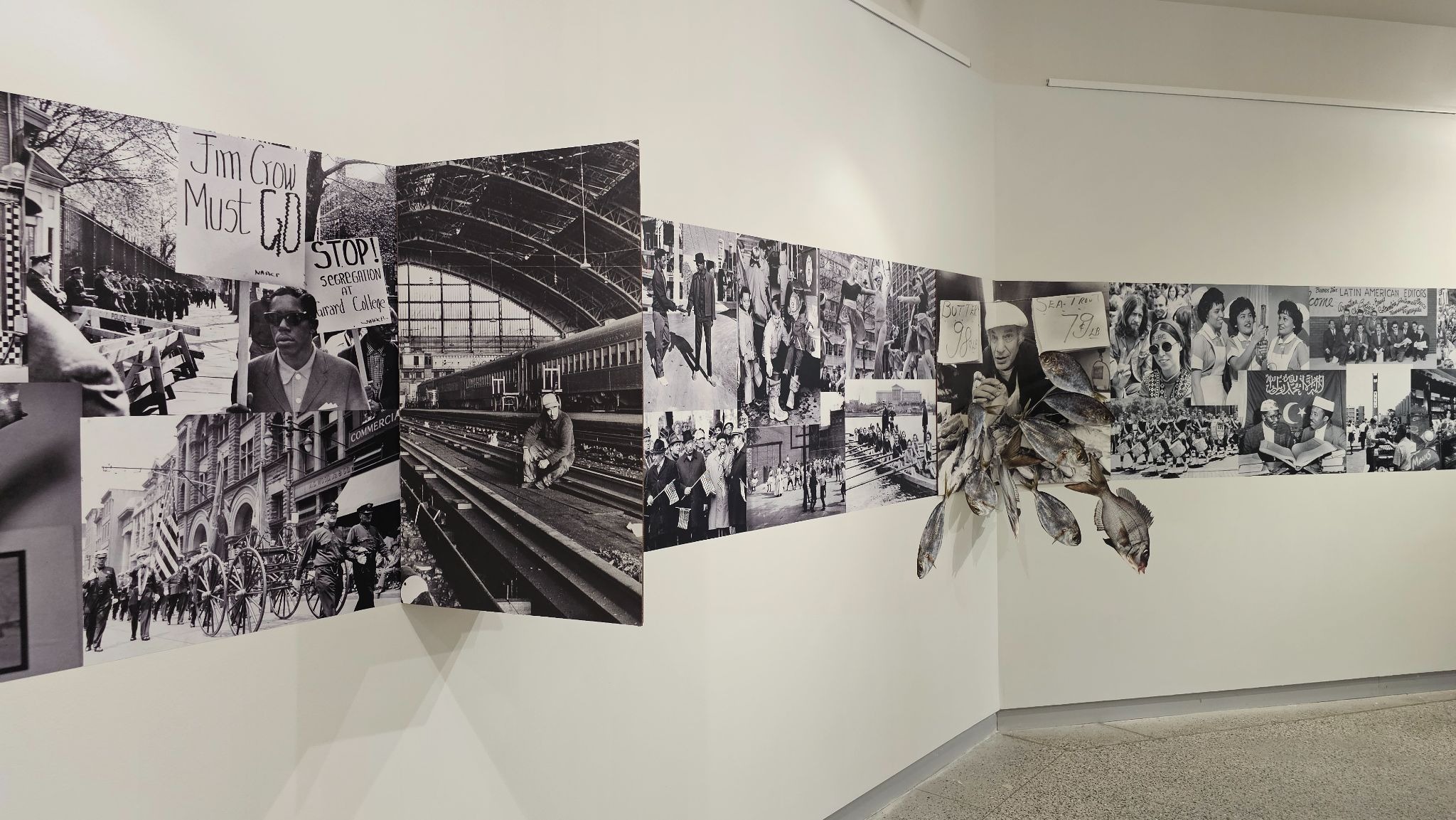
Susan: How did the exhibition expand to include many different types of immigrants to the United States, not just the Chinese? Obviously, for you, the focus is very much on the Chinese story of immigration in America, in Philadelphia in particular.
Colette: When Melissa and Ann described their plans to cover the exhibition walls with images from as many of Philadelphia’s communities as possible using Temple’s archives, it seemed like a fun way to bring these different histories to life and explore new stories. My work has focused on Chinese American history, but many immigrant and Black communities make up the city and there are so many stories that overlap. I heard a lot of these stories when I exhibited at the Chinatown Community Center earlier this year. I also recently moved to the same zip code as Temple, and I’m always struck by how much the neighborhoods can change in just a few blocks, and how different this area feels from other parts of the city where I’ve lived, including South Philly, where I just moved from.
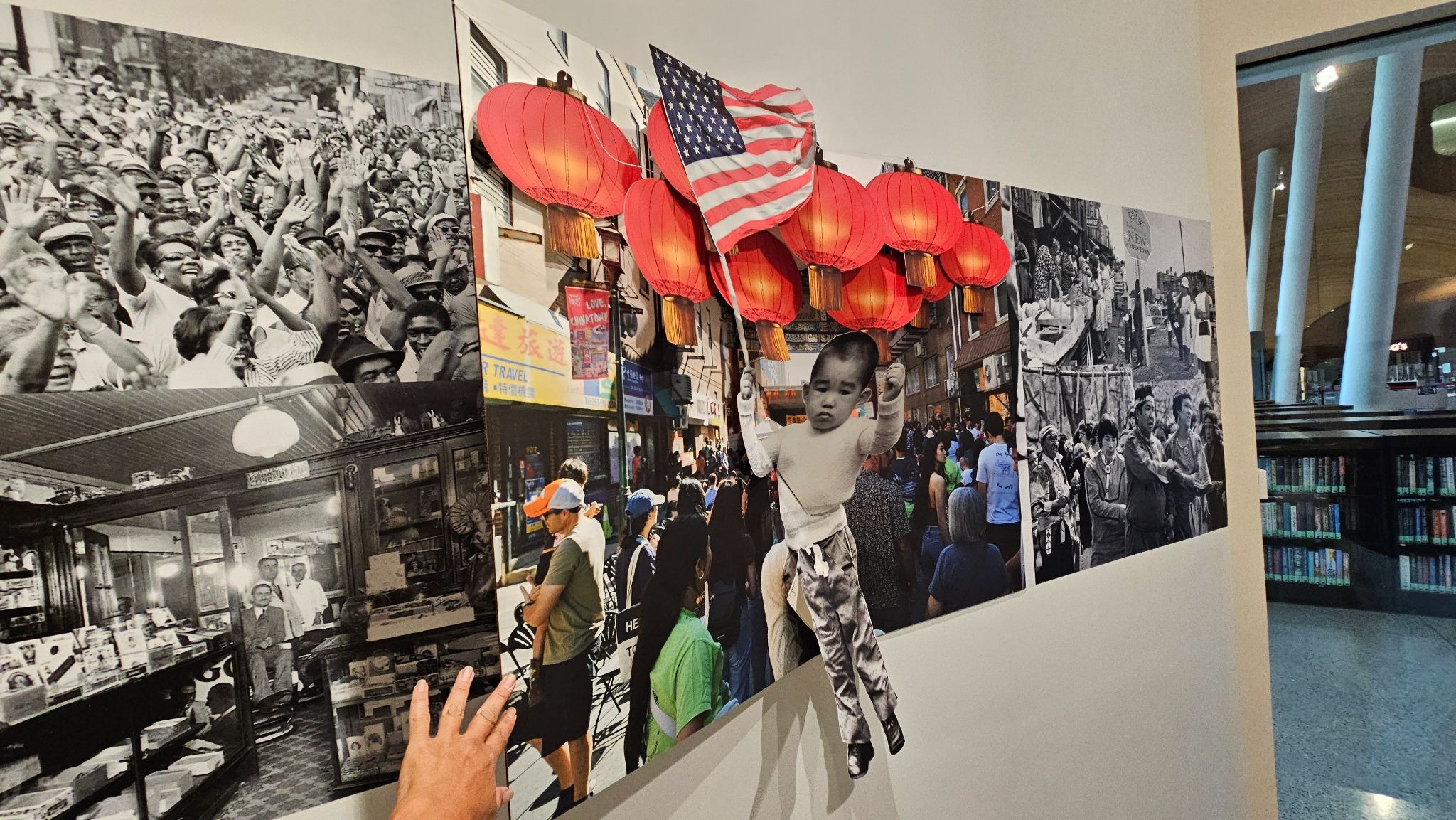
Susan: The dimensional and interactive elements of the surrounding walls really activate the space, and they engage with “Noodle Mountain” without distracting from it. I saw the show where everything was open. Are people meant to close the popped elements and let them open again when they let go?
Colette: Yes, that way people can see that the pieces open and close, and they're encouraged to interact with them. The whole installation came together pretty organically. I approached it with whatever happens, happens. I didn't feel that everything had to work or behave in a particular way. I also didn't have much time, since I started working on the installation right after returning from Japan, while I was still fairly jet lagged.
Susan: Well, it worked and I think it turned out excellent. The other thing that I liked about the show is having monitors in the gallery with text and changing images. I felt that also helped to activate the space and provide information that is more dynamic than text on a wall.
And you also include the fish can which sits on a sculpture stand. Can you tell me a little bit about that?
Colette: As you know, “Noodle Mountain” was originally commissioned by Monument Lab and Grounds for Sculpture, where I had a much larger gallery space to fill. So, I spread extra noodles around the installation and added a large salmon can as a reference to the “Iron Chink,” an automated salmon-butchering and cleaning machine that inspired the crank-operated altar table used for “Noodle Mountain.”
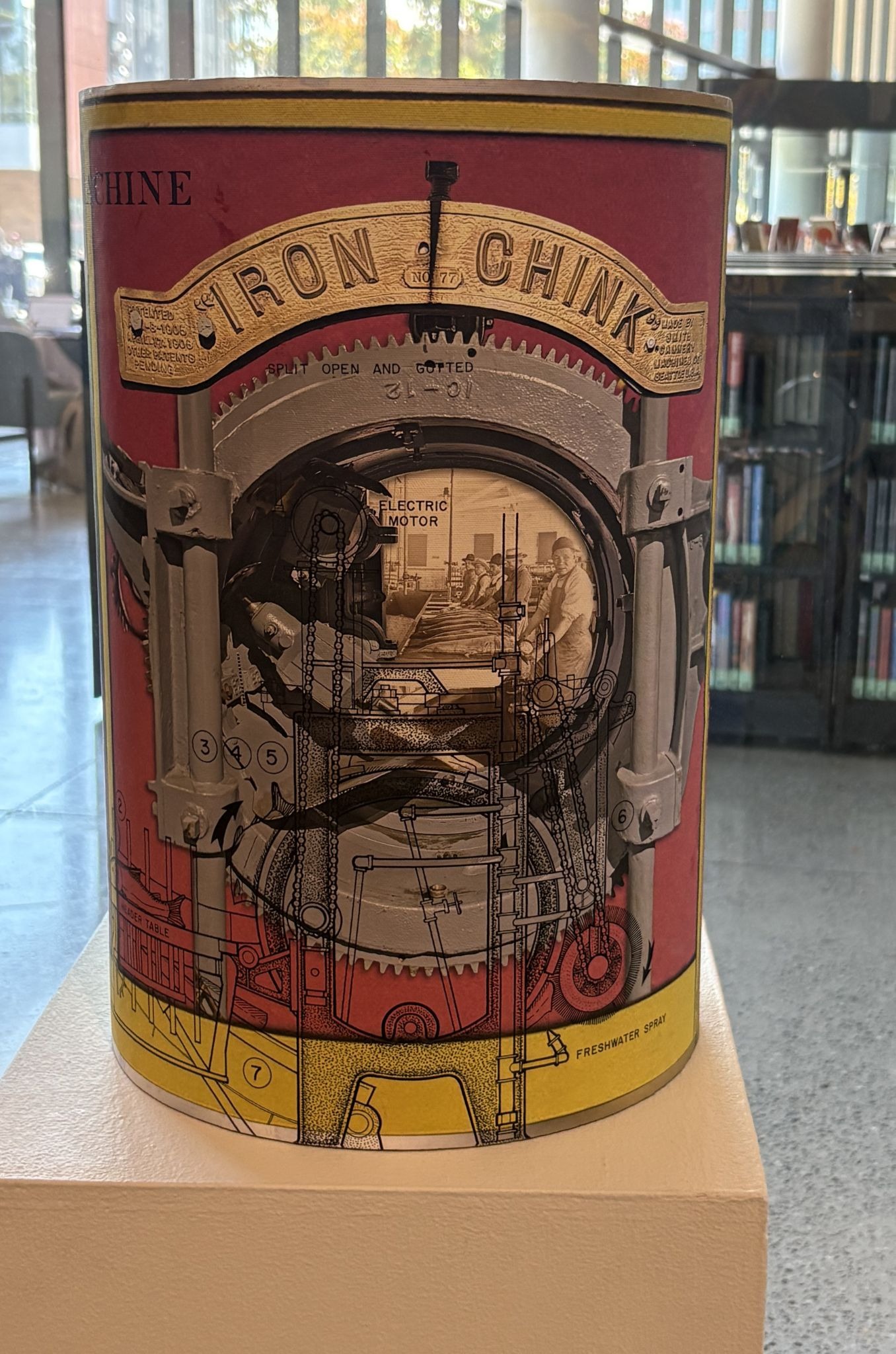
The can features an actual technical drawing of the machine, along with a historic photograph of salmon cannery workers in Washington State. It was my way of incorporating more historical information into the installation without relying on traditional wall text. It also gave me an opportunity to make the connection between the Iron Chink and “Noodle Mountain” more explicit.
Susan: The Iron Chink machine was named specifically with a derogatory racial slur. And then you also have the bean bags on the floor.
Colette: The beanbags are designed to look like oversized soy sauce packets, and they're another way of telling the story. One side features examples of anti-Chinese sentiment and exclusionary policies from the late 19th and early 20th centuries. The other side shows the contrast—how, despite all that discrimination, Chinese food and culture became increasingly popular and helped generate a more positive interest in China. The Chinese restaurant industry helped immigrants bypass laws that were intended to keep them out. I wanted to highlight that contradiction.
Susan: I also went into the Special Collections area where there are cases with objects and materials connected to the exhibition.
Colette: There are some mock-ups and early drafts of “Noodle Mountain” on display, along with objects I've collected during my travels in China, a little address book filled with my notes, and a book about my great-grandfather.
I like that the exhibition doesn't just show the finished artwork, but also some of the research, materials, and ideas that go into making it. People often tell me they want to see more of my creative process, so this was a nice opportunity to share things that go into making the work.
Susan: Thank you, Colette, for speaking with me today. I encourage visitors to make sure they go into the two spaces, the gallery and Special Collections too.
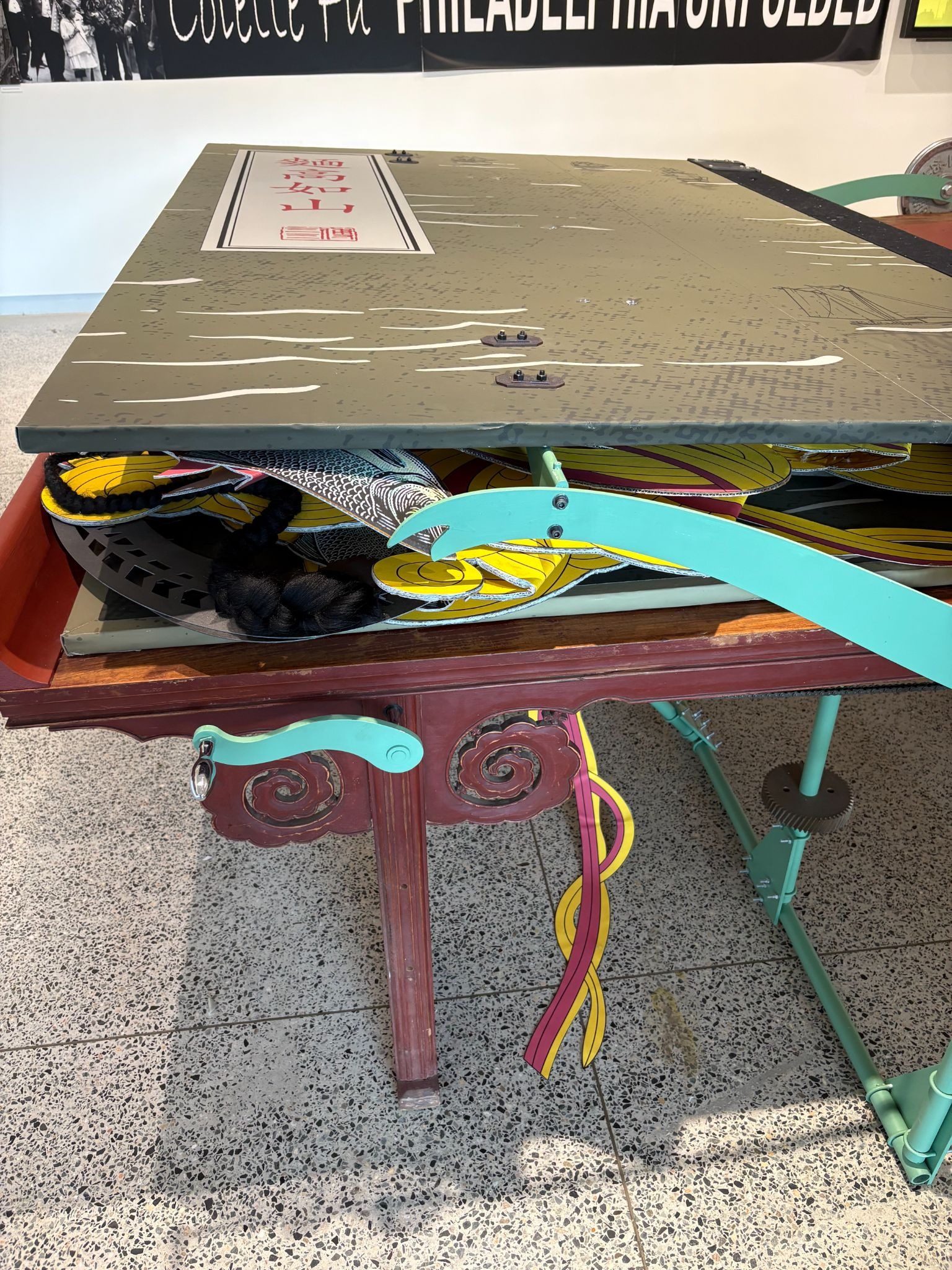
What: “Noodle Mountain” by Colette Fu with table fabricated by Brad Litwin.
Photographs from the archives curated by Ann Mosher and Melissa VandeBurgt
Where: Temple University, Charles Library, Special Collections First Floor Exhibition Space
When: Monday, August 24, 2026 - Sunday, December 13, 2026
Links: https://library.temple.edu/exhibitions/philadelphia-unfolded
Background:
Colette Fu is an important Philadelphia area artist known for her pop-up books and especially for some of the very large books she has created such as “Noodle Mountain.” As a curator, Susan Isaacs has shown Fu’s work in various exhibitions and this past year Isaacs enrolled in a workshop to learn how to make a pop-up book that Fu conducted in her studio in Philadelphia. She plans to offer more workshops in the future.
About the Author:
Susan Isaacs is retired from teaching art history and museum studies at Towson University. She curated many exhibitions for the Department of Art + Design, Art History, and Art Education Galleries as well as numerous institutions across the United States and abroad. She writes and publishes on modern and contemporary art. Isaacs holds a four-year certificate of Fine Arts from the Pennsylvania Academy of the Fine Arts in Philadelphia in painting and B.A., M.A., and Ph.D. degrees in art history from the University of Delaware. Believing that it is never too late to follow one’s dream, she also completed an M.F.A. in studio art at Towson University as an interdisciplinary artist working in printmaking, books, painting, and fabric sculptures. She has shown her own artwork in venues mostly on the East Coast. Employing organic abstract forms, she creates joyful worlds with intense colors and exuberant compositions.
Want to stay in the know about Philly’s visual arts scene? We’re developing a semi-regular Art & Image Newsletter - featuring interviews, articles, and reviews straight to your inbox!