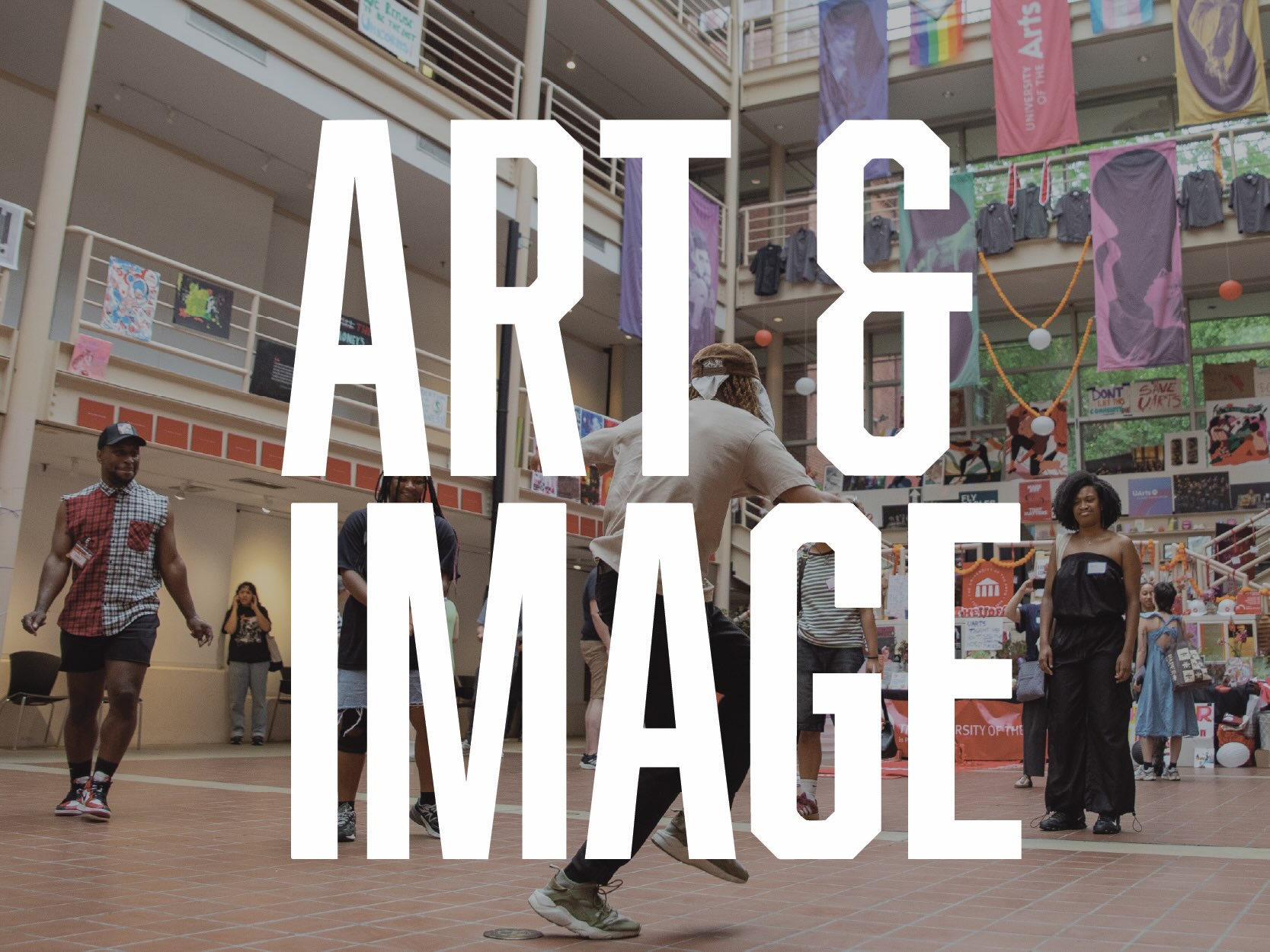
Pete Sparber, Art & Image Editor, interviews Lindsey Scannapieco, the developer behind South Philadelphia’s Bok Building and now the Village of Industry and Art — the ambitious transformation of the former University of the Arts buildings on South Broad Street into a new center for artists, makers, cultural organizations, and city life.
.jpg)
When Lindsey Scannapieco begins a tour of the Village of Industry and Art, she does not start with a development plan. She starts with the building. “We’re in the oldest part of the building,” she said, standing inside the former University of the Arts complex at Broad and Pine. “This portion was built in 1824. It’s the oldest building on Broad Street, north or south. When this was built, Broad Street didn’t exist. This was pastoral landscape.”
That sense of layered time runs through the entire project. The Village of Industry and Art, or VIA, is Scout’s reimagining of the former UArts Haviland and Furness Halls as a working center for artists, makers, cultural organizations, public programming, and affordable housing for cultural workers. The buildings carry a deep history in Philadelphia’s arts education landscape. They also carry the emotional weight of UArts’ sudden closure. Scannapieco understands that history, but she is not trying to freeze the buildings in place. Her language is less about restoration than continuation.
One of VIA’s early installations was organized with Paradigm Gallery and artist Kay Healy, a UArts alumna whose work Don’t Trash a Good Thing considers how one person’s discarded material can become someone else’s treasure. (https://www.kayhealy.com/) “We felt that was a really good conversation to be happening as we step into this,” Scannapieco said. “Adaptive reuse is essentially a kind of collage.” That idea … listening to what already exists and arranging it into new life … may be the best key to understanding the project.
“This isn’t Bok 2.0,” she said, referring to Scout’s widely admired transformation of the former Bok vocational high school in South Philadelphia. “This is a different project, a different building. There are certainly lessons from Bok that we take here, but this building is such a different condition. We have this grand facade on Broad Street. We have a screening room. We have this atrium. The way you experience this space is going to be different.” The principle, she said, is “listening to the building” and responding to the found condition.
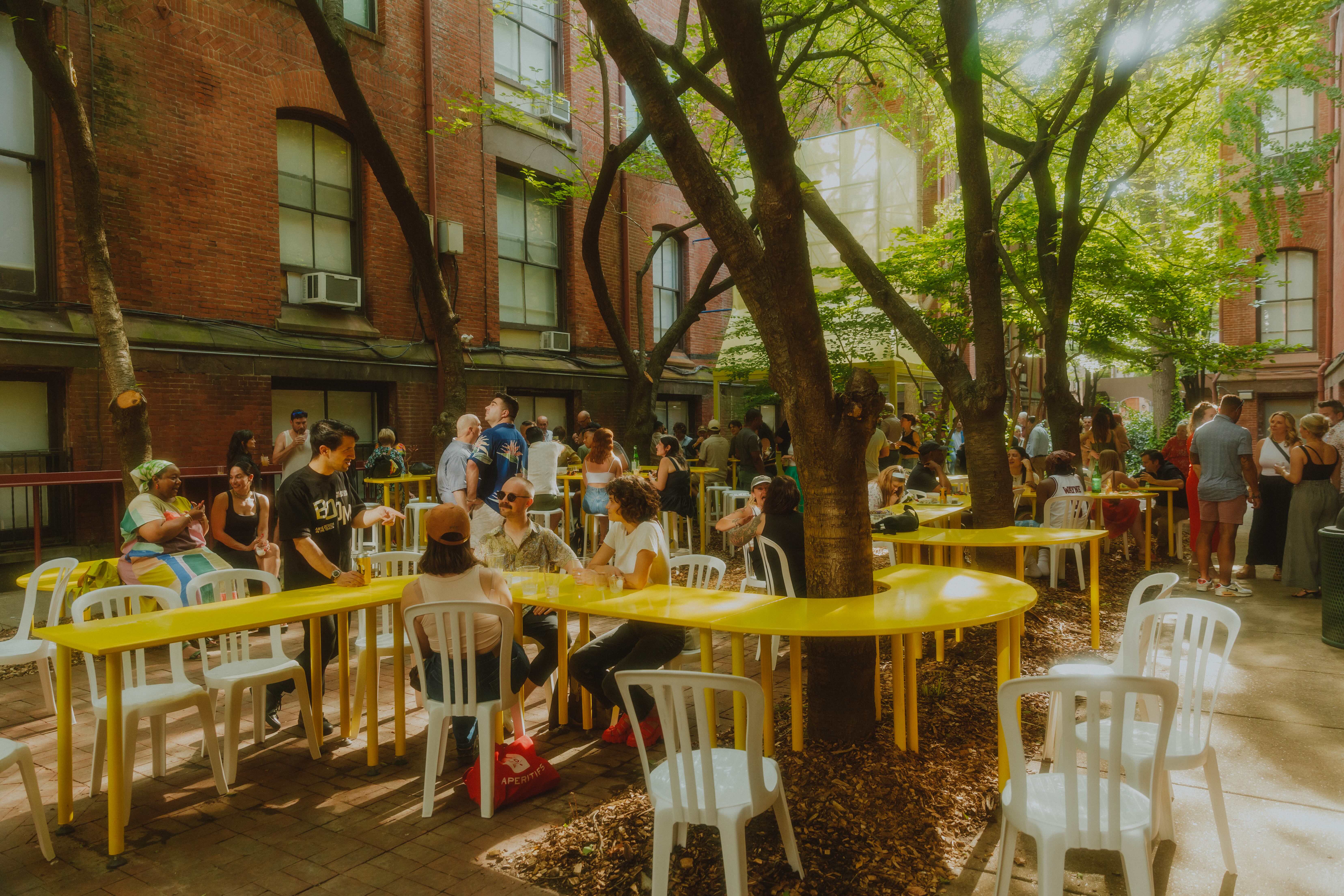
That condition is unusually rich. Some spaces lend themselves to offices for major cultural organizations. Others are ready-made for craft production. There are kilns, a ceramics department, woodworking facilities, a metal shop, a foundry, old looms, skylit studios, courtyards, a seasonal bar, a possible cafe, and former dormitories that will become affordable housing for cultural workers. Scannapieco is not imposing a single use onto the site. She is reading what the site can already do.
“Infrastructure” is a word she returned to throughout the tour, not just cultural infrastructure, but literal infrastructure: kilns, gantries, gas lines, electrical capacity, sandblasting equipment, studios, windows, courtyards, kitchens, bathrooms. “We have twelve kilns here on site,” she said. “We have a metal foundry. It’s a very different physical condition, a very different physical location.” Those inherited capacities matter. To rebuild them from scratch would be expensive, slow, and likely difficult to permit. At VIA, they remain embedded in the building’s fabric. In the ceramics area, Scannapieco pointed to working studios and enormous kilns. “Some of them you could stand in, they’re that big,” she said. Elsewhere, she described The Ceramics Department, a new ceramics collective started by a UArts alum, which will offer wheel-building, hand-building, specialized workshops, and membership shelf space.
In the metal shop and foundry, she gestured toward the equipment left behind: sandblasting tools, gantries, electrical and gas infrastructure. Scout is now speaking with metalworkers about how to bring the space back into active use. “This is really intended to be a working metal foundry,” she said. “Somebody could come, use this space, and maybe there are open days where people could actually see how metal gets made. That’s such an exceptional craft.”

For Scannapieco, however, access does not always mean constant public programming. Some people need to work quietly. Others will teach, demonstrate, host, or collaborate. VIA seems designed to allow different levels of publicness. “It can be somebody who’s an individual fabricator or producer,” she said. “But there has to be some degree of openness for us. That isn’t for everybody. They don’t have to be teaching classes here every day. They can be focused on their own work. But it’s a blend.”
That blend is already visible in the tenant mix. BlackStar Projects, AIA Philadelphia, DesignPhiladelphia, Community Design Collaborative, Monument Lab, CraftNOW, The Stained Glass Project, The Weaving Circle, fashion designers, artists, and makers are beginning to occupy the complex. Some relationships came through Bok. Others grew from the specific opportunities VIA presents. “BlackStar was previously located at Bok,” Scannapieco said. “It made more sense for them to move here, given that their festival happens here on Broad Street.”
The proximity to the Kimmel Center and the Avenue of the Arts gives the project a different civic charge than Bok. Bok grew inside a South Philadelphia neighborhood. VIA sits at one of the symbolic centers of the city’s cultural life. The spatial drama is also different. The atrium, added in the 1980s, is not part of either the original Furness design or the building on Broad designed by John Haviland. However, it does now give the complex a spectacular interior gathering space. Monument Lab recently used it for a major event, transforming it almost overnight.
The lobby and gallery areas are already being activated through exhibitions and events, though Scannapieco expects the lobby to eventually function more as an entry space, with the gallery becoming more clearly defined. A screening room will host regular film programming. “We’re starting with monthly programming,” she said. “In the autumn, it will start weekly programming, with films shown here. It’s this idea of consistency. Consistency is cultural.” That line feels central to the project. VIA is not meant to be a one-time rescue or a dramatic grand opening. It is meant to become habitual; a place people use, return to, discover, work in, and identify with.
The housing component may be the most consequential part of that ambition. The former dormitory building contains 45 units. They were built as quads, so the spaces are unusually generous, with kitchens, bathrooms, high ceilings, and strong light. “We’re really excited because this is going to become permanent, affordable housing for cultural workers,” Scannapieco said. “We’ve had artists and cultural workers asking us for years: affordable studio space is great, but we really need housing,” she said. “Being able to provide this density and this caliber because the housing is really quite generous, on the Avenue of the Arts, supporting working arts, is really exciting.” Scout is studying how to structure the housing program, working with Drexel University and the Barnes Foundation to examine best practices in affordable artist housing. The goal is not simply to create units, but to design a model that can succeed.
That concern for sustainability runs through Scannapieco’s thinking. She does not speak about VIA as a philanthropic gesture, nor as a conventional commercial development. She is trying to build something that can stand financially while remaining culturally meaningful. “There are easier ways to make money,” she said. “But in my opinion, I really believe in this work. I think my whole team does. We see the value and the benefit.” The aim, she said, is to create a model that can “stand up on its own two feet.” “With leadership and early funding in the beginning years, you can actually create something that is sustaining,” she said. “Economically sustainable, and culturally invaluable.”
The comparison to Bok is useful, but only up to a point. At Bok, few people initially believed Scout could pull off the transformation. Artists and makers took a leap of faith before the project’s identity was clear. VIA begins from a different place. It already has major cultural organizations saying they want to be part of it. “We’re just so honored to have these organizations in this building,” Scannapieco said. “They’re really at the center of cultural and civic space. I’m excited to see what happens when they’re all in the same building, whether it’s over lunch or in the bathroom. Something is going to happen between those organizations without anybody having to force them to play together.” That may be VIA’s quiet promise: not programming as mandate, but proximity as catalyst.
Scannapieco describes herself as “an accidental developer.” Her background, she said, is urban design. Development is the means, not the identity. “My job is just to make sure the building works around them so they can do their work,” she said. Asked what VIA might mean for Philadelphia more broadly, Scannapieco’s answer returned to support, not celebration in the abstract, but actual security.
“Philadelphia has an amazing cultural community, an amazing creative community, and amazing people as part of those communities,” she said. “The best thing we can do is support them more. In Philadelphia, we take for granted that this exists here. We should be celebrating it and offering security; security through housing, security through space, funding, and the elements you need for that to really thrive and grow.” She noted that other cities have robust arts institutions while losing the artists and cultural workers who make a city feel alive. “We see cities where cultural and creative workers get priced out,” she said. “Even if they have a very robust arts institution base, it’s a real loss to the city.” In that sense, VIA is not just a reuse project. It is an argument about what a cultural city requires. Not only museums, theaters, and galleries, but workplaces, tools, housing, courtyards, affordable studios, shared infrastructure, and places where people can make things with their hands.
The project’s name draws from the history of the Pennsylvania Museum and School of Industrial Art, a predecessor institution to UArts. Scannapieco said Scout moved from “industrial arts” toward “industry and art” because the word “industriousness” felt essential to the kind of community they hope to cultivate. “We talk a lot about honoring the artistic spirits of the people who’ve come before us in this space,” she said. “But most importantly, we value artists, their stubbornness, their verve, their resilience, their ability to find beauty in this broken world.”
That final phrase may be the emotional core of the interview. VIA is being shaped at a moment when many artists and arts workers in Philadelphia are still grieving UArts’ collapse. Scout held a “Celebration of Life” soon after receiving the keys, part memorial, part transition, part communal acknowledgment.
.jpeg)
“People came in and were overwhelmed,” Scannapieco said. “They started to cry. That was very much part of the experience.” But grief is not where the project ends. Scannapieco’s vision is forward-looking: a working building where art is not separate from life. “We’re living at a time when so much is filtered, manipulated, or machine-generated,” she said. “I think we’re really craving the real. We aspire to create a working building where art is not separate from life.” That includes the art of a metalworker, a pastry chef, a stained-glass teacher, a ceramicist, a filmmaker, a designer, a weaver, or an artist-in-residence living upstairs and working downstairs. It includes large institutions and small studios, public events and private labor, polished cultural programming and the messy reality of making.
As we walked through courtyards, studios, gardens, outbuildings, and workspaces, the project began to feel less like a single building than a small, dense ecosystem: people living, working, making, teaching, screening, gathering, repairing, eating, and occasionally discovering one another by accident. “People will find each other,” Scannapieco said. “People will find ways of working together.” That is the bet. That if the building is handled carefully, if the infrastructure is preserved, if artists and organizations are given enough security and enough room, something larger than a real estate project can emerge.
Not Bok 2.0. Not UArts restored. Something else.
A village. In the middle of the city.
Want to stay in the know about Philly’s visual arts scene? We’re developing a semi-regular Art & Image Newsletter - featuring interviews, articles, and reviews straight to your inbox!