Pete Sparber, Art & Image editor, takes a walking tour through PAFA’s A Nation of Artists exhibition with curator Lea C. Stephenson.
Interview by Pete Sparber
The first thing to understand about A Nation of Artists at PAFA is that it is not simply an exhibition to be seen. It is an exhibition to be entered, followed, questioned, and slowly unpacked.
Presented in conjunction with the Philadelphia Museum of Art and the Middleton Family Collection, the exhibition brings together a vast range of American art across centuries, styles, media, and identities. At PAFA, the show is co-curated by Lea C. Stephenson, Kenneth R. Woodcock Curator of Historical American Art, and Leah Triplett, Curator of Contemporary Art. Stephenson described the project as an ongoing conversation between historical and contemporary perspectives; not a chronological march through American art, but a series of thematic encounters.
“PMA took much more of a chronological approach,” Stephenson said as we began walking through PAFA’s upstairs galleries. “Here, we did much more thematic mixing everything together.”
That choice is immediately felt. Rather than moving neatly from colonial portraiture to modernism to contemporary art, the visitor encounters American art as a sequence of collisions, correspondences, and provocations. An early 19th-century nude faces contemporary portraits of women’s bodies. A monumental Benjamin West history painting is placed in dialogue with a Vietnam-era self-portrait. Still life becomes a language not only of bounty, but of illness and pandemic isolation. Landscape becomes not simply scenery, but myth and memory.
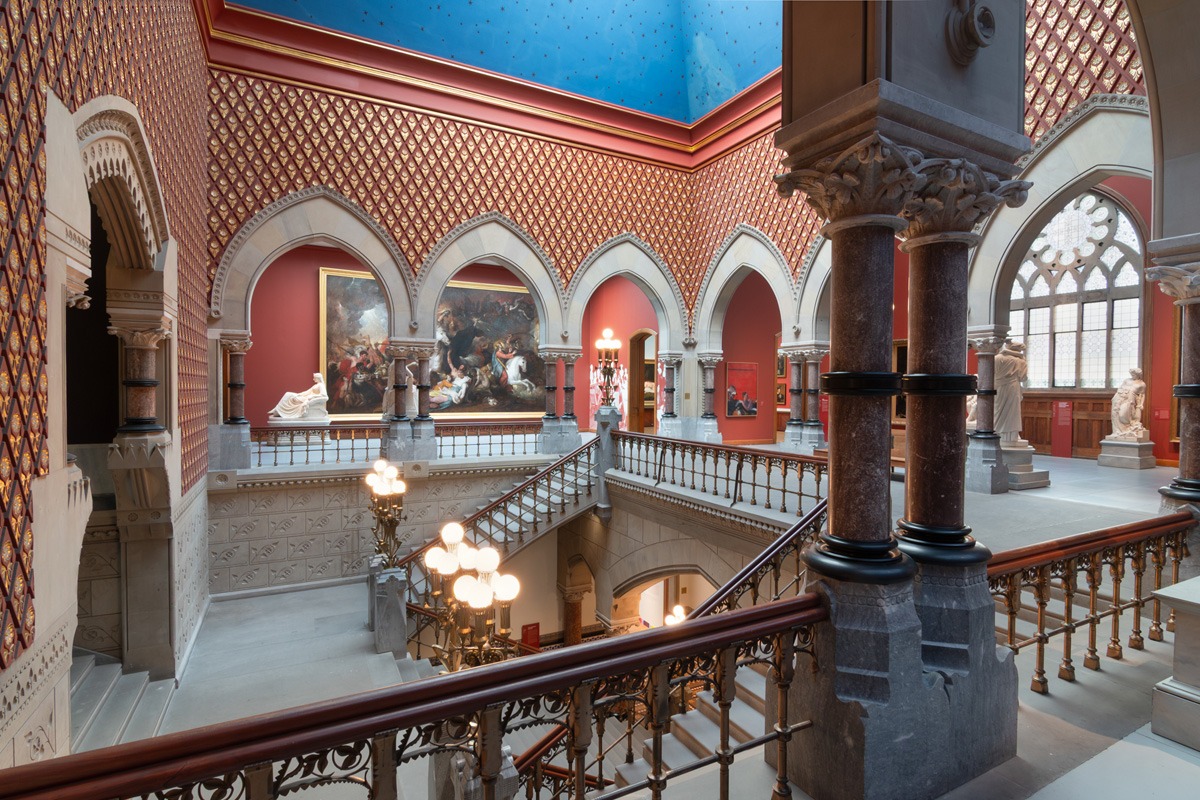
The building itself participates in the experience. PAFA is not a neutral white cube. Frank Furness’s 1876 galleries insist on being part of the conversation. “These were always created with artists in mind,” Stephenson said. “The high ceilings, the sight lines, the skylights…they were designed for the exhibitions that were installed here.” That history matters because A Nation of Artists is also a show about PAFA itself: as museum, school, collection, and long-running engine of American artistic training. “We’ve always been training artists since 1805,” Stephenson said. “This was a place for artists to experiment.”
One of the first galleries explores internationalism and global exchange; a theme that immediately complicates any narrow definition of American art. “It was a chance to think about American art as global,” Stephenson said. “How American art has always been global.” The gallery brings together artists who trained abroad, absorbed international styles, or worked across ideas of cultural exchange and hybridity. John Vanderlyn’s Ariadne Asleep on the Island of Naxos, a PAFA landmark, becomes one anchor. Painted by an American artist trained in Paris, the work presents the female nude through classical ideals. Stephenson noted that the painting was criticized when first exhibited in the United States, where audiences were still shaped by Puritan discomfort with the nude body.
But in this exhibition, Vanderlyn’s idealized Ariadne does not sit alone. Nearby are contemporary works that reconsider the female body through very different lenses: medical experience, diasporic identity and lived embodiment. Stephenson spoke of pairing Vanderlyn with artists such as Clarity Haynes and Gisela McDaniel, whose work shifts the question from ideal beauty to bodily reality. “What happens to these nude bodies across time, across centuries?” Stephenson asked.
That question becomes one of the exhibition’s recurring energies. Historical art often idealizes, monumentalizes, or mythologizes. Contemporary art often presses back, asking what has been hidden, simplified, excluded, or made too beautiful to be fully true. Again and again, the curators place works in proximity so that the viewer can feel that shift…not as an argument delivered in a wall label, but as something that happens visually, across the room.
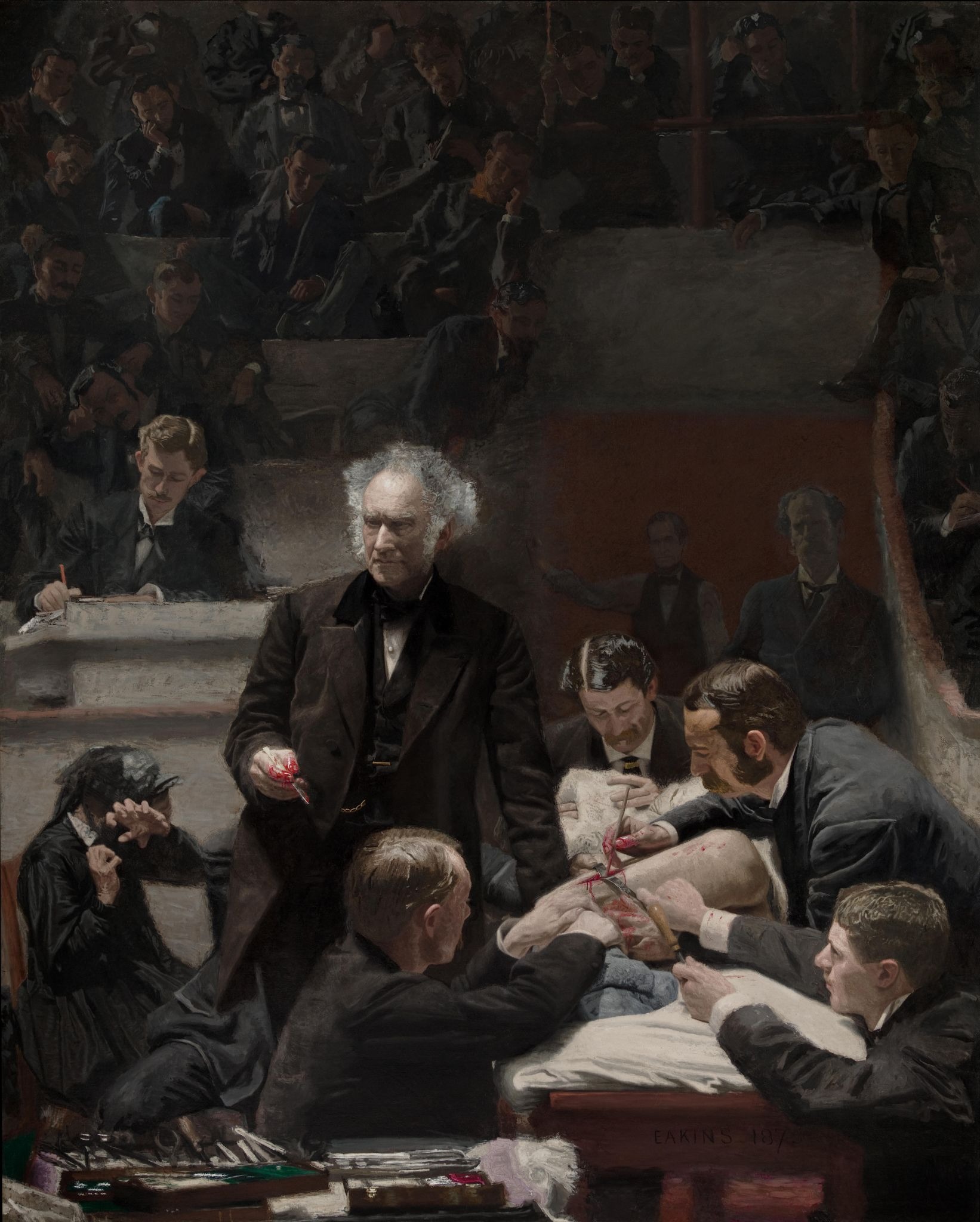
Walking through the exhibition, the word “complicate” becomes central. Stephenson and Triplett are not rejecting the canon so much as making it answer harder questions. Thomas Eakins’s The Gross Clinic, co-owned by PAFA and the Philadelphia Museum of Art, appears as both masterpiece and institutionally charged object. Stephenson noted that Eakins studied and taught at PAFA, and that the exhibition places him near artists across generations, including Cecilia Beaux and Jonathan Lyndon Chase, to show how figurative traditions are repeatedly reinvented. “We really wanted to foreground PAFA artists,” she said, “not only the local history of Philadelphia as this art center, but thinking about how almost all roads lead to PAFA in some cases.”
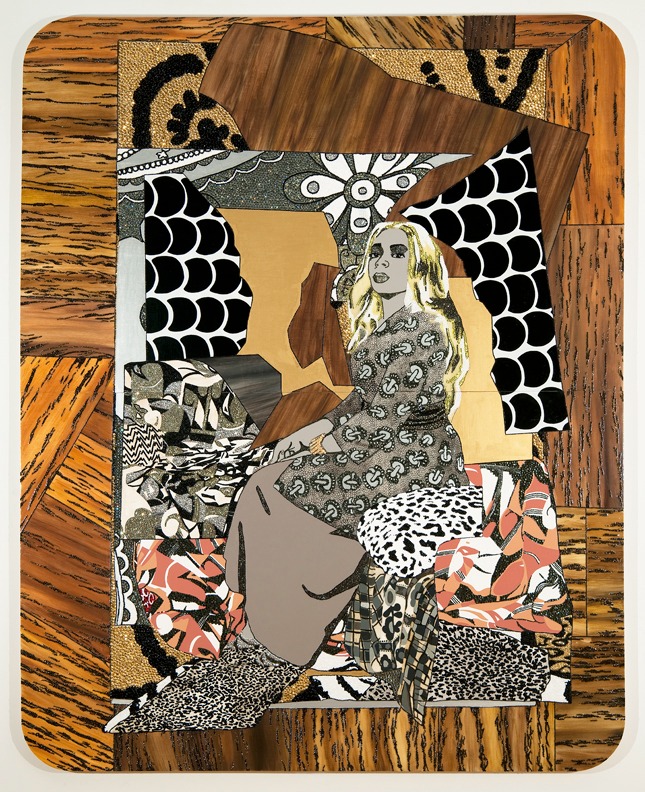
That institutional self-awareness is important. A Nation of Artists is proud of PAFA’s centrality, but not uncritical. Eakins’s complicated legacy, for example, is placed in relation to Black artists who transform and challenge the figurative tradition. Mickalene Thomas, looking back to 19th-century French academic painting, inserts Black female figures into a lineage from which they were historically excluded. The point is not simply contrast in style or materials. It is a deeper contrast in who gets pictured, who gets authority, and who gets to remake the image.
That same logic carries into galleries devoted to prosperity, abundance, and inequity. Stephenson described this section as being shaped not only by money and commerce, but by patronage and family privilege. Still life becomes a particularly rich example. The Peale family’s fruit and abundance are placed in conversation with contemporary works shaped by COVID, anti-Asian violence, medical care, domestic interiors, and isolation. In one contemporary work by Jennie Jieun Lee, Stephenson noted, “your bed became that environment to experiment with.” The movement from idealized bounty to lived vulnerability is one of the exhibition’s most powerful recurring shifts.
Nearby, Njideka Akunyili Crosby’s large-scale domestic interior offers another kind of abundance; one built through family, memory and mixed-media transfer of Nigerian fashion references. Stephenson described pairing Crosby with Charles Willson Peale’s portrait of George Washington: “this American idol,” set against a Black female artist’s reinvention of portraiture, domestic space, and identity. These are the moments when the exhibition becomes most electric. The works do not merely illustrate change in American art. They reveal changes in social psychology: who is centered, who speaks, who has been erased, and who reclaims the image.
Stephenson described this as a major curatorial challenge. “How can you create these jarring effects?” she said. “Besides just the aesthetics?” The exhibition succeeds when those jarring effects wake up the viewer’s own sense of history. A painting that once functioned as authority begins to look like construction. A contemporary work that might seem personal becomes historical evidence. The past and present do not cancel each other; they make each other more legible.
The landscape galleries continue that strategy. Landscape here is never only landscape. Some artists look at palm trees, orchids, or winter fields. Others look at urban expansion, suburban repetition, labor and environmental devastation. Works from the Middleton Collection help fill gaps in PAFA’s holdings, particularly around the Hudson River School and large-scale 19th-century landscape painting. But the curatorial question is broader than influence or chronology. “What is the American landscape to you?” Stephenson asked, describing the kinds of questions the exhibition poses. “What is a landscape? How do you place yourself in it?”
That question leads naturally into one of the exhibition’s most powerful sections: “Looking West.” Stephenson emphasized that the curators did not want to define the West as a fixed geography. “The West is always this constantly shifting geography or space,” she said, “depending on how you orient yourself in the world.” In this gallery, grandeur, Western stereotypes, Indigenous presence, and settler mythology collide. The centerpiece is Benjamin West’s Penn’s Treaty with the Indians, painted in 1771-1772. Commissioned by Thomas Penn, the work imagines a peaceful treaty between William Penn and the Lenape. As Stephenson explained, it is a fiction; one that helped create an enduring visual mythology of Pennsylvania’s founding.
Thomas Penn commissioned the painting at a time when the family’s reputation had been damaged. The work presents peaceful exchange…material goods for land…while muting the realities of dispossession. “It becomes almost propaganda,” Stephenson said. Across from it stands Rose B. Simpson’s Delegate, originally commissioned by PAFA for Rising Sun. Simpson’s work, made of ceramics, twine, metal, paint, and other materials, brings ancestral knowledge, ambassadorship, and Indigenous presence into direct dialogue with West’s colonial mythology.
This may be the exhibition’s most clarifying moment. History is not only what happened. It is also what was painted, reproduced and believed. “Who is constructing these images?” Stephenson asked.
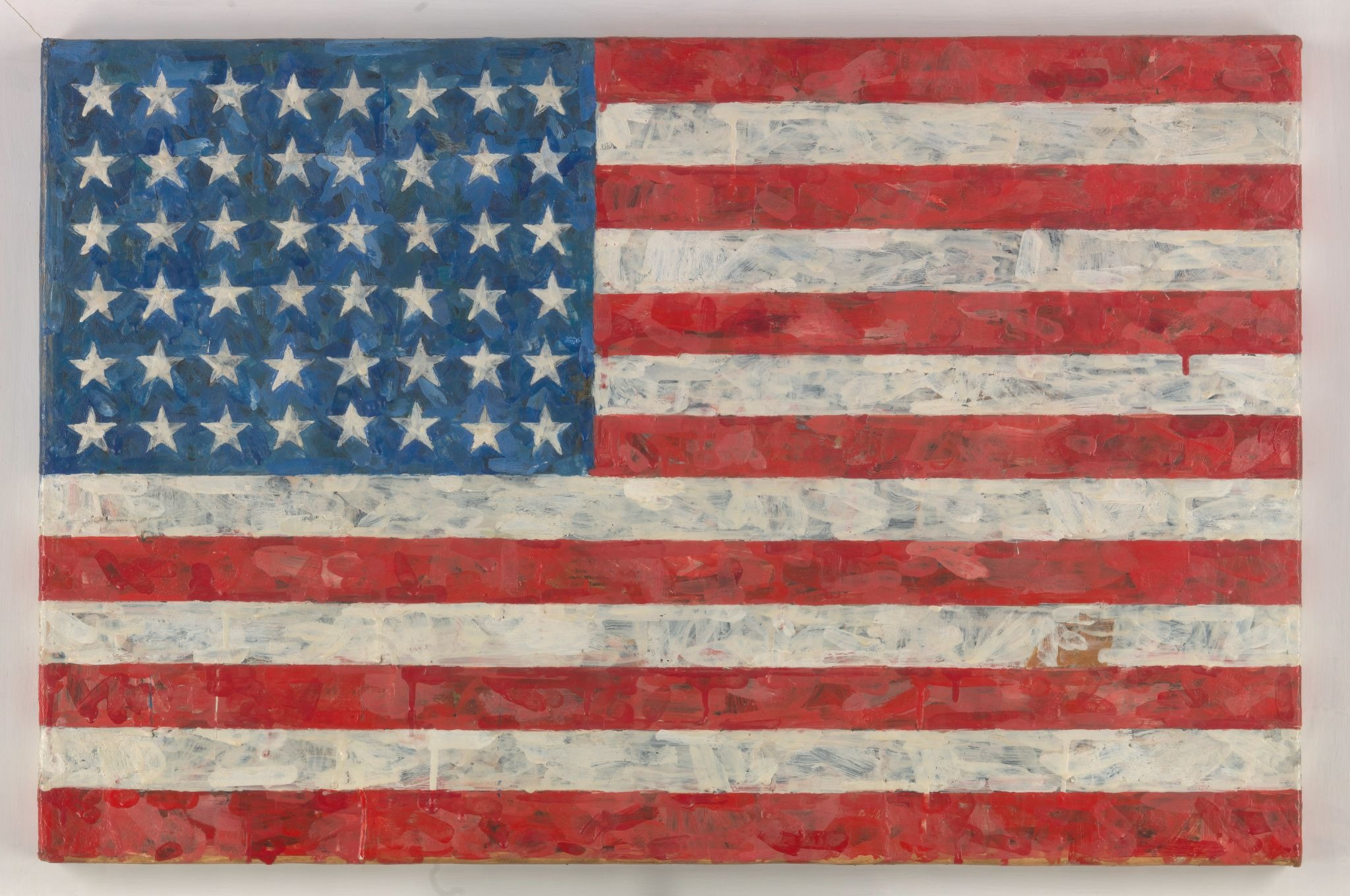
That question could apply to the entire exhibition. Who constructs the female body? Who constructs prosperity? Who constructs the landscape? Who constructs national identity? Who constructs the American flag, the American hero, the American West, the American family, the American artist?
Toward the end of the tour, I suggested to Stephenson that each gallery felt like a provocation. She liked the word. The show does not simply present masterpieces. It provokes the viewer to reconsider what American art is, who made it, what stories it carried, and how those stories change when historical and contemporary works are allowed to speak to one another.
For Stephenson, that multiplicity is the point. “I always think of it as multidimensional, hybrid,” she said. “There is no singular narrative of American art. And there is no singular chronological timeline.”
That may be the most important lesson of A Nation of Artists. American art is not a line. It is not a settled canon. It is not merely European influence translated into a new country. It is a network of reinventions, borrowings, exclusions, myths, ruptures, claims, and counterclaims. American artists, Stephenson argues through the exhibition, have always been integral to how the country understands itself. They have made its symbols, staged its bodies, imagined its landscapes, decorated its myths, exposed its contradictions, and questioned its stories.
For the semiquincentennial, that feels exactly right. Not celebration alone. Not indictment alone. Something more demanding and more useful: a set of rooms where visitors can look closely, compare, question, and decide how deeply they want to enter. “We didn’t want to hit visitors over the head,” Stephenson said. “We didn’t want to say you have to read it a specific way. There is no right answer.”
What the exhibition offers instead is evidence. Here are the bodies. Here are the landscapes. Here are the flags. Here are the myths. Here are the counter-myths. Here are the artists, across centuries, still arguing with one another, still remaking the nation’s image, still asking what America has been and what it might yet become.
A Nation of Artists
Through September 5, 2027
Historic Landmark Building, 118-128 North Broad
Curated by:
Leah Triplett, Curator of Contemporary Art, and
Lea C. Stephenson, Kenneth R. Woodcock, Curator of Historical American Art.
Want to stay in the know about Philly’s visual arts scene? We’re developing a semi-regular Art & Image Newsletter - featuring interviews, articles, and reviews straight to your inbox!