“For Black women as well as Black men, it is axiomatic that if we do not define ourselves for ourselves, we will be defined by others—for their use and to our detriment.” — Audre Lorde
Who taught you to love yourself?
The likelihood that it was someone who doesn’t look like you is slim—an intuition, or hypothesis if we are speaking the colonizer’s language, that I am willing to bet on. For many of us growing up Black outside of the African continent, beauty was not something affirmed the moment we stepped beyond the safety of our homes or neighborhoods. Our self-esteem was often sullied by a capitalist and colonial system of racialized othering that rendered anything outside of whiteness less than desirable.
And yet, none of that ever stopped our Blackness from shining—whether moonwalking across a world stage or standing in our mother’s mirror swiping on the most ruby red lipstick, flashing a big Chicklet grin back at ourselves. For a moment, we knew we were all that and a bag of chips.
Beauty has always been both a sensual and political act for Black communities in pursuit of autonomy over what was so often taken from us by force. To be beautiful meant imagining beyond the present moment—toward a tomorrow where we could take pride in how we presented ourselves and the rituals of care that shaped our becoming.
Across the diaspora, the dynamism of Black life grants us the opportunity to remix and remodel beauty in countless ways. Growing up in the American South meant a beauty defined by voluminous hot curls set overnight, Easter pageant dresses, patent leather shoes polished to a mirror-like sheen, and stockings and slips worn even at the tender age of ten.
As I came of age and leaned further into my West Indian heritage, beauty shifted. It became about sun-kissed skin and a curvaceous silhouette, about straight-back braids or tight coils born from a long day at the beach and set by the sun itself. Today, beauty arrives to me through a new lens of faith, much like it does for many Muslim women across the globe. Listening to the stories of women in Philadelphia’s historic Nation of Islam communities—who were taught to remain pristine and impeccably coiffed even beneath their starched white veils—reminds us that beauty is also discipline, devotion, and reverence for God.
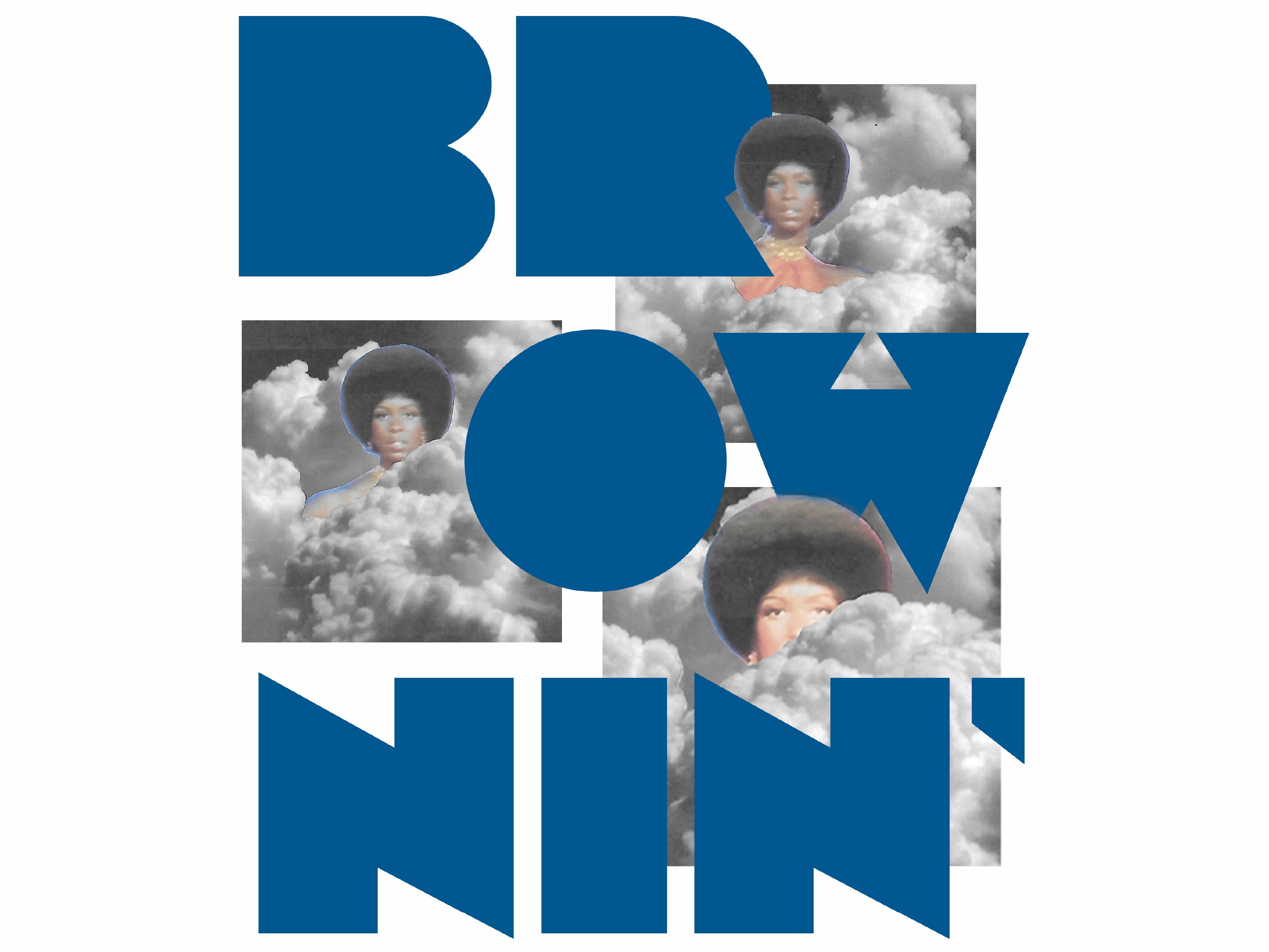
Across these moments, beauty becomes a constantly evolving performance of self-preservation and spirit throughout the diaspora. It draws us back toward a collective understanding of ourselves—one that resonates in the visual language of the five extraordinary artists brought together in Brownin’.
In the Caribbean, brownin’ is a Jamaican Patois term used to describe a light-skinned person, typically a light-skinned Black woman or someone of mixed race with a fairer complexion. The term derives from the English word “brown,” yet within Jamaican culture it exists within a long colonial history of colorism, where skin tones have been categorized along a spectrum—“browning” for lighter complexions and “blacks” for darker skin.
Brownin’ also refers to a thick, caramelized sugar sauce used to deepen the color and flavor of stews, meats, and cakes. Made by burning sugar—often brown or cane sugar—until it nearly blackens, then mixing it with water, the ingredient is foundational in dishes such as stewed chicken and Jamaican fruitcake.
Both meanings linger in tension: sweetness and heat, depth and darkness.
.jpg)
Brownin’ is an exhibition that embraces softness while exploring Black beauty. It does not attempt to escape the reality that colonization has profoundly shaped how we see ourselves, but rather acknowledges that we remain in constant refusal and negotiation with its aesthetic impositions. Diaspora does not produce diversity in Black beauty simply because of colonial histories. Instead, our aesthetics are continuously remade through the invisible politics of seeing—the gaze through which we are viewed and the one through which we choose to view ourselves. Brownin’ invites Black viewers to encounter themselves through their own eyes, while offering those outside of this experience the opportunity to witness and listen to the languages of admiration, care, and aesthetic possibility that circulate within Black communities themselves.
If you’d like to experience the exhibition, Brownin’ opens tonight at InLiquid Gallery in the Crane Arts Building and will remain on view through May 14, 2026.