

.jpg)


.jpg)
.jpg)

.jpg)
.JPG)
.jpeg)
.png)
.png)
.jpg)


Brownin’
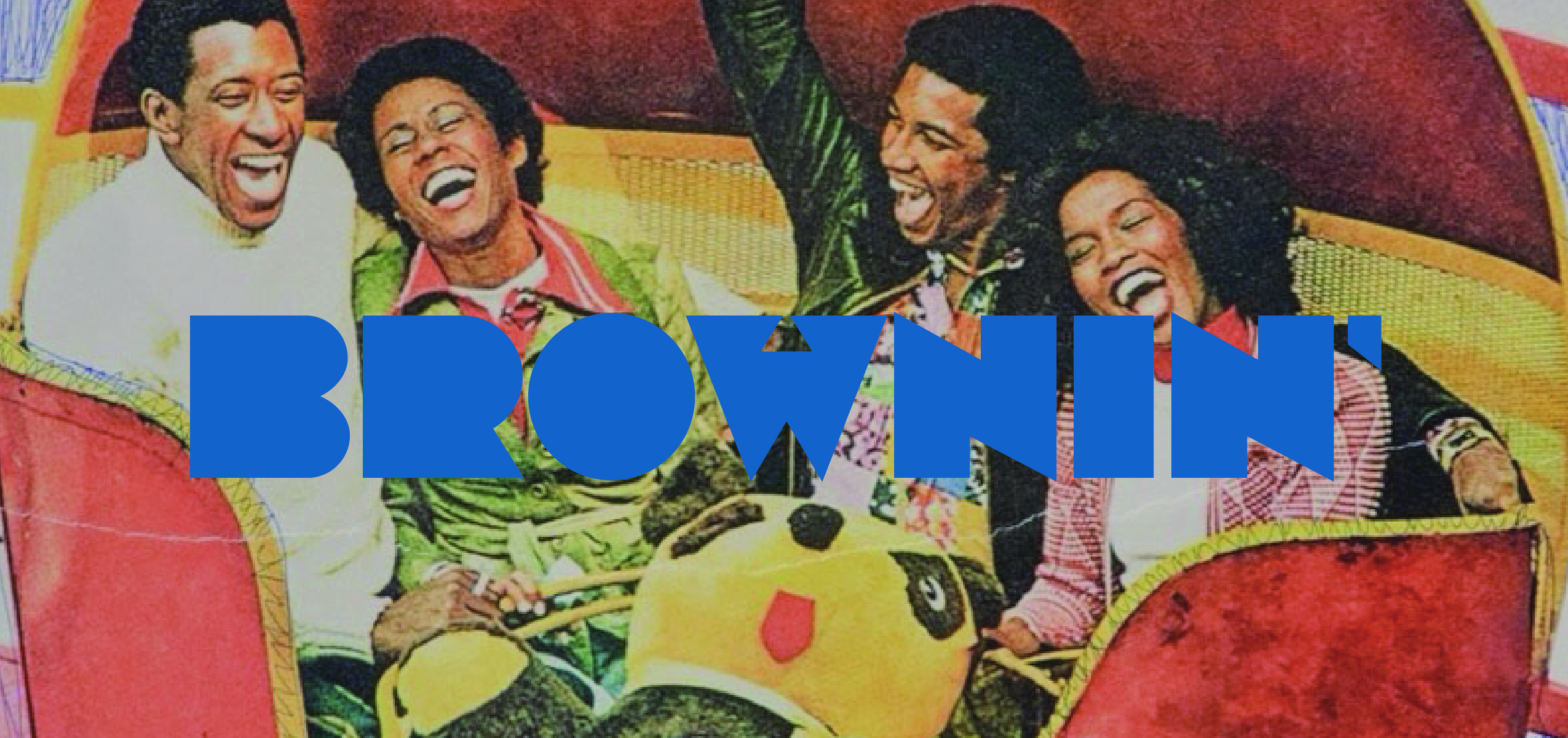
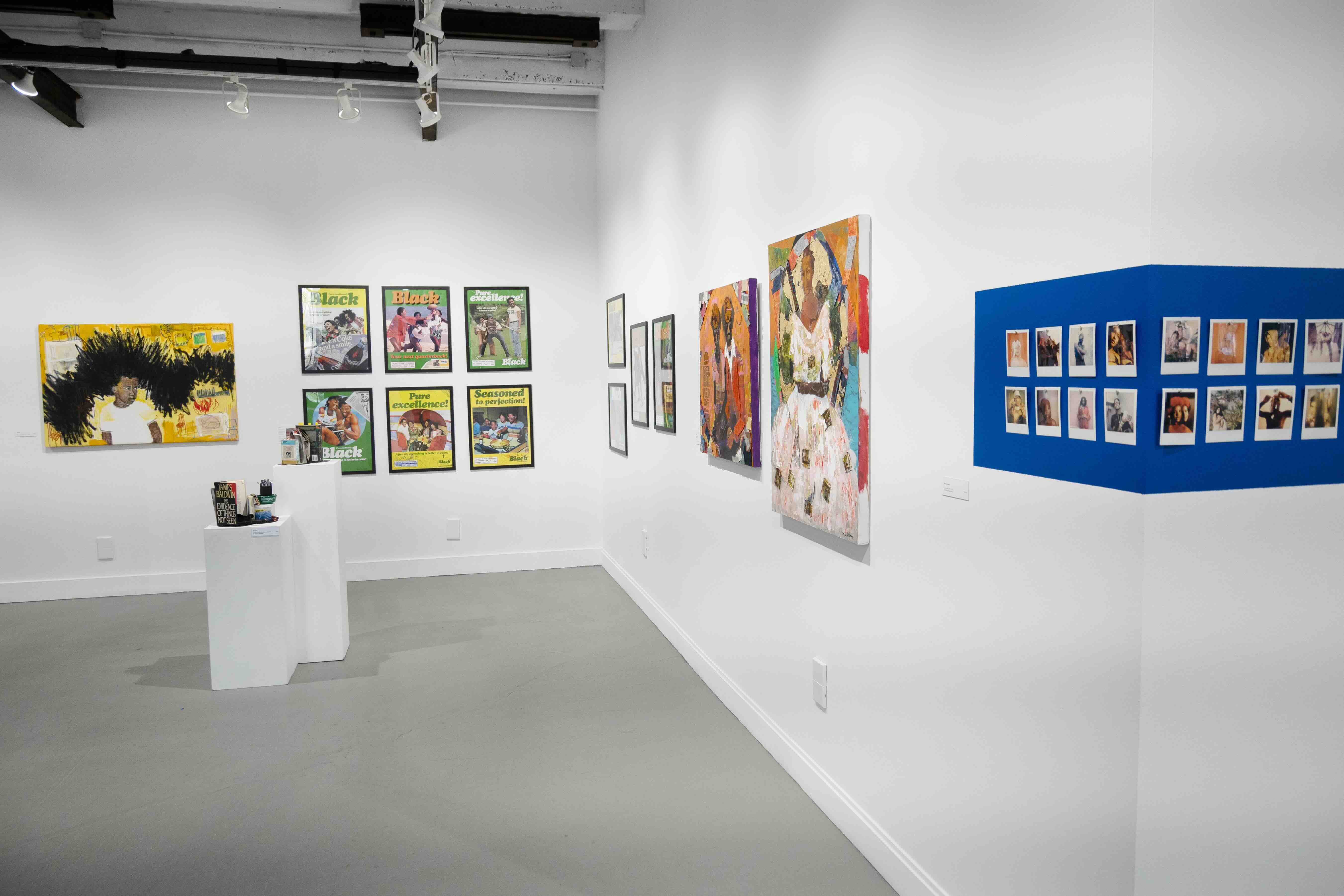
Curated by InLiquid in collaboration with Zindzi Harley, Brownin’ showcases five Philadelphia-based artists whose work studies the Black figure and celebrates black identity by redefining the meaning of beauty.
“Beauty is often framed as subjective, yet Black beauty has historically been interpreted, mediated, and validated through external gazes. Brownin’ re-centers Black aesthetic production within its own cultural context, foregrounding artists who articulate beauty on their own terms. The exhibition brings together five visual artists whose practices engage Blackness not as a monolith, but as a site of plurality, nuance, and self-definition. Rooted in the visual languages and lived realities of Black communities, Brownin’ examines how Black beauty is constructed, performed, and reimagined across the everyday and the symbolic. Featuring emerging and established Philadelphia-based artists, the exhibition resists singular narratives of Black identity, instead presenting a spectrum of aesthetic positions that challenge reduction, stereotype, and commodification. Collectively, these works affirm Black beauty as expansive, evolving, and authored from within. The title Brownin’, drawn from Caribbean slang, reflects the curator’s West Indian heritage and her multicultural upbringing as an African American woman in the South, where she encountered the multiplicity of Black beauty through a familial lens. This perspective informs the curator’s vision and frames the exhibition’s engagement with Black beauty as both a response to and a medium of art and culture emerging from communal memory, bodily agency, activism, and identity affirmation.”
– Zindzi Harley
.jpg)
Caff Adeus
Bio
Caff Adeus is a self-taught visual artist whose practice primarily consists of mixed-media paintings and assemblages, street art, and photography. He’s currently focused on creating work from an autobiographical perspective that defies norms, stereotypes, and monolithic rhetoric, using a blend of cultural references and iconography.
Statement
“My work boldly states what a lot of artists wouldn’t dare express openly. This unapologetic approach incorporates a mixture of iconography, abstraction, figuration, and ubiquitous symbols to express my experiences, and attempt to reconfigure ideology in regards to racial disparities, social norms, and a tragic history that is often blurred. In my work, there's vulnerability and apprehension, urgency and calm, purpose and purposelessness, disillusionment and enthusiasm, seriousness and irreverence, optimism and nihilism. These dichotomies are explored using photography, reconstructed objects, sculptures, and paintings. Aesthetically, my paintings symbolize commonality and echo the tone of the grittiness of the city I call home. Layers of acrylics, buttery oils, spray paint, and colorful pastels add playful, finely detailed antagonistic critiques about the world around me, while offering viewers a glimpse of who I am. The result of this is often aggressively condescending art that mocks and berates disagreeable viewers in an effort to recondition their perspective through negative reinforcement. Much like the fictional Ludovico Technique, but with the panache of a parent pretending the spoon is an airplane while feeding their child.”
.png)
Marcus Branch
Bio
Marcus Branch is a Black and queer photographer based between Philadelphia and NYC who has worked with publications and star talent globally, including Tina Knowles, i-D, Dominique Jackson of Pose, Dazed Magazine, Ari Lennox, Marie Claire, Philip Lim, Interview Magazine, and Fotomania. Passionate about documenting queer and Black communities, Branch's photographic work celebrates the BIPOC and LGBTQ+ experience, embraces diversity and inclusivity, and contributes to a broader perspective on underrepresented communities.
Statement
“Rooted in lived experience, these portraits bring forth a soulful honesty that is tender, open, and seen. Speaking to what holds us, what takes from us, and what it means to exist within that tension.
This work leans into presence, connection, and the quiet beauty that lives within us. A reclamation of who we are, as we are.”
.jpg)
Mikel Elam
Bio
Mikel is an artist native to Philadelphia whose work expands the boundaries of painting and drawing. He attended the University of the Arts, where he graduated with a BFA in Painting. Mikel worked as a personal assistant for famed jazz musician Miles Davis for several years. It was then that he was encouraged and inspired by the musician, who was developing a second career as a visual artist, to pursue art full-time. This experience helped shape and define Mikel for years to follow. In recent years, his work has focused on Afrofuturism, which he defines as people of color coexisting in present and future world cultures.
Statement
“It has always been my focus to bring more prominence to Black and Brown imagery in art. The very deliberate assassination of our cultural heritage has been undeniable. Black and Brown people are undeniably beautiful, intelligent, compassionate, and resilient. For more than 400 years in what we know as America, we have been used and labeled chattel, denied access to privileges and opportunities others have taken as a given and entitled way of life. We have always been the backbone of this country’s development. We have raised the others' offspring, bared their children without consent, many times experiencing a forced abandonment of our own families to serve an unappreciative pseudo master. We fought and died in wars, promised reparations never received, as well as an all out attack on our image, intelligence, and our moral compass. Until recent years, we have been ignored in the fine arts. It has moved forward, yet still has some way to go. About my images. This show mostly represents proud, strong people of color. Much like my personal family and friends. People who have encouraged me to pursue my dreams regardless of the underwhelming predicted outcomes. Some of these images are part real and imagined. Based on faded, distressed photos from my past, and my reimagining them in variations of collage and pigment. There is one slightly different painting from the others( yellow background), which is a dream poster of a theater show in the Jim Crow period. Where the performers are portrayed as subjects to possibly be ridiculed. Yet somehow I think the real buffoons are the audience.”
.jpeg)
Akira Gordon
Bio
Akira Gordon (she/they) is a Philadelphia-born painter and University of the Arts graduate whose work explores themes of leisure, nostalgia, and the transition into adulthood. Through self-portraiture and rich, saturated color, she creates immersive narratives that reflect personal and collective experiences. Her art highlights Black figures in moments of rest and everyday life, offering a perspective that is both intimate and universal. Akira holds a B.F.A. in Fine Arts, Painting from The University of the Arts, Philadelphia, PA. Her work has been featured in several Philadelphia galleries, including Anderson Hall, Icebox Project Space, Penn’s Hall of Flags, Philadelphia’s Magic Gardens, Ubuntu Fine Art, and Paradigm Gallery.
Statement
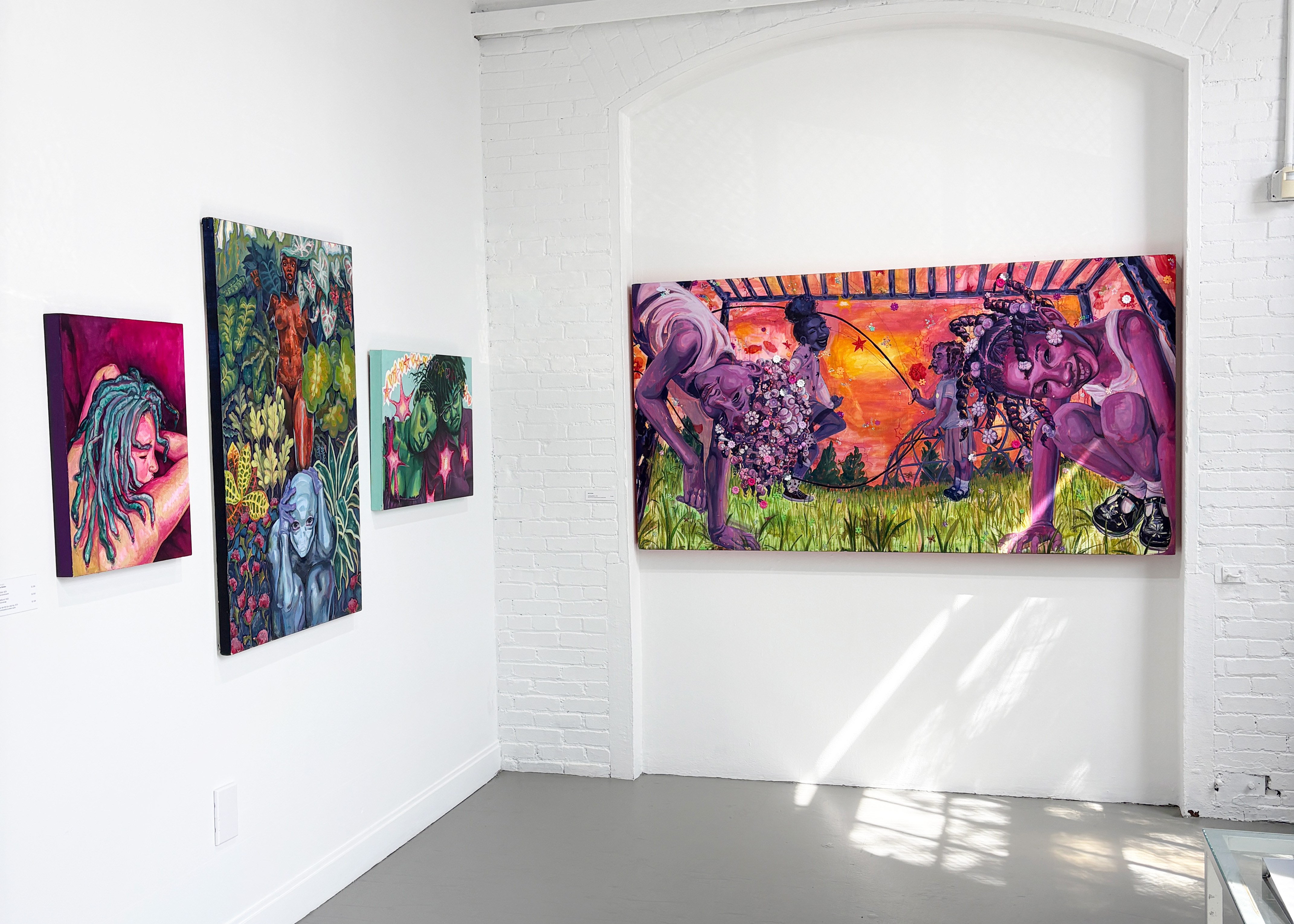
Through figure painting, Akira’s paintings explore the essence of being a black woman, bridging gaps in representation with authenticity and depth. Inspired by classical art, she reimagines its boundaries by translating the complex narratives of her community—highlighting joy, vulnerability, and strength—onto canvas. Her work challenges stereotypes and amplifies the voices of black people by celebrating everyday moments often overlooked. A distinctive element of Akira’s process is self-portraiture, grounding her art in personal experience and emotional truth. Every brushstroke reflects a blend of reality and imagination, inviting viewers to engage deeply. While rooted in her own life, Akira’s artistic journey is one of continuous exploration. She embraces new experiences, cultures, and perspectives, allowing them to shape her practice and enrich her storytelling. Through this evolving work, she remains committed to creating art that resonates, challenges perceptions, and inspires change.
.jpeg)
Yannick Lowery
Bio
Yannick Lowery is a native of New York City and currently resides in Philadelphia, PA. Claiming both cities as cultural and creative influences, he cites the rich diversity of their visual art histories as fuel for his own practice. Yannick attended the Atlanta College of Art (SCAD) and Columbia College in Chicago, where he studied sculpture and graphic design, respectively. His work explores the creation of illustrated proverbs to guide viewers through cultural introspection and imaginative perpetuation. Lowery parallels archival imagery and his own photography to employ world-creation and compile instigative and investigative way-making devices through collage, animation, and sculptural works. The creative accessibility within this medium has enabled Lowery to experiment with his artistic reach: from illustrations for publications such as The New York Times, The Atlantic, Vanity Fair, Time Magazine, as well as public murals and installations across the nation.
Statement
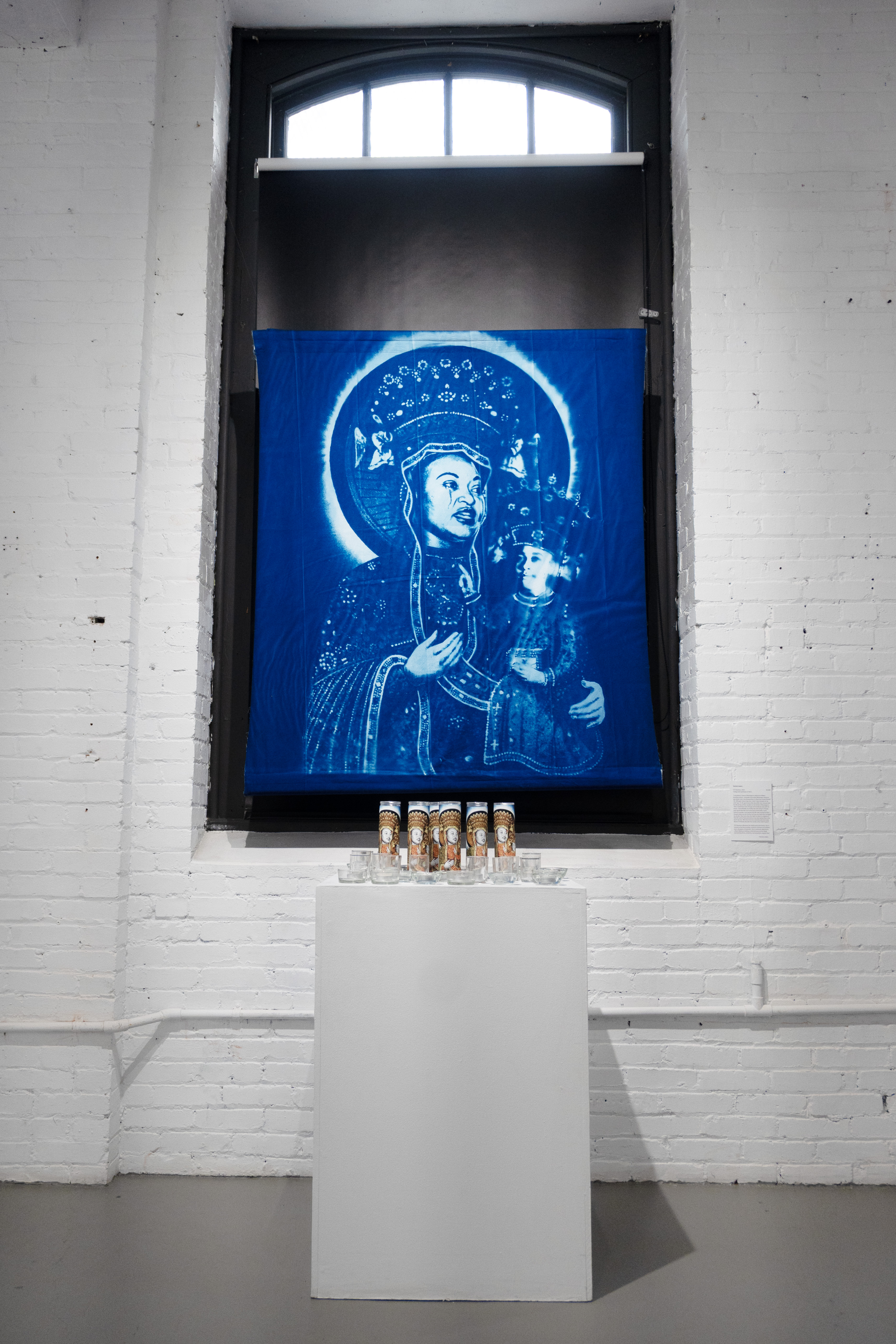
“I am an interdisciplinary artist interested in the manifestation of our collective futures, the fleeting nature of memory, and the spaces in between that allow us to imagine and remember. Working within the context of historical and contemporary spaces, I introduce my practice and methodology to communities in order to communally illustrate the themes in my work. This influence on my practice is often paralleled with visual proverbs, premonitions, and historical references in an effort to spark cultural introspection and imaginative narratives. Working between alternative photographic processes, collage, animation, and sculpture, my practice focuses on introducing alternative propaganda while empowering others to do the same. I lead with the understanding that no public image is coincidental. Recognizing the resounding influence of mass media has charged me to attempt to harness and redirect those messages towards avenues of alternative ideas about time itself and our role in keeping it.”


