
.jpg)
.jpg)
.jpg)
.jpg)
.jpg)
.jpg)
.jpg)


Future/Past/Present
Featuring Randall Cleaver, Billy Colbert, Carolyn Harper, Candace Karch, James Labold, Carole Loeffler, Benjamin B. Olshin
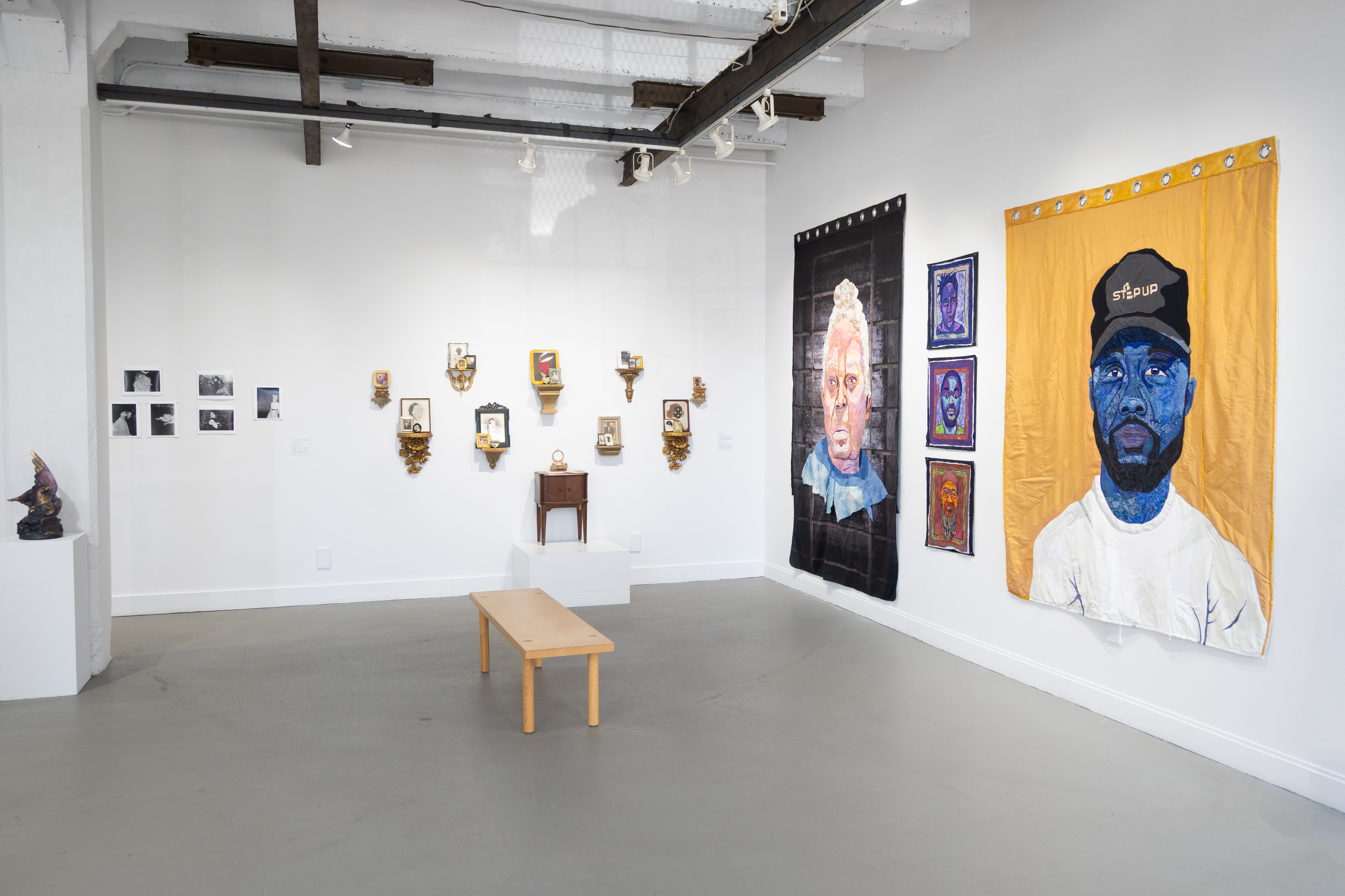
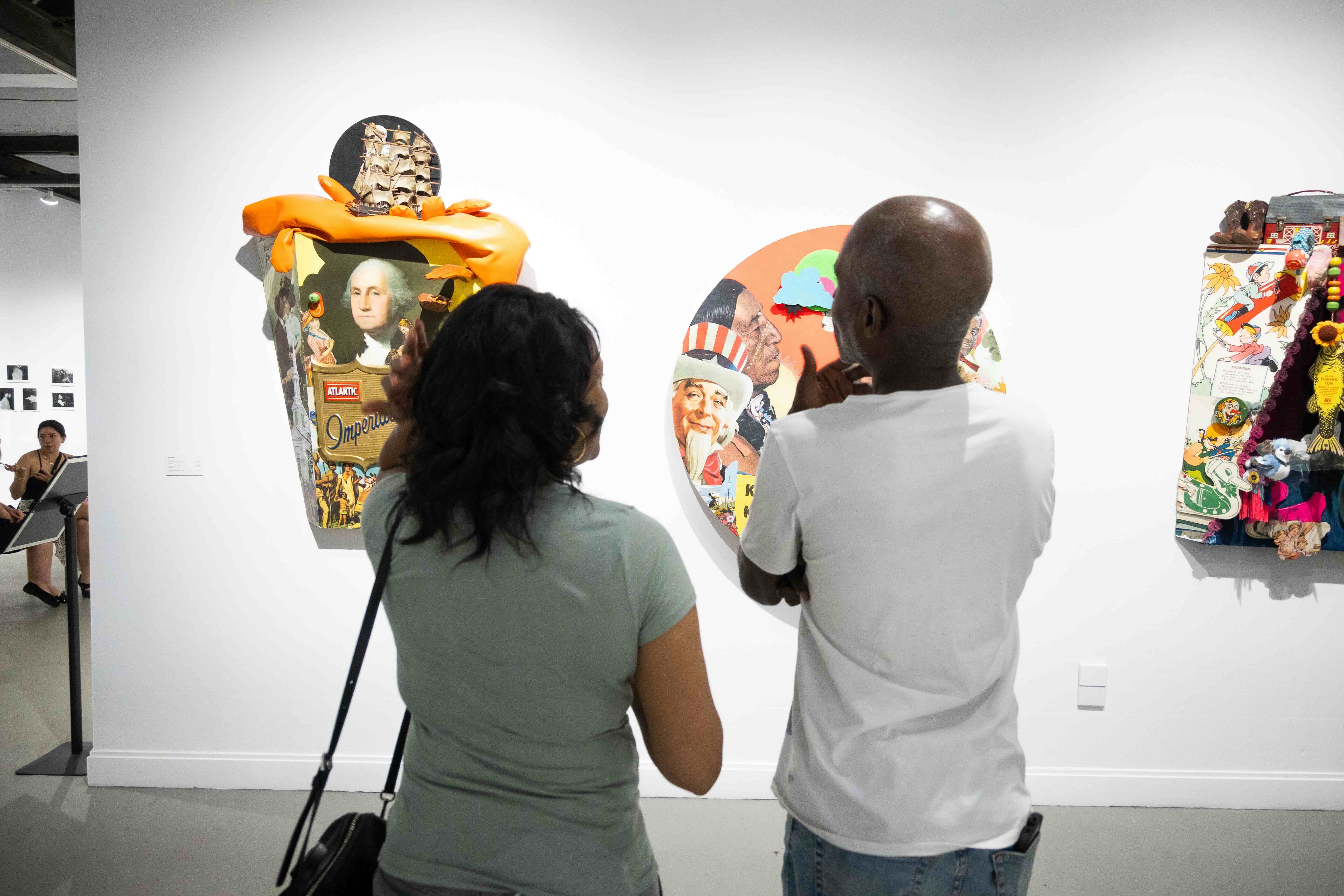
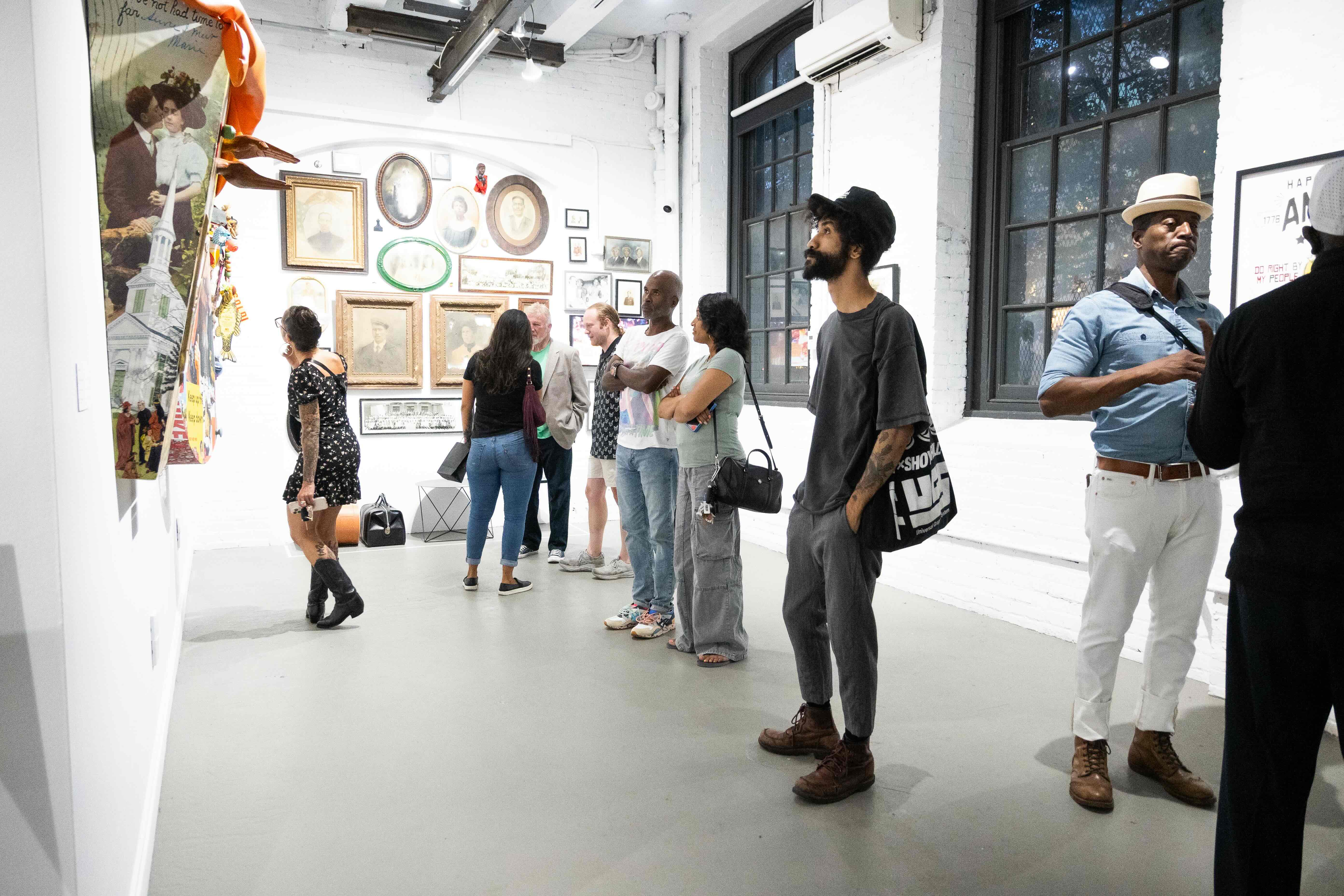
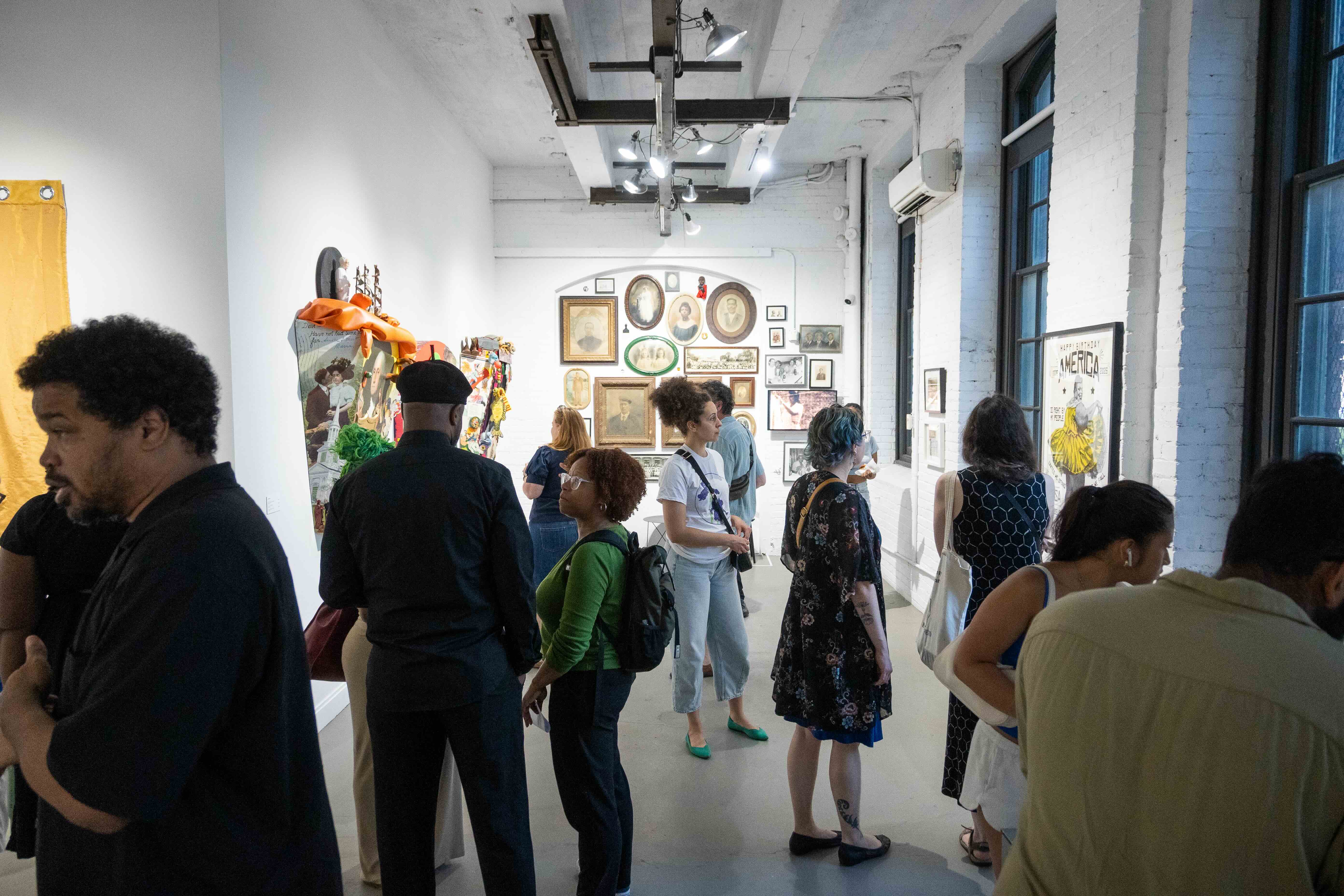
This multi-media exhibition features seven InLiquid Artist Members making work about the United States’ past, present, and future. Using photos, sculpture, painting, and other mediums, these artists bring various cultural phenomena to coexist on a single plane. Through this exhibition, we’re reminded that the American political landscape is intersectional and extends beyond our immediate line of sight, our present. As we celebrate the United States’ 250th Anniversary, we take this time to reflect on how we’ve evolved as a nation and who we might dream of becoming.
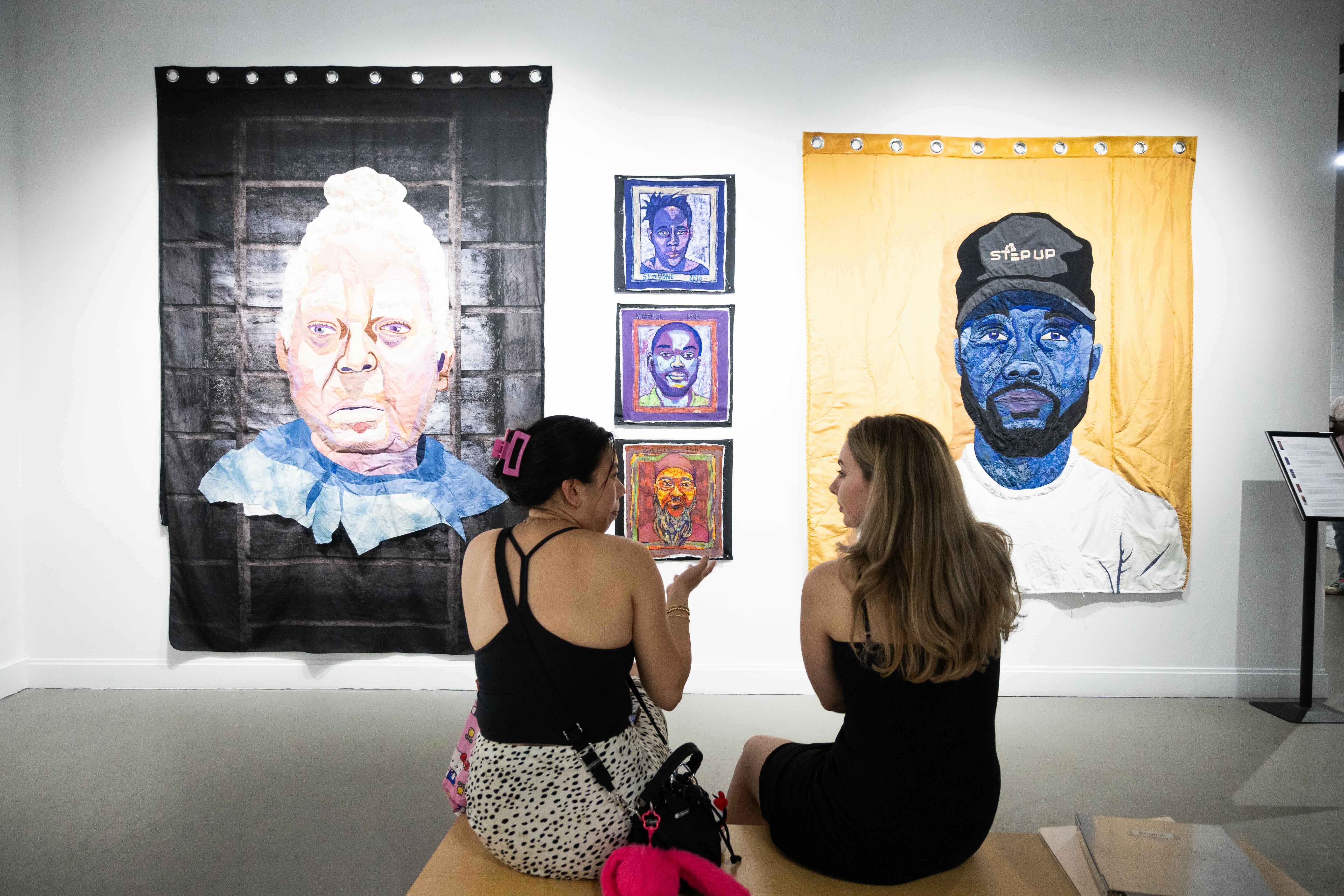
Each artist examines the American political landscape through a different lens. As viewers move through the gallery, they are placed in different states of time, both factual and imagined. Portraits throughout the gallery depict individuals whose future has been stolen, whose past has been forgotten, and whose history is remembered—three very different outcomes of existence. Portraiture is employed as a means of preserving an identity and reshaping the historical footprint of the subjects they honor.
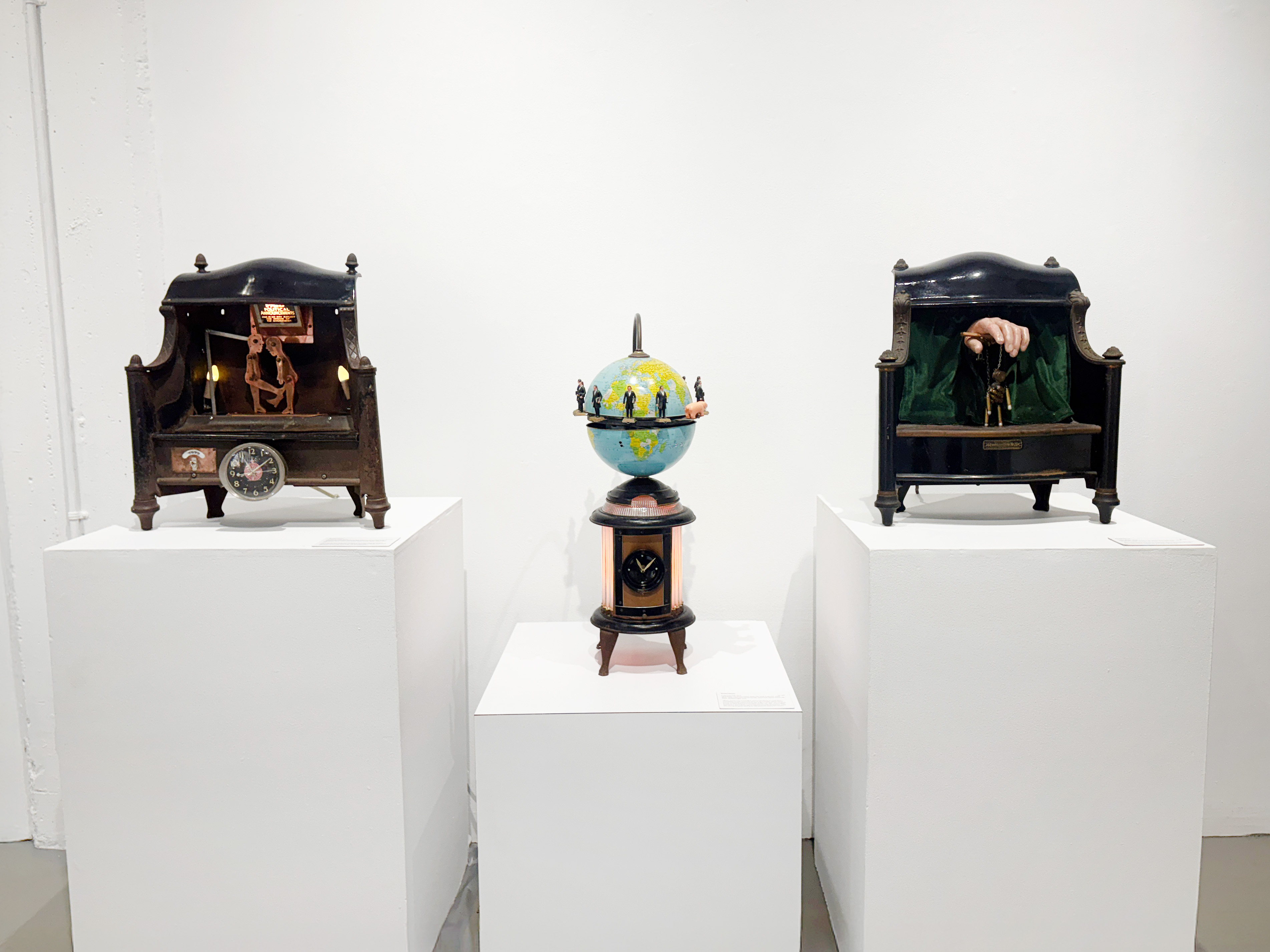
Sculptures throughout the space draw caricatures of political figures, creating tongue-in-cheek compositions critiquing the lawmakers and the state legislature in the US. Mockery has been a long-standing tool of opposition to identify the downfalls of political figures, typically seen in newspaper cartoons; these narratives shape the perceived effectiveness of government officials.
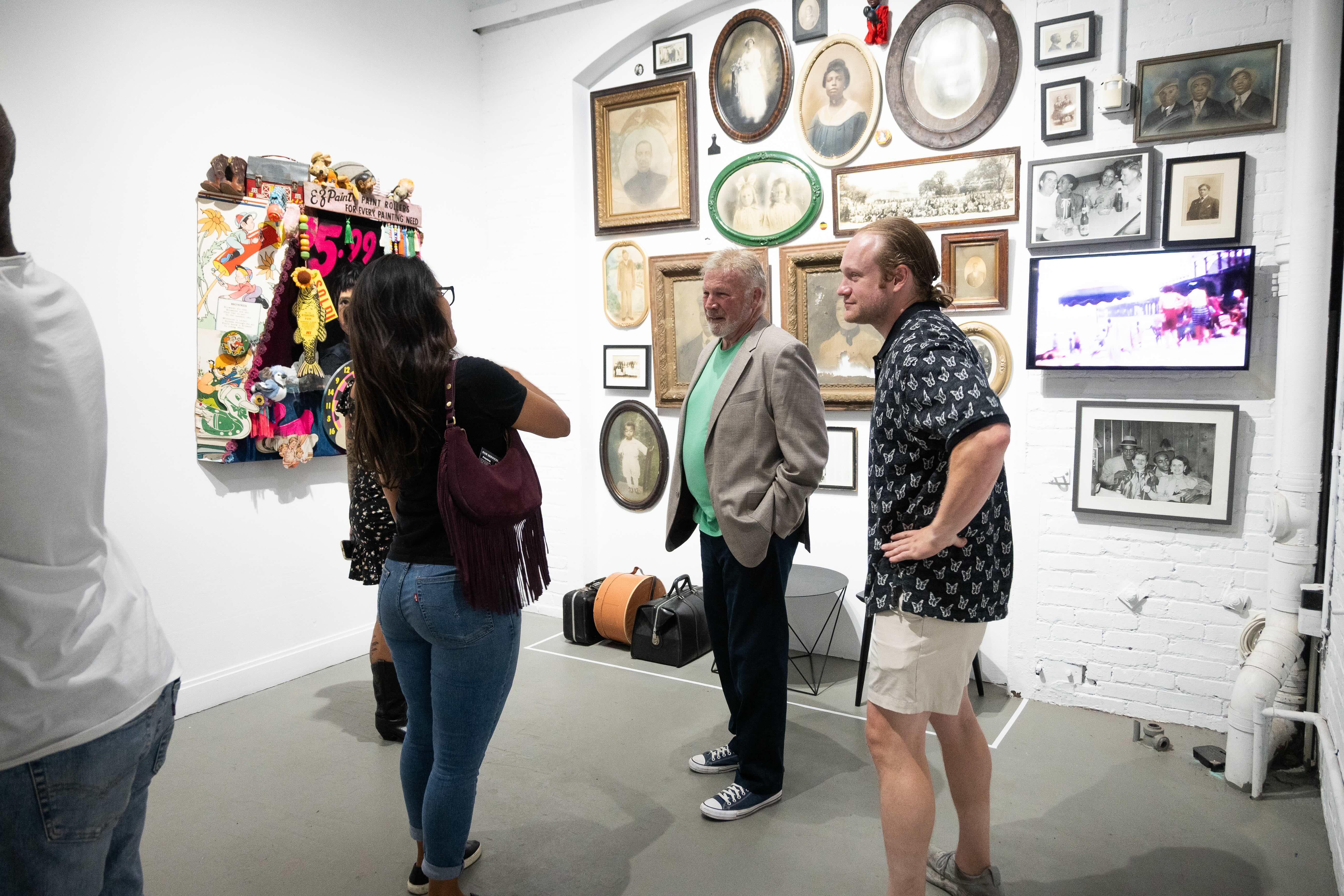
But what if the past looked different? Artifacts from alternate timelines, items that could not possibly exist in our reality, highlight the obvious: our actions will impact our future. As for the timeline we exist in, there are moments in history that simply can’t be overlooked. The collection of work in the back of the gallery puts viewers face-to-face with the not often-seen lives of Black Americans from the 1800s to the 1950s. As we imagine how our future might be shaped, we must remember what shaped our present.
.png)
Randall Cleaver
Bio
Randal Cleaver was born in Reading, PA, and received his BFA in sculpture from Pennsylvania State University in 1981. Since then, he has exhibited in solo, two-person, and group exhibitions throughout the northeast. Notably, a solo exhibition in 2011 at the National Watch and Clock Museum in Columbia, PA, and an installation from 2008 - 2009 at the Philadelphia International Airport. His work has been featured in various “Found Object” and “Creative Reuse” publications throughout the years. He currently lives and works in Takoma Park, Maryland.
Statement
Randall Cleaver’s work combines what has been discarded to create timekeeping artifacts. Their utility and motion involve the viewer in their complexity of forms, textures, relationships, and humor.
Creating with found objects started as an inexpensive way to obtain materials, but soon, the objects themselves became a source of inspiration. Cleaver tries to give his viewers the sense that the parts were manufactured to form the object, in order that the various parts transcend what they were.
The clocks, as a body of work, are a conglomerate of ideas Cleaver has had over the years: actual, as opposed to implied, motion; machine sounds emanating from the pieces; humor; functionality; the sense of history in timepieces; and the near obsession our society has for time.
The clocks also give an archetypal starting point with which to view his pieces. From there the viewers can work their way deeper into the works.
The lamps are similar to the clocks in that they, too, are viewer-friendly. Instead of the movement of clockworks to accent the piece, there is the glow of the bulb, not only accenting the piece, but changing the mood of the entire room when lit.
Cleaver’s working style is intuitive. He starts with a germ of an idea or a particular found object that will suggest a piece, but as it grows, different relationships will be discovered and the form of the work will respond to these discoveries.
.jpeg)
Billy Colbert
Bio
Billy Colbert received his BS in Graphic Design from Frostburg State University and his MFA in Painting from the University of Delaware, where he was a Presidential Fellow. He has been the recipient of various awards and honors, notably the “Best of Show” award in the Carroll Harriss Simms National Black Art Competition. His work has been featured in Solo Museum Exhibitions at The African American Museum, Dallas, TX, Delaware Contemporary, Wilmington, DE, and the Rosenberg Gallery at Hofstra University. Featured in numerous solo and group exhibitions throughout the United States, his work is also collected in private and public collections, including The National Gallery of Art, The World Bank, The African American Museum, Dallas, TX, and The Library of Congress. Colbert has curated and juried exhibitions, spoken at many cultural institutions, and been published in publications.
Statement
Is the reason we learned how to play musical chairs in Kindergarten because it is a game that we will be metaphorically playing for the rest of our lives? For centuries, we have been waiting for someone to stop the hysteria by just saying, “We can take turns sharing the available seating”…game over!
I am influenced by collecting cultural and historical ephemera. My work explores the complexities and compounded struggles of Black America’s splinters that are cultivated from holding on tight to the short end of the equality stick. In my art, time and place blur as re-appropriated images of popular culture fluctuate and overlap throughout the focal points in my creative compositions. I create episodic tales of Black culture using juxtaposition, humor and transposed imagery. It is my intention for the viewer to isolate the ridiculous blur that is created when the world moves so fast that we don’t have a chance to pay attention to the details and byproducts of our frivolous movements. My work aims to reduce the speed and capture the generational blur of oppression so that it can be seen at a rate that allows understanding and creates a vision for a new future.
.jpeg)
Carolyn Harper
Bio
Carolyn Harper was raised in Rochester, NY, and moved to Philadelphia, PA, in 1989 to attend the University of Pennsylvania, where she received her MFA. She has worked in the arts both as an administrator and educator. She has been involved in volunteer work for many years, creating panels for the AIDS NAMES Memorial Quilt Project, teaching art classes in homeless centers, advocating for homeless and incarcerated populations, and more. She currently teaches classes and workshops on textile art, portraiture, and social justice art. Her work has been exhibited both in solo and group exhibitions throughout the United States.
Statement
My work consists of hand-sewn large-format quilts and hand-embroidered batiks. They are portraits of incarcerated and formerly incarcerated individuals. These are almost all people I know or have known, most residing within a Pennsylvania State Correctional Facility. Many have been imprisoned for decades, many for a crime they did not commit or took no active part in. The portraits are my attempt to show the humanity of those whom the world has forgotten.
Most of the people whose portraits I have created are serving a life without parole sentence, or what is known as Death by Incarceration (DBI), for second-degree felony murder. This is when a death occurs during the commission of a felony, but the death was not premeditated or intentional. Many of those serving a DBI sentence did not commit the murder, and none had any idea or intention that a murder would happen. Pennsylvania is one of only two states (the other being Louisiana) that up until last month, had a mandatory life without parole sentence for second degree murder. This sentence was challenged as unconstitutional in the PA State Supreme Court: Commonwealth v. Derek Lee; the Court decided unanimously in favor of Lee. They have asked the PA Legislature to codify this, however, so impacted prisoners are essentially in limbo.
The only way that an individual with a DBI sentence can get out of prison is through a process called commutation. This is a long, arduous and painful process. The PA Board of Pardons, which determines who gets commutation, has a five year backlog. When an individual finally gets to present their case for commutation, they are asked to relitigate their crime, and are called on to remember every detail. If an individual asserts innocence, as many do, they are almost automatically denied commutation. (Experts estimate that across the U.S., 4-6% of the incarcerated population is innocent. A December 2024 study place PA in the top 10 states with the most wrongful convictions per capita.)
Each individual I have portrayed has their own unique and compelling story. Many have a background of abuse and trauma. Some committed the crime in question and are clear about that. Many assert their innocence. I have never, in getting to know those in prison, asked specific questions - or any question- about the crime which placed them in prison. I have left it up to each of them to share what they want with me. In the end, I have come to see that guilt or innocence, while important, is not the critical thing here. Rather - it is the idea of redemption, of rehabilitation. None of the people in prison are the same people today that they were when the crime of which they were accused was committed. This, to me, is the real story- the story of transformation.
.jpeg)
Candace Karch
Bio
Candace Karch is a Philadelphia-based photographer, documenting the world around her for over 30 years. Shooting on film, her work focuses on documenting identity and one's place in the world. She graduated from the University of the Arts in Philadelphia, PA, in 1989, and since then has published various photo books, each encompassing one of her many bodies of work. Namely, a series of work photographing Ms. Ulmer, a 97-year-old artist and close friend of Candace.
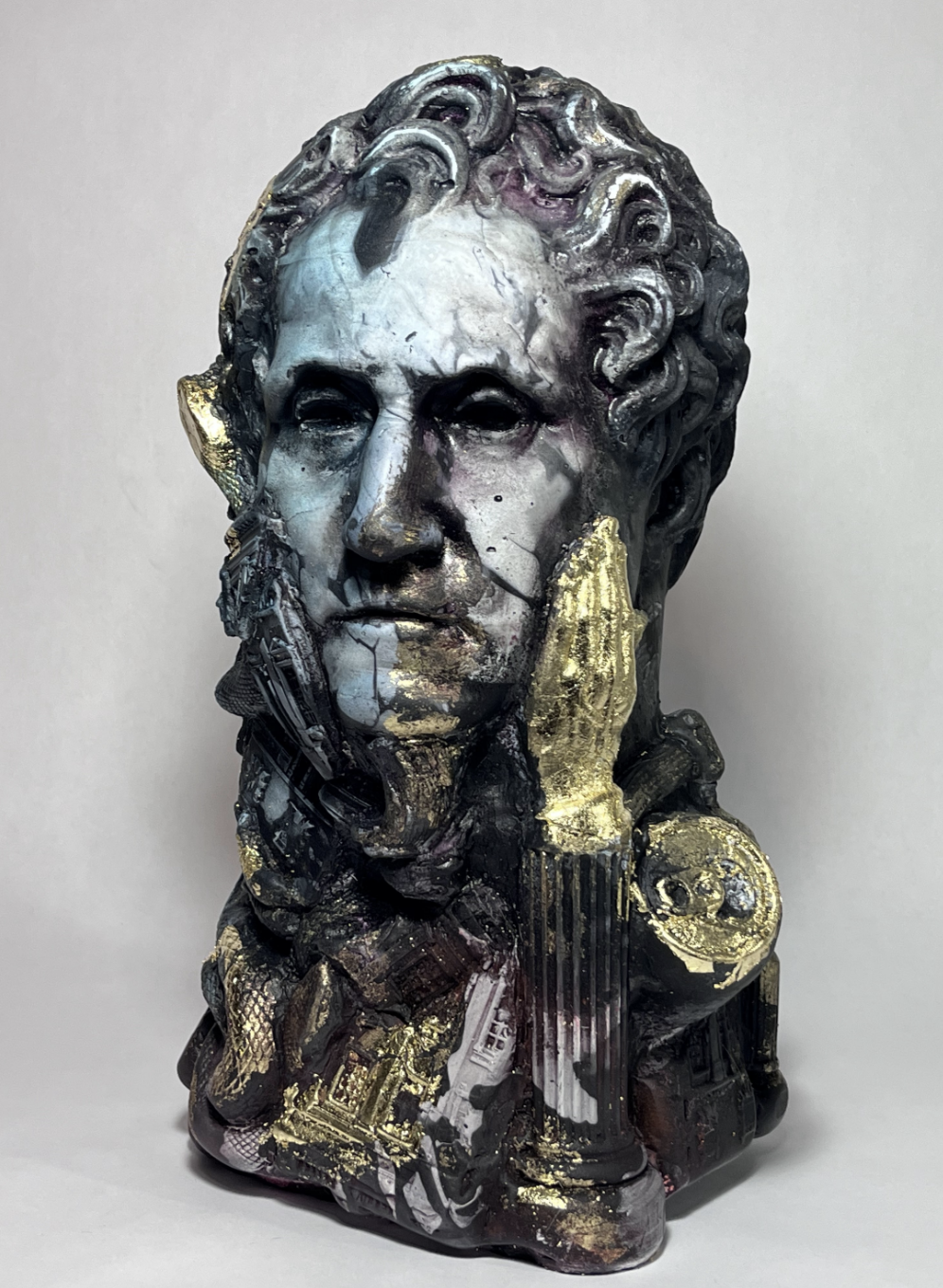
James Labold
Bio
James Labold is a glass sculptor currently living and working in Philadelphia, PA. He received his BFA from Tyler School of Art in 2004 and after briefly relocating to Arizona, James called Philadelphia home for the better part of a decade. In 2015 he received his MFA in Glass at Ball State University in Muncie, Indiana. James’ work has been included in The Corning Museum of Glass’s New Glass Review in 2010, 2015, and 2018. He has been Artist in Residence at Salem State University's Rosenberg Residency and Starworks Center for Creative Enterprises in Star, NC. He was selected for the Glass Art Society's 2016 Saxe Emerging Artist Award and lectured at their 2016 conference in Corning, NY. He has led workshops at universities and public glass studios throughout the U.S. as well as the International Summer Academy Bild-Werk Frauenau, Germany.
Statement
My work draws on contemporary and historical imagery to create imagined narratives reflecting on the bridges between past and present culture. I’m inspired by the high culture of classical sculpture as much as the low culture of dollar store holiday decorations. I see both as important symbolic representations of the contemporary world.
I often use Americana as both inspiration and raw material in the form of found objects. I transform these objects through direct manipulation or by molding them, then creating wax assemblages which are ultimately formed in glass. By manipulating and distorting my materials to elevate kitsch and undermine the Western canon, I explore the ways in which “History” can change over time as modern perspectives reinterpret events of the past.
Over the last several years I have been researching 3D printing and modeling and incorporating digital technologies into my creative practice. By utilizing open source and copyright-free 3D scans of classical sculptures and historic figures, I embrace the accessibility of new technologies while exploring their limitations. While these digital scans of sculptures can democratize access to works of art around the world; the digital simulations of real-world objects dramatically change the way we interact with the analog world.
I am interested in how icons and imagery can reinforce and create new cultural narratives. In an historical moment when societies are reconsidering the relevance of monuments and reckoning with the legacy of colonialism, advertising and media have infiltrated every corner of our lives, and we are also entering a new world of AI-generated imagery: notions of what is “real” and “true” are shifting before our eyes. My work aspires to explore the space between historic reality and contemporary truth.
.png)
Carole Loeffler
Bio
Carole Loeffler is a Philadelphia-based artist, mother, and educator whose work transforms vintage textiles into evocative vessels of memory and lineage. Drawing on the imagined lives and labors of unnamed foremothers, she weaves layered narratives that resonate with her own lived experience. Loeffler earned her BFA from the Mason Gross School of the Arts at Rutgers University and her MFA from the University of South Florida. Her work has been featured in more than 100 solo and group exhibitions throughout the United States and abroad.
Statement
I’m drawn to old objects and textiles, especially those that carry traces of the lives they’ve passed through. An essential part of my process is searching antique stores, thrift shops, estate sales, and online listings for pieces that begin to reveal their histories. I’m particularly interested in signs of use—writing on the back of a photograph, the wear of a quilt, or the careful stitches in handmade clothing.
Through my work, I seek to uncover, amplify, and reimagine the stories embedded in these materials, bearing witness to and learning from the matriarchs who came before us. I’m interested in honoring both known and anonymous women throughout history, foregrounding the quiet labor, resilience, and wisdom that have shaped our world through acts of care and perseverance.
.jpg)
Benjamin B. Olshin
Bio
Benjamin B. Olshin was born in the United States, but he spent much of his life abroad. Early university travels include Sri Lanka, Italy, and Rome. After graduating from Williams College, he traveled to England and Portugal on a Filbright grant, doing research and attending AR.CO (Centro de Arte e Comunicaçâo Visual), taking courses in abstract sculpture and design, focusing on the history of cartography and exploration. Olshin completed his M.A. and Ph.D. in the Institute for the History and Philosophy of Science and Technology (I.H.P.S.T.), at the University of Toronto. His career extended into Tokyo, Brazil, Turkey, West Africa, and more. He was a recipient of an NEH grant, studying history, indigenous art, and craft traditions in Ghana. He won a second NEH grant, and studied Chinese philosophy at the East-West Center and the University of Hawaii. Olshin was an Associate Professor of Fine Arts and Design at Mind Chuan University in Taipei, Taiwan. Simultaneously, he worked as a designer for two glass art companies.
Upon his return to the U.S., he taught courses in model-making, painting and drawing, Renaissance design and engineering, Asian art history, and a number of other areas at various schools in San Francisco and Philadelphia. Olshin went on to serve as a Professor of Philosophy, History and Philosophy of Science and Technology, and Industrial Design at the University of the Arts in Philadelphia, and was an instructor in the architectural design and product design programmes at MICA (Maryland Institute College of Art). Olshin's academic background in the history and philosophy of science has inspired his synthesis of his scholarly and artistic interests: his 2017 book, Deciphering Reality: Simulations, Tests, and Designs, examines how both scientists and artists "render" reality.
Statement
My work follows a number of different paths, drawing from my interests in travel, investigating other cultures, history, philosophy, and science. I worked for many years in drawing and painting, and then small, constructed spaces. Later, I went on to create works in digital media, as well. These three strands have been my main areas of practice now for several years. Currently, my more traditional drawing and painting works focus on the philosophy of landscape (in which I have developed and taught a graduate seminar), and the rending of particular places in time and space. This led to my creation of miniatures: small, "captive" works or "canned art" — pieces that experiment with the idea of limitations. In the third area of my artistic practice, I engage in digital work that looks at the ontology of objects from "alternate worlds", where history has played out differently.


