Author and art collector K.E. Karl reviews Freedom Dreams, a video installation celebrating the achievements of five renown Black American Artists at the Barnes.
Freedom Dreams
Roberts Gallery, The Barnes Foundation
Until August 9, 2026
Philadelphia
The sometimes soothing, sometimes enraging—but always engaging—exhibit, Freedom Dreams, features five film/video/installations by Garrett Bradley, David Hartt, Tourmaline, Ja’Tovia Gary, and Arthur Jafa. To mark the 250th anniversary of the United States, The Barnes Foundation gives viewers a chance to reflect not just on the achievements of these renowned Black American artists, but on “how Americans of color have shaped identities and created spaces of resistance, joy, and resilience in the face of systemic oppression.” The exhibit, co-curated by Maori Karmael Holmes, Chief Executive and Artistic Officer of BlackStar Projects, and James Claiborne, Fleischner Family Vice President for Engagement at the Barnes, is thought-provoking and filled with fabulous film footage.

Garrett Bradley’s America (2019, 23:55 minutes) is the multi-channel version of her film presented on four flowing flags set at right angles. This black-and-white film was featured in her first solo touring exhibit, Garrett Bradley: American Rhapsody and has been shown widely in museums and occasionally movie venues such as the Sundance Festival (2019). In this installation, the banners move in a gentle breeze as the background soundtrack, music overlayed with the white noise of crowds, reverberates through the room. There are twelve segments beginning with footage from the all-Black cast silent film Lime Kiln Club Field Day (1913). The remaining film pieces depict everyday life of metal workers, Boy Scouts, mounted soldiers, and other scenes of African-Americans. One gripping scene captures church women wearing hats and looking down, presumably into a casket. Filmed from the viewpoint of the deceased, it is moving and mesmerizing. Another section juxtaposes a twirling, dancing couple, shot from slightly below, with swirling disco balls on the other screen. Captivating! The reflections on the floor of the video aesthetically enhance the installation.
Continuing counterclockwise from the first exhibit to the left, David Hartt’s On Exactitude in Science (Watts) (2021, 15:47 minutes) is a color slideshow and video on steroids. After the Bradley black-and-white film, the images here, displayed on a screen of beads (each a pixel) lit up on a five-by-seven-foot board, hit you in the face. Bam! Inspired by filmmaker Charles Burnett’s Killer of Sheep (1978) and titled after a Jorges Luis Borges short story, the hyper-realistic images overwhelm Burnett’s narration and the muted acoustic soundtrack. The shots are often mundane—a large leafy plant in a pot dwarfing the nearby door, a sink, a segment of an aging roof, an easy chair, the storefront of a long-closed business with its forlorn sign resting against the front wall, or Burnett himself. In one exhilarating segment, the camera passes slowly by an out-of-focus house, and many pixels become dots of flying light.
.jpeg)
Next is Tourmaline’s Pollinator (2022, 5:08 minutes), a video montage of archival footage of Marsha P. Johnson’s 1992 homecoming services and Tourmaline’s father, George Gossett. Tourmaline has achieved fame not only through her films—Salacia (2019) was acquired by the Museum of Modern Art for its permanent collection—but also for her long-time activism in supporting transgender rights, economic justice, and prison abolition. Connecting the segments of this film is a black-and-white movie of Tourmaline wearing a flower hat and a diaphanous white flowing gown as she walks through gardens and shrubbery. Her attire is an homage to Johnson, who favored floral adornments. Tourmaline creates a moving, loving tribute to Johnson, an important figure in the LGBTQ and transgender rights movements, noteworthy for her participation in the Stonewall riots.
Ja’Tovia Gary’s Quiet as It’s Kept (2023, 26:14 minutes) begins with a Dick and Jane story and ends with a joyful, hopeful modern dance. Those of a certain age will remember the Dick and Jane books from their childhood, with such memorable lines as “Laugh, Mother, laugh.” By far the better of the film’s bookends is the dance segment performed by Bianca Melidor in a white dress. To me, the D&J book was an ironic reference to the dominance of white culture in the American educational system. Whereas the dance represented a beautiful portrayal of the contributions of African Americans to US art and culture. The film includes archival footage of Toni Morrison explaining why she writes—because she loves to read and wanted to read something about her own people and their struggles in a white-dominated society; the result was her first book, The Bluest Eyes. Most of the film, however, is an interview with the amazingly articulate Morrison scholar, Dr. Kokahvah Zauditu-Salassie. The retired professor sits among her incredible collection of African art—Alfred Barnes would be jealous. She provides an interesting narrative on Blacks in America, their struggles and hopes.
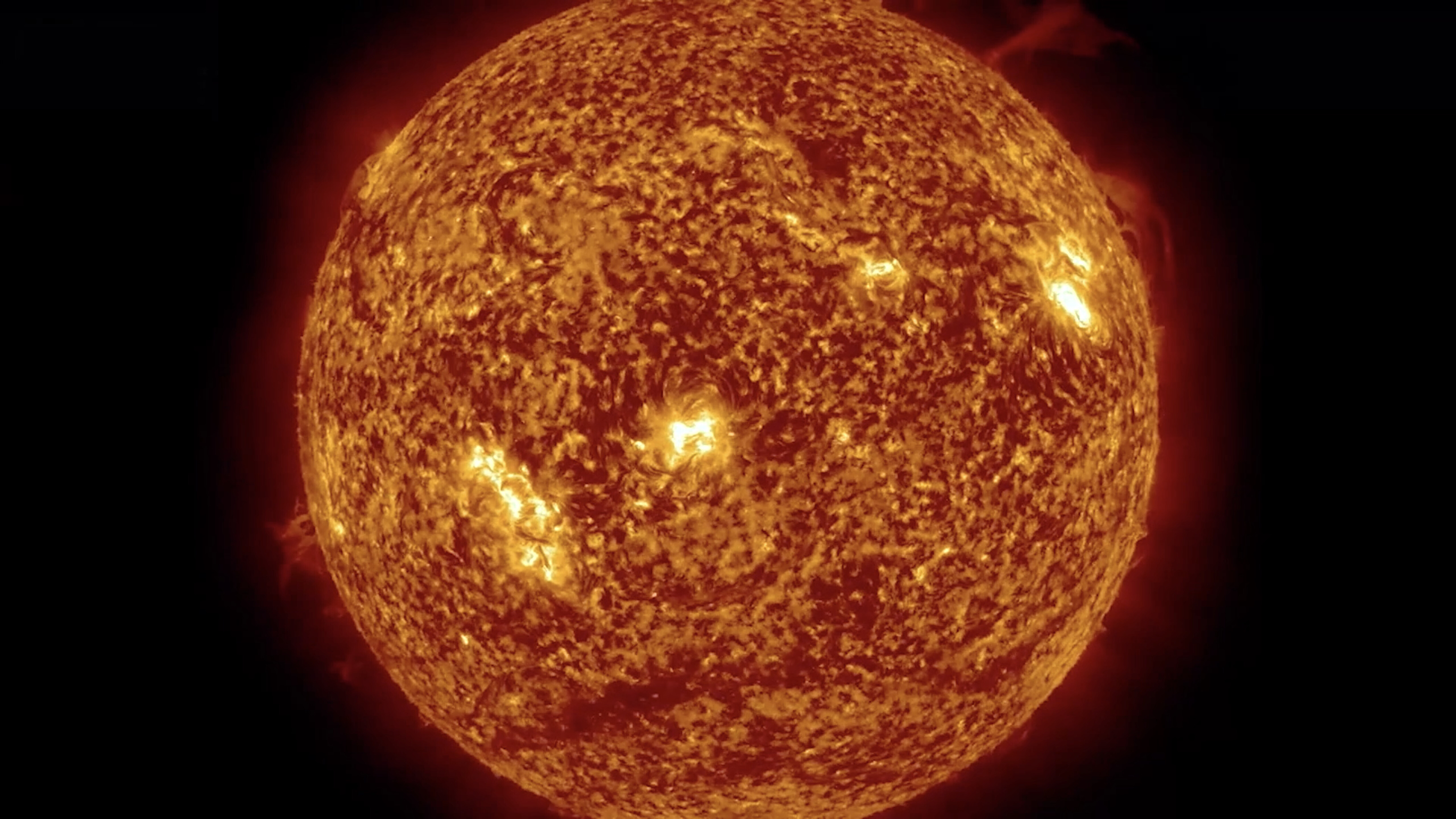
The last film in the exhibit is Arthur Jafa’s Love is the Message, the Message is Death (2016, 7:25 minutes). Jafa’s films have been exhibited in many prestigious museums, and he has worked with Spike Lee as a cinematographer. This is the most engaging and enraging installation in the exhibit. The movie juxtaposes film footage of Blacks widely loved by Americans—Little Richard, Michael Jackson, a slew of famous athletes, include Mohammed Ali—with police brutality against African Americans. Sometimes it just shows the burning sun and sun flares. The musical score is rich and varied. This is a short but emotionally powerful film that you won’t want to miss.
K. E. Karl's second novel, Chasing the Bangkok Dragon, received favorable reviews: “A well-crafted, diverting thriller.” —Kirkus Reviews. His debut novel, Our Man in Mbabane, is a fictionalized account of his years (1977-80) supporting the anti-apartheid movement in Africa. He published a collection of short stories, The Red Door and Other Stories, in 2023. His fiction has appeared in several literary journals. He has lived and worked in Oregon, London, Mbabane, Philadelphia, Maputo, Bangkok, New York, and Zurich. Karl lives in Philadelphia.
Want to stay in the know about Philly’s visual arts scene? We’re developing a semi-regular Art & Image Newsletter - featuring interviews, articles, and reviews straight to your inbox!