Art & Image Editor, Pete Sparber, interviews Ginger Rudolph. Ginger, co-curator of Mural Arts’ Fellowship for Black Artists, discusses how the fellowship has created community, visibility and opportunity for 100 Black artists.
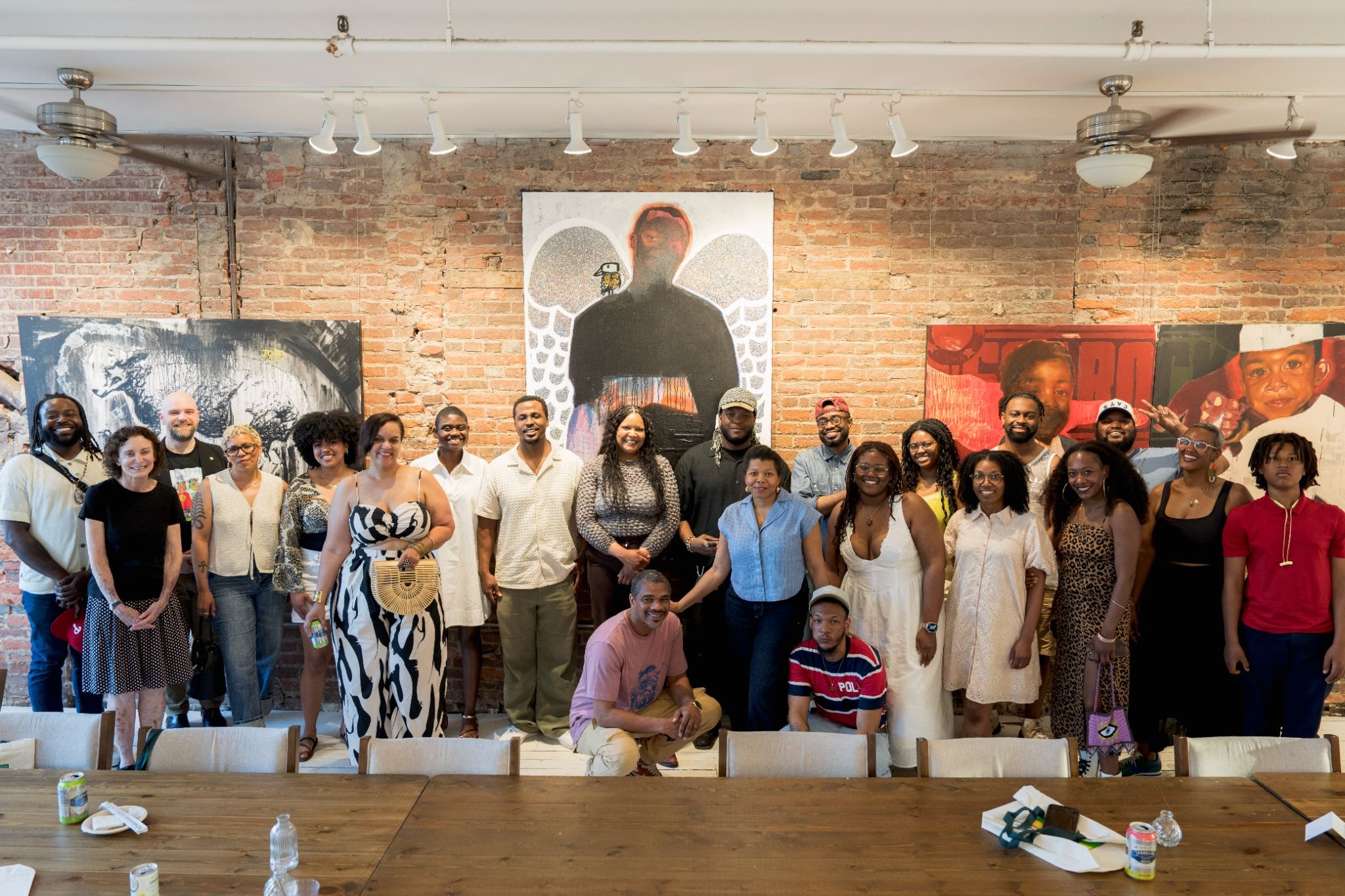
Cracking Open the Door: How Philadelphia’s Fellowship for Black Artists Builds a Creative Community
For seven years, Ginger Rudolph and Noah Smalls have been building something that began as a modest financial award and has evolved into a network helping Black artists find connections, opportunities, and one another.
Philadelphia has no shortage of artists. What it does have, according to curator Ginger Rudolph, is a problem connecting many of those artists to the institutions, people and opportunities that can allow them to build sustainable careers. “This is a large town, but it can be quite small,” Rudolph told me. “The artist community...very small. And within that, we tend to use the same artists for everything in the city.”
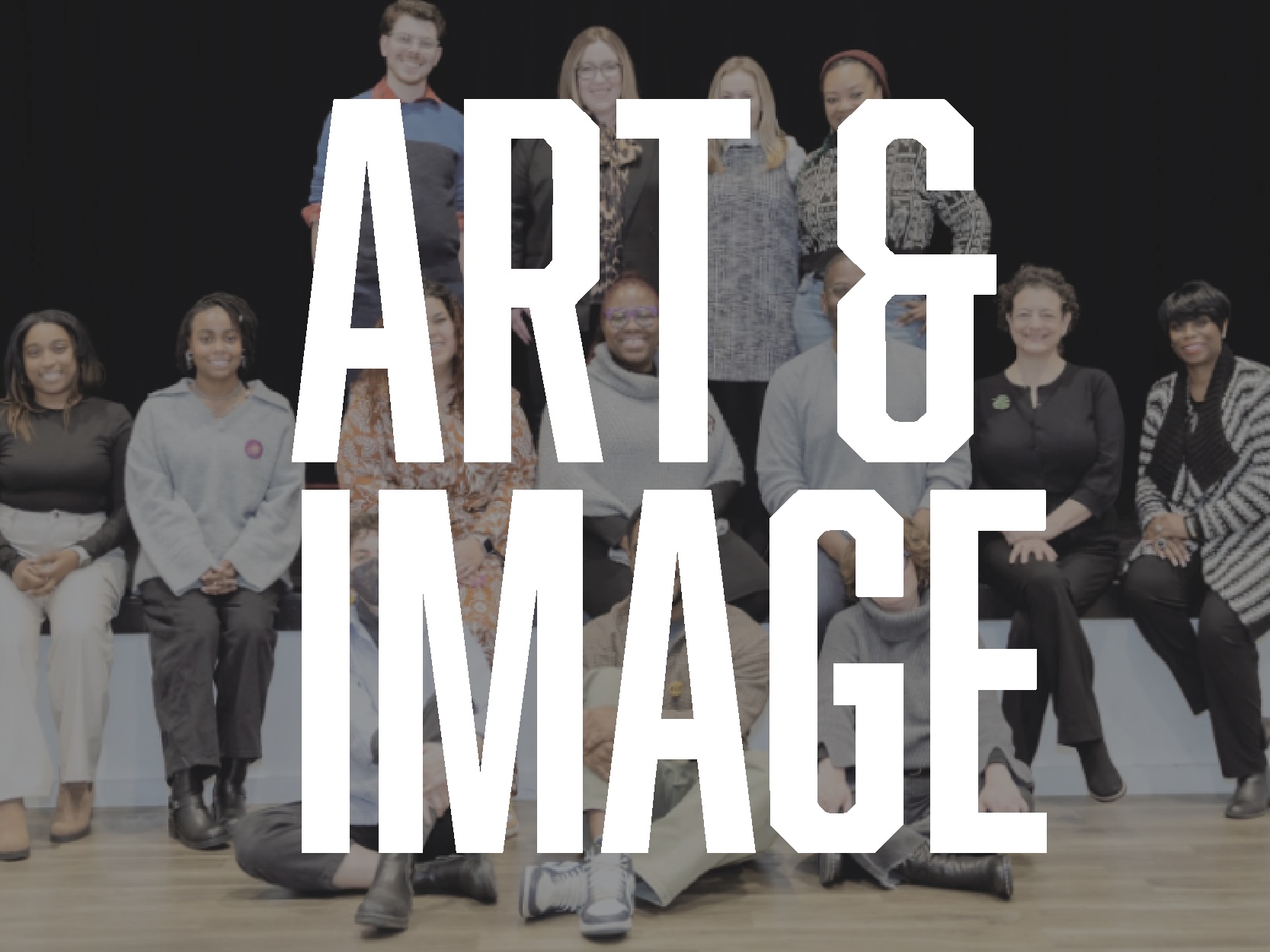
That observation goes a long way toward explaining what the Philadelphia Fellowship for Black Artists has become. Launched through Mural Arts Philadelphia in 2020, the Fellowship was created amid the pandemic and the national reckoning following the murder of George Floyd. Today, supported by TD Bank and led by Rudolph and fellow curator Noah Smalls, more than 100 Philadelphia artists have participated. But those numbers only begin to explain the program. The more interesting story may be how a relatively simple initiative to provide financial support to Black artists gradually became something much broader: an attempt to create pathways through Philadelphia’s complicated arts ecosystem.
From a stipend to a fellowship
Rudolph didn’t set out to create such a program. A Philadelphia native, curator, writer and arts advisor, she had spent years building relationships through HAHA Magazine and HAHAxParadigm, a public-art initiative associated with Paradigm Gallery. Her work increasingly placed her between artists, galleries, public-art organizations and communities. That network eventually brought her into the orbit of Mural Arts and its executive director, Jane Golden.
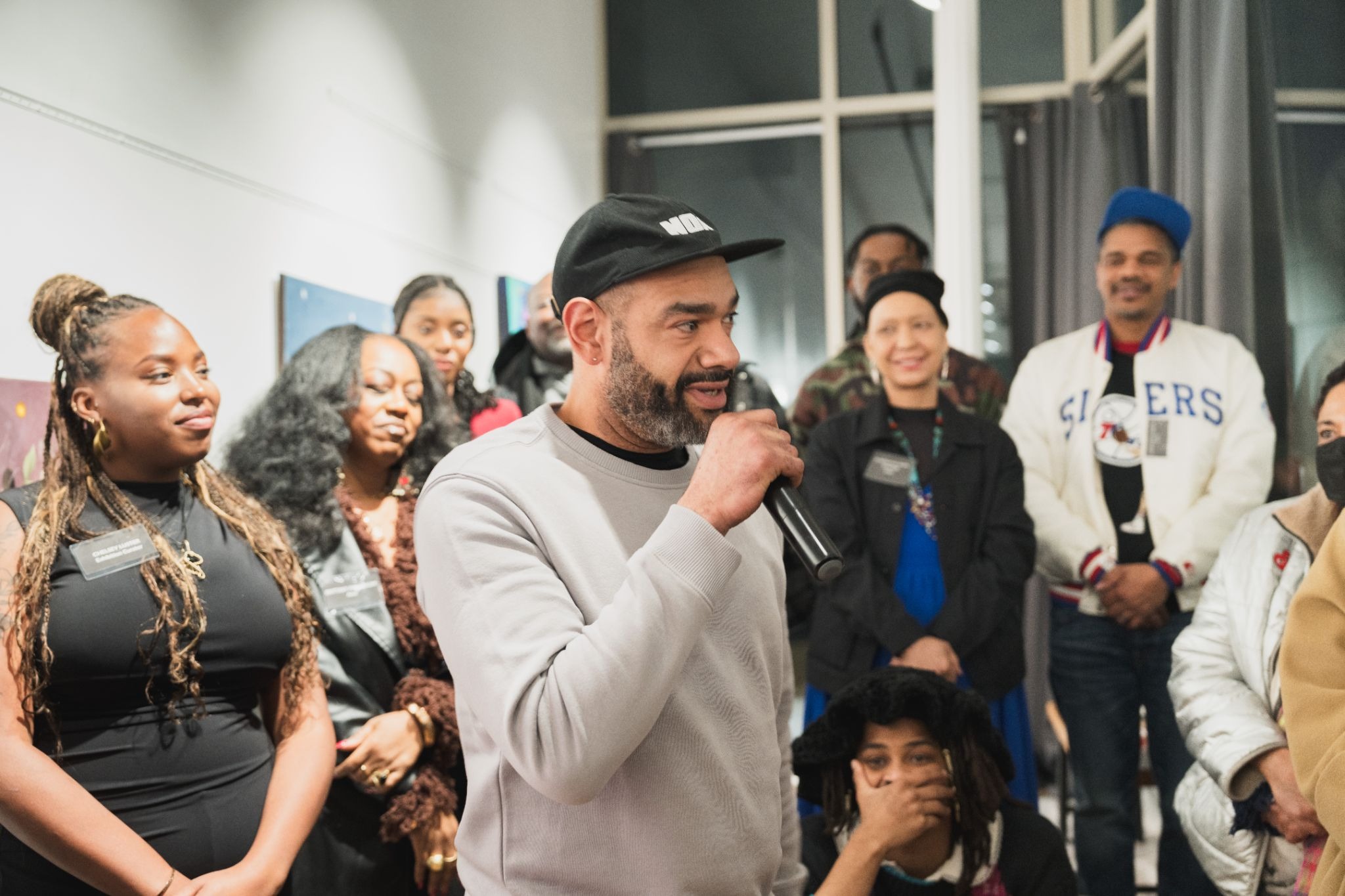
Following the upheavals of 2020, Golden approached Rudolph and Smalls about helping select artists for a new fellowship. The initial proposition was fairly straightforward: choose Black artists and give them unrestricted financial support. Rudolph remembers worrying that an initiative created at that particular moment could easily become performative…one more institutional response to a crisis that would disappear when public attention moved elsewhere. She and her colleagues therefore asked for something important: if they participated, the commitment couldn’t simply last a year. Mural Arts agreed to continue as long as funding could be raised.
At first, however, even Rudolph admits that the program didn’t have what she calls “fellowship bones.” Fellows received relatively small unrestricted awards, which artists used however they needed; to buy materials, certainly, but also for groceries, utility bills and the ordinary costs of living. Over time, Rudolph and Smalls began asking a different question: What did artists actually need?
The invisible machinery of an artistic career
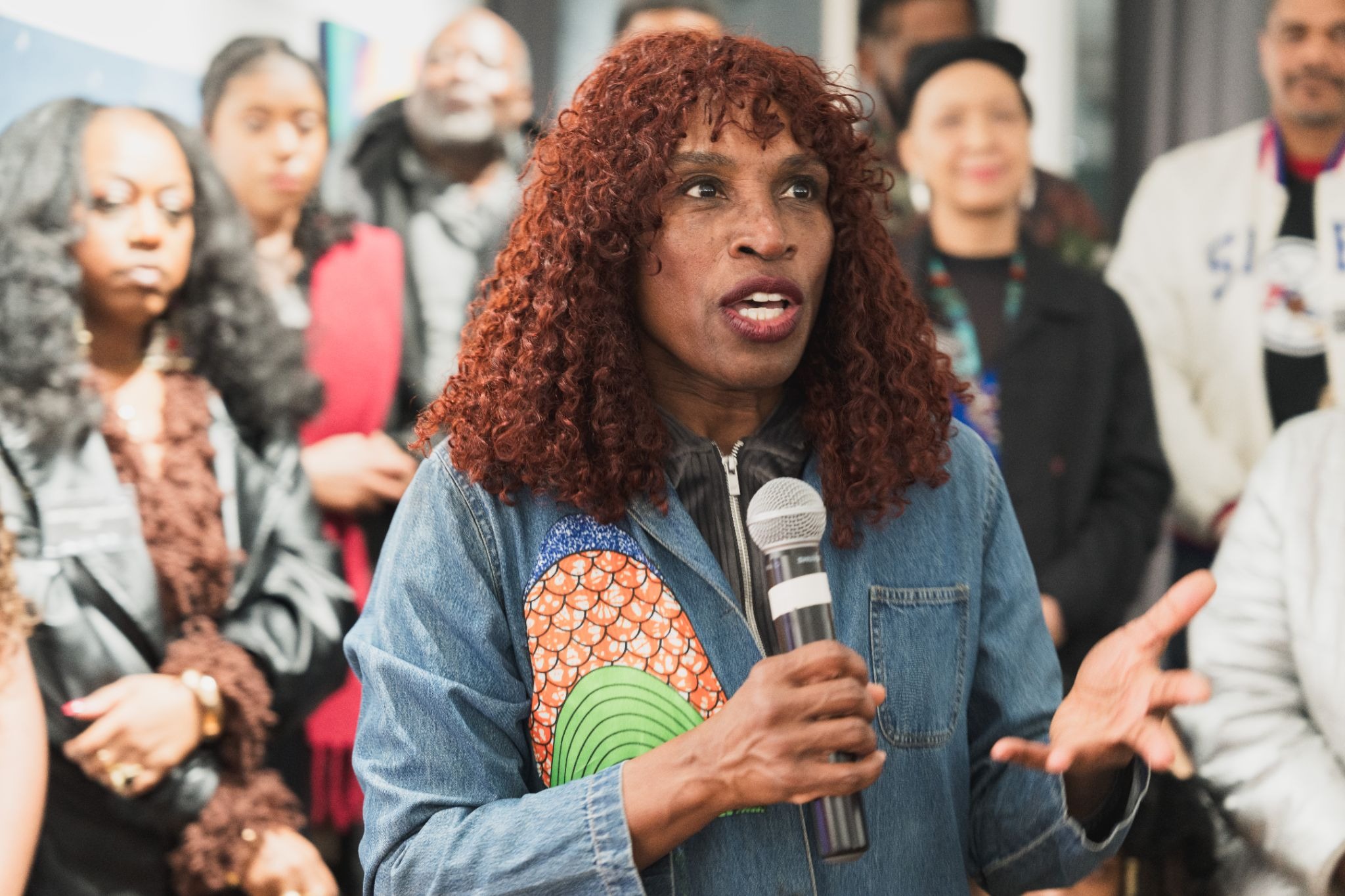
Making art is only part of making a life as an artist. There is another infrastructure surrounding the studio: knowing curators and other artists, discovering exhibition and commission opportunities, writing grants, negotiating contracts, understanding taxes, forming a business and simply knowing which doors exist, and who might open them.
For artists without established relationships in Philadelphia, Rudolph had repeatedly seen how difficult entering that world could be. “If you don’t know anybody in this city,” she told me, “it’s so difficult to get a job.” She knew the experience personally. Rudolph remembers years of watching peers gain access to opportunities while she struggled to find the route to the next level herself. Eventually, a colleague, Nicole McDonald, invited her to moderate an artist conversation for Mural Arts. It became one of those seemingly small introductions that alters a career. People approached Rudolph afterward and told her they hadn’t realized how much they needed to see a woman of color occupying that role; someone knowledgeable about contemporary art who was also bringing artists into the conversation whom established institutions weren’t necessarily acknowledging.
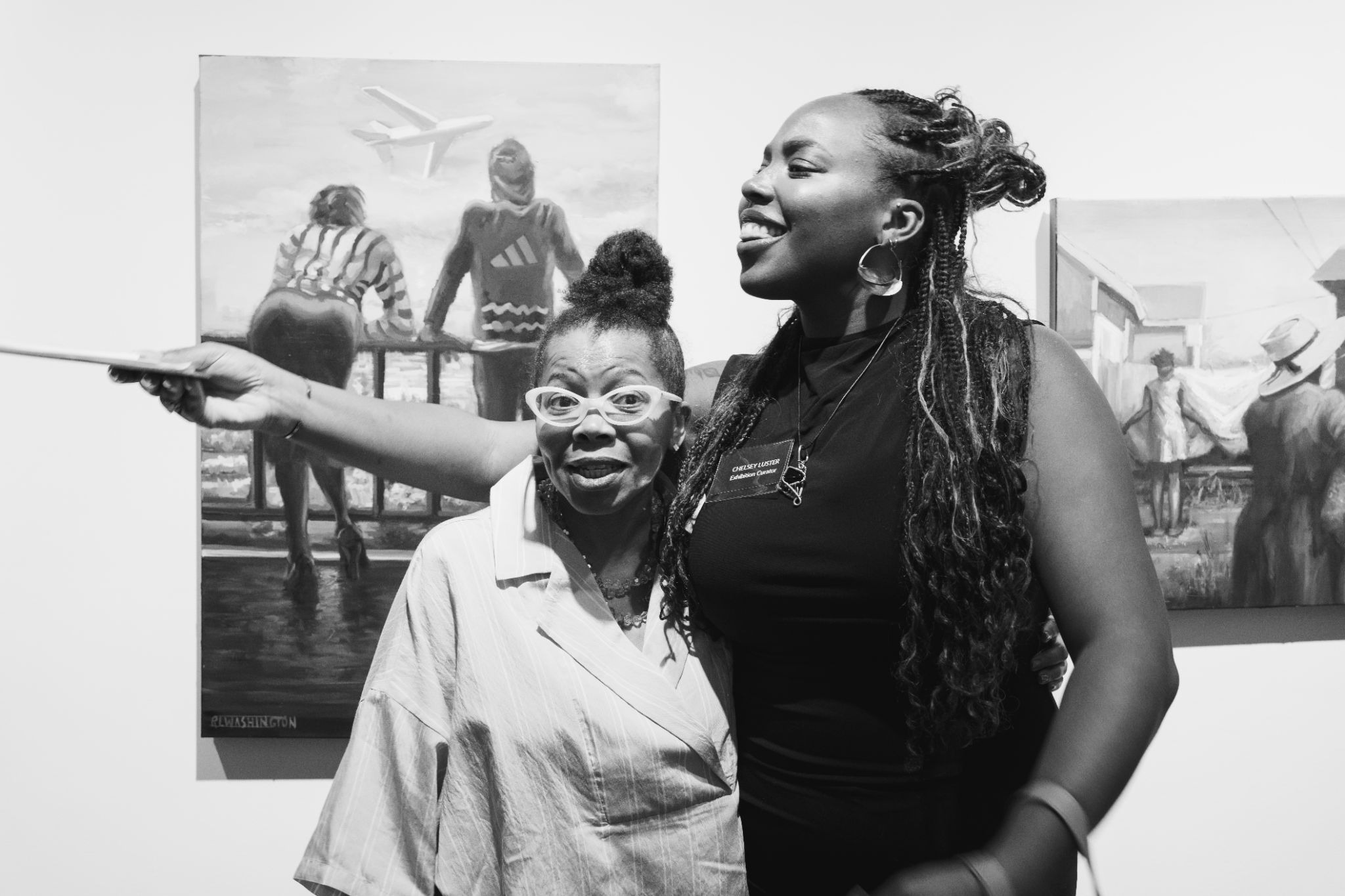
It helped crystallize something Rudolph would later bring to the Fellowship: talent doesn’t automatically produce access. So access became part of the program. “Networking was number one,” she said. “How do we get them in the room with people who can then give them the job?”
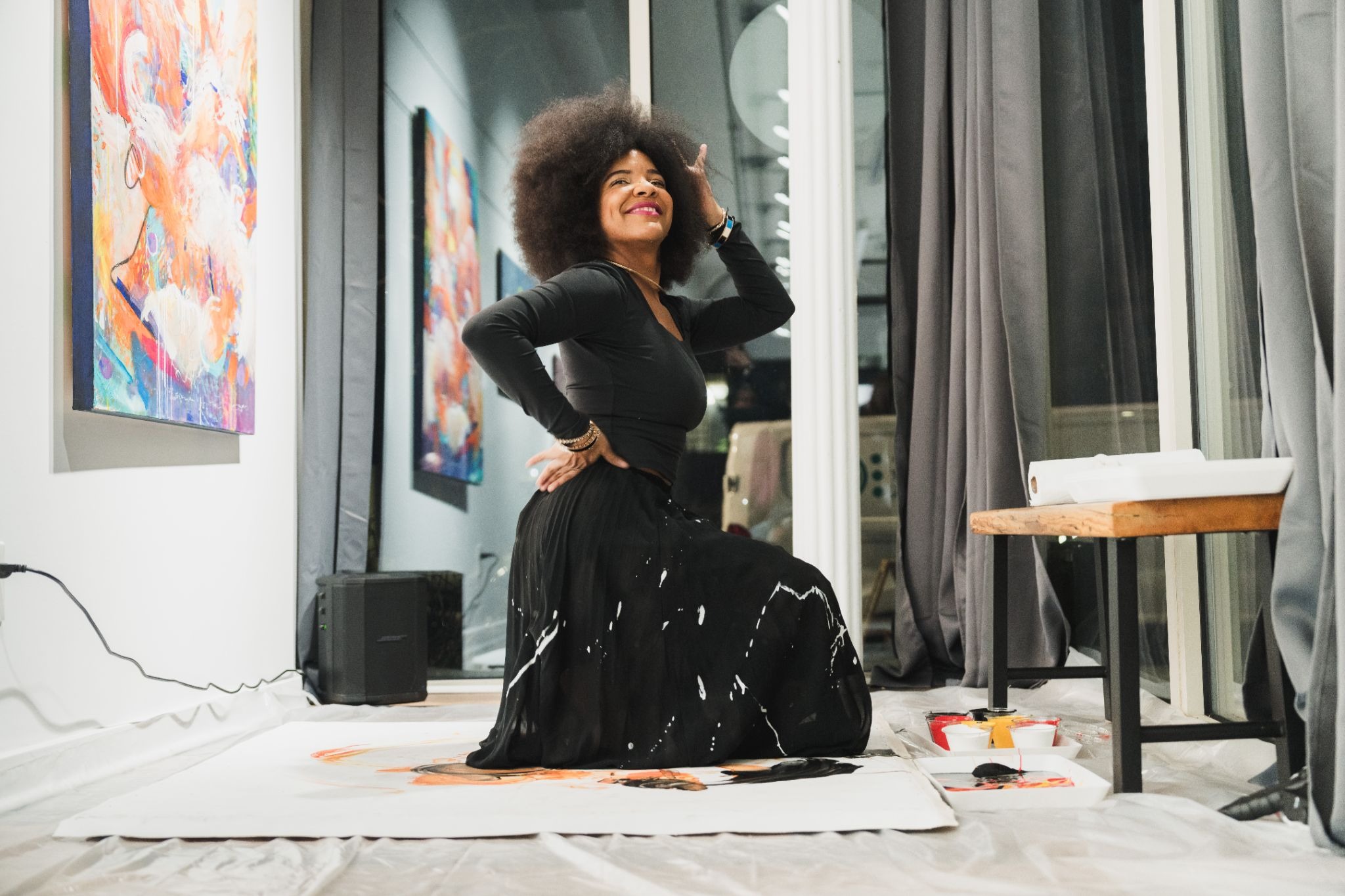
The stipend remains part of the Fellowship, but the program surrounding it has become far more extensive. Fellows visit cultural institutions, meet arts professionals, participate in workshops and receive individual guidance. Programming has addressed contracts, taxes, grant writing and the practical mechanics of sustaining an artistic practice. “There are so many things that we don’t get taught in art school,” Rudolph said. “It’s one thing to learn how to talk about art, but it’s another thing to have to live in it.”
Discovering the city…and each other
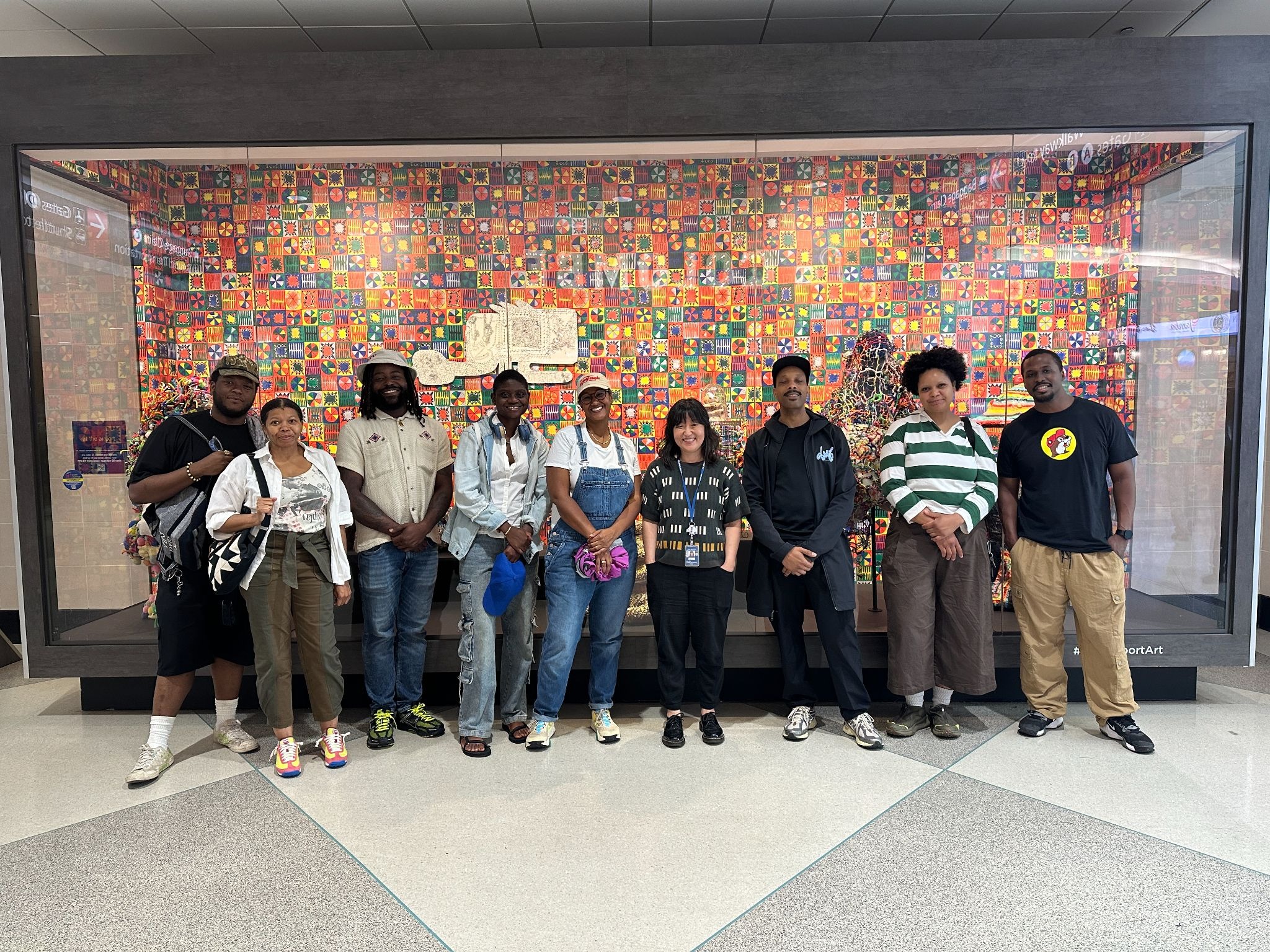
One of the Fellowship’s surprises was discovering how disconnected artists could be from the extraordinary cultural resources around them. Rudolph and Smalls initially assumed fellows would already know institutions such as the Barnes Foundation, the West Collection, or even the art program at Philadelphia International Airport. Often they didn’t. So visits around the city became another part of the Fellowship: a way of making Philadelphia’s sprawling cultural ecosystem more legible and helping artists understand where opportunities might exist.
But an even more basic gap emerged. Some Black artists in Philadelphia didn’t know where to find one another. For Rudolph, herself a curator, the realization was startling. She had sometimes brought artists of color into Philadelphia projects from elsewhere simply because she didn’t know how to locate enough of them locally. The Fellowship’s applicant pool suggested that scarcity wasn’t the problem: Rudolph says the program can receive 250 to 300 applications from artists of color for a single cohort. “We had barely hit the tip of the iceberg.”
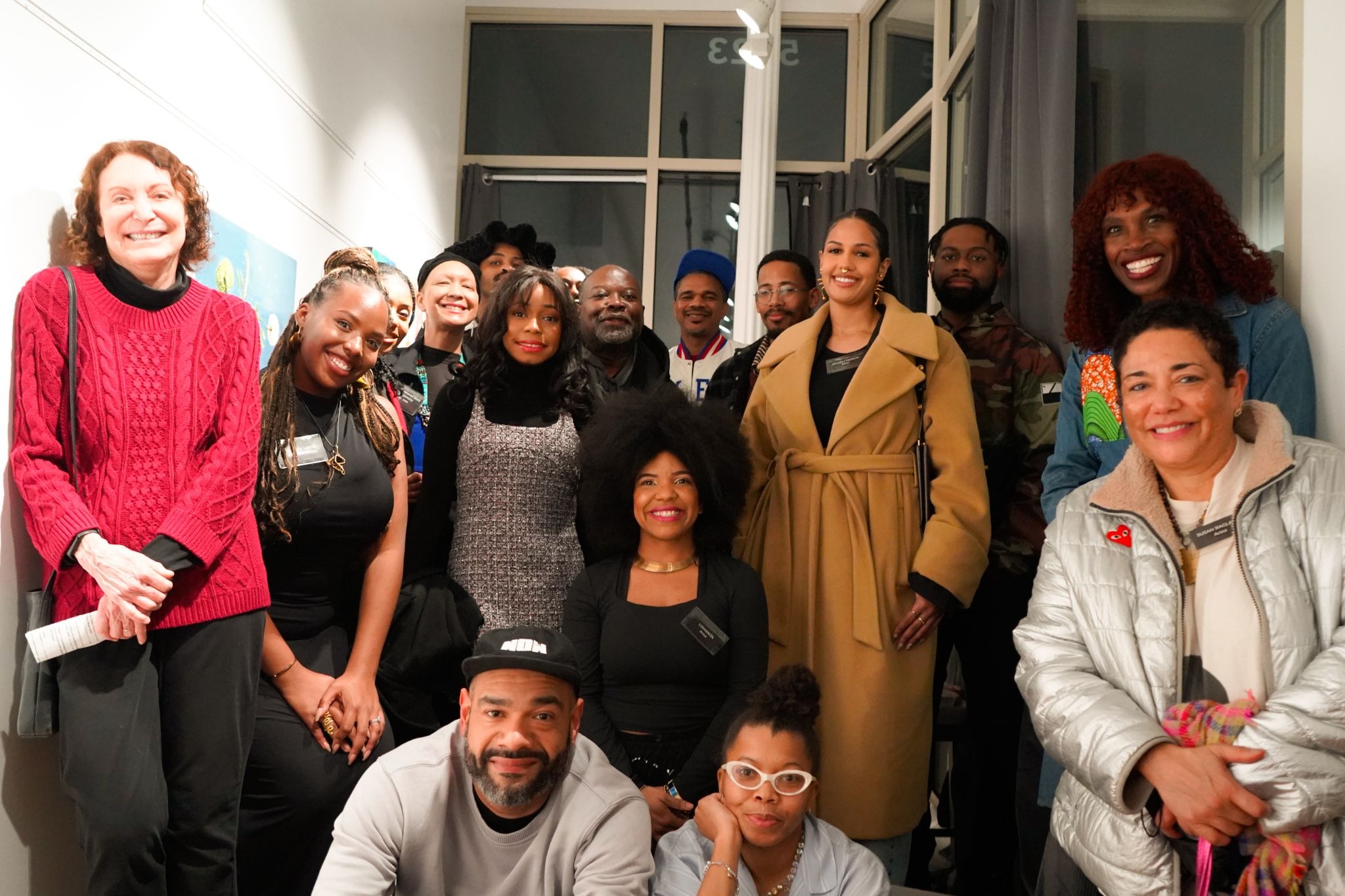
That realization shifted the Fellowship again. Bringing artists into a room together became as important as bringing them into rooms with institutions. Cohorts have become smaller over time, allowing more individualized attention, while alumni have begun creating their own connections. Some maintain an online group where they share exhibitions and welcome incoming fellows; former fellows return to meet new cohorts and sometimes become informal mentors.
Rudolph sees evidence of that network at exhibition openings, where she encounters groups of former fellows showing up for one another. At a recent exhibition at Woodmere Art Museum, people greeted her by telling her, “We’re so well represented here.” Rudolph initially thought they meant Black artists. “No,” they told her. “Fellows.” For Rudolph, that distinction mattered. “That’s what it’s supposed to do,” she said. “It’s a Fellowship in the truest sense of the word.”
Cracking open the ecosystem
Seven years into the experiment, perhaps the Fellowship’s most important lesson is that identifying talented artists is only the beginning. Artists also need relationships, practical knowledge, visibility and entry points into networks that naturally tend to reproduce themselves. Rudolph is candid about those networks. “We have gatekeepers,” she said. “That’s very true. We just do.”
Her response, however, isn’t simply to criticize Philadelphia’s institutions. It is to create another route into them. More than 100 artists now constitute a network that didn’t previously exist in quite this form: Fellows recognize one another, institutions increasingly recognize the Fellowship, and alumni collaborate and support one another.
Rudolph acknowledges that the program is still evolving. For years, she says, she has been something of a “Mama Bear” toward the Fellowship; protecting something fragile while it developed. Now she is beginning to consider what growth might require, including deeper connections among past cohorts and new opportunities involving residencies and studio space.
Perhaps that is the clearest way to understand what Rudolph and Smalls have spent seven years constructing. Philadelphia already had the artists. The Fellowship is helping them find the city—and helping the city find them.
For more information on Ginger and the Fellowship:
Ginger Rudolph website: https://www.gingerrudolph.com/
Ginger Rudolph Instagram: https://www.instagram.com/popgeekout/
Mural Arts Black Artists Fellowship Link:
Want to stay in the know about Philly’s visual arts scene? We’re developing a semi-regular Art & Image Newsletter - featuring interviews, articles, and reviews straight to your inbox!