Art & Image Editor, Pete Sparber interviews curator Daniel Tucker about the Eco-Social Realism initiative and expanding the definition of curatorial practice.
Through Eco-Social Realism, curator Daniel Tucker is exploring what happens when exhibitions move beyond presenting art and begin building communities around the questions artists are asking.
In the spring of 2023, about 30 people gathered at Making Worlds Books in West Philadelphia to hear artist A. Laurie Palmer discuss The Lichen Museum, her recently published book and long-running conceptual art project. The evening began conventionally enough: books on a table, an artist talking about her work, an audience listening.
Then Palmer handed everyone a small microscope.
The group walked outside onto 45th Street and began examining lichens growing on trees, curbs and sidewalks. The premise of Palmer’s project is both simple and radical: rather than removing specimens from the world, cataloguing them and placing them inside a museum, perhaps the museum is already everywhere. We simply need to learn how to see it. Palmer’s book, published by the University of Minnesota Press, similarly uses the unusual symbiotic structure of lichens to reconsider relationships among humans and the natural world.
For curator Daniel Tucker, the event captured something essential about the project he had just begun organizing: the Eco-Social Salon, Site-Seeing, and Screening Series (ESSSSSS) Art might frame an idea, but the real work could happen when people left their chairs, encountered the world differently and began talking with one another.
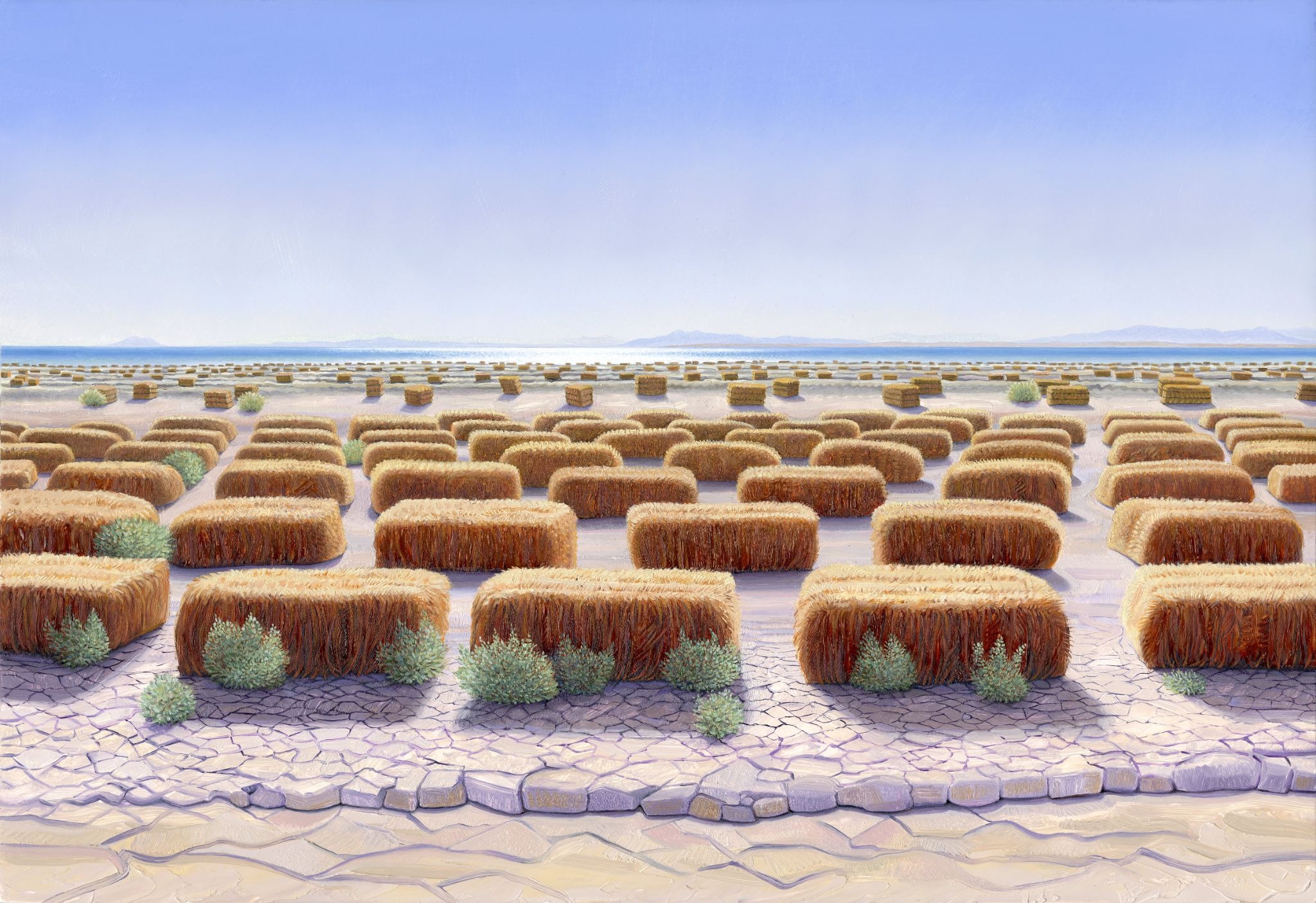
Three years and more than 20 programs later, that experiment is expanding into Eco-Social Realism, a multi-site exhibition opening this fall across the Philadelphia region. The project brings together artists whose practices engage ecological questions that are difficult to contain within a conventional gallery: watersheds, land use, food systems, infrastructure, extreme weather and the social systems intertwined with them. Exhibitions and programs will take place at TILT Institute, Big Ramp, Street Road Artists Space, Haverford College’s Cantor Fitzgerald Gallery and the Rowan University Museum of Contemporary Art. But Eco-Social Realism is also an unusually good window into Tucker’s evolving idea of what a curator can be.
Tucker traces an important part of that evolution to his years as a young art student in Chicago in the early 2000s, when he participated in social movements responding to corporate-centered globalization. He found himself at tables with farmers, labor organizers, students and activists trying to understand complex economic and political systems: How did they work? Who benefited? Where could things change?
In 2009, those interests took Tucker across the United States interviewing farmers engaged in sustainable agriculture and food justice. The resulting book, Farm Together Now, was published in 2010 with artist and designer Amy Franceschini and photographer Anne Hamersky. The project introduced readers to 20 agricultural groups experimenting with alternatives to industrialized farming.
For Tucker, those experiences sharpened a question that would follow him back into the art world: within enormous systems involving politics, economics, institutions, communities and social movements, what could he actually contribute?
Over time, he found his trade.
“My trade or approach became editing, interviewing, documenting other people’s practices,” Tucker told me, along with creating exhibitions that could bridge movement activity and cultural institutions. Sometimes that work brought visibility or resources. Just as importantly, the act of interviewing and documenting could give people immersed in demanding work an opportunity to stop, explain what they had done, and understand it themselves.
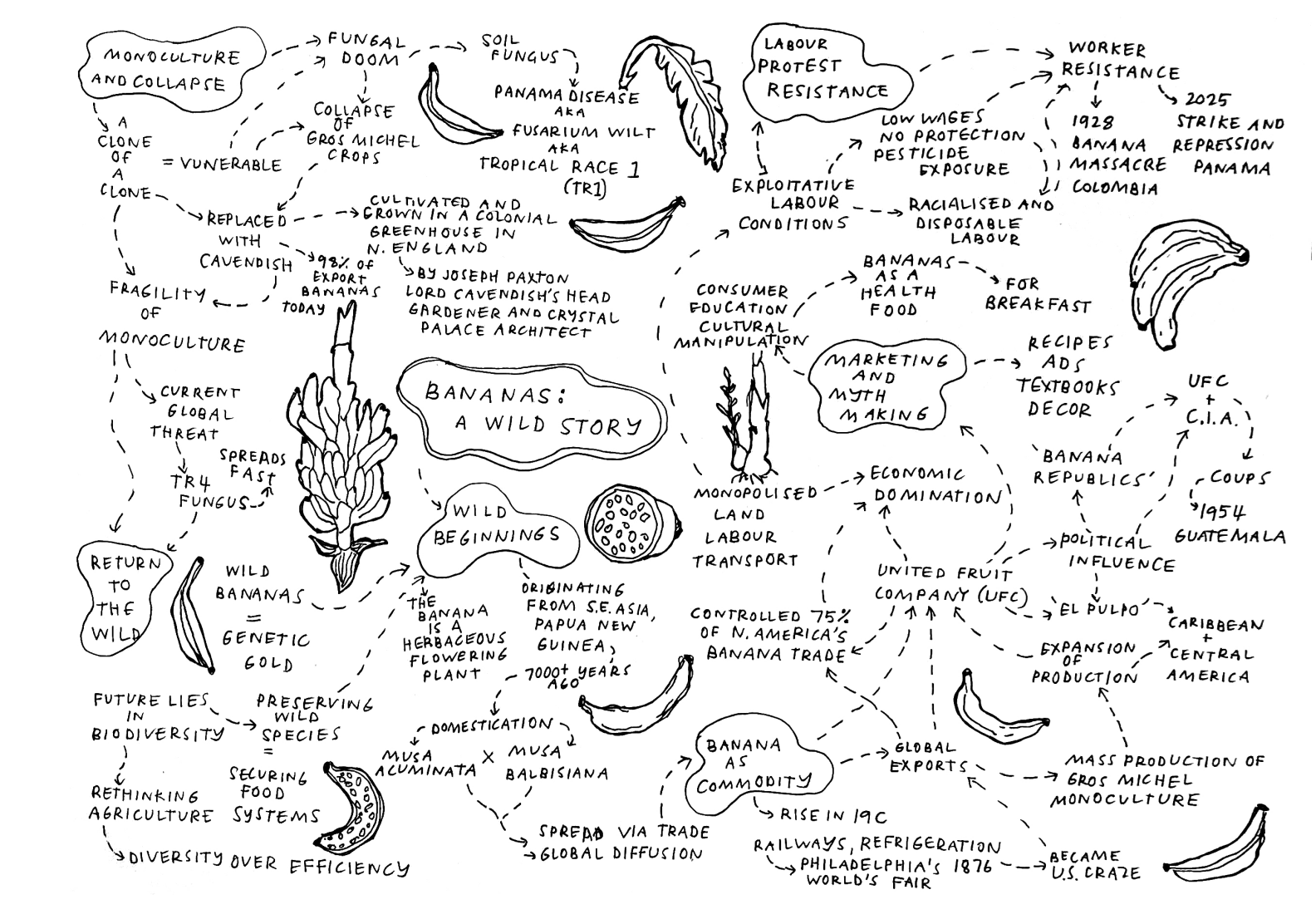
I found myself thinking about the idea of lever points—places within a complex system where a relatively focused intervention can have an outsized effect. Tucker isn’t claiming that an exhibition will solve climate change, or that curation substitutes for political organizing. His question is more pragmatic: given his skills and access, where can he create useful connections?
The Eco-Social Series is one answer.
Tucker launched it in 2023 with co-sponsors RAIR (Recycled Artist in Residency), Green Sun and Making Worlds Books. Rather than programming several years in advance, he deliberately kept the structure informal and responsive. Early events grew from people he knew, projects passing through town and work he encountered. Soon participants themselves began proposing programs. The audience gradually became part of the organizing community. The project’s public archive now documents programs ranging from watershed discussions and timber tours to screenings, potlucks and examinations of art made on a bioregional scale.
Philadelphia matters to that process. Tucker noticed that numerous local artists were already making ecologically focused work, but they often operated independently. Four or five artists might be working on water without knowing one another. A program such as Waterworks in Progress could simply put them in a room together to show unfinished work, exchange ideas and begin forming relationships.
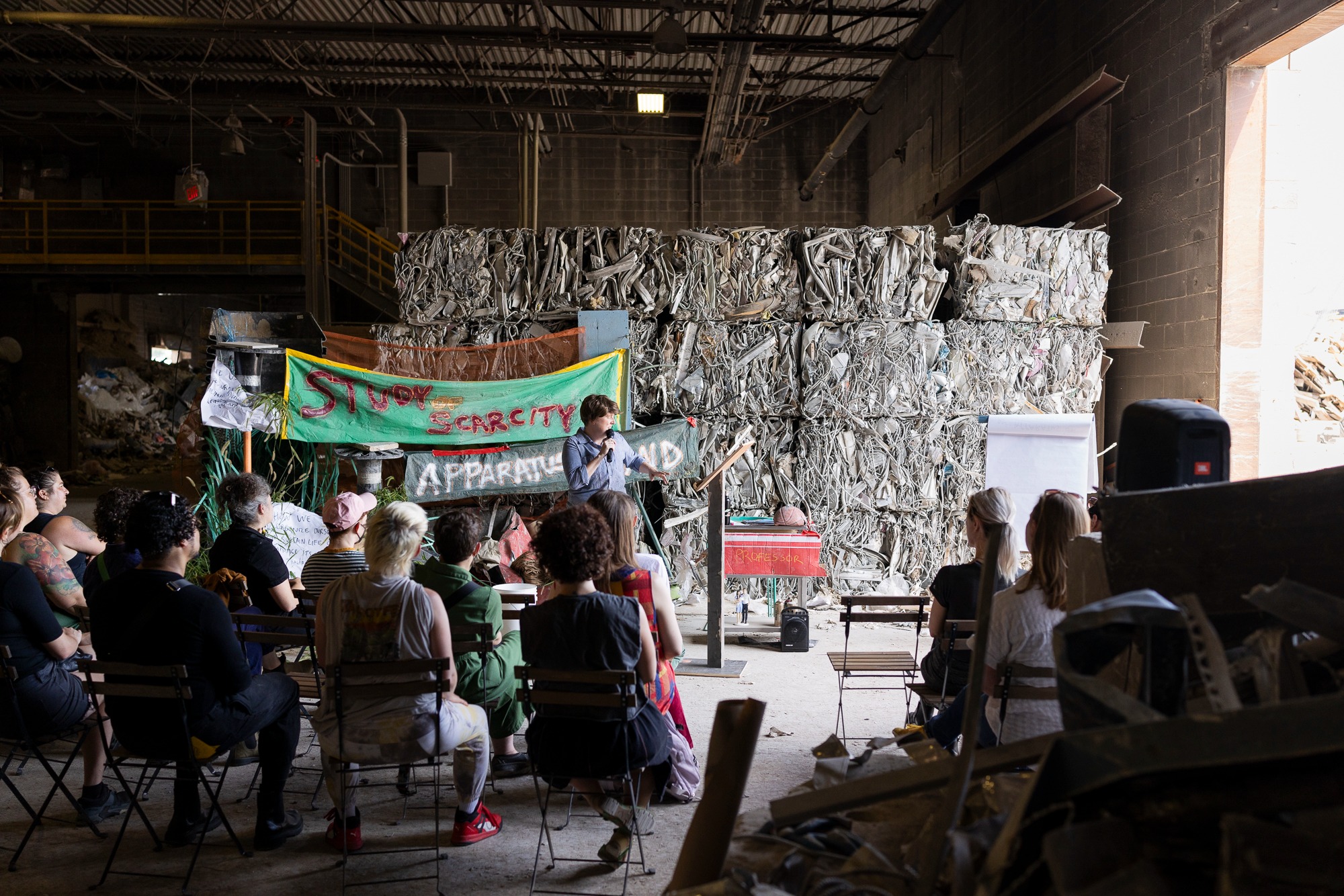
That kind of convening may be the project’s most important medium.
Eco-Social Realism grows directly from those relationships. Rather than selecting what he considers the “best” ecological artists and assembling them into an exhibition, Tucker is showing artists who have participated in the series. The exhibitions become a moment to see what ideas developed through talks, screenings and works-in-progress look like when brought into exhibition spaces and then to use the exhibitions to generate the next round of conversation.
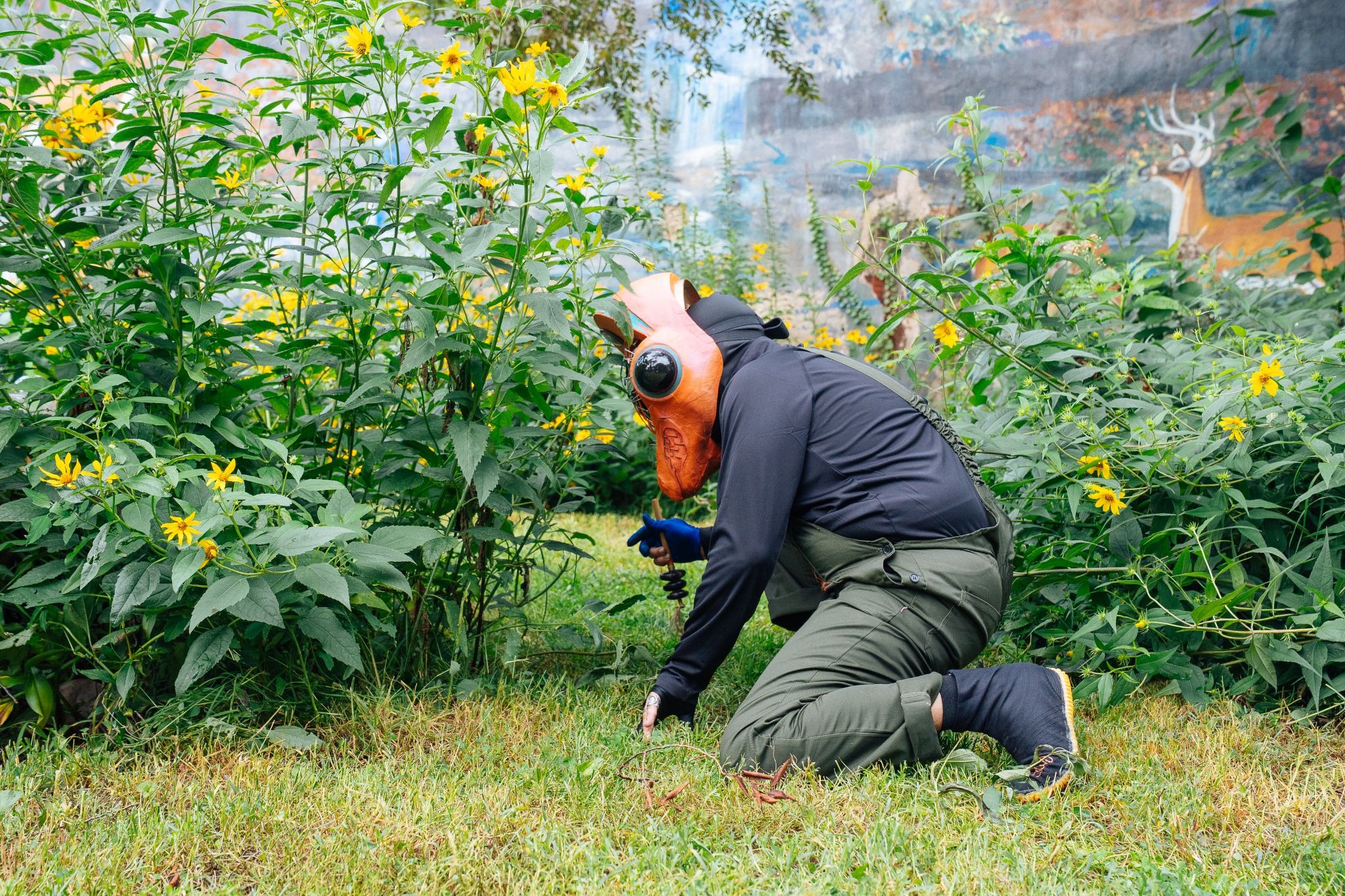
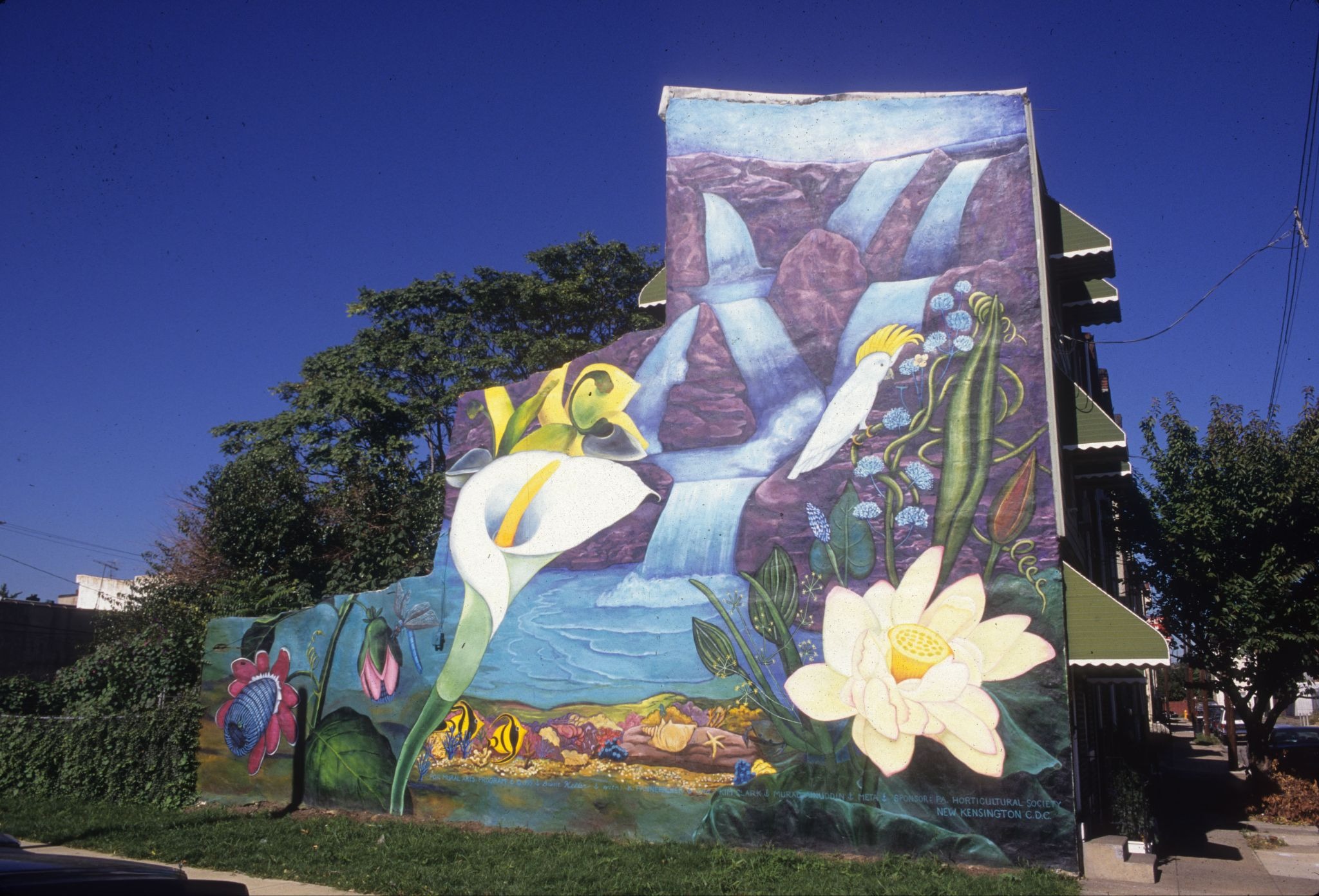
At TILT Institute, for example, four Philadelphia artists are responding to early Mural Arts landscapes in Fishtown and Kensington, using existing murals as starting points for new work grounded in the neighborhoods surrounding them. The larger Eco-Social Realism project similarly emphasizes infrastructural and bioregional practices capable of addressing environmental problems at something closer to their actual scale.
Tucker’s approach belongs to a broader reconsideration of curatorial practice. As Curator-in-Residence at Philadelphia’s Public Trust, he has also helped convene practitioners from around the country to examine forms of public engagement and community-oriented curating that sit outside the traditional curatorial toolkit. Those conversations produced the 2026 publication Curating Engagement, developed with Public Trust and the Wagner Foundation as a resource for a field increasingly asking how cultural institutions can work meaningfully with publics rather than simply present things to them.
Tucker is careful about the distinction. He resisted when I suggested that this might amount to “seeding a movement.” Social movements, he said, involve much larger kinds of collective action. What he is doing is closer to arts organizing with an intentionality around community building; creating situations in which artists and audiences can learn together, develop relationships and think more deeply about the places they inhabit.
That may be exactly the lever point.
The curator no longer stands only at the end of the process, selecting finished objects and arranging them within a gallery. Tucker moves earlier and further outward: interviewing, convening, documenting, connecting, asking questions and creating frameworks in which work can develop.
And sometimes the most consequential curatorial gesture may be remarkably simple.
Hand everyone a microscope.
Open the door.
And send the museum back out into the world.
For more information on the Eco Social Series, series participants, and Daniel Tucker and his curatorial practice:
Exhibition information: https://exhibits.haverford.edu/ecosocialrealism/
Eco Social Series website: https://ecosocialseries.wordpress.com/
Eco Social Series Instagram: https://www.instagram.com/ecosocialseries
Tilt Institute: https://tiltinstitute.org/event/eco-social-realism/
Public Trust Curating Engagement: https://publictrust.org/curating-engagement
Daniel Tucker website: https://miscprojects.com/
Want to stay in the know about Philly’s visual arts scene? We’re developing a semi-regular Art & Image Newsletter - featuring interviews, articles, and reviews straight to your inbox!