Author and art collector K.E. Karl walks us through the Barnes’ ‘Noguchi to Asawa: Designing Postwar America’, an exhibit exploring the work of six influential mid-Century designers and the impact of the World War II incarceration of Japanese-Americans on their practices.
The Barnes exhibit, Noguchi to Asawa, traces the early careers of six Japanese American artists focusing on their contributions to design. Viewers will recognize many of their works in this exhibit, a delightful trek down memory lane for those of us who lived through the 1950s and 60s. Four designers—George Nakashima, Sadamitsu Neil Fujita, Kay Sekimachi, and Ruth Asawa—were forcefully incarcerated in US concentration camps during World War II. To help the interned, Isamu Noguchi voluntarily entered the Poston War Relocation Center in Arizona. In contrast, Leo Amino served as a translator for the US Navy during the war.
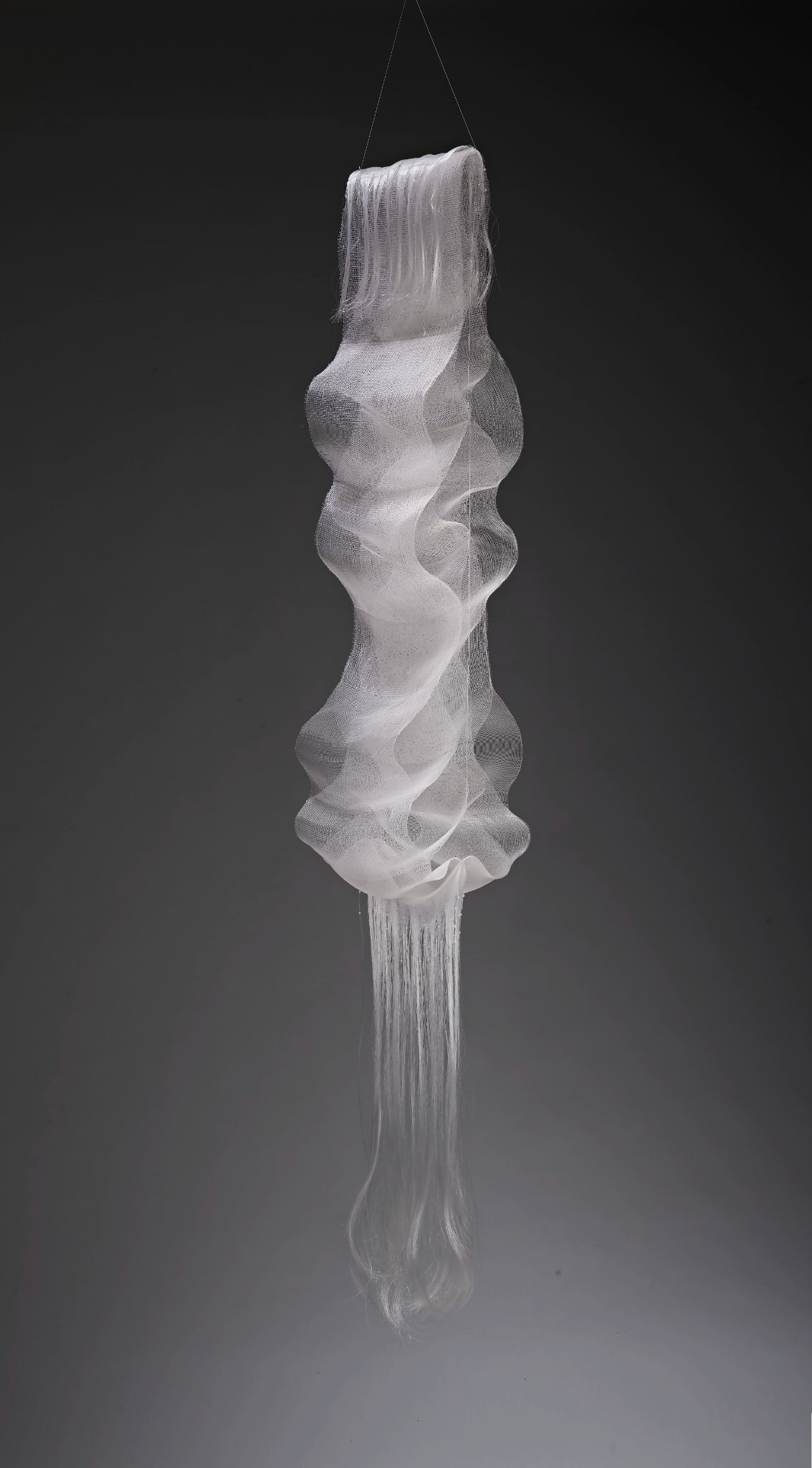
We’ll never know precisely how WWII and the Japanese “relocation centers” inspired or motivated these six artists, but, for example, we know that Kay Sekimachi at age 16 learned to draw and paint while in captivity with her family. Several of her early drawings and watercolors, revealing an extraordinary talent, are on display in the exhibit. Sekimachi later became famous for her weavings and nylon monofilament hangings, some of which are presented in the exhibit. All are deceptively simple in design and exceptionally elegant. Sekimachi is the only surviving artist among these six Japanese designers.
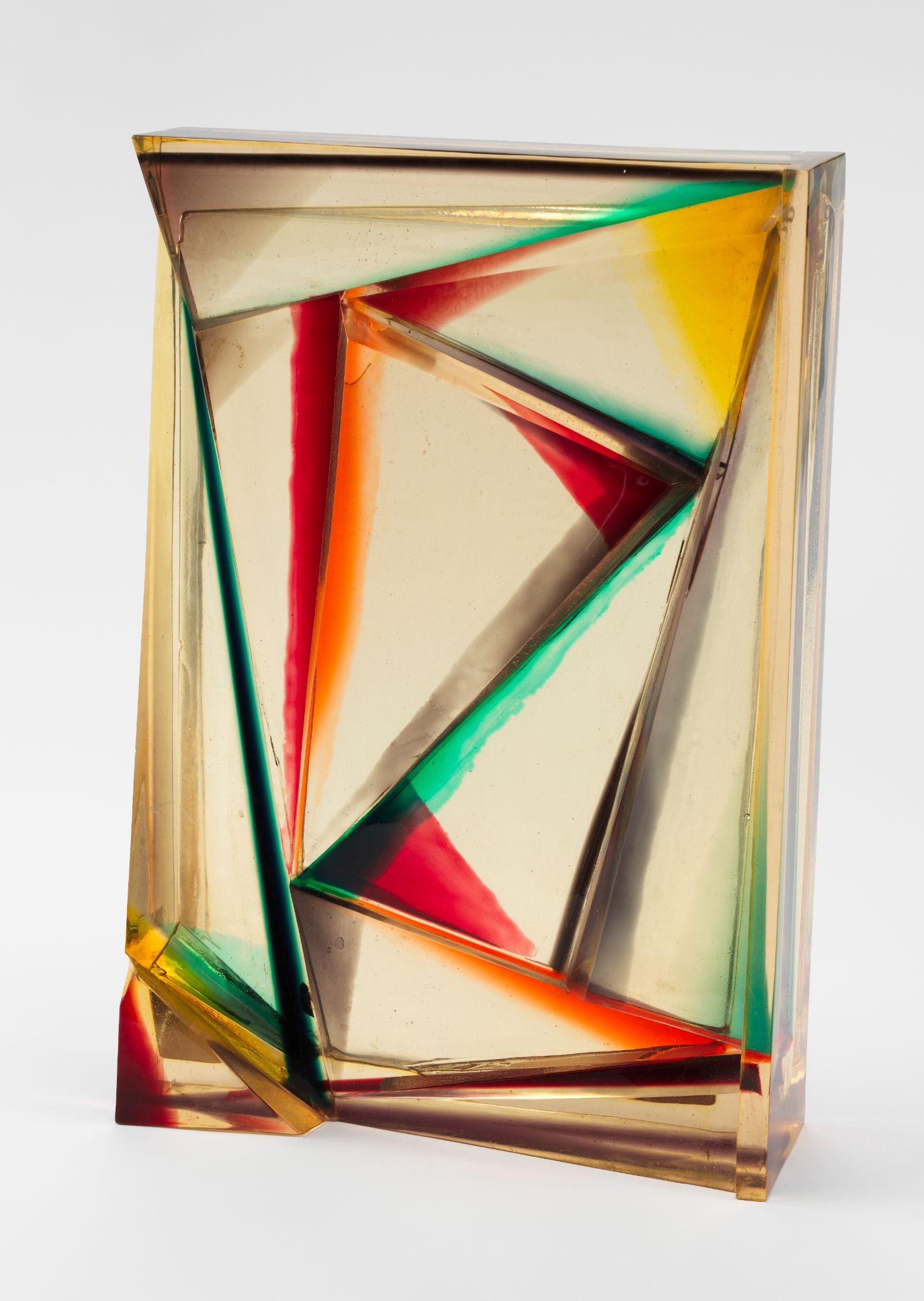
Noguchi, Amino, and Nakashima, on the other hand, already had established design careers before the onset of WWII. Many will recognize Noguchi’s Akari paper lanterns and his IN-50 coffee table on display in the gallery, both classics of design. Amino became well known for his polyester resin sculptures, many presented here. In consultation with a chemical company, Amino created graceful, colorful, translucent block sculptures.
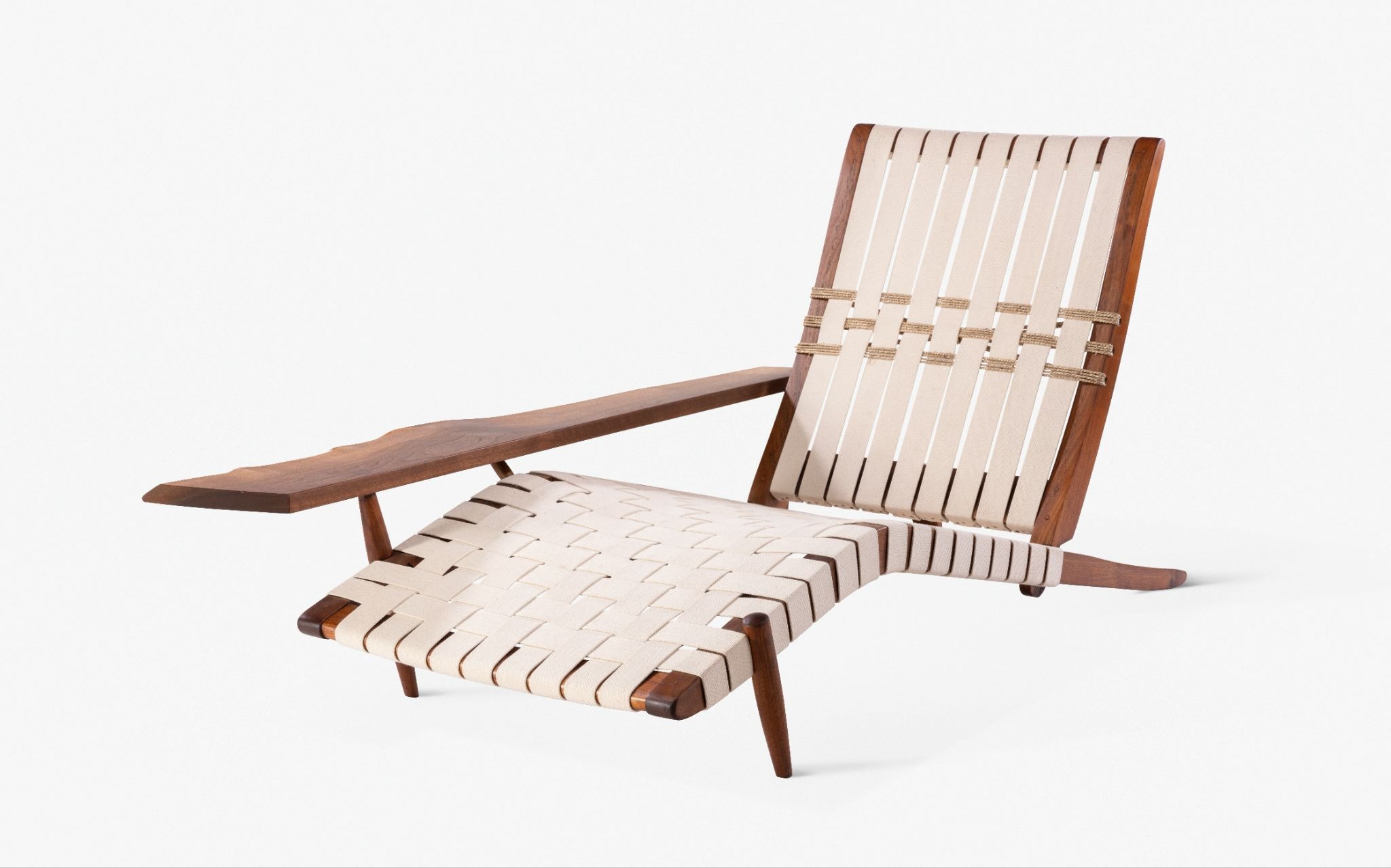
Two of Nakashima’s furniture pieces stand out in this show. First, is the “Long Chair with Free-Form Arm,” a chaise lounge of walnut and fabric webbing with a single natural-edge arm. The second is the eight-foot long black walnut and cloth “Radio Cabinet.” Both furnishings illustrate Nakashima’s belief that furniture should reveal, rather than conceal, the inherent beauty of wood.
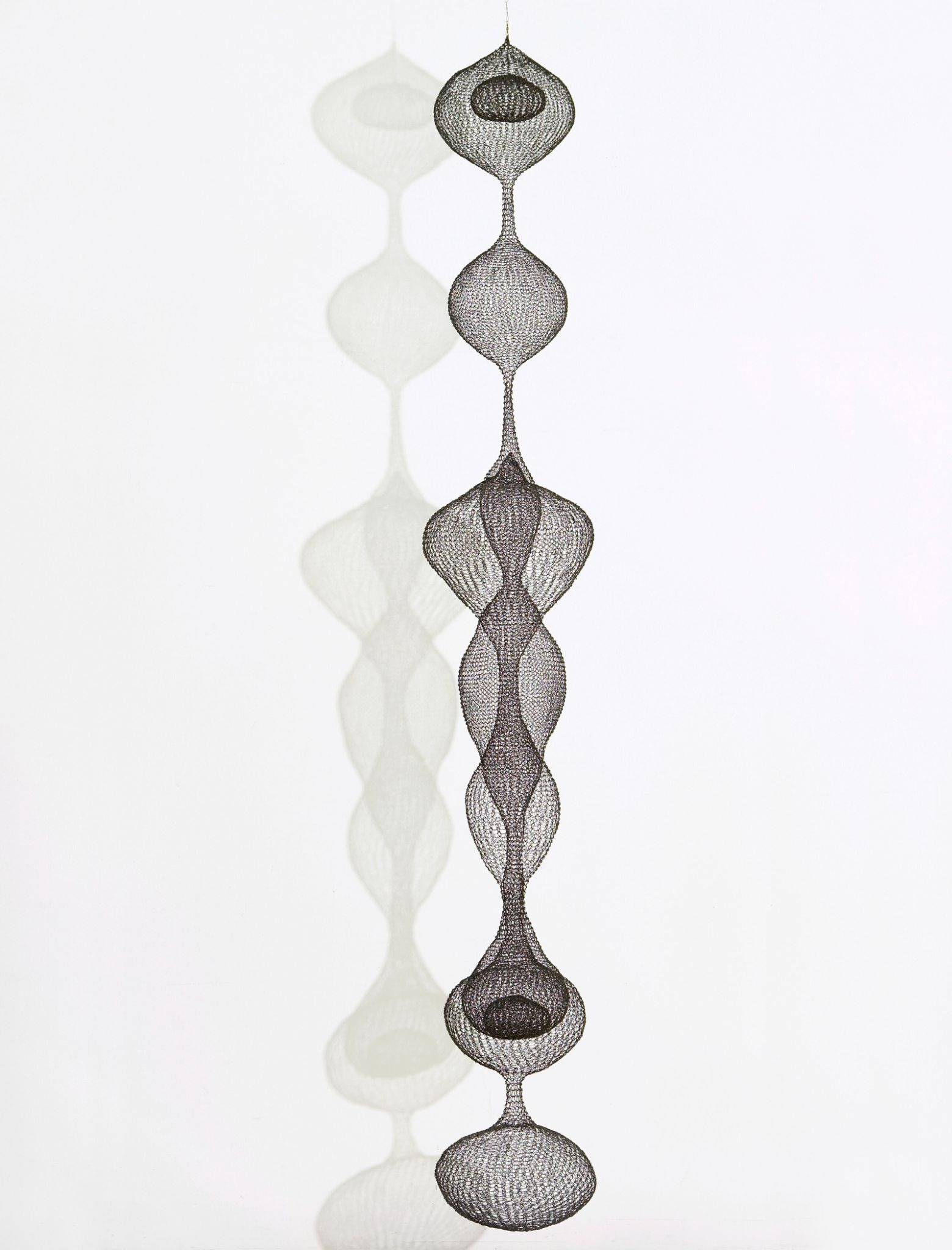
A few of Asawa’s celebrated wire hanging sculptures are included in the gallery. The dripping spherical-shaped bulbs have further spheres within the outer layer of mesh. “Untitled S.272” creates a sinuous, almost organic structure that appears to expand and contract as the eye moves from top to bottom.
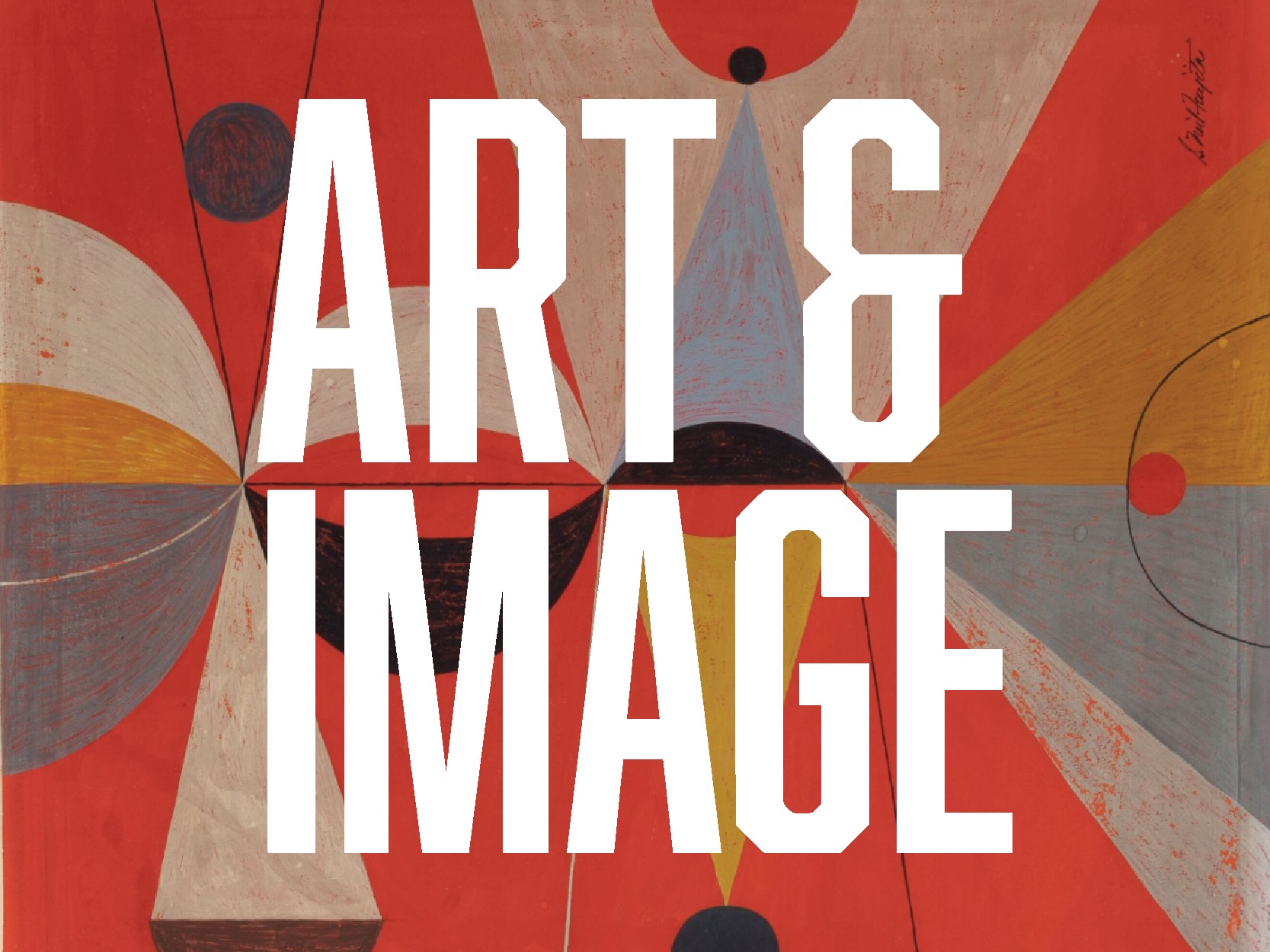
Finally, Fujita is the designer you haven’t heard of but know very well. Aside from his design of the Bugles snack box, the show displays many of his album and book jacket covers. With their abstract splashes of color, the vinyl jackets are “quintessentially modern and American.” The simplicity of the fonts on Fujita’s dust jackets makes them iconic.
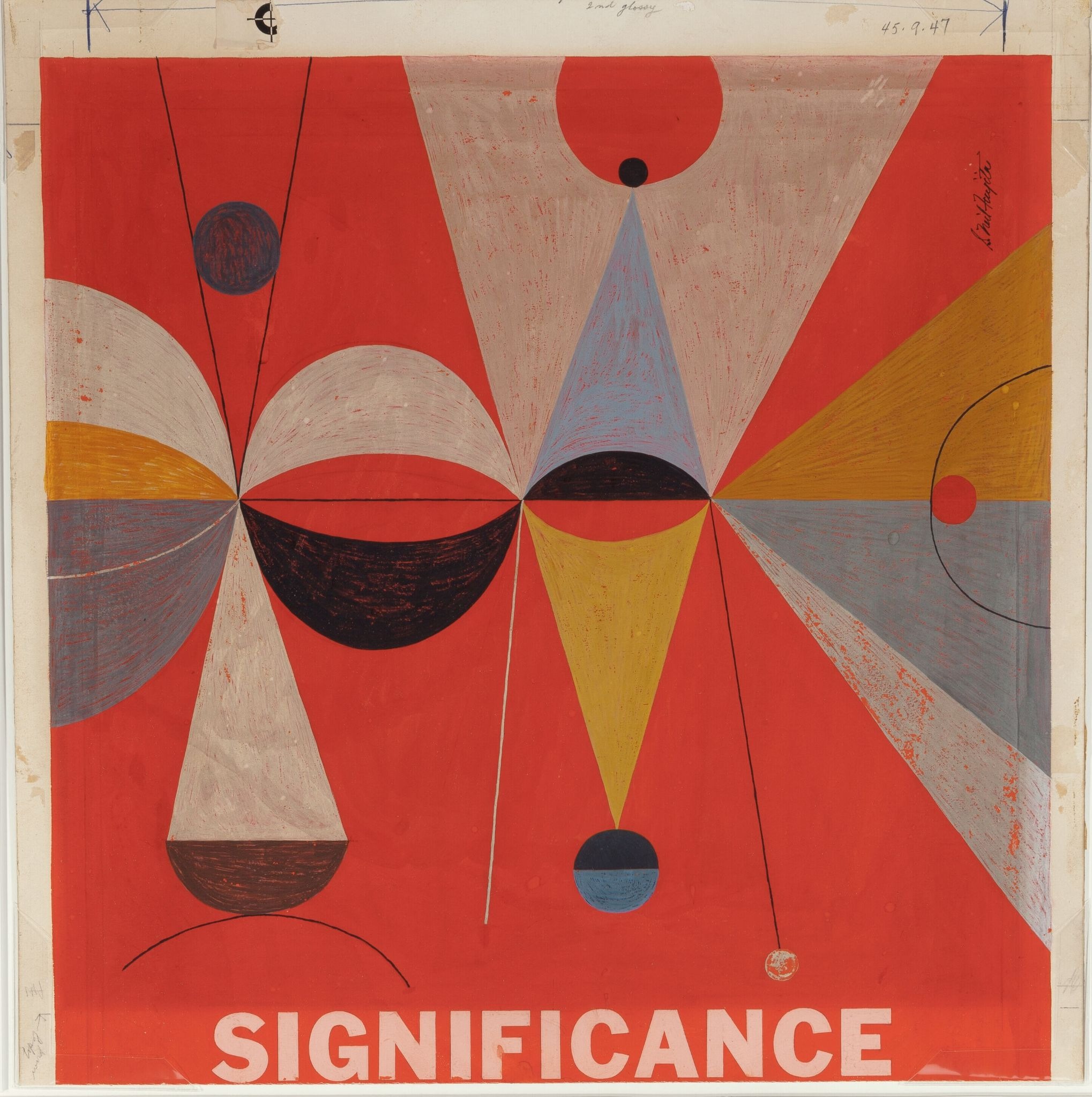
Noguchi to Asawa is both a visual pleasure and a fascinating journey through the Japanese American contribution to American design from the 1940s through the 1960s. It brings together furniture, sculpture, textiles, graphics, and everyday objects while reminding us that behind these now-familiar works were artists whose lives were profoundly shaped by a turbulent period in American history. For those who remember the era, it is a particularly enjoyable romp through the past—and an opportunity to see familiar objects with fresh eyes.
Noguchi to Asawa: Designing Postwar America
Curated by Cindy KangRoberts Gallery, The Barnes Foundation
Until January 10, 2027
About the Author:
K. E. Karl is an art lover and collector living in Philadelphia. His second novel, Chasing the Bangkok Dragon, received favorable reviews: “A well-crafted, diverting thriller.” —Kirkus Reviews. His debut novel, Our Man in Mbabane, is a fictionalized account of his years (1977-80) supporting the anti-apartheid movement in Africa. He published a collection of short stories, The Red Door and Other Stories, in 2023. His fiction has appeared in several literary journals. He has lived and worked in Oregon, London, Mbabane, Philadelphia, Maputo, Bangkok, New York, and Zurich.
Want to stay in the know about Philly’s visual arts scene? We’re developing a semi-regular Art & Image Newsletter - featuring interviews, articles, and reviews straight to your inbox!