Writer and educator Liz deBeer reviews “New Eyes: American Landscape Drawing” while pondering perception.
Exhibition – New Eyes: American Landscape Drawings
Location – Philadelphia Museum of Art, Korman Galleries 221-223
Dates – Ongoing
New Eyes: American Landscape Drawings at the Philadelphia Museum of Art presents a varied collection of American landscape artists’ views and techniques. Some works display gorgeous pops of color; others offer solely shaded charcoal.
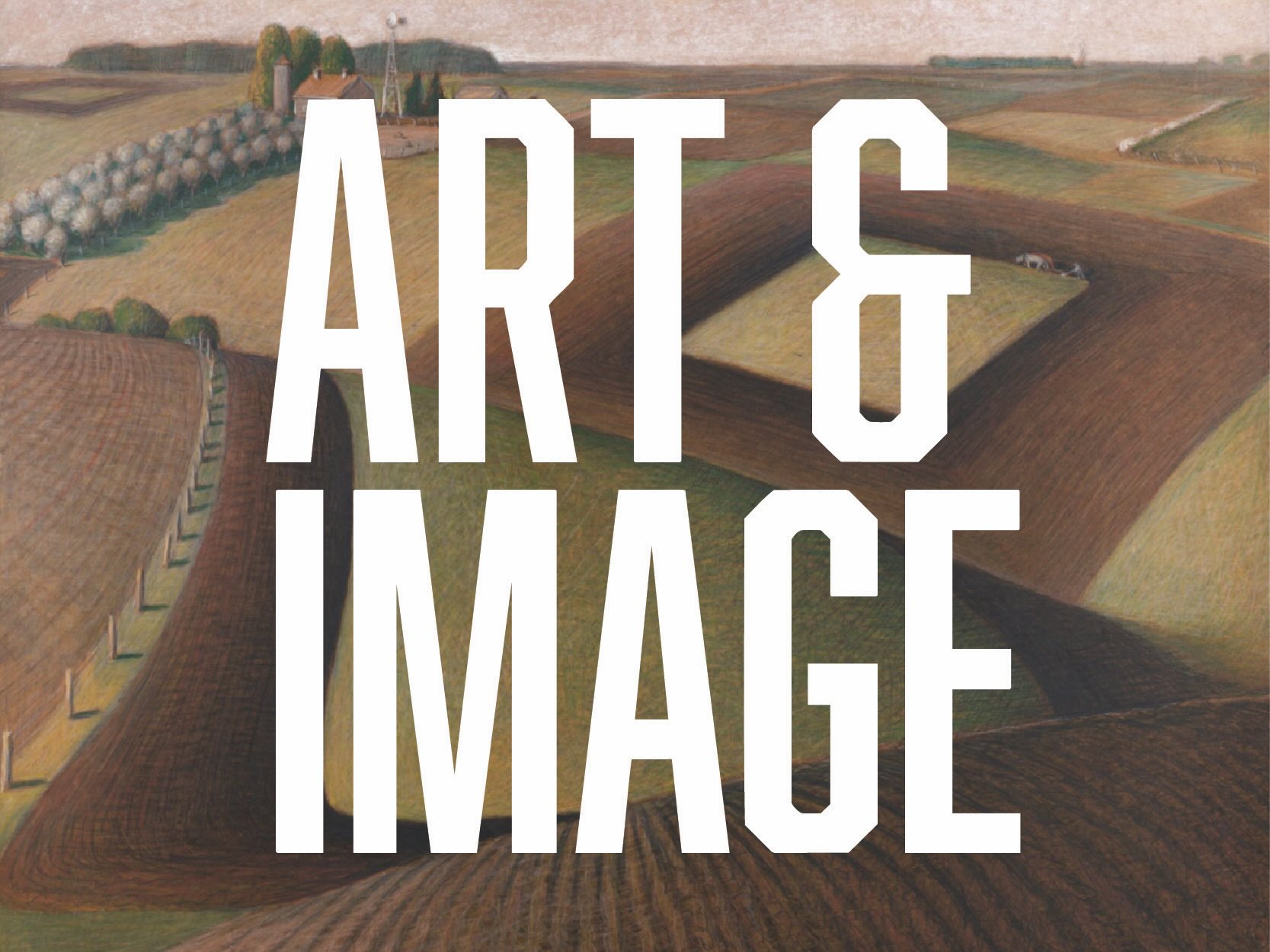
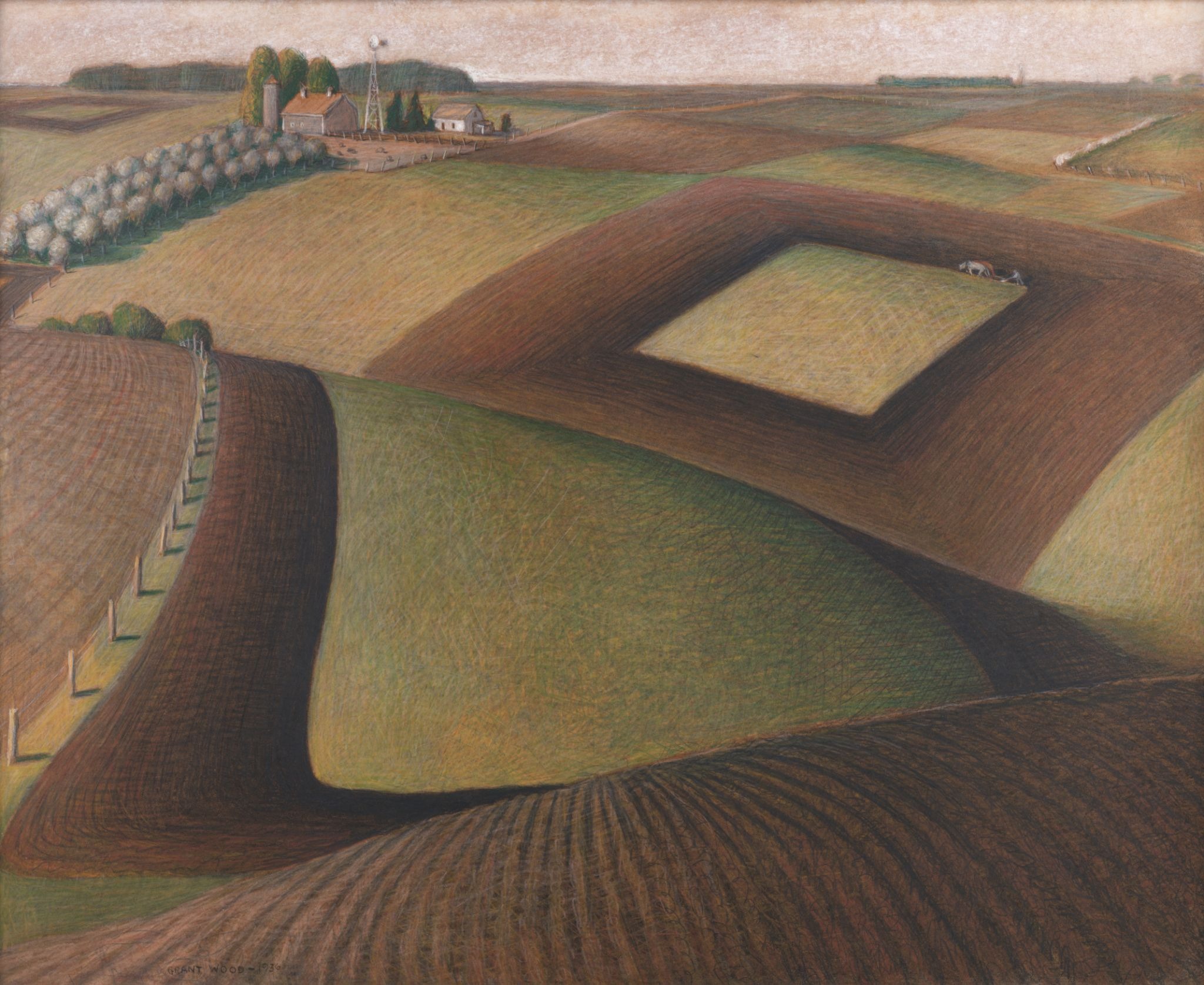
Many laud a bucolic America, like "Dublin Lake,” a watercolor by John Singer Sargent which depicts a canoe on the edge of a shimmering body of water in New Hampshire framed by pine trees and mountains. Others celebrate farmlands and farmers, such as the multimedia work “Plowing” by Grant Wood, portraying plowed acreage via “quilt-like squares of earth and streamlined curves of undulating fields [that] resemble the simplified forms of modern industrial design.”
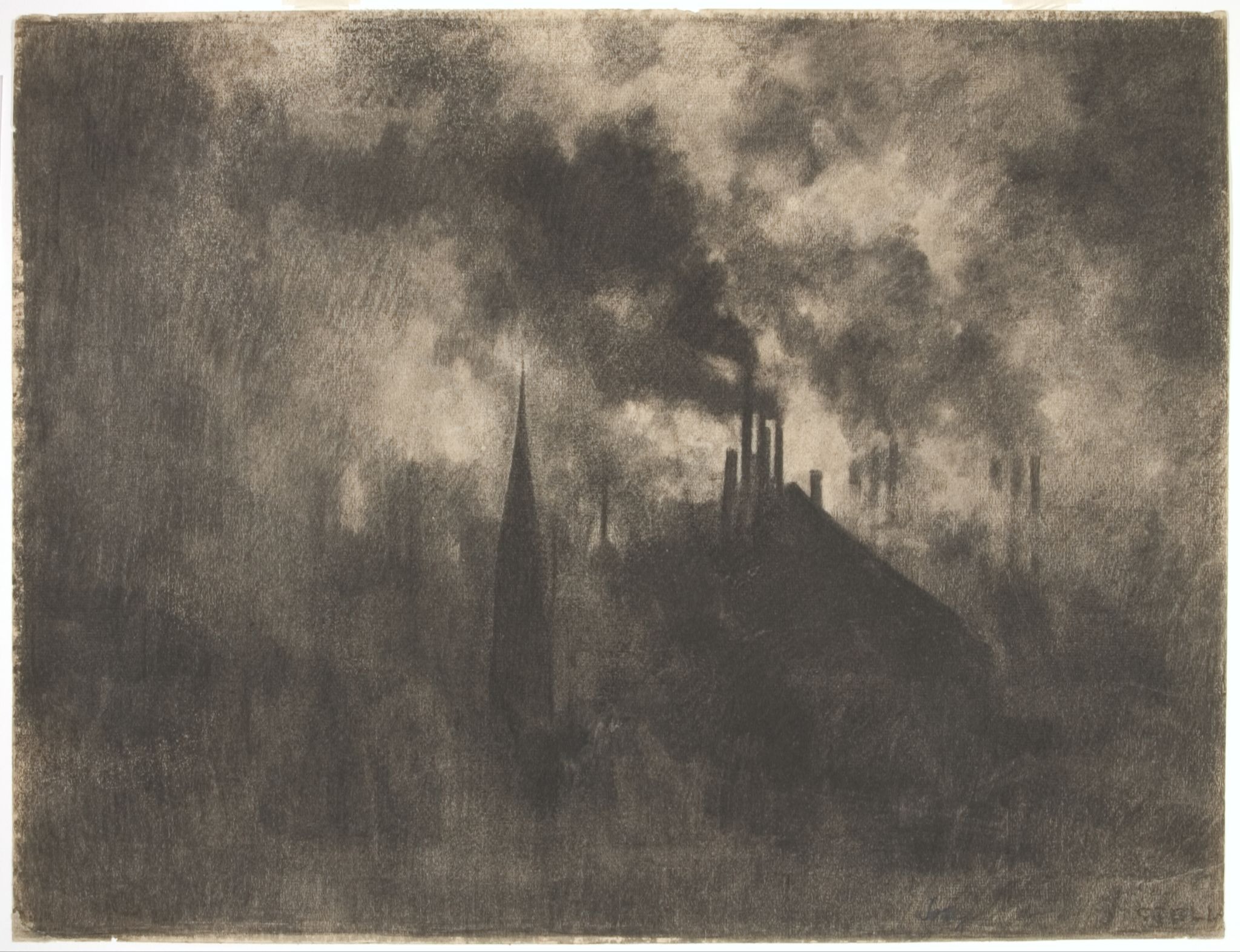
In contrast is a dark drawing in charcoal displaying America’s smog. Joseph Stella’s “Chimneys, Pittsburgh" depicts factories pouring dark smoke that fills skies and lungs during the turn of the 20th century.
“Low-Land” by Blanche Dillaye offers yet another technique and point of view. Using watercolor over charcoal, Dillaye’s blue trees and skies reflect into a blue waterway, both beautiful and eerie, like an echo of a song.

Together, these diverse works create America’s varied landscapes as well as the range of artistic styles, perhaps reminding viewers to recall the famous fable “The Blind Men and the Elephant.” In that story, each person zeroes in on something different; only in unison can they generate a full understanding of the animal. The fable’s message is validated by the late neurologist Oliver Sacks, who popularized the discussion about the difference between sight and perception in his best-selling book The Man Who Mistook His Wife for a Hat.
This exhibit, described on the museum’s website as “rarely seen watercolors and drawings,” reveals “vital energies that drew artists outdoors to register fleeting impressions of the American landscape.” The show is part of their America’s 250th anniversary celebration, offering “a wide range of subjects and styles” to explore “the diversity of both the American terrain and the responses it inspired among artists of various cultural backgrounds and visual traditions.”
The works of art are arranged thematically in categories of air and space. The former grouping focuses on qualities like weather and smoke, while the latter highlights vast terrain and spirituality. While this exhibit is relatively small, it makes a large statement about America’s multifarious landscape.
Similar to “The Blind Men and the Elephant,” the show leaves viewers pondering how “To learn the truth, we must put all the parts together,” a lesson that arguably is a statement much larger than the exhibit itself.
About the Author:
Liz deBeer teaches and writes with Project Write Now, a writing cooperative based at the Jersey Shore, where she resides with her family. Her debut chapbook Farewell to Emptiness, a novelette-in-flash (Thirty West Publishing House), is set in the Albany, NY, area, her birthplace. Her flash has appeared in Fictive Dream, Bending Genres, Literary Garage, and other literary journals. A volunteer reader for Flash Fiction Magazine, Liz holds degrees from University of Pennsylvania and Rutgers University. She can be found via her weekly Substack A Lizard's Tale or her website: https://www.ldebeerwriter.com
Want to stay in the know about Philly’s visual arts scene? We’re developing a semi-regular Art & Image Newsletter - featuring interviews, articles, and reviews straight to your inbox!