


Odds in the Absurd
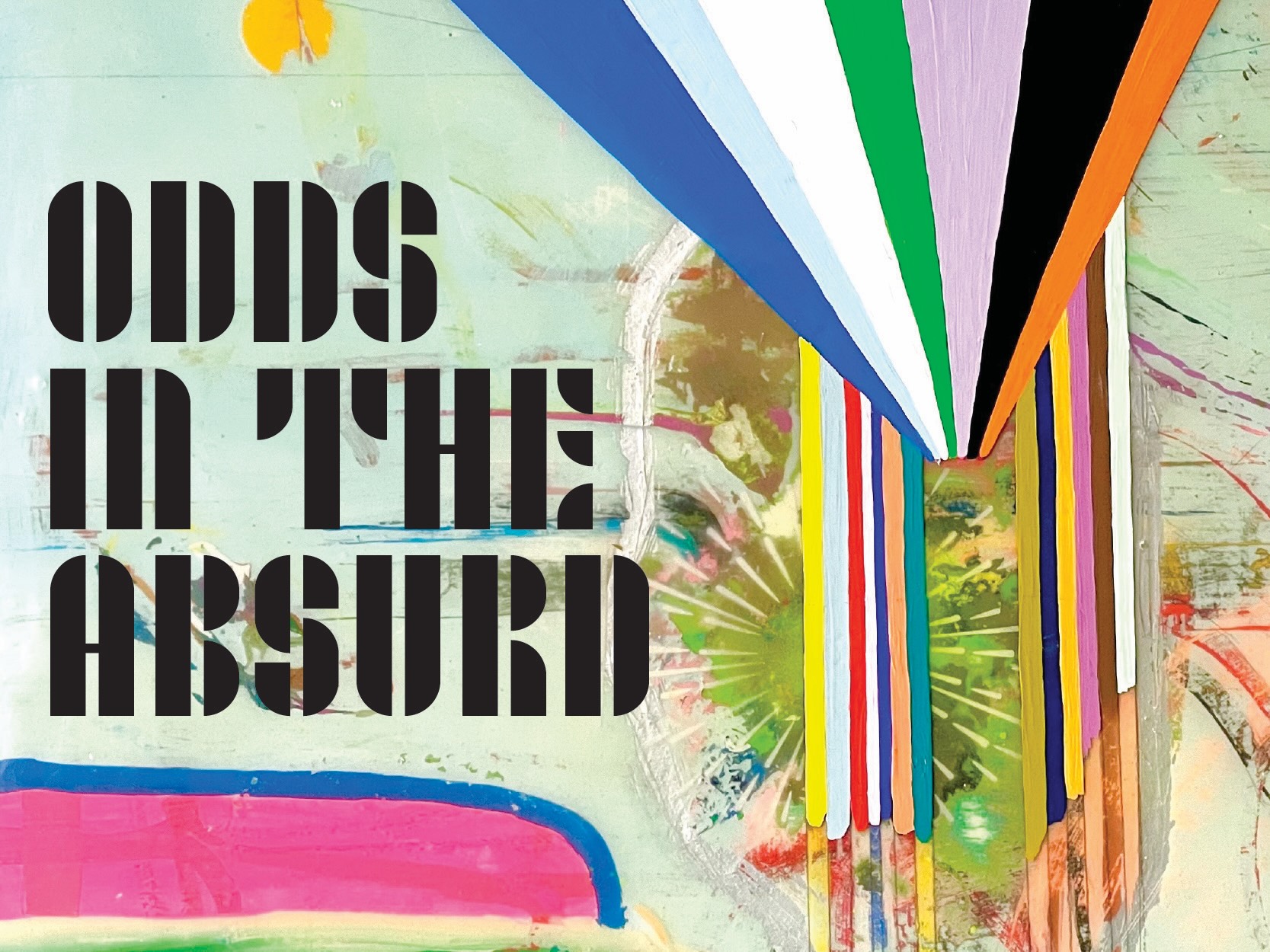
Odds in the Absurd examines the irreverent works by six InLiquid Members in connection with the Dada and post-Dada surrealism movement, in which absurdity, chance, and a sense of mystery do not pose the question ‘Is this art?’, but instead affirm it.
Dada began in the early 20th century as a response to events of World War I. Most notoriously, Marcel Duchamp's readymades emerged from that movement, challenging notions of art that are still argued today. Odds in the Absurd examines Dada from a contemporary lens. In some cases, directly inspired by the father of conceptual art, the group of six artists employs collaboration, repetition, ready-mades, curiosity, and a rejection of the ideas of taste.
Featuring Lisa Baird and Keillianne McCarthy's surrealist paintings, Jake Jacob and Alex Bard’s timeless installation works, Howard Brunner’s urban photography, and williamCromar’s distribution 3D printable models of iconic pieces such as 1913’s Bicycle Wheel by Duchamp. Odds in the Absurd is characterized by its playfulness, experimentation, and commentary.
.jpeg)
Lisa Baird
b. Wilmington, DE
Lisa Baird received a BA from Bowdoin College, a BFA in Painting from the San Francisco Art Institute, and an MFA from the Maryland Institute College of Art. She also studied at University College, University of Oxford, England, and was an Artist-in-Residence at the Vermont Studio Center. Lisa has taught at the University of the Arts, Drexel University, Pennsylvania College of Art & Design, and Delaware College of Art and Design. She has received numerous awards for both her artwork and teaching, including a Leeway Foundation Award for Sculpture and the MBNA Award for Best Practices in Education. Her work is held in private collections throughout the United States, Europe, and Australia. Lisa is the Executive Director of The Hook Experiment, a nonprofit contemporary art space in Oxford, PA.
Working across painting, sculpture, video, and installation throughout her career, Lisa has consistently explored the intersections of memory, identity, domesticity, and time. Her paintings examine how photography, technology, and family histories shape memory, identity, and our experience of time. Layering domestic interiors, personal imagery, and cultural references, her work creates psychological spaces where multiple moments in time coexist. Through painting, Lisa investigates memory not as a fixed record of the past, but as a living process, fluid, subjective, and continually reshaped by experience.
Statement
“Throughout my practice, working across multiple media, I have explored the intersections of memory, identity, domesticity, and time. I have returned to painting because it gives memory space to move. Painting allows memories to shift, overlap, and unfold rather than simply be illustrated. Increasingly, I've come to realize that what I'm really painting is time.
Watching my children become adults and begin families of their own has made me think about the strange way memory works—how a room, a chair, a photograph, a screen, or a wedding dress can suddenly pull us backward. Ordinary objects become emotional landmarks, carrying the weight of lives lived while quietly connecting personal memory to our shared cultural inheritance.
Weddings recur throughout these paintings because they are among the most photographed moments of our lives. They mark a threshold between past and future, filled with hope, expectation, family history, and inherited rituals. Weddings also reveal the paradox of memory: the image remains fixed while everything around it continues to change. Relationships evolve, families grow, loss accumulates, and the meaning of the moment shifts with time.
Photography and digital technology have transformed the way we remember. We no longer remember only through lived experience, but through photographs, television, home movies, family archives, and the endless stream of digital images that now shape our emotional lives. These technologies do more than preserve memory—they construct it, influencing what we revisit, what we forget, and how we understand our own histories. Time itself becomes a form of cultural inheritance, carried forward through images, rituals, objects, and stories.
As our lives become increasingly mediated through screens, memory risks flattening into endlessly reproducible images, while identity is shaped by a shared visual language rather than lived experience. Painting offers another way of remembering. It slows us down. It resists certainty and refuses the fixed image, allowing memories to drift, overlap, fracture, and evolve. Different generations, places, and moments can occupy the same space, where emotional truth becomes more important than chronology or factual accuracy.
For me, painting is a way of recovering what cannot be captured by the camera or the screen. If technology records experience, painting reveals how experience is remembered. It preserves the complexity of perception and the individuality of memory in a culture that increasingly asks us to see and remember. These paintings are not attempts to reconstruct the past. They explore the fragile space where memory, domestic life, technology, and the passage of time continually reshape one another. Ultimately, they are paintings about time, not as chronology, but as something remembered, inherited, and continually remade."
Alex Bard
b. Philadelphia, PA
.jpeg)
Alex Bard is a multidisciplinary artist, born and based in Philadelphia, PA, best defined as a magical realist. Bard’s imagined characters express and explore their world through costume, sculpture, photography, performance and film.
Bard holds a BFA from University of the Arts and an MFA from Maryland Institute College of Art. He attended high school in Maine, where his first exhibition was at the Hallowell Gallery. Alex Bard has since exhibited in NYC, Philadelphia, Baltimore, Barcelona, and the WaterMill Center. His work is in private collections in the U.S. and Europe, the Pennsylvania National Guard Museum, and the Episcopal Cathedral.
Statement
Alex Bard is a U.S.-based interdisciplinary artist, whose works span a range of mediums, including sculpture, costume, performance art, photo and video.
Anthropology, mythology, comparative religions and psychology inspire his work. He strives to explore universally understood symbols that transcend cultural, historical and political boundaries, and speak to audiences from all backgrounds. Each piece presents archetypal images that reflect different facets and levels of human consciousness, encouraging self-awareness and reflection.
The goal for his art is to help people know and understand themselves better. Alex Bard aims to remind viewers of their own innate strengths and qualities, empowering the deeper meaning of their own lives.
Howard Brunner
b. Allentown, PA
Howard Brunner is an artist and photographer based in Philadelphia. He holds an MFA in Photography from the University of Delaware and a BFA in Graphic Design from the Philadelphia College of Art. He served as a Professor of Photography at the Art Institute of Philadelphia for 31 years. He was also a faculty member in Temple University's Architecture Program, where he taught 2-D Design, Drawing, and a photography course titled *Photography and Visual Literacy*.
For more than 37 years, Brunner has exhibited his photographs regionally, nationally, and internationally. His work is represented in the collections of the Museum of Art and History in Fribourg, Switzerland; the Philadelphia Museum of Art; Museu da Praia in Maragogi, Alagoas, Brazil; the James A. Michener Museum of Art in Doylestown, Pennsylvania; and the Allentown Museum of Art in Allentown, Pennsylvania. He is a member of the DaVinci Art Alliance and InLiquid.
Statement
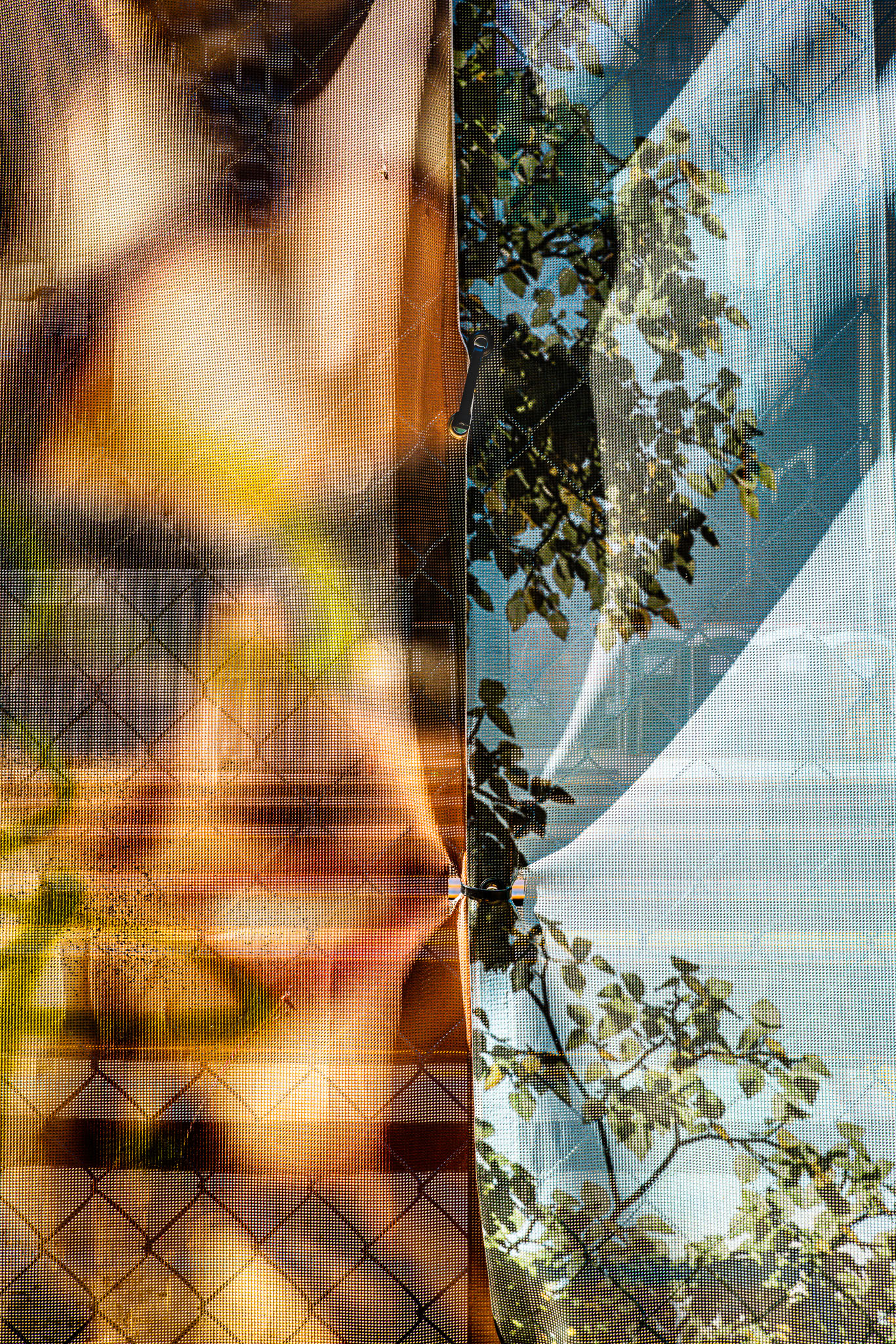
“One of my favorite things to do is to walk through the urban environment and photograph whatever grabs my interest. Over the years, these urban walks have evolved into a spiritual practice—a walking meditation of sorts. My best photographs occur when I am able to walk, look and feel, unbound by conscious thought. The aesthetic qualities of my photographs are provisional and improvisational responses to each situation. I don’t impose any aesthetic conventions or stylistic agendas on what I am photographing. I prefer to let the urban environment reveal its own aesthetics. These are environmental incidents that evoked an emotional or spiritual connection worthy of capturing as a photograph. It's a mysterious and loving feeling when this connection occurs; in this way, I am making the photograph out of gratitude.”
williamCromar
b. Richmond, VA
williamCromar is an artist and educator based in Philadelphia. He hybridizes a peculiar blend of architecture, music, animation, art-making, and cutting-edge digital expression into a unique body of sculptural and installation art. Through such work, he develops paradoxical manifestations of the human need to find or invent order.
He is the recipient of the Silver Medal at the International Biennial of Architecture in Sofia, Bulgaria, and the Samuel Fleisher Art Memorial’s Challenge Exhibitions by the Philadelphia Museum of Art. His work has been exhibited at the Nexus Foundation for Today’s Art sponsored by InLiquid, and aFSe Gallery in Philadelphia, the Eastern State Penitentiary Historic Site, the Michelle Liao Collection, and the National Liberty Museum.
He directs the Penn State Abington College MakerSpace and teaches new media art, encouraging emerging artists to create senseless acts of beauty on the Macintosh. He also collaborates internationally with the Duncan of Jordanstone College of Art and Design, part of the University of Dundee in Scotland.
Statement
“Just over a century ago, Marcel Duchamp upended the art world by selecting mass-produced, public-domain industrial objects—a bicycle wheel, a bottle rack, a urinal—and elevated their status using conceptual art parameters.
He called them Readymades.
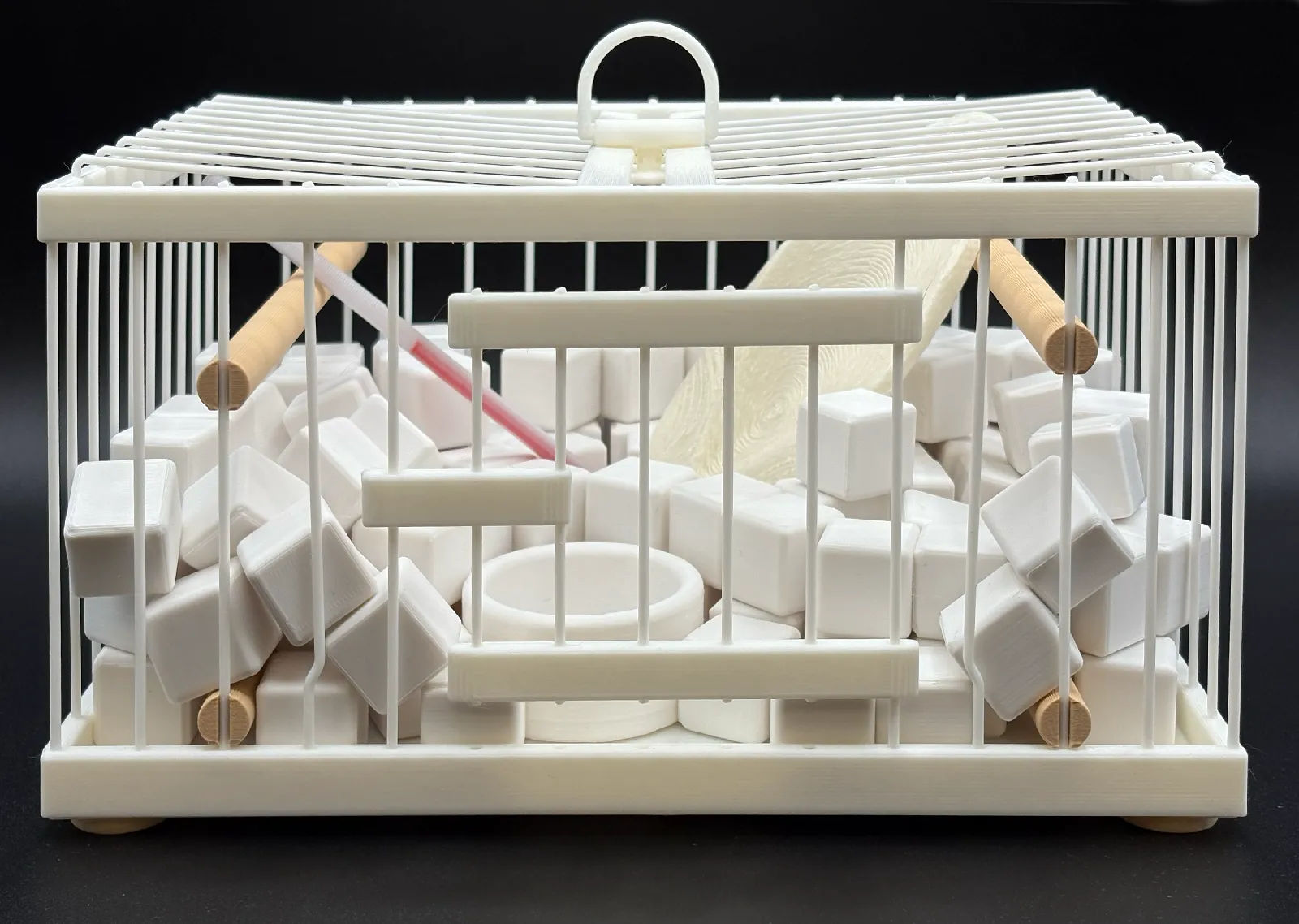
By moving a factory item into a gallery, he demonstrated that an artist’s idea, not physical labor, creates value. Supported by a faculty grant from Penn State Abington and developed utilizing the fabrication facilities of the Abington MakerSpace, Prêt à Faire pushes Duchamp’s logic into the digital age. The sculptures on display in this gallery are not unique, rare artifacts. They are physical manifestations of digital 3D models. They were not sourced from a proprietary repository; they were forensically reconstructed from open-access historical data points.
Therefore, the artwork is not the plastic shape sitting on the pedestal.
The true artwork is the act of distributing these files across a global network. In new media art, we call this Distributed Culture.
Prêt à Faire democratizes the process of distribution. Open-access reference models are available to download online under a CC BY-NC-SA 4.0 license right now. To examine the structural and financial frameworks of the art marketplace, premium full-scale file configurations and physical Exhibition Proofs operate under a distinct, separate commercial framework hosted on external independent platforms.
The physical sculptures on display here function as those Exhibition Proofs. They represent the physical labor of translating digital code into highly stable exhibition reference models. By interacting with these external tiers or downloading an open-access file, you are not simply acquiring an object.
You are actively participating in a distributed performance that liberates artwork from an artificially imposed physical scarcity.”
Prêt à Faire is an autonomous artistic project, scholarly reference work, and institutional critique by williamCromar, supported by a faculty grant from Penn State Abington with fabrication assistance from the Abington MakerSpace. This project is entirely independent and maintains no formal affiliation, endorsement, or sponsorship with Association Marcel Duchamp, the Estate of Marcel Duchamp, ARS, ADAGP, or any curating museum. When referencing or sharing this work, users must maintain a clear distinction in authorship and nomenclature from the historical referent. Cite this asset as: Model of Marcel Duchamp’s [Object Name] by williamCromar. Basic models are available under a CC BY-NC-SA 4.0 license; premium tiers operate under a separate commercial framework. For full conceptual and legal text, visit https://sites.psu.edu/pretafaire/disclaimer-and-licensing/
.png)
Jake Jacob
b. New Jersey
Jake Jacob is an artist and designer based in Philadelphia. His work navigates the space between Dadaism and commercialism, using collage, assemblage, and painting to explore the power of imagery and material. He holds a BS in Graphic Design Communication from Jefferson University (formerly Philadelphia University) in Philadelphia, PA, and attended the University of Arkansas in Rome, Italy. He is the Founder and Director of Collage Philadelphia (est. 2022), a community-centered organization promoting contemporary collage through events, exhibitions, and institutional partnerships. Jacob has exhibited at Susquehanna Art Museum, Harrisburg, PA; The Look Listen, and The Athenaeum, Philadelphia, PA; Gallery VII, York, PA; and Kyiv National Art Gallery, Kyiv, Ukraine.
Statement
Be Kind to Yourself
"This piece is a reminder that the first kindness we owe
is to ourselves."
Five Promises
"Five Promises looks at the American Dream through five ordinary objects, each carrying a familiar promise of abundance, freedom, prosperity, security, or self-worth."
.jpeg)
Kellianne McCarthy
b. Philadelphia, PA
Kellianne McCarthy works with oil, acrylic, and collage on wood panels. Known for her saturated color palette and blend of imagery, abstraction, and pattern, she creates spaces where the concrete and surreal meet. Influences that filtered into her work include the graphic design of Peter Max, the altar pieces of the Renaissance, and the ungraspable vastness of the universe. She was born in Philadelphia, PA. She received a BFA in Painting from Moore College of Art and Design in 1992, and is an RN currently working in Philadelphia. Most recently, her work has been featured in solo exhibitions at Central Tattoo Studio, the Philadelphia International Airport, and Moko Beauty, Philadelphia, PA; and Soft Machine Gallery, Allentown, PA.
Statement
"I want to evoke a feeling of place where the elements of the world we know meet bizarre, reverent spaces that make dream sense: Strange, opulent worlds with relentless stripes, patterns, flowers and colors that are lavish and startling."


