
.jpeg)
.png)


Bespoke Matter

Decorative arts have been an intrinsic part of the human experience. Across cultures and time, people have felt a deep desire to embellish the spaces they inhabit to tell stories, assert identity, and infuse interiors with life. At the heart of decorative art lies craftsmanship and functionality: the intersection where artists and makers create everyday objects that are visually enthralling and serve a purpose.
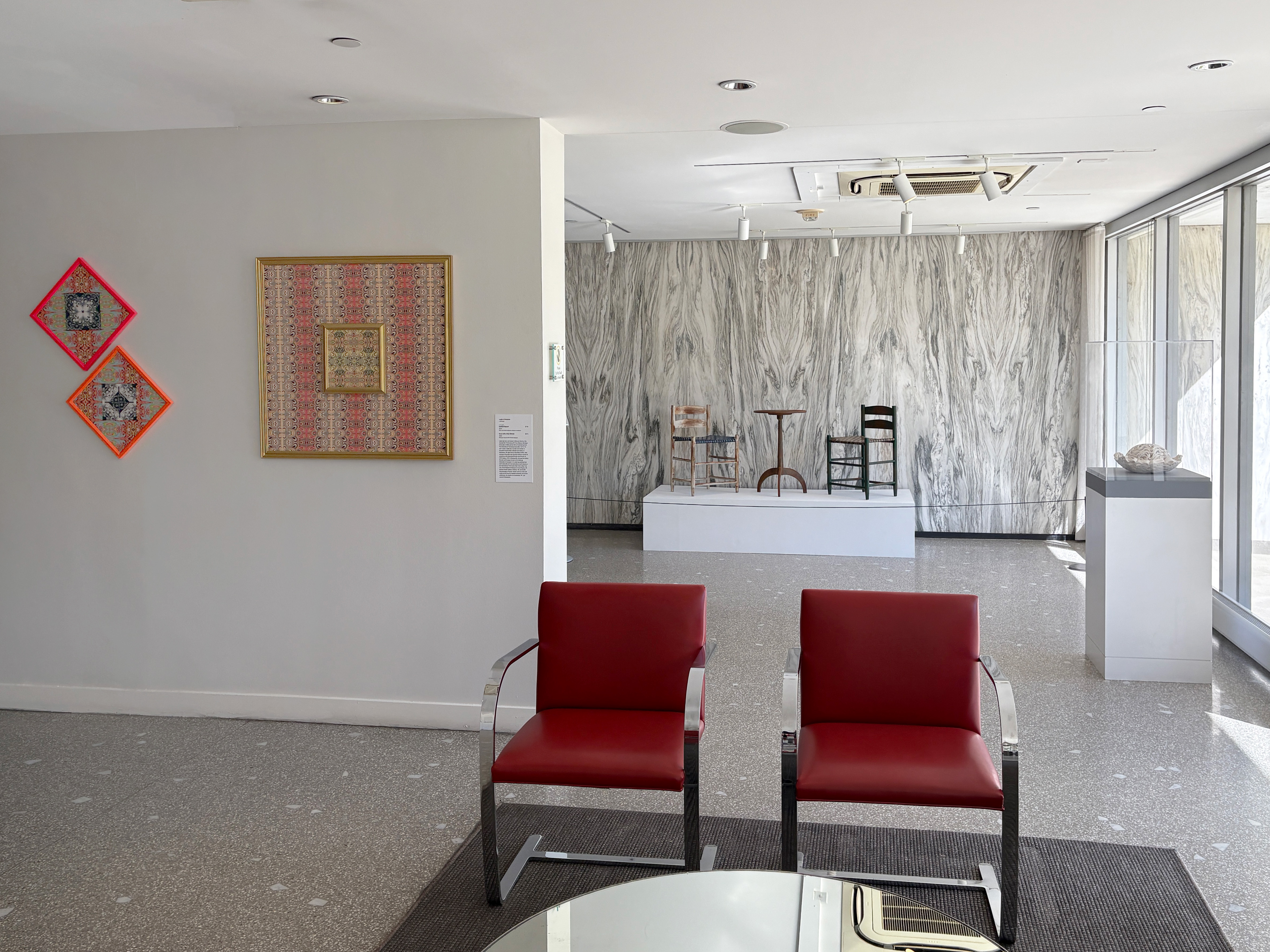
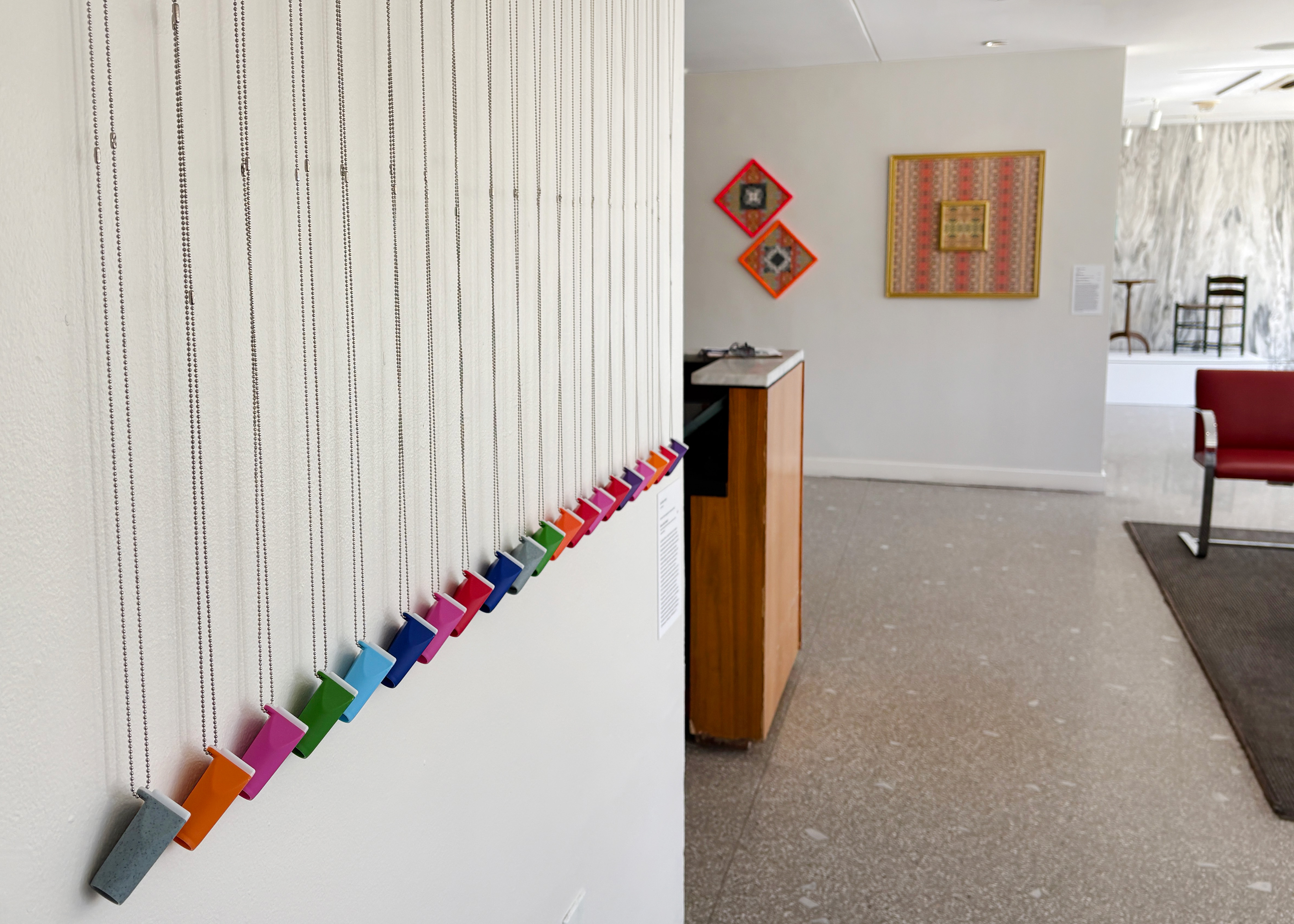
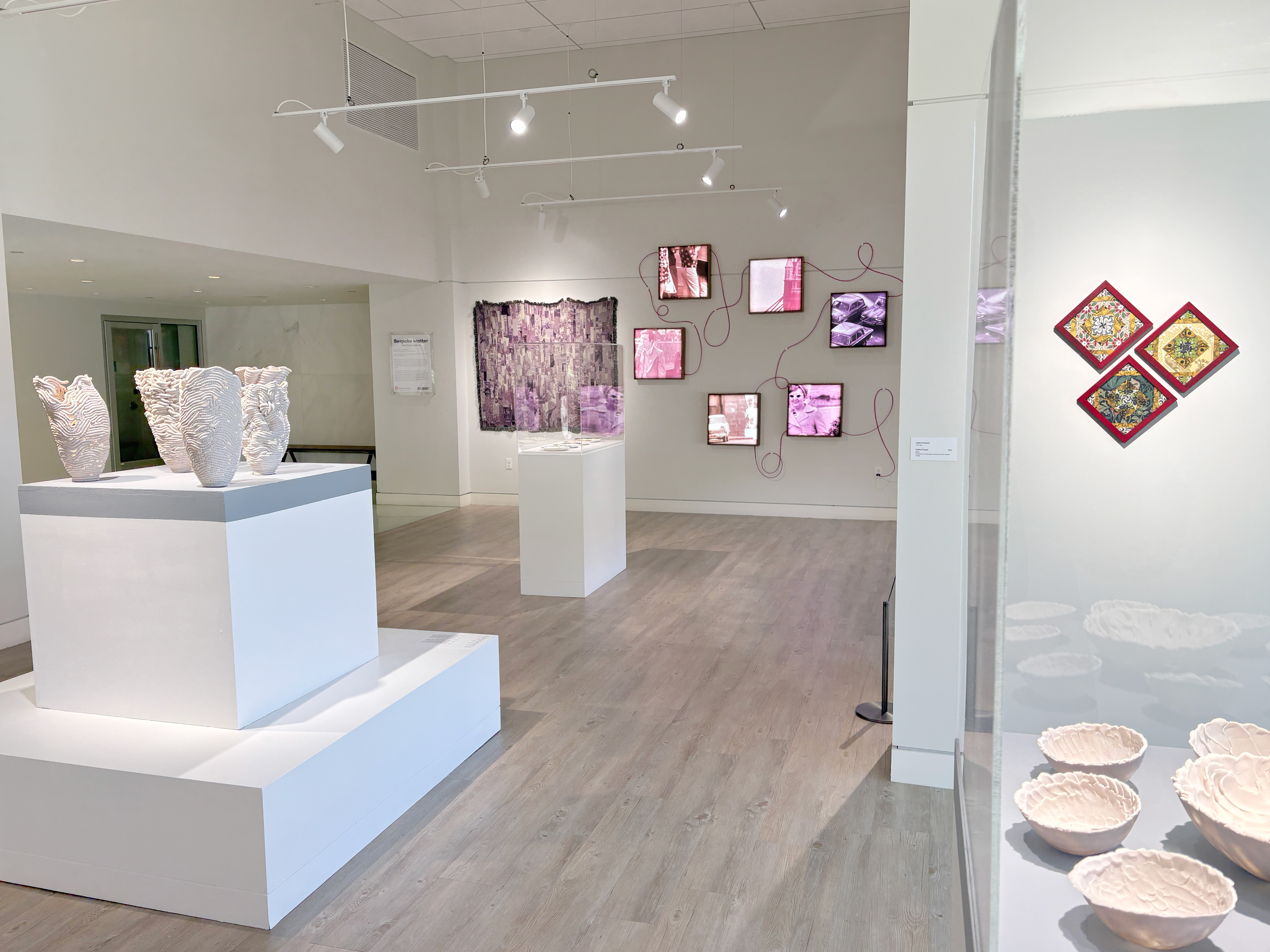
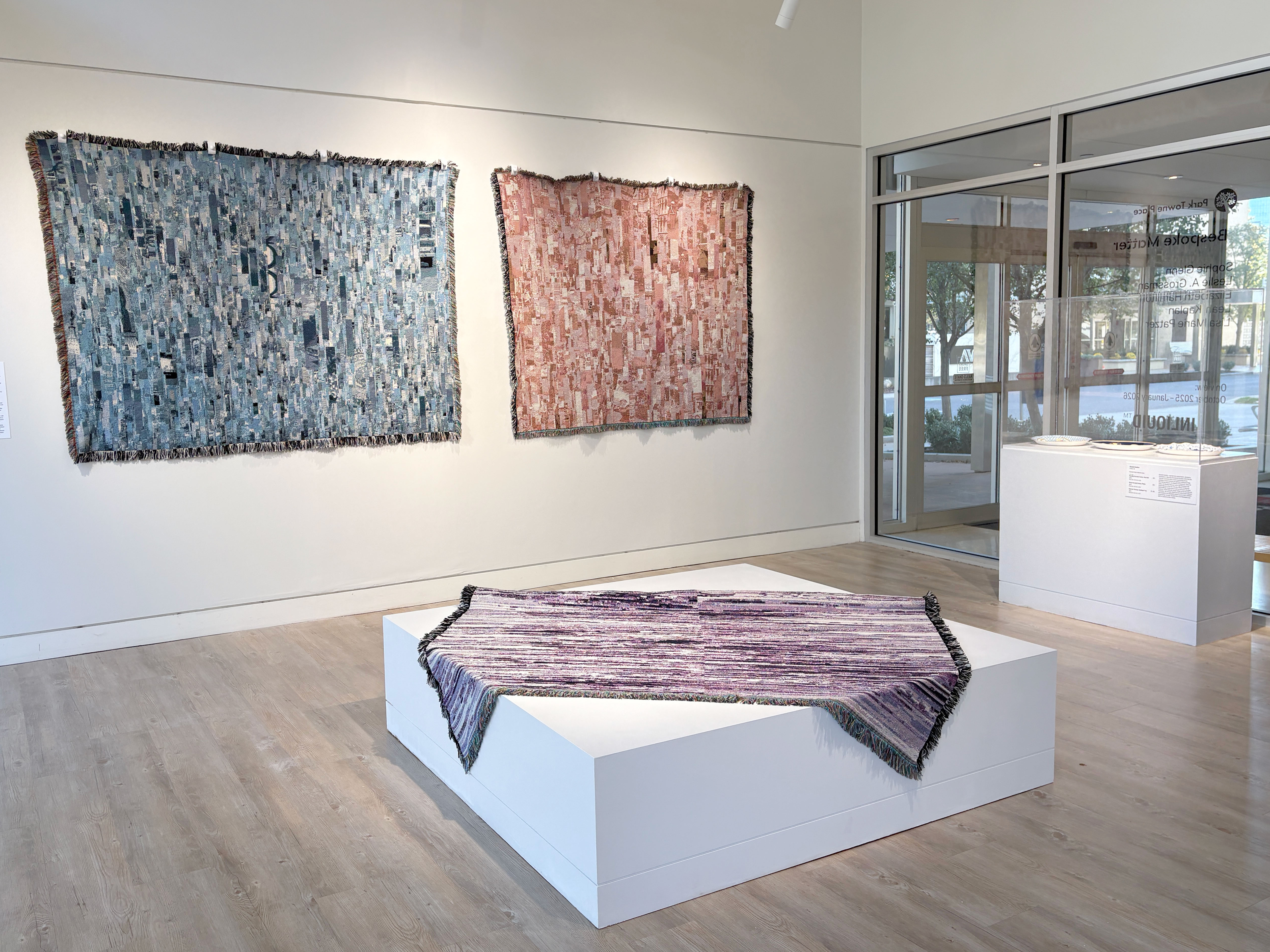
In Bespoke Matter, five artists challenge and expand these definitions; they explore traditional decorative arts through untraditional lenses. Their work poses a compelling question: What happens when an object is no longer functional? Including pieces representing furniture, wallpaper, decorative plates, porcelain vessels, and tapestry, Philadelphia-based artists Sophie Glenn, Leslie A. Grossman, Elizabeth Hamilton, Leah Kaplan, and Lisa Marie Patzer push the boundaries of craft, decorative arts, and traditional mediums.
Sophie Glenn
b. New York, NY
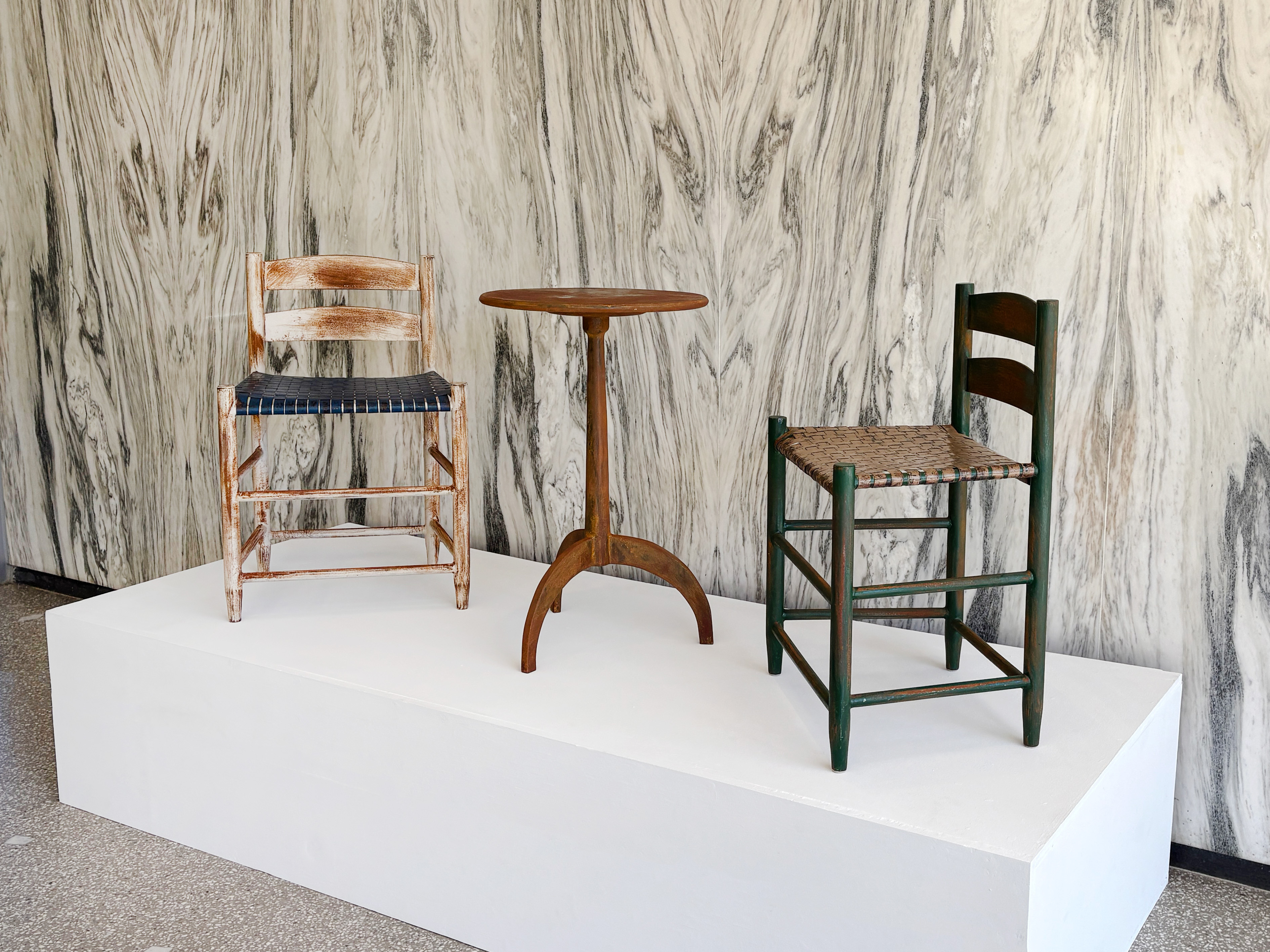
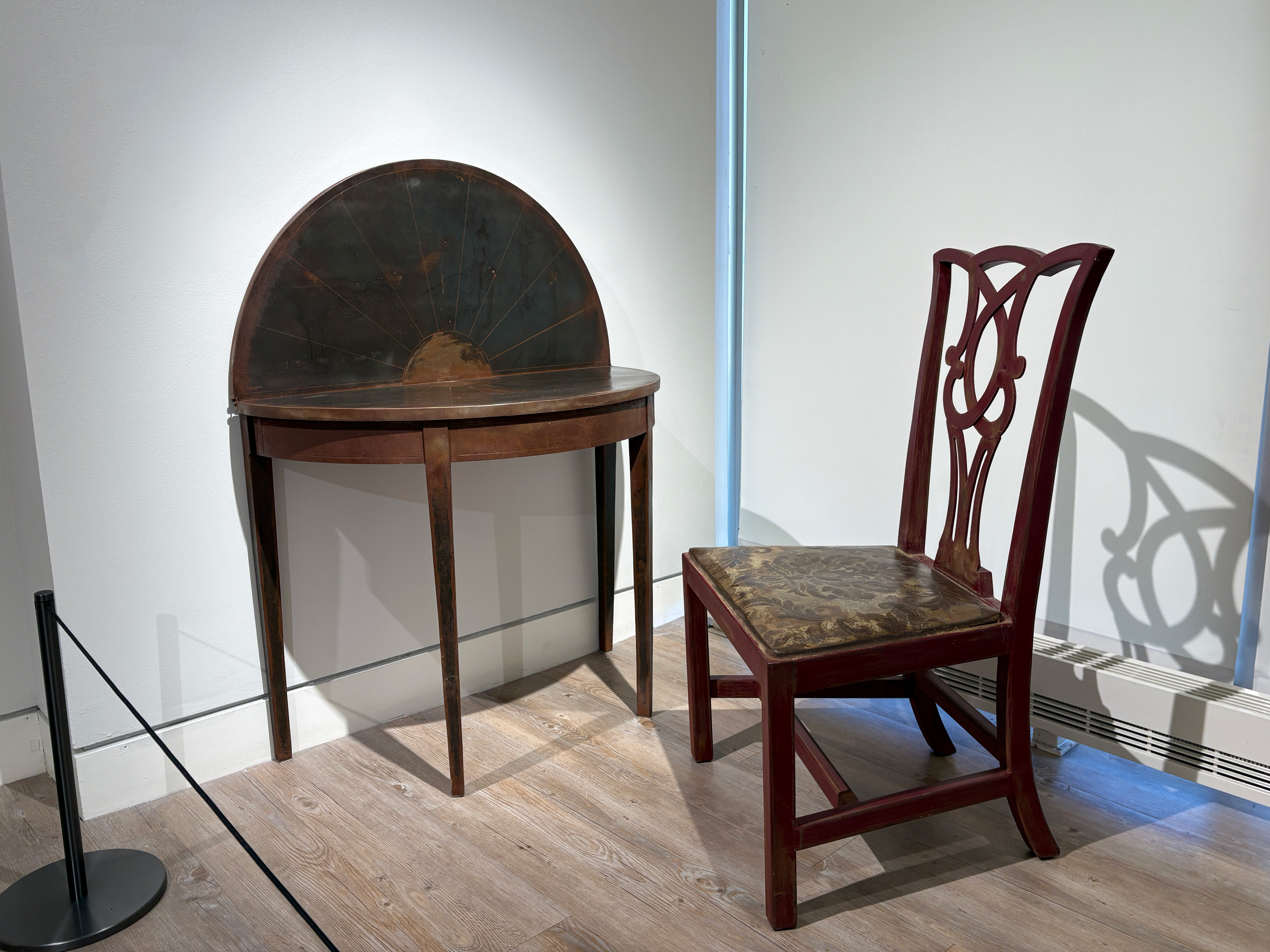
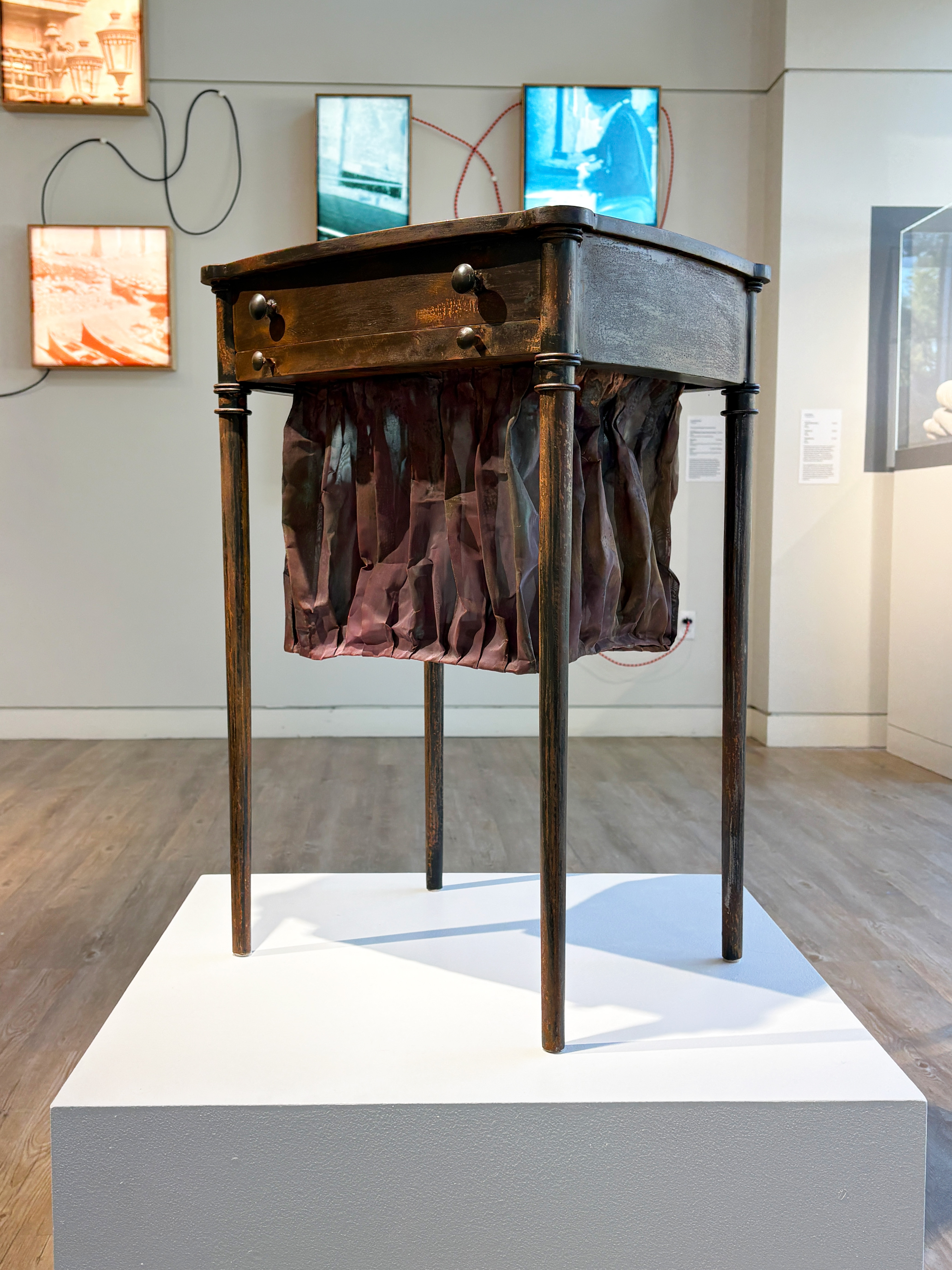
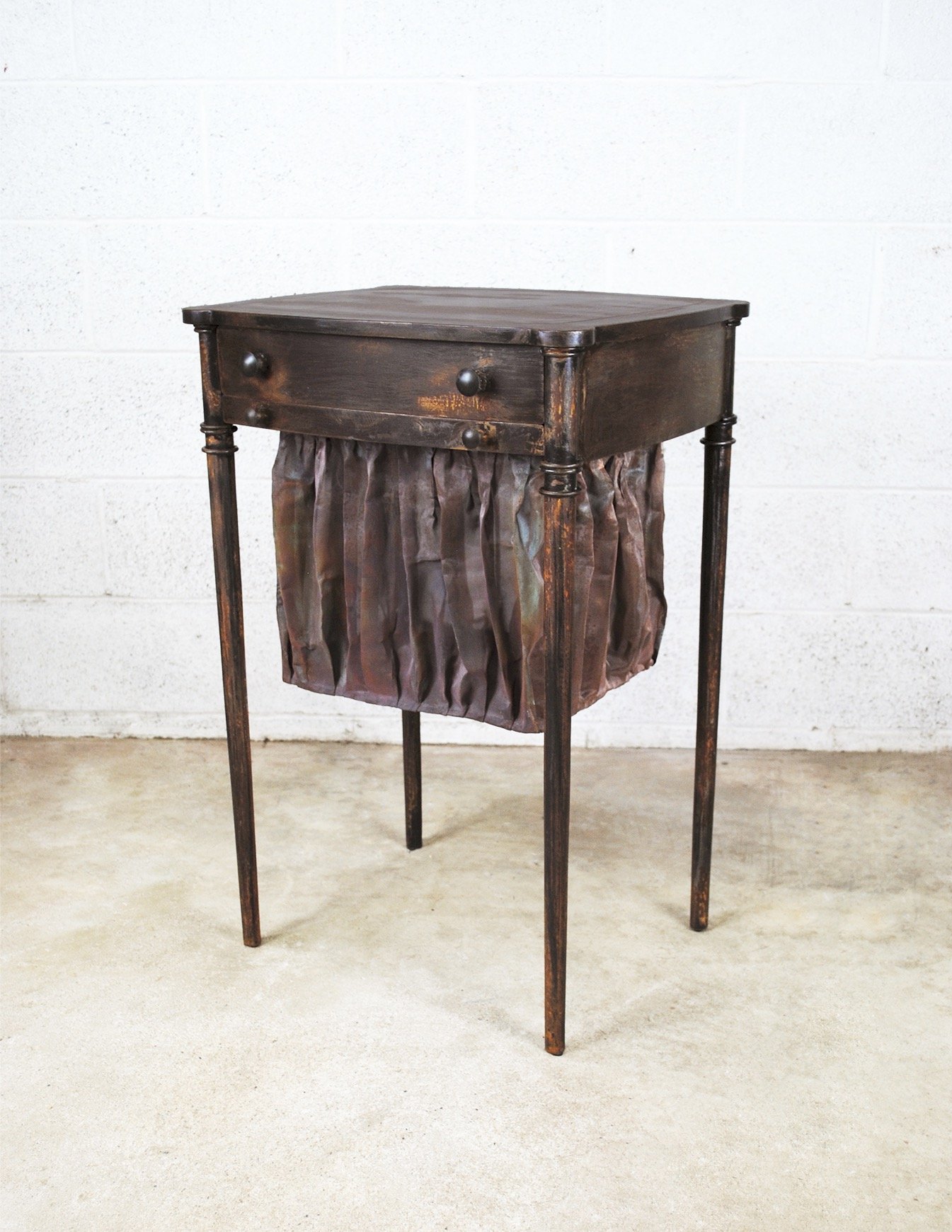
Sophie is a metalworker and furniture maker currently based in Reading, PA. She makes classic furniture designs recreated out of steel to give voice to women in both the woodworking and metal fields, and she utilizes steel in the making of her work to explicitly expand upon the materials that are considered to be part of the fine furniture making field.
Sophie received her MFA in Furniture Design and Woodworking from San Diego State University, and BFA in Sculpture and Drawing from SUNY Purchase College. She has exhibited her work across the country, including Blue Spiral 1 Gallery (NC), the Center for Art in Wood (PA), and the Metal Museum (TN), and has been fortunate to receive several grants, fellowships, and residencies to help advance her career, including the John D. Mineck Fellowship in 2022. Sophie currently teaches at Kutztown University, and has taught workshops at A Workshop of Our Own, Penland School of Craft, Arrowmont School of Arts and Crafts, the Appalachian Center for Craft, and Haystack Mountain School of Crafts.
Statement
“I recreate classic furniture designs completely out of steel as a means of self-discovery and commentary on the fields of furniture making and woodworking, metal fabrication, and sculpture. For years, I thought that I needed to be a woodworker in order to make furniture, even though steel was my material of choice, and for years I tried to combine these two materials together in meaningful ways. After making lots of uninspired works, I decided that I needed to completely eliminate wood from my work in order to make the furniture that would bring me joy.
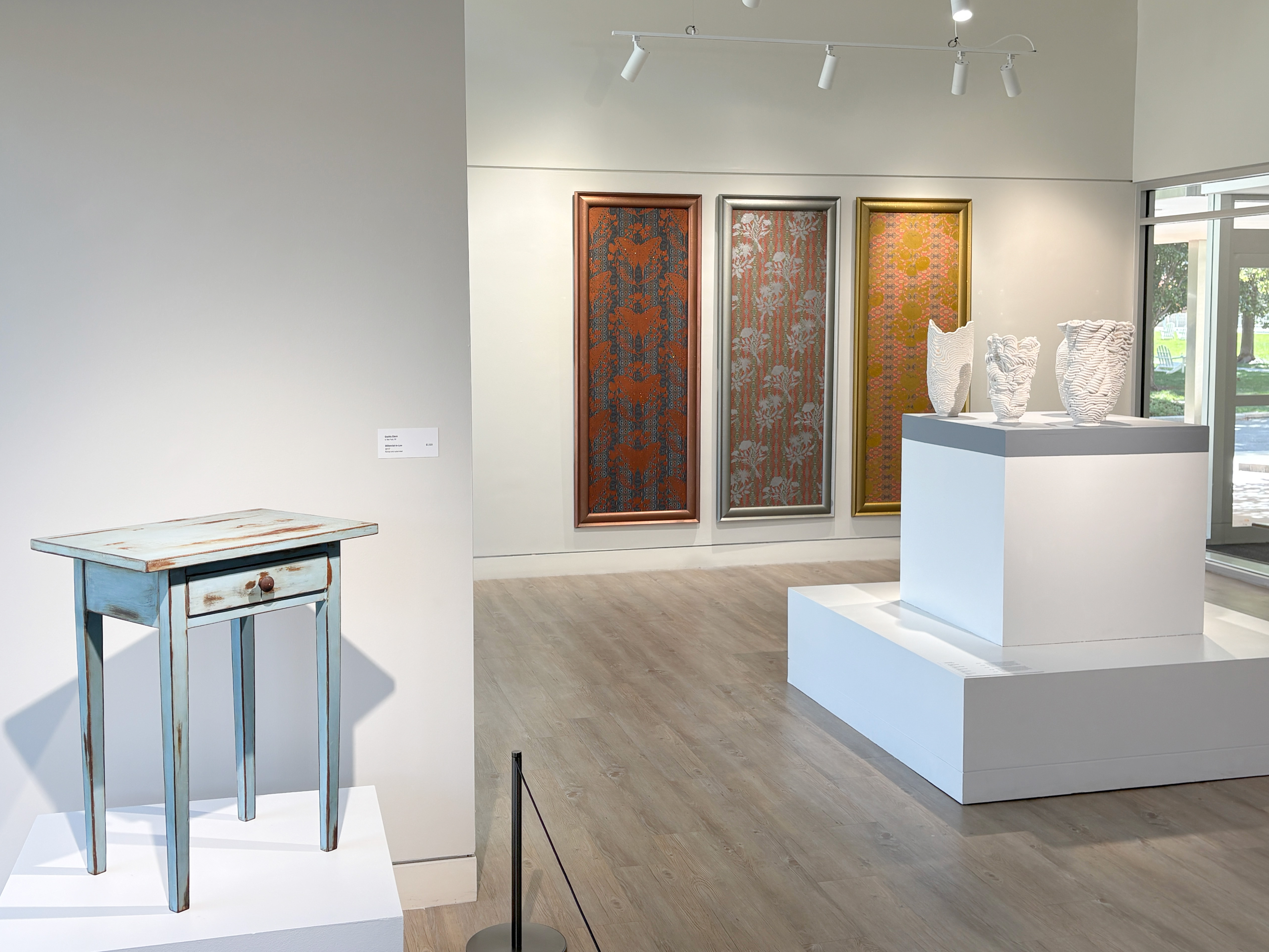
Through this body of work, titled ‘Rust Never Sleeps’, I am able to pay homage to and in some ways make fun of furniture making and woodworking. The results are pieces which look like worn, wooden antiques, but are actually rusted steel sculptures of familiar furniture forms. Most of my works employ hollow form fabrication techniques and welding, but I also work metal in different ways, such as coiling and weaving steel wool seats or using perforated sheets to mimic caning. Doing this ensures that I can more closely replicate the original works but also highlight the versatility of the material. I find that welding and steel fabrication often get overlooked in the craft world, particularly in furniture making, so I want to show off the potential of these two fields.
I recognize the absurdity of making rusty, non-functional furniture sculptures, which is why I often give my pieces silly titles, or use pop culture references to elicit humorous responses from viewers. But I also see this as a complement to the history and perceived seriousness of woodworking and furniture making. Creating a perfect set of dovetails is of little interest to me, but I want to make furniture that sparks joy and surprise within viewers, while also provoking thoughts about the furniture we live with and the materials we encounter everyday.”
Leslie A. Grossman
b. Michigan
Leslie was born and raised in Midwest America. She received her Printmaking BFA from Western Michigan University in 2008 and her MFA in Printmaking from The University of Tennessee-Knoxville in 2012. For over 3 years, Leslie was a curator and member of Exquisite Corpse Artist Collective and Gallery in Kalamazoo, MI, which she co-founded in 2005. After moving to Knoxville, she remained active in curatorial practices as the Associate Director and Director of UTK’s Gallery 1010. Following this, she was the Gallery Director and Campus Curator at St. Ambrose University in Davenport, IA. Leslie has exhibited her work nationally and internationally at such venues as the International Print Center New York in New York City; Grand Rapids Art Museum in Grand Rapids, MI; Barbara Archer Gallery in Atlanta, GA; and Grafiki Warsztatowej in Poznan, Poland, and her prints and books can be found in multiple university and private collections. Her studio is in Lansdowne, PA - just outside Philadelphia.
Statement
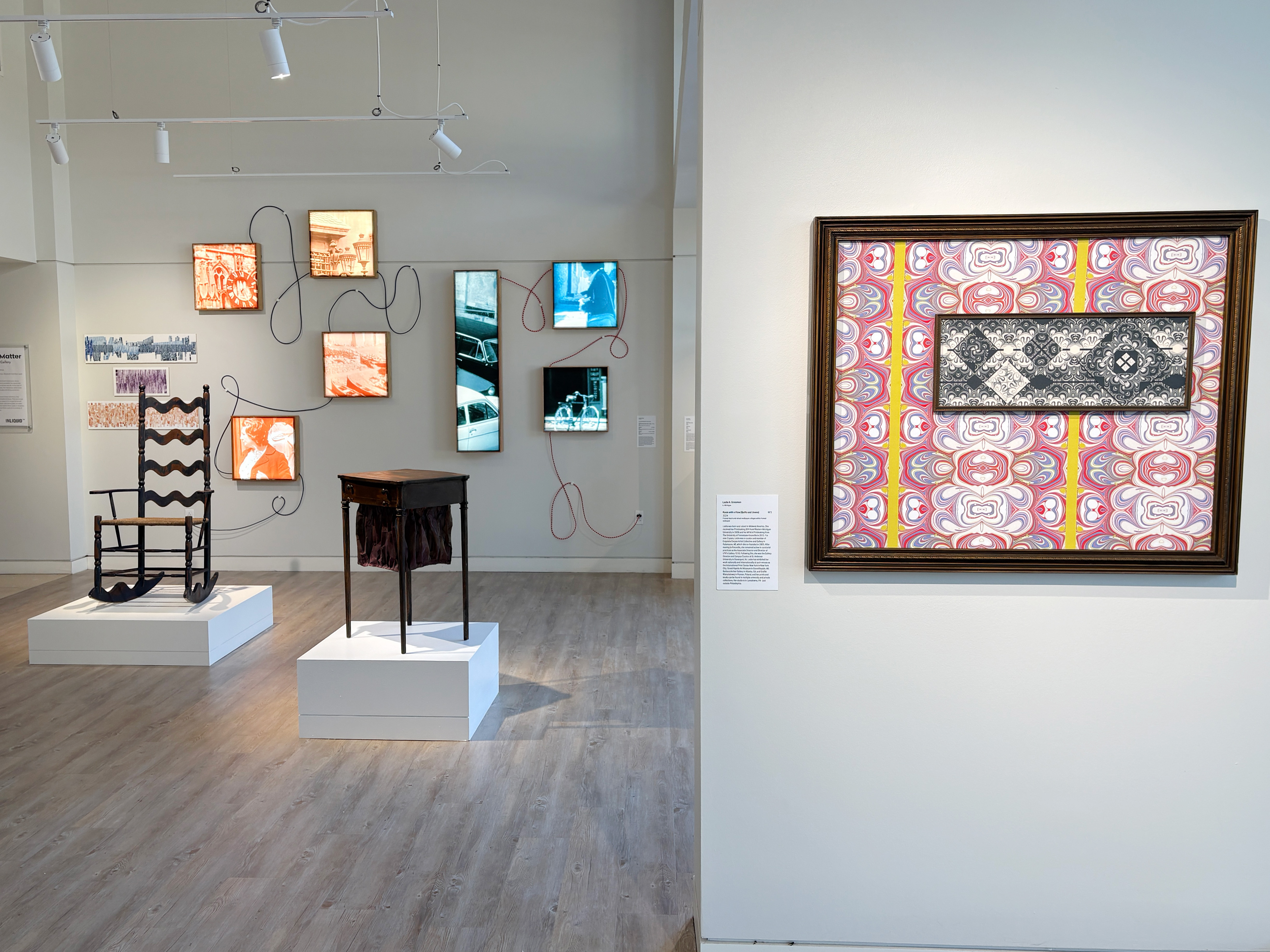
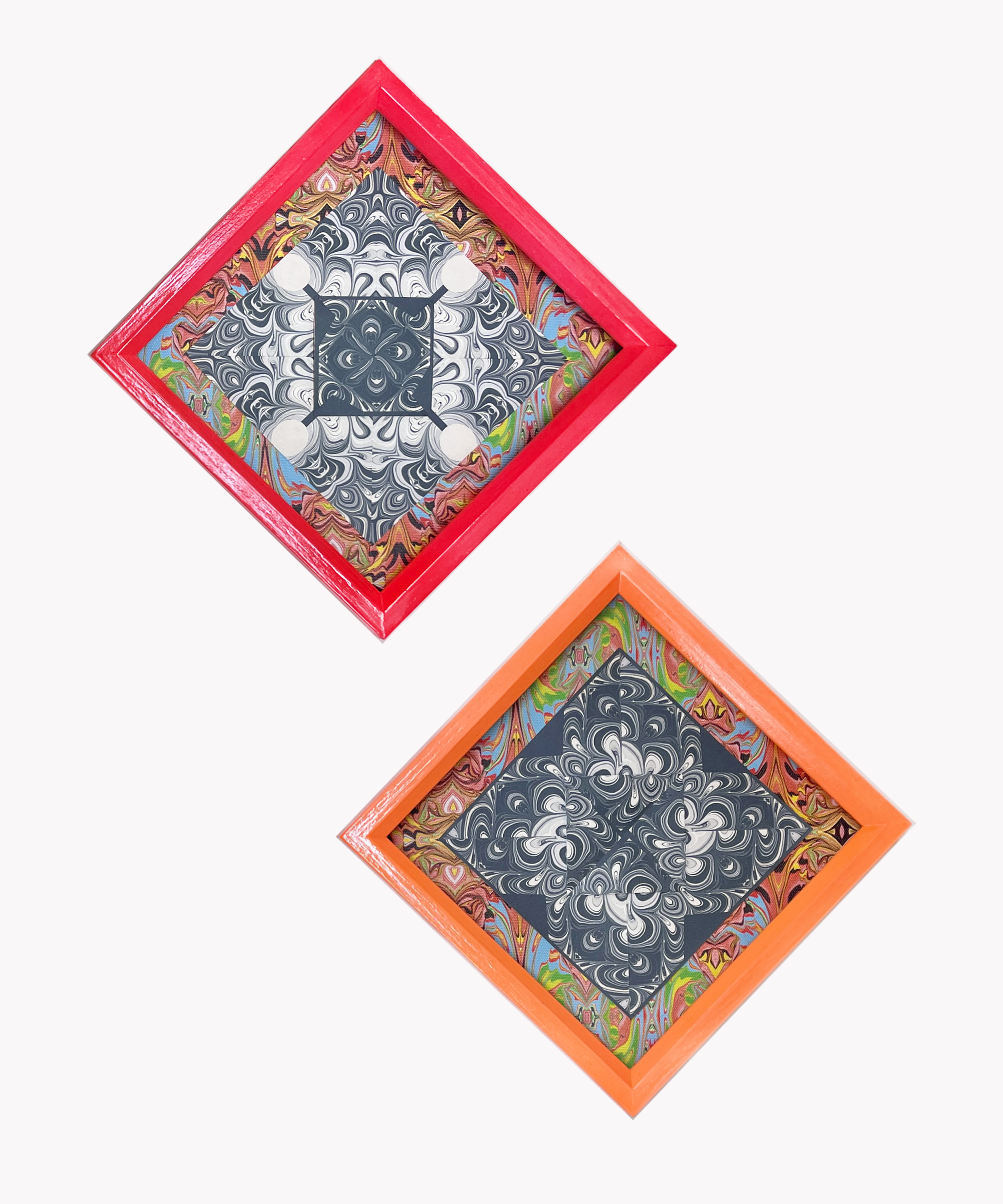
“My work is informed by patterns and how they relate to the unique development of people and places. The wallpaper patterns I create and use in my pieces are inspired by the multitude of different aesthetics I’m attracted to. I describe these patterns as “Psychedelic Victorian,” as they combine the ornate characteristics of the late 1800s with the brightly colored kaleidoscopic features of the 1960s-80s. The Pattern and Decoration Movement – which celebrated ornamental and decorative craft, motif-mixing, material-mashing, and unabashed use of color – additionally influences my work.
Most everything I make begins with a single component that is methodically segmented and reassembled, yielding an entirely new form. The wallpaper designs originate from my handmarbled papers. I digitally scan small areas of the papers and rearrange them through tiling and repetition, sometimes incorporating additional shapes. The finished pattern is printed on paste-up wallpaper. Those are cut, collaged, and embellished, adopting other crafting techniques like quilting, weaving, and flocking. Throughout these processes, I ensure that a memory of each stage (especially its original component) is saved within the final piece. The densely packed, hyper-detailed, and pattern-rich compositions are framed, creating a balance of visual chaos with an element of calm containment.
Having lived in more than thirty homes across many cities and states, I often return to themes of home, memory, relocation, and filled spaces. My creative process involves multiple stages of development, reconfiguration, and transformation, much in the same way I have packed up, moved, and reorganized my personal belongings so many times in my life. The framed wallpapers suggest a sense of peering through a window into my maximalist design tendencies where patterns reminiscent of my personal nostalgia are patchworked together... much like what’s found in my own home’s décor.”
Leah Kaplan
b. Kansas City, MO
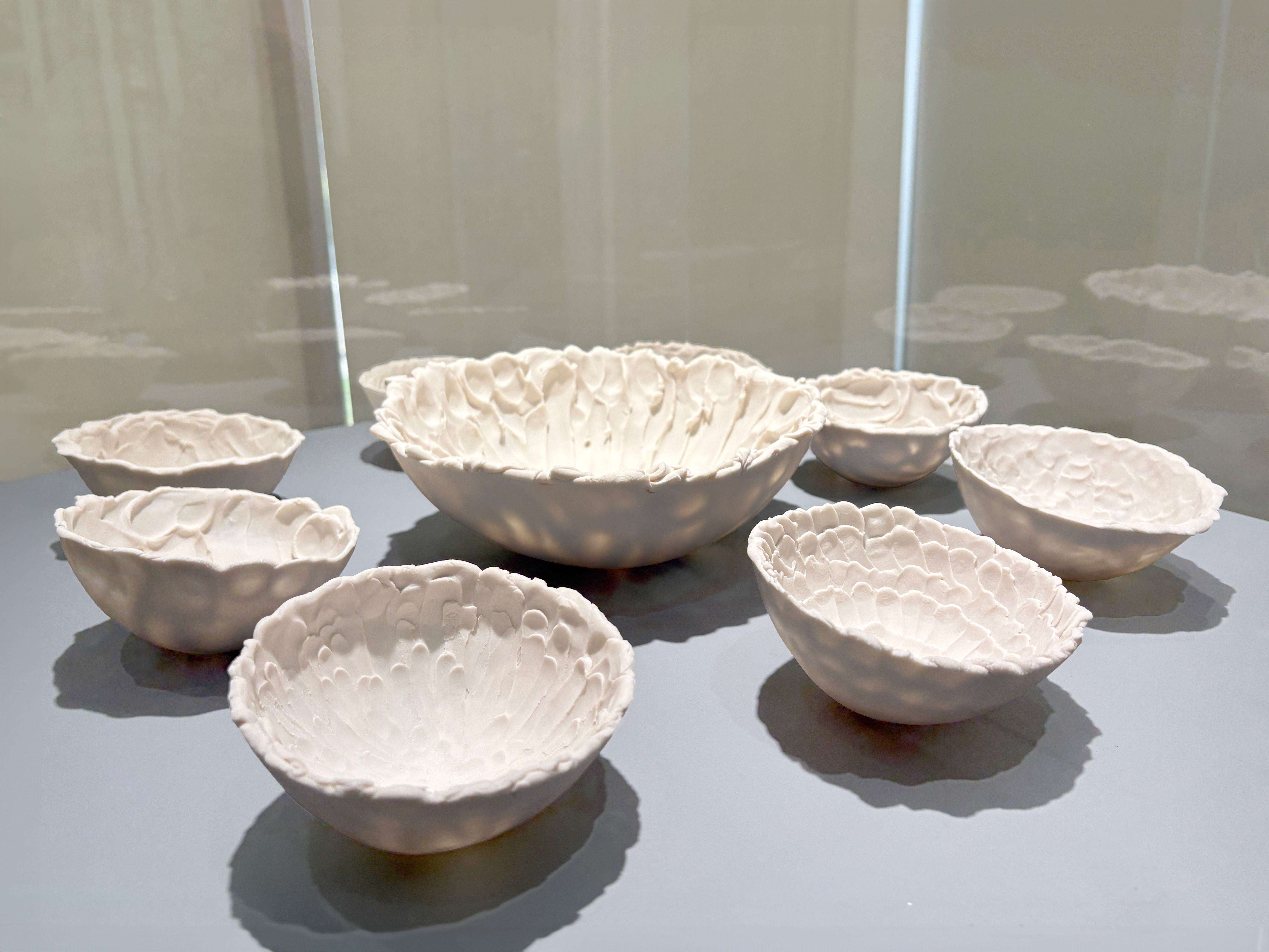
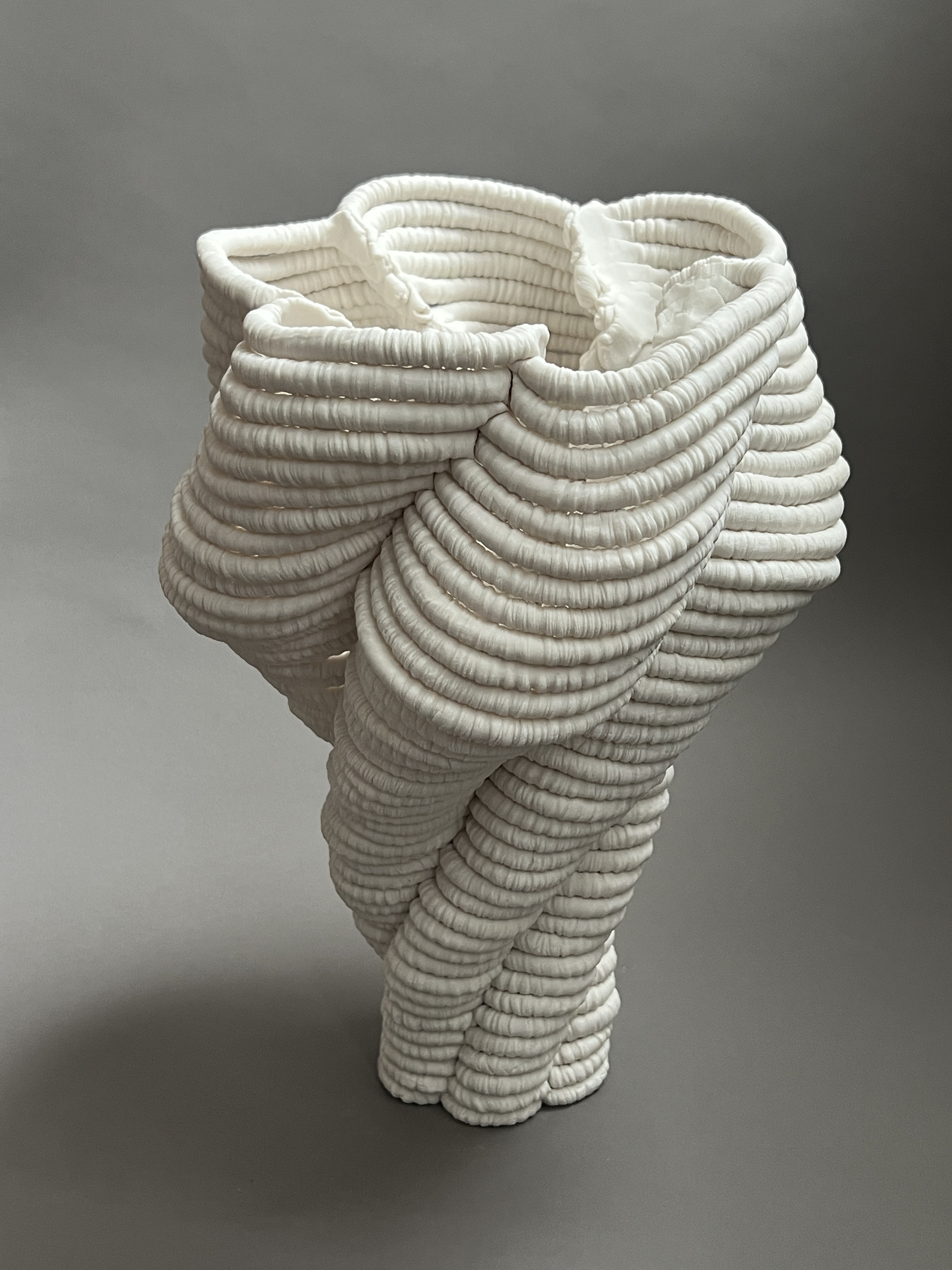
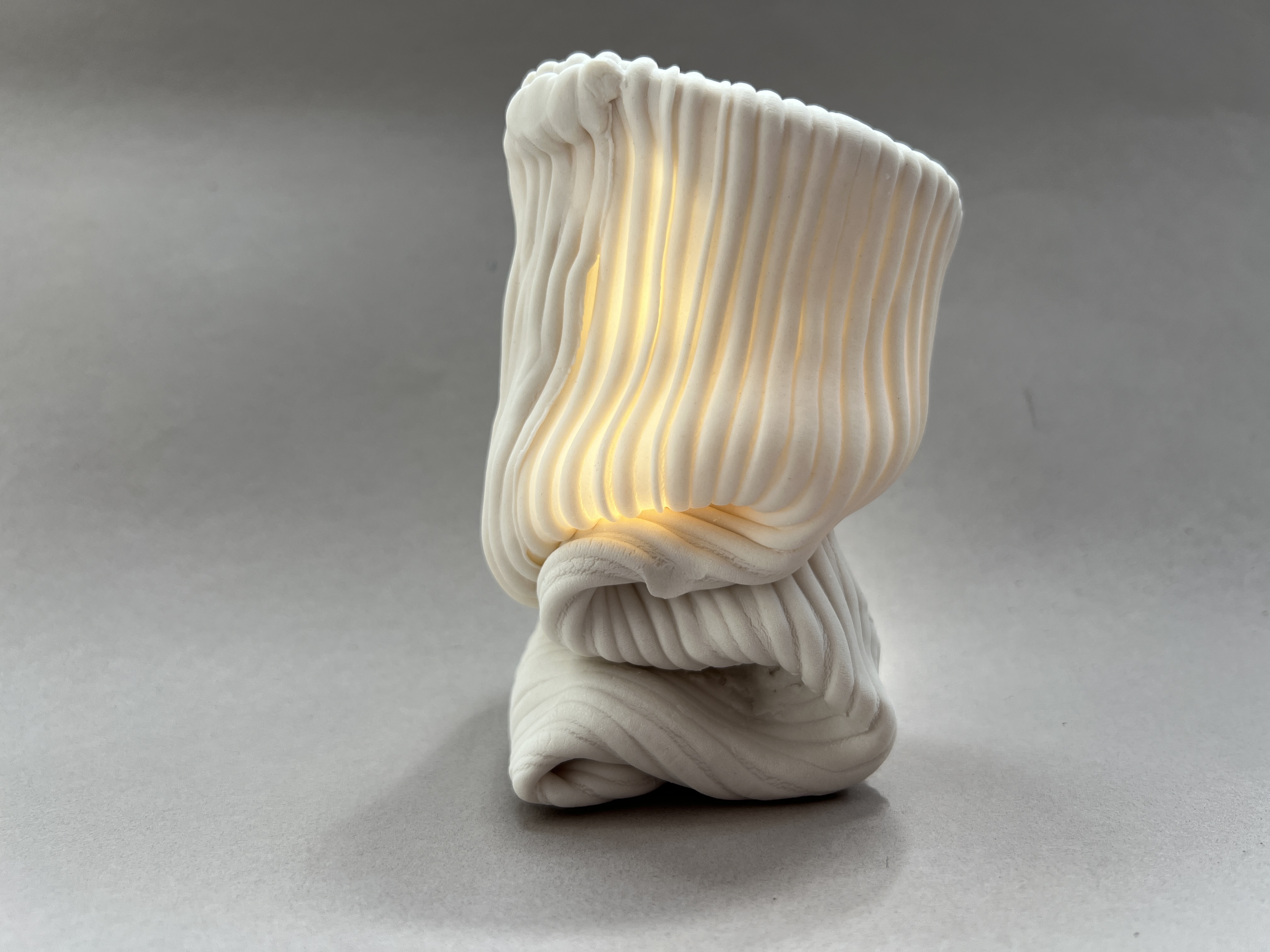
Philadelphia-based artist Leah Kaplan has worked in clay for nearly four decades, creating sculptural vessels that explore light, shadow, line and texture. Employing age-old handbuilding techniques — pinching, coiling and slabs — in innovative ways, Kaplan crafts pieces that often reference textiles or basketry. The fluidity of her forms reflect years of experimentation and refinement.
Prior to establishing her full time art practice in Old City in 2019, Kaplan was an associate artist at The Clay Studio. Her work has been shown in exhibitions throughout the US and internationally, including Homo Faber in Venice, Onna House in East Hampton, NY and the Chautauqua Institution, NY. Her work can also be found in both corporate and private collections.
Statement
“About 15 years ago, I started working exclusively with porcelain, drawn to its whiteness and plasticity. I did not know it at the time, but that obsession sent me down a path where materiality became everything. I gradually dispensed with glazes and colorants. The more I narrowed my practice, the richer it became, with one discovery leading to the next and then the next. Above all, I realized I love incorporating an element of surprise in my work — as much for myself as for the viewer. I enjoy pushing porcelain to its brink: how thin and translucent can I get it? How do I capture movement? How do I make the inside of a vessel as important as the outside? A late bloomer, I have stored up a lifetime of questions. And when I stumble upon a satisfying resolution, it is addictive in the best possible way.”
Lisa Marie Patzer
b. Colorado
Lisa Marie Patzer is a digital media artist, designer, and entrepreneur who creates site-specific art that integrates light, pattern, historic imagery, and vibrant color. Having access to early digital video cameras and editing equipment, Lisa Marie began integrating analog and digital processes in the early 2000’s. She went on to earn an MFA in film and media arts from Temple University in 2013 while simultaneously studying interactive video in New York City. In recognition of her contributions to new media art, she received the prestigious Pew Fellowship in the Arts in 2019. The following year, she was awarded the Sachs Arts and Innovation grant from the University of Pennsylvania. In 2022, Lisa Marie founded her company Lisa Marie Patzer Studio, where she works with private clients, interior designers, and individual business owners to create site-specific work for bespoke commercial settings and private residences. Lisa Marie is a member of InLiquid Gallery. Her studio is located at the Studios @ The Delaware Contemporary Art Museum in Wilmington, DE.

Statement
Lisa Marie Patzer’s artistic practice celebrates memory and history by reimagining archival materials in new visual forms. Using cutting-edge digital techniques, Patzer transforms archival content into luminous arrangements for contemporary audiences. Her process is a form of visual dialogue involving historical research, collaboration with curators, and deep listening to place.
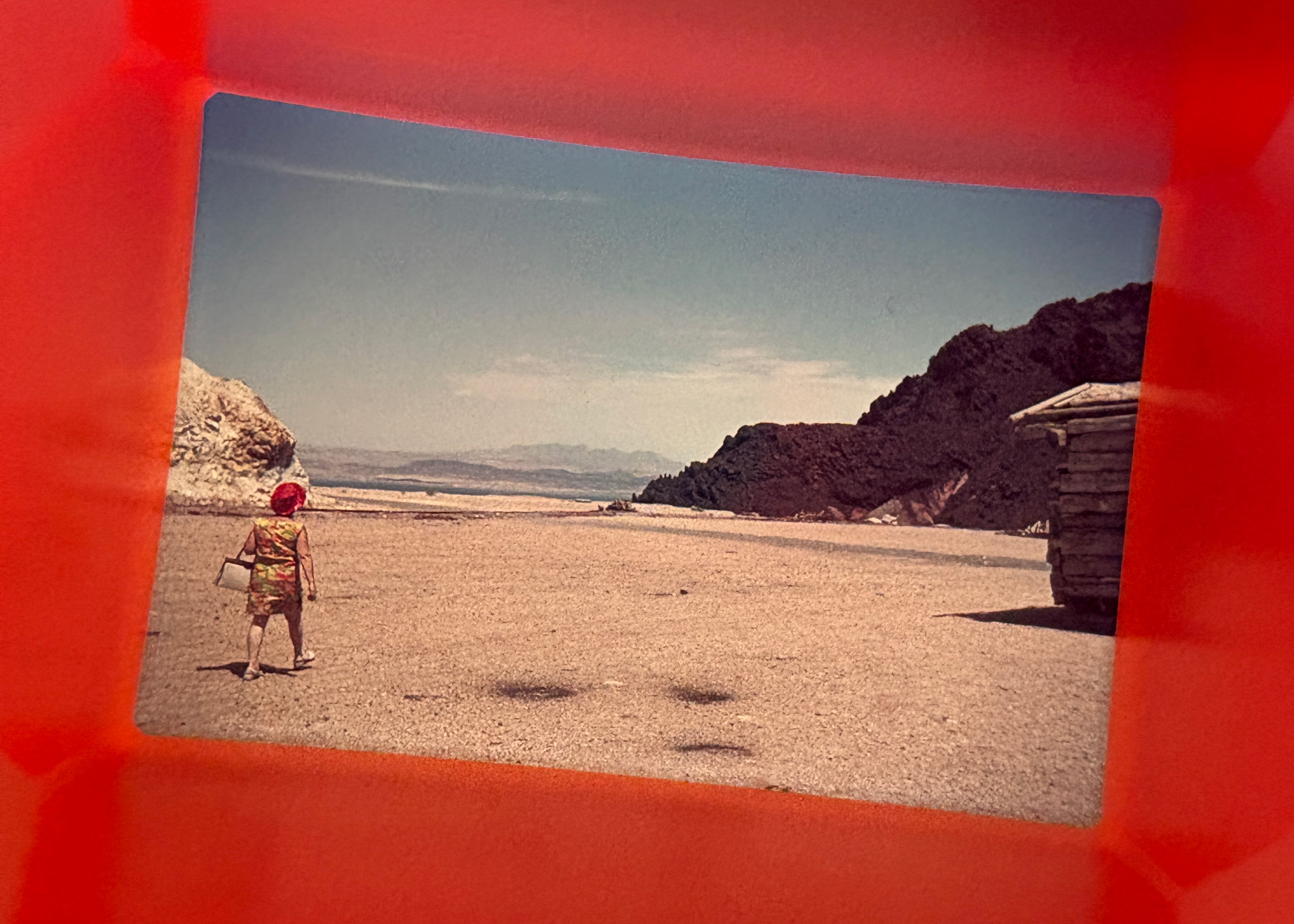
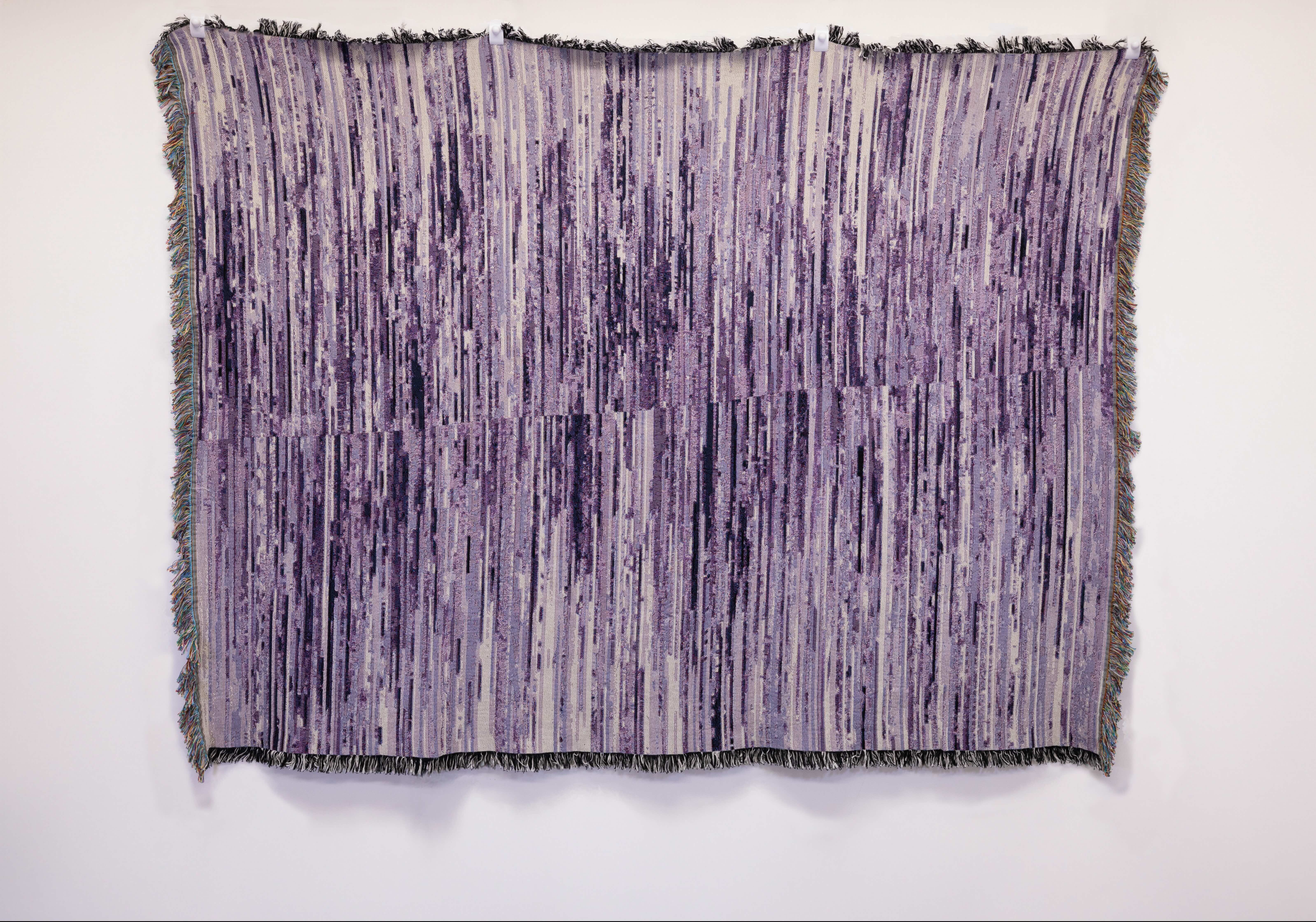
Chromatographic Landscapes includes a series of illuminated art panels arranged as vignettes, digitally woven tapestries, and data visualizations based on the color values of a collection of 35mm slides. Employing digital chroma-sorting processes, Patzer scanned, separated, and reconfigured images derived from more than one thousand slides. Originally captured by photographer Ben Kabakow during the mid-1950’s, the slides reflect his view of life in New York City and international travel.
Lisa Marie Patzer’s treatment of this large archive emphasizes a data-based approach, utilizing new technological tools to make sense of large amounts of information. By removing personal bias from the selection process, instead relying on computer vision and automation, the process became interpretive and generative. The result is a colorful set of vignettes and landscapes that are abstracted from the original context inviting the viewer in for playful association.
This body of work was inspired by and made possible through the generosity of Deb Rudman, Kabakow's granddaughter. Also available for show are a selection of slides from the original source material by Ben Kabakow, viewed through individual slide viewers.
Elizabeth Hamilton
b. Boston, MA
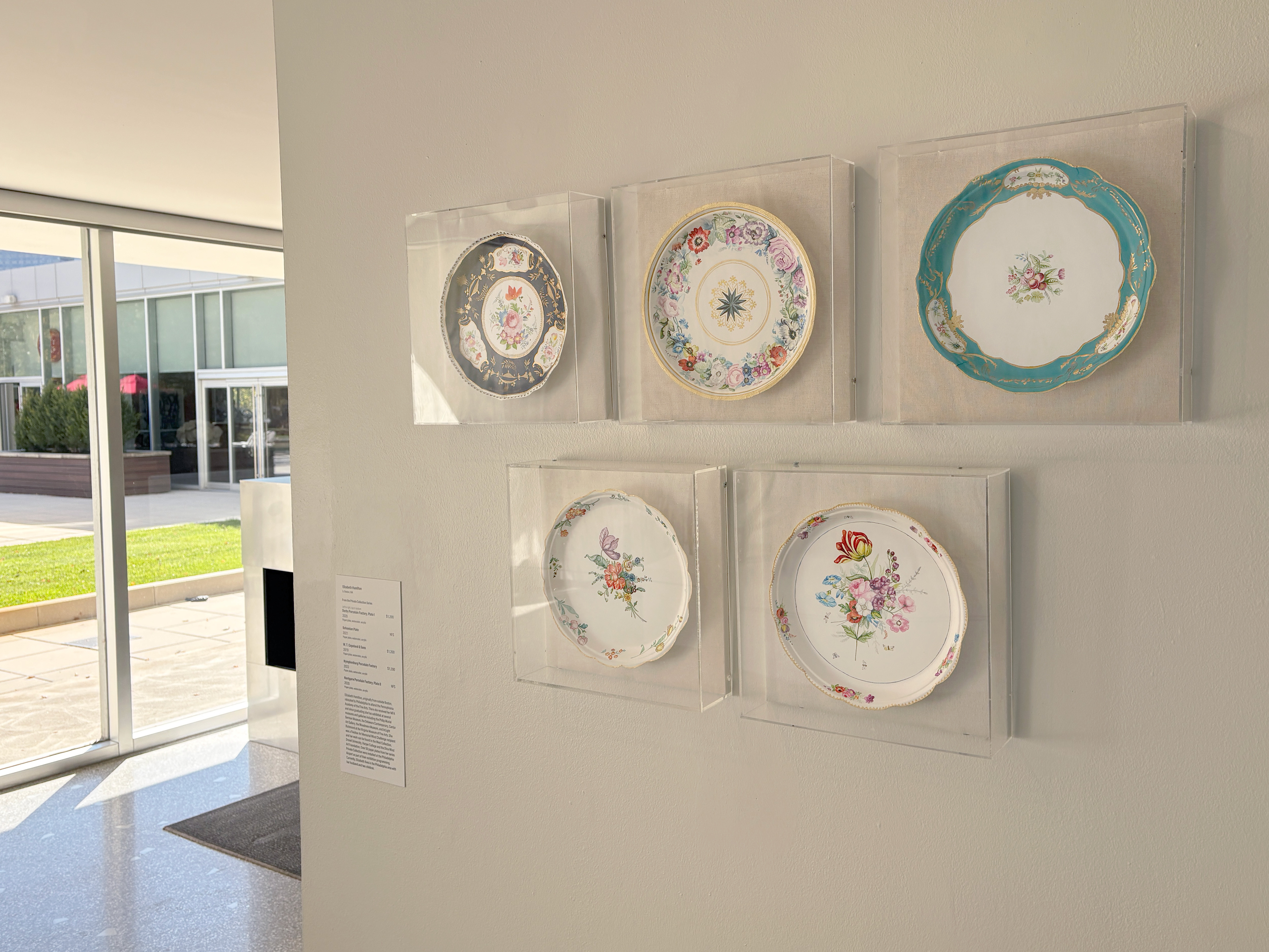
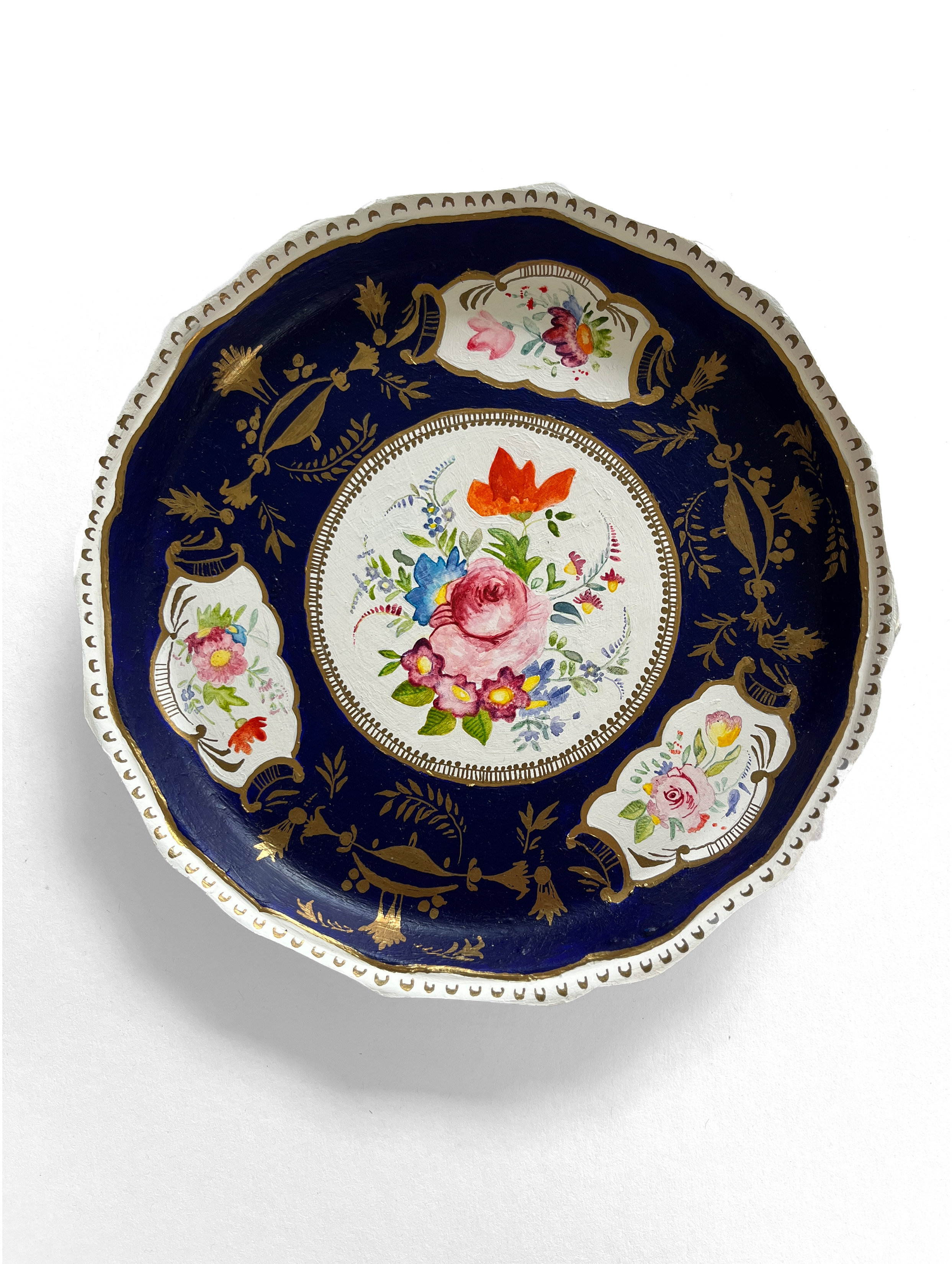
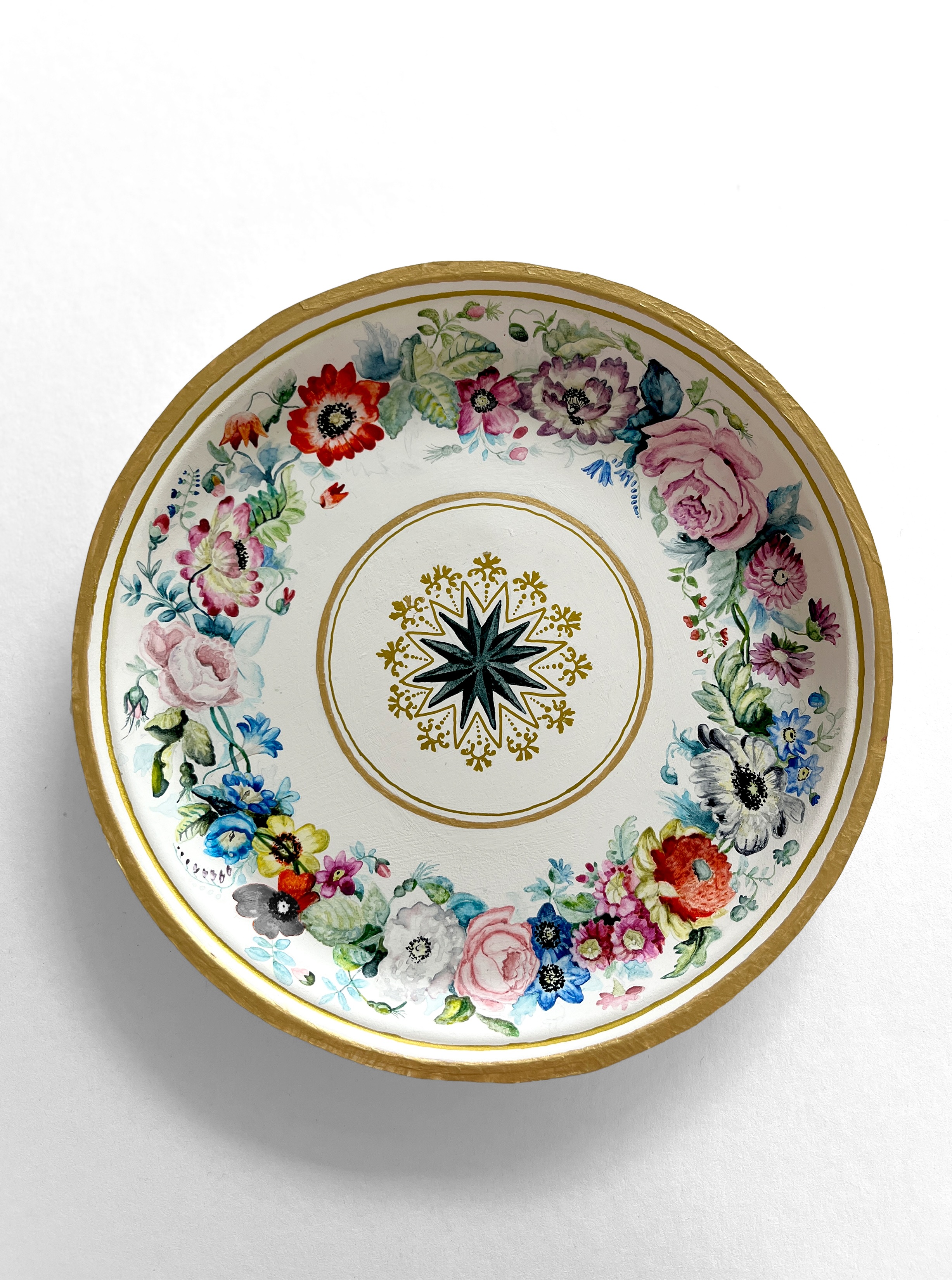
Elizabeth Hamilton, originally from outside Boston, relocated to Philadelphia to attend the Pennsylvania Academy of the Fine Arts. There she received her MFA and since graduating she has exhibited at several museums and galleries including the Philip Muriel Berman Museum, the Delaware Contemporary, Cantor Art Gallery, the Woodmere Museum and InLight Richmond at the Virginia Museum of Fine Arts. She was a Samuel Fleisher Wind Challenge recipient and her work can be found in the West Collection, Drexel University, Harper College and the Dina Wind Foundation. Over 50 paper plates from her series Private Collection were installed at the Philadelphia Airport as part of their exhibition programming. Currently, Elizabeth lives in the Philadelphia area with her husband and two children.
Statement
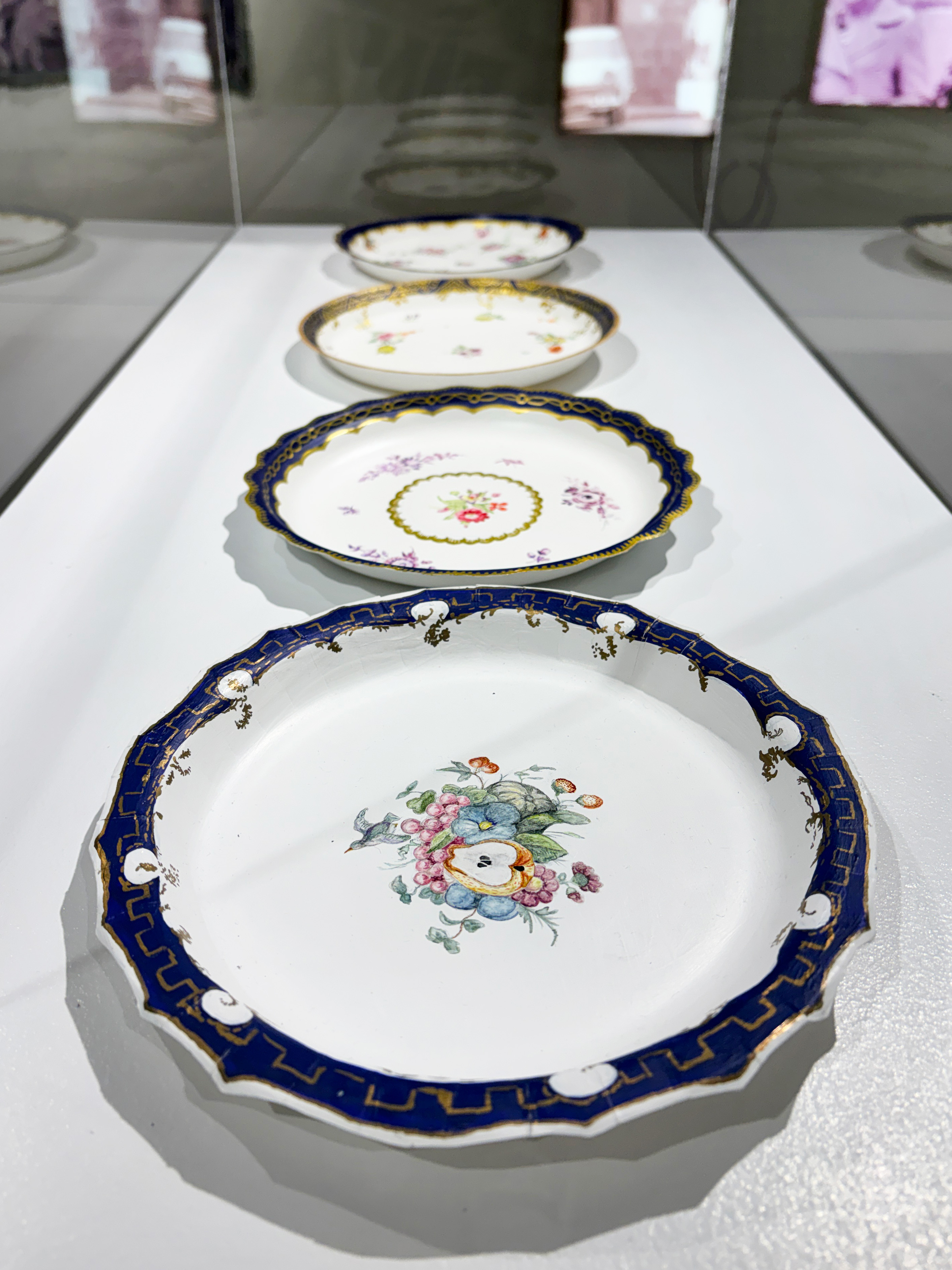
“My work is based in personal narrative and explores family relations, ancestry and grief. While I often work with sculpture, installation and drawing, I don’t feel aligned to one material. Rather, I enjoy working with different mediums and am interested in the ability of a material or process to communicate a concept. Domestic objects and settings are staples in my pieces because the structures we live in and objects we live with are a large part of how I understand my place in the world. Altering, repurposing and recreating these familiar companions help me connect intimate rituals to larger, universal experiences. The "Private Collection" series is an ongoing project where I transform paper plates into replicas from the Philadelphia Museum of Art’s permanent collection, specifically their 1700 - 1900 European Decorative Arts collection. Through cutting and painting, the paper plates attempt to accurately resemble highly valuable chinaware that were not only popular when they were originally created, but often passed down from one generation to the next. This series explores the intersection of value, inheritance and loss.”


