


Undercurrent

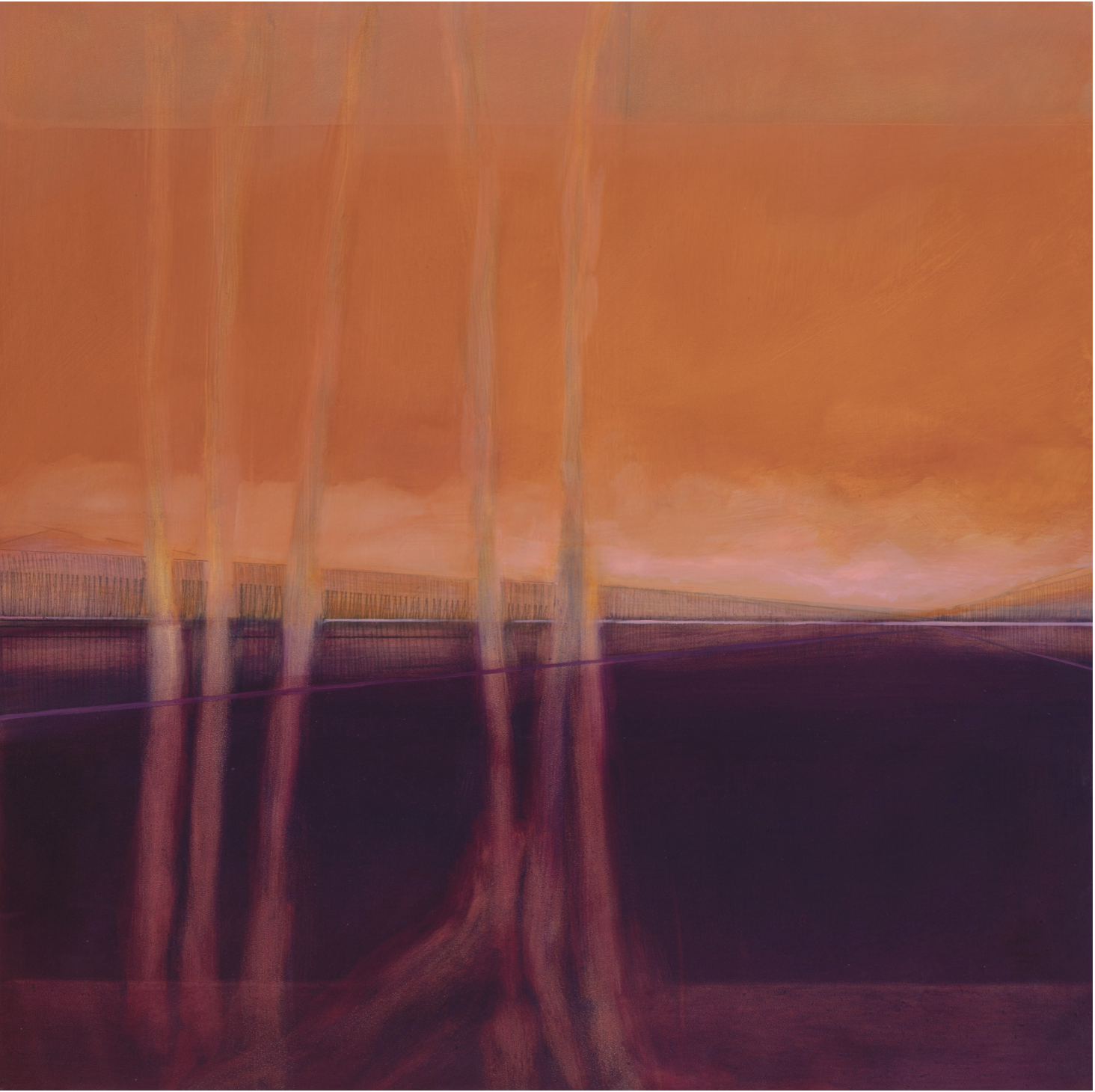
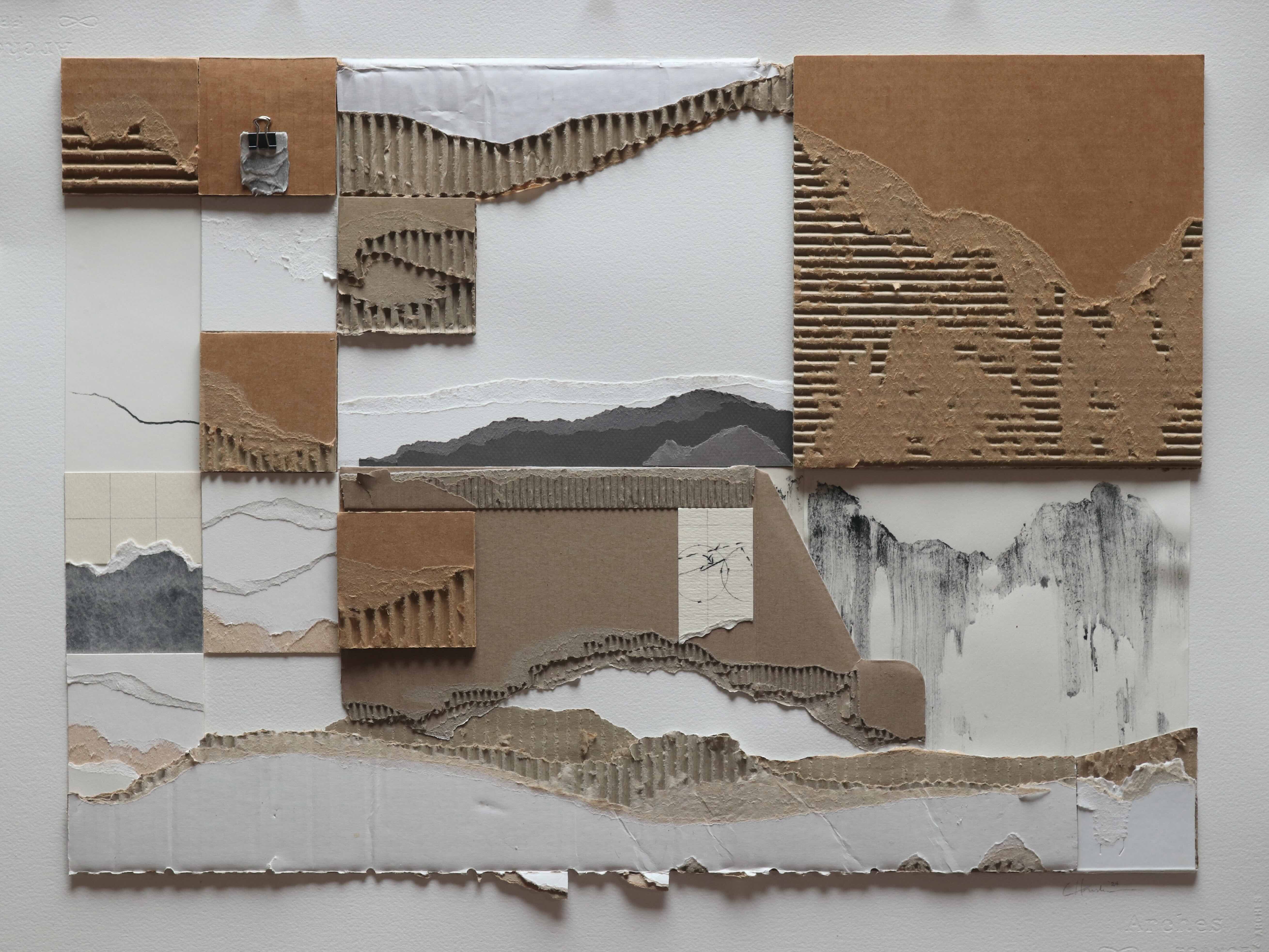
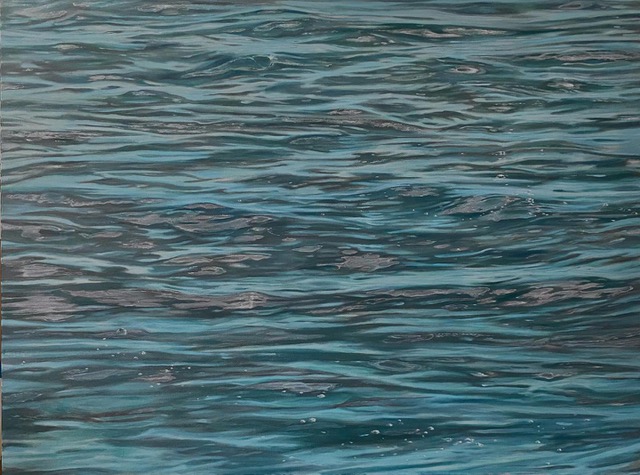
Undercurrent features work by three artists who draw inspiration from the deep observance of bodies of water, and the marks they leave behind. Christopher Houston is directly inspired by the mark making left behind by waves dragging sand across the shore, and the direct link that can be drawn between the ocean as an artist and an artist as a mark maker. Christopher’s torn paper acts as a textured border reminiscent of the edge of a wave, and plays with texture that is directly impacted by what was removed. Kirby Fredendall moves the viewer into a landscape where the border between water and sky can not be found, and must be felt. Using pigments that are not directly related to how a sunset looks but how the experience of melting into a sunset might feel. Each observed landscape is different, dependent on the convergence of air and water in the sky in the form of mist, rain, clouds, or fog. Peter Quarracino removes the surrounding landscape and focuses his compositions on the folding light and textures on the water’s surface. By omitting the peripheral objects, we are able to fully submerge ourselves in the waves of pigment on the canvas.
Kirby Fredendall
She/Her
Bio
Fredendall grew up on the western bank of the Delaware River, in Bucks County, Pennsylvania. Here, in the late 19th and early 20th centuries, the Pennsylvania Impressionists took up residence in inexpensive farmhouses and disused industrial properties. They set about painting the landscape along the river and the once-bustling Delaware Canal. The whole region remains a nexus of artists and craftspeople. Fredendall was surrounded by these artists growing up and both of her parents were artisans.
Fredendall, born in 1966, lives in New Hope, a former mill town 40 miles from Philadelphia. She and her husband, Alex Damevski, share an 18th-century house on a sparsely populated two-lane road that cuts through the fields. Her studio is in an adjacent white-clapboard structure that once housed a general store. She paints in the second floor of the building and uses the ground floor as a showcase for her work.
Fredendall earned a B.A. in art history from Duke University in 1988, and after a course at Le Cordon Bleu in London, returned home to work as a pastry chef while she completed an M.Ed. in 1992 in art education and coursework in Painting at Arcadia University. Her degree work led her to a position as a visual art instructor at the Solebury School, a private college-preparatory school and started her on the path towards a career as an artist.
This body of work on acid etched tin has its roots in Fredendall's work with her mother who apprenticed with a man who made colonial tin lighting fixtures. Her father was building period homes and needed lighting that fit the historic reproductions. Building on the skills she learned as an apprentice, Fredendall's mother built a small business crafting lighting from tin and copper. Fredendall worked with her mom for years, learning how to work with the tin and it is from this experience that these pieces on tin were born. The acid washes leave a distinctly watery feel on the surface. Using oil glazes over the surface creates an elusive landscape that builds on the watery marks beneath.
Fredendall’s artworks have been presented in numerous group and solo shows throughout the country and her work is represented by galleries in New Hampshire, Rhode Island, and Pennsylvania.
Statement
Sit down at the end of the dock and allow the drama of the sunset to soak in. Your inner voice is quieted. The events of the day or concerns about tomorrow drop away. These paintings are a visual record of this experience. They are not about how the landscape looks as much as about how the landscape can make one feel.
Myriad conditions of light created by the time of day and the weather illuminate textures in the water, patterns in the clouds, and juxtapositions of color that richly vibrate with one another. Water exists in the sky as mist and clouds and sheets of rain that fall softly or with driving insistence. Water can be calm and reflective or take on the texture of the wind or light. One can fill their field of vision with the sky, or watch the reflection of the clouds in the water, or dip their gaze down to the rocks whose shapes waver beneath the surface. There is no one view that captures the entirety of how one experiences a place in time but rather it is more effectively expressed as an amalgam of views.
To achieve this awareness, elements of the landscape are pulled apart and selectively reconfigured. Where the viewer is gently led away from a directly observed image to one where a balance is struck between the known and the felt. The surface is organized into separate areas where one can then experience the landscape as a vista across a body of water, as the transparency of light and objects seen beneath the water, and the combinations of light and color that play together among all of these views. The viewer can be drawn deep into the visual space or skate along the surface.
These shifting points of view allow me to selectively pull elements from the visual experience that most effectively express a heightened awareness of the felt experience of the place.
Christopher Houston
He/Him
Bio
Philadelphia native, Christopher Houston, has an MFA from The University of the Arts and a BS in Education from Temple University. He taught art for 33 years at Springfield Township High School in Montgomery County and has exhibited work at the Rosenwald-Wolf Gallery, Highwire Gallery, and the Abington Art Center, among others. His work is held in private and corporate collections.
Statement
As the waves washed upon the shore, raised lines of sand and debris formed a relief along the boundary between the water and the land. Occasionally a larger wave washed up, erasing previous lines. I thought about the marks the sea made, about the ebb and flow of the tides, about time and centuries of waves leaving marks and reshaping the land. I thought, too, of the marks artists make and the ones they leave behind. My recent work is a visual investigation that draws parallels between an artist’s mark, nature and the sea.
Peter Quarracino
He/Him
Bio
Peter Quarracino, originally from Ohio and the Philadelphia area, currently resides in Newton Square in Pennsylvania. He studied at Philadelphia College of Art and later Graphic Design at University of the Arts. His work is affiliated with galleries around West Chester and Philadelphia, and he has illustrated multiple publications. He has had Solo Exhibitions in West Chester PA, namely Real & Imagined at the Chester County Art Association in 2016, Surface Tension at Church Street Gallery in 2015, and more. Peter has been featured in numerous group and two-person exhibitions in Pennsylvania and Delaware, and he participates in annual group exhibitions at Sunset Hill Gallery, Malvern Retreat House, Chester County Art Association, and Philadelphia Sketch Club.
Statement
In the waterscape paintings I enjoy working in oil paints. I feel the texture and consistency of the oils creates the movement in the paintings, and the medium provides the visual depth where required.
The challenge of painting water comes in expressing the nature and effects of water. I am interested in the fluidity, movement, multi-layered hues, light patterns and reflected forms. The exclusion of peripheral objects is used to emphasize the viewer’s movement through the paintings colors and forms.


