New Now IX
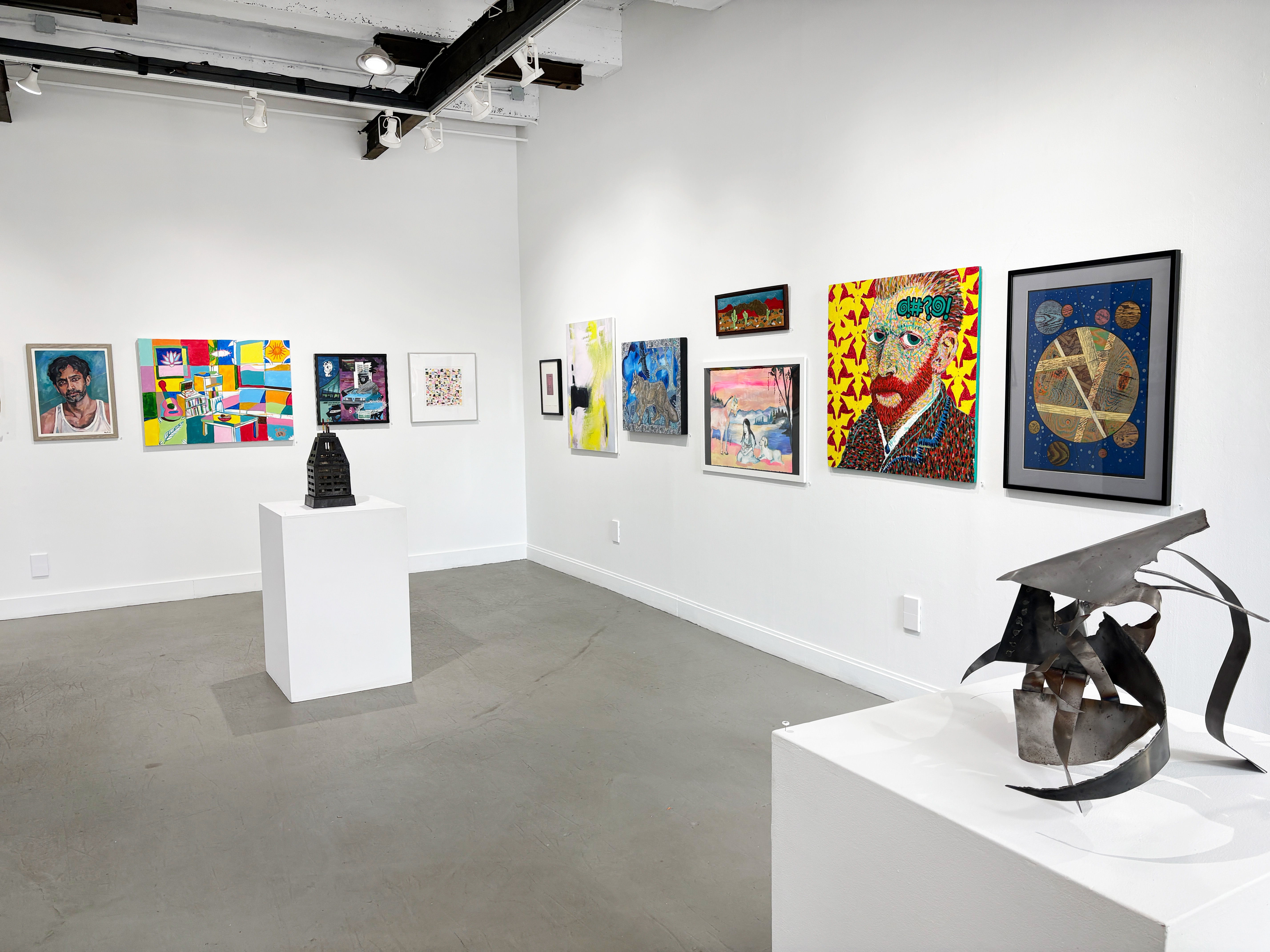
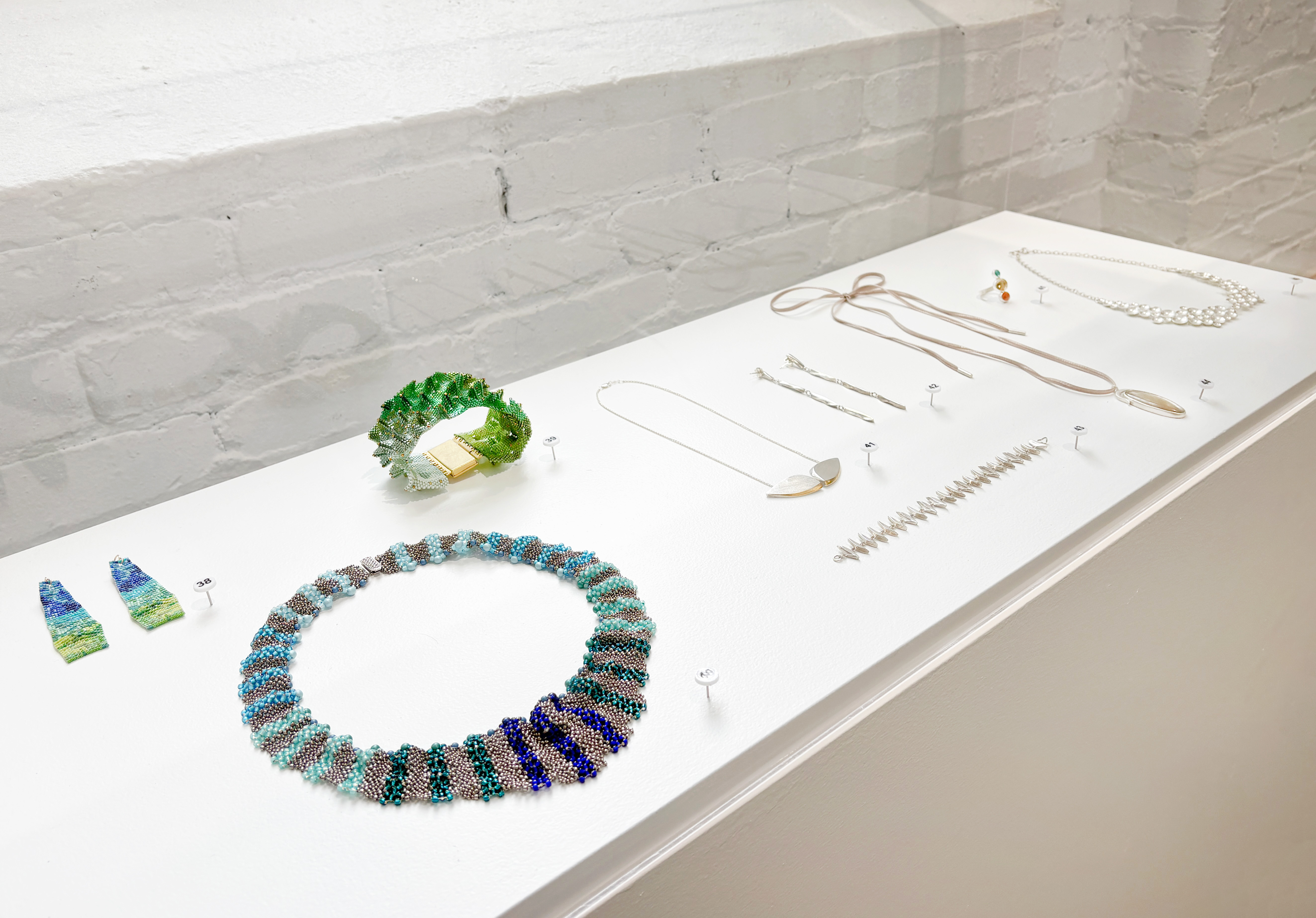
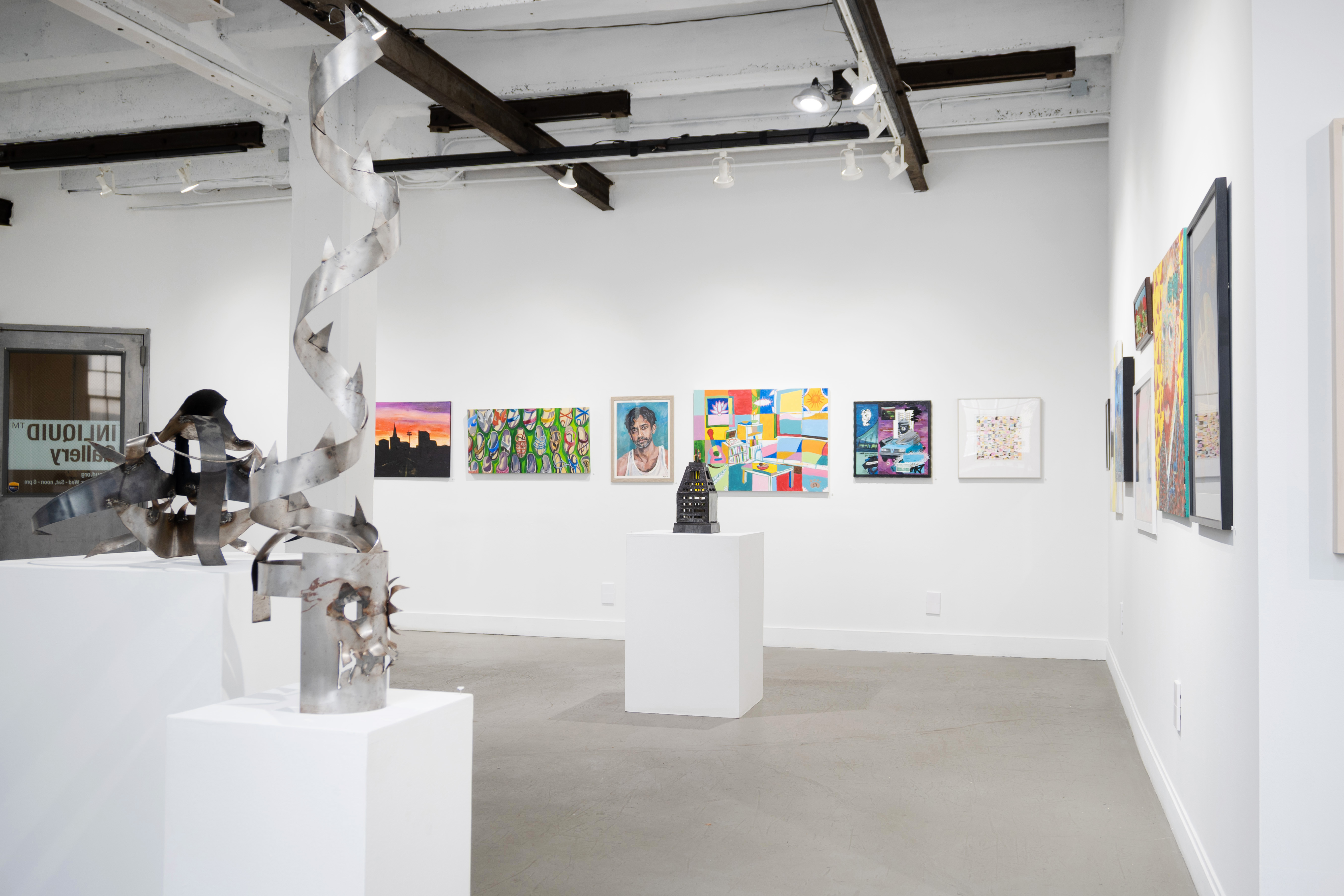
Since 1999, InLiquid has connected artists and audiences in Philadelphia and the surrounding region. In the ninth installment of our new member showcase, New Now IX, 43 artists of diverse mediums, inspirations, and histories come together in the InLiquid Gallery. Though distinct, they are linked by the local community and a shared interest in the human experience.
About the Artists:
Elisa Abeloff
Bio:
Elisa earned her BFA in Printmaking from Washington University in St. Louis, with a minor in Art History. She also studied at the Santa Reparata Printmaking Studio in Florence, Italy, and the Vermont Studio Center. Her work has been exhibited in solo and two person shows at Elliot Smith Contemporary Art in St. Louis, Fontbonne University, and The Contemporary Art Workshop in Chicago, and she has taught painting and drawing at Webster University.
After moving to Philadelphia in 1999, Elisa drew inspiration from early motherhood, later stepping back to focus on family life. When she returned to her studio, she found freedom in its privacy—space to explore materials, ideas, and her own artistic voice, apart from outside influences. Over the past fifteen years, her continued practice has shaped a distinct process and visual language, and she now looks forward to reengaging in dialogue with the wider art world.
Statement:
"My recent paintings create private worlds in which overlooked and sometimes broken bits of everyday objects, tiny natural forms, and even space itself become animate and full of subjective meaning. The work arises from the desire to slow down, look closely and define my own sense of reality while also relating to the larger world. Sometimes those two desires are in conflict. Psychoanalyst Donald Winnicott observed that artists are fueled by “the urgent need to communicate and the still more urgent need not to be found.” My work dances on that boundary, inviting the viewer in with glimpses of recognizable objects while also remaining mysterious.
At the core of my practice is the question: How is our interpretation of what we see shaped by personal history? Each of us encounters the world through a distinct lens, informed by experience and memory. The iterative nature of my process itself becomes a personal lab on how individual perception develops and retains integrity within a large, loud world.
I develop each piece through an extended process that unfolds across photography, gouache, and oil painting. I begin by constructing miniature spaces of tiny domestic and natural objects, further complicated by the use of glass, reflections and water. I then photograph the scene, capturing details that can’t be seen with the naked eye. From these images, I create gouache studies, which I then photograph. When I enlarge those photos new layers of information are revealed; including drips, marks, and ghosts of earlier decisions. The much larger oil paintings synthesize these multiple sources, holding in tension the illusionistic space of photography and the material presence of paint.
Because this process can take months or years of intimate engagement, objects and their relationships accrue meaning in my imagination. Time, accumulated decisions, and unseen layers remain embedded in the surface. The resulting spaces are indefinite, shifting, and at times vertiginous. They suggest that reality is not fixed or singular but layered, provisional, and in flux. Rather than offering resolution, the work dwells in uncertainty, embracing not-knowing as a necessary condition for discovery — and for connection."
Chad Andrews
Bio:
Growing up as the third of four boys in a military family, we moved around a lot - living in different parts of the United States and even Europe for a bit. I received my Bachelor of Fine Arts degree from Kutztown University of Pennsylvania. Then, I went on to complete my Master of Fine Arts degree at the University of Pennsylvania with a focus on Printmaking. I taught Printmaking at the University of Pennsylvania from 1994 to 1999 and then became the Director of Visual Arts at Interlochen Center for the Arts from 2000 to 2006. I am an Associate Professor of Printmaking and 2-D Foundations at the Bloomsburg campus of the Commonwealth University of Pennsylvania. Apart from teaching, I own Studio Paper+, a printmaking studio in the Pajama Factory in Williamsport, PA. Additionally, I maintain the Roost, my drawing and painting studio, on my family's horse farm in Montoursville, PA.
Statement:
"In 2024, I experienced two transformative moments that profoundly impacted my journey as an image maker. The first occurred when I was invited to visit my mentor Hitoshi Nakazato's New York studio. There, I had the opportunity to go through his voluminous flat files of prints and discuss his approach to printmaking with his son, wife, and a curator from Osaka. Even though Hitoshi passed away over a decade ago, his presence felt palpable, and I found myself learning from him all over again. His prints, large and commanding, left an indelible mark on me, particularly one collagraph that struck me deeply and revealed how far I had strayed from his teachings.
The second moment of revelation came from Juliette Aristides' Lessons in Classical Painting. On page 19, I encountered a small image of a woodcut by Yoshida Hiroshi, which led me to research his work and eventually order The Complete Woodblock Prints of Yoshida Hiroshi. I was astounded by his masterful gradations and the transparency of color in his atmospheric landscape prints—qualities I had only begun to explore.
Pennsylvania can be graced with picture-perfect days, but I find myself increasingly drawn to the beauty in its gloomier moments. The aesthetic of the rust-belt brain drain in the small coal towns resonates with melancholy. Words often escape me when trying to explain this essence, so I make marks to express what I see and use colors to show how I feel. Though my works may not possess the power of Hitoshi's prints or the atmospheric subtlety of Hiroshi's woodcuts, my prints serve as quiet reflections on the region I call home."
Alex Bard
Bio:
As a U.S. based interdisciplinary artist, my works spans a range of mediums including sculpture, sculptural costumes, performance art, photo compositions and videos.
Anthropology, mythology, comparative religions, and psychology inspire me. I strive to use universally understood symbols that transcend cultural, historical and political boundaries, and speak to audiences from all backgrounds. Each piece presents archetypal images that reflect different facets and levels of human consciousness, encouraging self-awareness and reflection.
Statement:
“My goal is for my art to help people know and understand themselves better. I aim to remind viewers of their innate strengths and qualities, empowering the meaning of their own lives.”
Laurie Beck Peterson
Bio:
Laurie Beck Peterson (b. 1962) is a U.S.-based artist known for her work with 19th-century photographic processes. Her practice explores impermanence, ephemerality, and the cycles of growth and decay in the natural world. In her most recent projects, she incorporates sustainable, plant-based printing techniques that align with her environmental themes.
Peterson is currently on faculty at the Tyler School of Art and Architecture in Philadelphia, PA, where she teaches contemporary applications of historical photographic methods. Her work has been exhibited both nationally and internationally and is held in numerous public and private collections.
Notably, she was selected to exhibit at the Royal Photographic Society's International Photography Exhibition 164 (IPE 164) in Bristol, UK. In 2025 this work was also on view at The Fox Talbot Museum at Lacock Abbey and is now in the museums collection. Other exhibition venues include the Woodmere Art Museum, The Delaware Contemporary, FotoNostrum Gallery, and The Museum of Gloucester.
Her work has been featured in publications such as Rfotofolio, The Hand Magazine, Gum Printing: A Step-by-Step Manual, Santa Fe Photographic Workshop Portraits, and Anthotype Emulsions (Volumes 1 and 3) and most recently is featured in the book Eroding Forms, launched at the 2025 Ephemere Photo Fest, Tokyo, Japan. She is represented by UpStart Modern Gallery in Sausalito, California.
Statement:
"My work explores the quiet collaborations between natural systems, light, and time, revealing the delicate entanglement of growth, decay, and renewal across the living world. Using historical and plant-based photographic techniques such as chlorophyll printing, cyanotype, phytograms and gum bichromate, I invite sunlight, water, and organic matter to participate in image-making, blurring the boundary between artist and environment. Each piece becomes both document and reverie: a temporal surface where transformation, impermanence, and care unfold in slow conversation with the more-than-human world."
Ernesto Beckford
Bio:
I’m a Hispanic American and retired attorney, now working full time as a writer and collage artist. I practiced corporate and nonprofit law for nearly forty years in New York City, Washington DC, and Raleigh, North Carolina. Born in Buenos Aires during a military dictatorship and raised in the United States, I have long experienced identity as layered and evolving. That theme runs through both my visual and written work.
I work in collage because it welcomes fragments and mystery. I cut, layer, and reassemble found imagery into compositions that flirt with beauty, but always with a layer of mystery. Figures may emerge, then blur. The images I use might suggest one meaning at first, but take on a different meaning when seen in context. I bring together old images, pieces of the human figure, and everyday ephemera to create scenes that feel familiar but subtly disoriented, inviting viewers to look again.
I’m less interested in fixed realism than in the way truth is often unstable, emotional, layered, and interrupted. Collage lets me inhabit that uncertain space. I build by instinct rather than formula, letting relationships between textures, lines, and gestures guide the image. The process is painterly, intuitive, and deeply personal.
While some of my collages echo classical art, I’m not quoting tradition. I’m rearranging and sometimes undoing it. Beauty, for me, is a form of quiet defiance, especially when it emerges from the unexpected.
What matters is that each piece feels alive, pleasing at first, yet awakening something deeper. I want the work to invite rather than confront—to suggest figuration without fully settling into it, always leaving room for ambiguity and reflection.
Statement:
"I am a self-taught collage artist originally from Buenos Aires, now based in Pennsylvania. I use religious and traditional art imagery to create portraits that explore gender, vulnerability, and inner transformation. For InLiquid’s “New Now IX” exhibition, I am presenting three works that focus on the tension between selfhood and outside pressure—how identity is shaped, constrained, and performed in public space. These three works show people trying to hold onto who they are while the world around them frames, judges, and contains them.
In “Crowned Identity,” I merge bold portraiture with ornate fabrics. A vibrant headdress, inspired by cultural motifs, crowns a figure with a direct gaze. Subtle makeup and intricate textures explore how identity is constructed through tradition, adornment, and self-presentation.
In “Graffiti,” two women in elaborate dress stand against a city-park wall marked with “EB” graffiti. The tag and the urban setting clash with their exaggerated elegance, turning the scene into a public test of visibility—being looked at, labeled, and daring to exist anyway.
In “Guitar Muse,” the figure is both musician and muse, split by the vertical neck of a guitar like a stage line between what is offered and what is protected. Floating fragments and visual noise suggest spectacle and expectation, while the figure’s calm expression points inward, toward an artist performing for an audience while still answering to something private and self-owned.
Together, the three works examine different forms of exposure—adornment, marking, and performance—and the fragile balance between presenting oneself to the world and remaining accountable to an inner self."
Alana Bograd
Bio:
Alana Bograd is an artist with over 20 years of experience in painting, educating, and curatorial work. She has an MFA from The Pennsylvania Academy of the Fine Arts and BFA from The School of Visual Arts. She has exhibited extensively in the U.S. and abroad and her work is in various private collections including the James T. Dyke collection. She is based in Philadelphia.
Statement:
"Alana Bograd explores the symbiotic decay and growth in motherhood, motherland, and the maternal body. Playing with themes related to interrupted rights; various selves and natures, confusion, sleep deprivation, and interruptions-- her worlds exist within an embrace of off-register forms and painting gestures, reflecting a society where the protections of the state and the autonomy of the body are increasingly out of alignment."
William Bowser
Bio:
I began studying in painting, drawing, printmaking, art history, design, sculpture and ceramics, holding a BFA from Alfred University, College of Ceramics. Between 1976 – 1979, I set up and maintained a pottery studio in upstate N.Y., selling work through galleries and craft shows. I taught ceramic classes periodically at the Chautauqua Institution and the Memorial Art Gallery in Rochester. A developing interest in eating and paying bills regularly prompted a return to the Washington area in late 1979. I continued work in ceramics on a part-time basis while the below unfolded:
1979 – 1981: Part-time Museum Assistant at the Phillips Collection
1980 – 1982: Smithsonian American Art Museum (formerly the National Collection of Fine Arts) and Renwick Gallery, Design Department, Art Installation
1982 – 1985: National Gallery of Art, Office of the Registrar, Art Installation
1985 – 2009: National Gallery of Art, Design Department, Project Coordinator for Special Exhibitions, Retired from the NGA in April, 2009
I have been maintaining a regular studio practice and have had bi-annual exhibitions/sales at my home. Upon my recent move to Philadelphia, PA, I maintained a studio at the Crane Arts Building.
I have also provided mount making, design and installation services on a contract basis through my business, William R. Bowser Art & Art Services.
Statement:
“I have a long-standing interest and involvement with clay which is now a basic starting point for my art practice. I have had the very good fortune and privilege to have learned from some of the most well-known and highly knowledgeable instructors throughout my path through college and university, most especially Alfred University.
I have also worked very closely with curators, designers, and artists, as well as paintings and objects of all eras and from many cultures as a result of close to 30 years with design departments in two Smithsonian Museums, and finally with the National Gallery of Art, all located in Washington, D.C.
I’m interested in making “things,” objects made in clay. Ceramic objects have been critical in human survival and art through their use in food utensils and food storage, the making of durable shelter, and territorial barriers, as well as sculpture, for millennia.
Clay has also been, and remains, critical in human culture in many areas - industry, art, ritual and metaphorical use. It is in these areas of the ceramic tradition that I am presently most interested.
I have also returned to drawing, primarily with gouache and pastel. The medium of drawing allows me to use a wider range of color than is possible in ceramic work (primarily because of the significant technical restraints in the firing of ceramic work) and allows me the ability to use my imagination more freely.”
Raymond Carballada
Bio:
Raymond Carballada is a Philadelphia-based fine art photographer whose work focuses on light, structure, and the quiet order found in both natural and built environments. He began photographing at age twelve after saving for a year to buy his first 35mm film camera. Having limited vision in one eye has sharpened his sensitivity to form and light, qualities that run through his work.
Carballada studied black and white photographic processes at the Rochester Institute of Technology before building a career leading creative teams in the media industry. He has returned to fine art photography with a renewed commitment to craft and the physical print. His work has been selected for exhibitions in Paris, Philadelphia, Warren, PA, Portland, London, and Vermont, and he has created commissioned pieces for private collectors and architectural spaces.
All prints are produced and editioned by the artist.
Statement:
"Light is what I photograph. It shapes form, defines structure, and changes everything it touches. Composition is what gives light something to work with.
I work in black and white, by choice and conviction. Without color, a photograph has to hold through composition, light, contrast, and structure alone. For me, that limitation is not a constraint I work around. It is the point.
Having limited vision in one eye has shaped how I see. I perceive the world primarily in two dimensions: as composition, structure, and the relationships between elements in a frame. Most people move through space in three dimensions. I am looking at how things sit in relation to each other. It's the way I see.
Much of my work develops from a fixed framework. I choose a position, a framing, or a subject, then study what light does within those boundaries. Series emerge from that repetition. The constraint reveals what would otherwise go unnoticed. I return to areas and scenes to shoot them when the light is right. The light is the final component.
I produce and edition each print myself using archival pigment processes. The captured image is where the work begins. The print is where it becomes itself."
Jake Dombroski
Statement:
Jake Dombroski’s work navigates the space between Dadaism and commercialism, using collage, assemblage, and painting to explore the power of imagery and material.
Drawing from vintage magazines, discarded packaging, and found objects, Dombroski builds compositions that balance intentional structure with spontaneous experimentation. Each piece begins with instinctive collecting and evolves through layered juxtapositions of image and texture.
His work invites viewers to reconsider their definitions of art and beauty, challenging assumptions while celebrating the overlooked. With a sensibility that is both playful and critical, Dombroski created visually compelling pieces that reward close attention and layered interpretation.
Jessica Doyle
Bio:
Jessica Doyle is an artist whose work explores intimacy, memory, and the quiet emotional states that surface through figures and imagined landscapes. Moving between drawing and painting, she creates images shaped by observation and a natural, instinctive clarity. Her work examines honesty, presence, and the subtle interiors of human experience. Doyle holds a BFA and MFA in Painting and a PhD in Philosophy, Art Theory, and Aesthetics.
Statement:
"Influenced by literature, music, and philosophical thought, I work with ideas as a subtle undercurrent rather than a strict roadmap. My work explores introspection and the shifting nature of our internal worlds. Each piece emerges through an open, exploratory process shaped by emotion, memory, and the soft edges of imagination. In these dreamlike environments, themes of longing and transformation surface quietly, reflecting the in-between states we often inhabit. Neither fully here nor there, yet acutely aware."
Seher Erdogan
Bio:
Seher Erdoğan (b. 1982, she/her) is a Turkish artist, architect, and educator based in Philadelphia. Her sculptural wall pieces combine clay and wool—materials that echo the material culture of her birthplace, Istanbul—and explore the interplay between structure and intuition.
She holds undergraduate and graduate degrees in architecture from Yale University, and practiced in New Haven and New York before shifting her focus to teaching and visual art. After years of experimentation across media, she began to concentrate on her current creative practice in 2019.
Seher has exhibited her work locally and produces commissions for private clients across the United States. She continues to teach architecture at University of Pennsylvania and works out of her studio in Philadelphia’s Germantown neighborhood.
Statement:
"My work plays with the push and pull between following rules and breaking free from them. I’m drawn to patterns that mix opposing ideas and show that things aren't always as simple as they seem. Much of what I make comes from experimenting with materials, weaving my personal history into formal structures.
I make wall pieces pairing clay and wool—materials both timeless and ancient—that connect me to the material culture of my birthplace, Turkey. I grew up surrounded by mesmerizing kilims and exquisite tiles. While my work doesn’t conform to any single tradition, it is grounded in reimagining this heritage.
Each piece begins with the precise construction of a rule-bound, geometric order on a ceramic surface. I then follow intuition to find moments of idiosyncratic expression, iteratively exploring variations in the color and texture of needled or wet-felted wool. This interplay of structure and spontaneity produces a sensory-rich contrast of visual and tactile impressions. I approach oil pastel drawings with a similar sensibility, using the sgraffito technique to complement and expand my sculptural language.
My training and practice as an architect continue to shape how I think about systems, space, and form. Over time, I came to understand the remnants of architectural heritage I studied not only as historical structures, but as charged spaces of longing—sites where memory, imagination, and material intersect. In my work, these echoes of past cultures become frameworks for exploring multiplicity and transformation, offering the viewer a grounded experience that bridges the real and the imagined, the present and the remembered."
Linda Fernandez
Bio:
Linda Fernandez is an artist whose work features bright colors, designs and symbols. She's inspired by the ways in which nature, architecture and history weave together to tell stories of people and the places they call home. Her work merges themes of identity and home across physical, social and cultural divides by exploring Caribbean heritage through a diasporic lens. She is a founding member of Amber Art and Design, an artist collective based in Philadelphia that creates public art through engagement with community members. Linda has earned a Bachelor’s degree in Art Education from Tyler School of Art, a certificate in Contemporary Art from Metafora Escola de Arte Contemporaneo in Barcelona, Spain, and a Master’s in Public Administration from Austin W. Marxe School of Public and International Affairs. She is an alumni of Community Arts Education Leadership Institute, National Urban Fellows and the Caribbean Cultural Center African Diaspora Institute’s Intercultural Advocacy Fellowship. She has received notable grants including 2024 Philadelphia Cultural Treasures project grant for Creative Freedom & Experimentation, 2023 Art is Essential grant, and 2014 & 2015 Leeway Foundation Art & Change grants.
Statement:
"My artwork explores the theme of home. Not only as a physical place, but as a feeling of connection to people, memory, and the natural world. I’m interested in how home can exist within us, across landscapes, and through ancestral memory. As a multicultural artist of Caribbean heritage, I draw inspiration from Latin American tilework, vibrant color palettes, and organic patterns that reference nature’s rhythms. These visual elements become metaphors for identity, migration, and the layered histories of the diaspora. I’m inspired by Spanish tilework, which became popular throughout Latin America and the Caribbean through colonization of these lands. In response to this colonial influence, I create tile inspired paintings with symbols to remix the status quo and proclaim identity. By using the tile as both symbol and structure, I reimagine forms rooted in colonial history as spaces for reclamation and healing."
Andrea Finch
Bio:
Andrea Finch creates sculptural quilts of botanical & environmental subjects, realistic to abstract, exploring textile textures. Her botanical obsession began with 2 decades of photographing and creating an arboretum in her yard while working at a local garden center. She has come to quilt-making from a different angle, allowing the fabric to speak through texture, color, and design.
Andrea grew up on a hobby farm in Eastern Pennsylvania and earned a BA in Fine Arts from Kutztown University. She started quilting during her last class at university which changed the direction of her art. Her art career was interrupted for 18 years while she raised her children and lived a different creative life. When she returned to quilting, she tossed out many of the quilting rules. Her work, never truly conventional, has taken on sculptural forms.
Now living in Chambersburg, Pennsylvania, she is involved in many arts organizations throughout the region. She is a Juried Artist member of SAQA (Studio Art Quilts Associates), sits on the board & exhibitions committee of the Virginia Quilt Museum in Dayton, Virginia, is the co-manager of the Foundry Art Market co-op.
Her work can be found at the Foundry Art Market in Chambersburg, various galleries, museums, public and private collections, and juried exhibitions throughout the US.
Her work won Best of Show at the Adams County 20th annual juried exhibition in Gettysburg, PA and she will have a solo exhibition at Goggleworks in Reading, PA this fall. She has recently been shown at juried exhibitions at Wayne Art Center, Wayne, PA; the Delaware Contemporary, Wilmington, DE; New Hope Arts. New Hope, PA; Erie Art Museum Customs House, Erie, PA; Art of the State at Pennsylvania State Museum, Harrisburg, PA; the Mansion at Strathmore, Bethesda, MD; Maryland Federation of Art, Annapolis, MD; Annmarie Art & Sculpture Center, Solomon, MD; Washington County Museum of Fine Arts, Hagerstown, MD; d’ Arts Center, Norfolk, VA; Virginia Quilt Museum, Dayton, VA; The Workhouse in Lorton, VA; Dairy Barn Art Center, Athens, Ohio; Sarratt Gallery at Vanderbilt University. Nashville, TN; Yeiser Arts, Paducah, KY; Louisiana State University Museum of Art, Baton Rouge, LA; Windgate Museum of Art, Conway, Arkansas; Watermark Art Center, Bemidji, MN; Sebastopol Arts, Sebastopol, CA; Blue Line Arts, Sacramento, CA; Visions San Diego CA. Additionally she has artwork in four SAQA Global Exhibitions.
Statement:
"Once a traditional flat quilter, my work has left the surface, now sculptures that taunt the viewer to reach out and touch. My garden, as it changes through the seasons, is the inspiration for my work. Starting with botanical forms of leaves, flowers, or weeds, reducing the designs to abstract forms, finding the essence of the structure. I create art to show aspects of the natural world that starts conversations about saving our natural world.
I use all textiles, new and vintage quilting fabrics, repurposed quilts, reclaimed textiles, and decorator samples. Reusing textiles diverted from landfills I create with small bits of ephemeral fabrics, once used, I cannot replace them. Textile production is a resource-intensive industry: the more I keep out of the landfills the more at peace I feel with my chosen medium. Viewing my wall of collected textiles, pieces catch my eye, bringing color, texture, or pattern to my art. Each creation is a unique collection of hand-cut fabrics, stitched together with liberal use of thread by dense machine quilting through multiple layers of fabric and batting, that form the stiffness to defy gravity to create the desired shape.
In my work, I save memories, preserve the environment, and create art that is accessible to everyone. Art that makes you smile in a world that can be so bleak. I am creating a whimsical garden of flowers and vessels with ties to my family and community."
Chuck Fisher
Bio:
Chuck Fischer’s work is in numerous corporate and private collections and was recently the cover feature of River Towns magazine as well as being featured in the fine art magazines, Artists Magazine, and Woven Tale Press. Earlier in his career, Fischer created 9 pop-up books including Christmas in New York (Little, Brown & Co.) and The White House - A Pop-Up Book (Rizzoli/Universe). He designed 3 tabletop collections for Lenox, fabric and wallpaper for F. Schumacher & Co., and Brunschwig & Fils, as well as fine paper products for CR Gibson and Caspari. His designs are in the permanent collection of the Smithsonian's Cooper Hewitt, National Design Museum, the Museum of American History, and in the Artist Book section of the Library of Congress.
Statement:
"My Abstract Assemblages, break the plane of two-dimensional art. I create textured and dimensional work that I intricately hand cut and assemble from wood, aluminum, and copper then finishing with colored gesso and modeling paste to bring the surface of the work into conversation with its maze-like depth. Recently I decided to incorporate trompe l’oeil painting in some of my works to fool the viewer as to what is real and what is painted. Visual mystery is also created by hiding sections of the work behind textured geometric pieces or painted fabric resulting in a lively interplay between perception and deception. In addition to my new Zen series I am incorporating mythical Asian landscapes along within my abstract constructions. This visual complexity runs throughout my work, and I trust my intuition, life experiences, and the materials at hand to create works of spatial balance and harmony."
Donna Grande
Bio:
An accomplished artist with a distinctive voice, Donna Grande creates expressive, dynamic works in acrylics, pastels, and oils. Her richly layered surfaces pulse with color and movement, revealing the mystery and beauty of the natural world. Each painting is a vivid exploration of form and emotion—where design, texture, and spirit converge.
Donna’s mastery of color and composition reflects both intuition and technical skill. Through bold experimentation and an expert command of multiple mediums, she transforms familiar imagery into something entirely new—art that invites contemplation and discovery.
A graduate of Montclair State University with a design degree from F.I.T., Donna also studied at the Art Students League of New York. Over the past 30 years, she has built a distinguished career, earning numerous awards and exhibiting widely in juried shows, galleries, and solo exhibitions throughout the Northeast. Her work has been featured on NBC, Fox News, and SOS Radio Live, and is held in both private and corporate collections across the United States and Europe.
Donna’s paintings have been exhibited at prestigious venues including the Maine State Capitol Building, Montclair State University, Bloomfield College, the Salmagundi Club, the National Arts Club, and the New Jersey State Museum, among others.
Donna recently moved from northern New Jersey to Philadelphia. The move involved creating studio space within her new home. Moving is an emotional journey, as is travel. Donna has traveled the world and lived abroad which influences her works of art.
Statement:
"An artist statement, by its very nature, captures only a single moment in an ever-evolving journey. It cannot contain the totality of artistic endeavor or vision—only a reflection of where one stands in time. Words, after all, are symbols, not the thing itself. To use them to describe painting—a wordless, visual language—is to translate the ineffable twice over. And yet, we try.
Painting for me is not a fixed act but a continuum—a living process that unfolds and transforms as I work. Each brushstroke carries the momentum of thought, feeling, and discovery. No two paintings are alike because no two moments are alike. Each canvas is a synthesis of chaos and clarity, of idea and emotion, of conscious choice and intuitive surrender. Within that dynamic process, transformation begins: form and color resolve, spirit emerges, and something greater than thought alone takes shape.
I seek not merely to depict, but to express—to move beyond representation toward a visual language of spirit. However elusive that spirit may be, it remains my constant pursuit: to make visible what is felt but unseen, to let each painting breathe with its own living energy.
Every artist, of course, cultivates her own aesthetic. For me, the true excitement of painting lies in that rare moment of transcendence—the feeling of innocence and wonder that compels one to fall in love with an image. It’s a sensation that defies explanation, a reminder of why we create at all.
Donna is a graduate of Montclair State University and holds a design degree from F.I.T. She studied at the Art Students League of New York and has built a distinguished career over three decades. Her award-winning paintings have been exhibited in juried shows, galleries, and solo exhibitions throughout the Northeast and beyond. Donna’s work has been featured on NBC, Fox News, and SOS Radio Live, and is held in private and corporate collections across the U.S. and Europe. She has exhibited at the Maine State Capitol, Montclair State University, Bloomfield College, the Salmagundi Club, the National Arts Club, and the New Jersey State Museum, among others.
Donna continues to strive toward the creation of what has never been seen before—paintings that invite the viewer into that timeless space where thought, emotion, and spirit converge."
Pragya Gupta
Bio:
Pragya Gupta (b. 1986, Patiala, India) grew up without access to the arts. Now based in Philadelphia, the former finance professional creates paintings that explore what it means to perpetually uproot and rebuild as an outsider, navigating cultural norms of success and diasporic identity. Her work asks: is it even possible to unmask and feel with certainty, "this is who I am"?
Her journey took her from India to Philadelphia for a MBA from Wharton, then to London for a career in finance. Everything shifted during a visit to the National Gallery in London—standing before the paintings, she felt a primal yearning to paint. She left finance though it meant turning away from what she had known: the values and expectations of her family in India, and the version of herself she'd spent years building.
Pragya studied at The Art Students League of New York, NYC Crit Club, and Pennsylvania Academy of Fine Arts. She has exhibited widely including at Bristol Art Museum (RI), Waterworks Art Museum (MT), Lloydminster Museum (SK, Canada), San Diego Museum of Contemporary Art (CA), and Customs House Museum.
Statement:
"In the current series - ‘The Places we Carry: A Search for Identity’, I explore the question: what does it mean to hold multiple, sometimes contradictory identities at once? My paintings investigate this through fragmented figures, overlapping spaces, and layers that accumulate like memory—some marks visible, others buried, all of them present.
When I begin, I rarely know what the painting will look like, but I do have clarity about the emotion or question driving it. The juxtaposition of mathematical elements—grids, circles—with intuitive mark-making using slightly awkward tools like palette knives and large brushes is my way of honoring and integrating both the structured and the creative without repressing either.
As someone who grew up in a culture where creative inclinations were taboo, each painting is an act of affirmation—a way of asserting to myself that creating art is not shameful but something primal and inherently spiritual. In the end, I hope my work leaves viewers with ambiguity and space to engage with their own simultaneous truths and the complexities they navigate."
Laura Havlish
Bio:
Laura Havlish is an artist and illustrator based in Philadelphia, Pennsylvania. She received a BFA in painting from Tyler School of Art, Temple University, Philadelphia, PA. She runs an art collection care business in addition to creating illustrations for her Etsy shop. Her artwork has been included in various group shows in Philadelphia and abroad, including the Delaware Center for the Contemporary Arts and Woodmere Art Museum. She is a recent member of InLiquid and also a member of Illustrators for Hire, a curated group of freelance illustrators from around the world.
Statement:
"In the series 'Divided Lines,' I look at how individual parts come together to form a group. My process begins with intuitive watercolor washes and bold ink marks on paper. These original works are then systematically cut into small square tiles—a system of deconstruction intended to let go of the artist's hand and welcome the element of chance. Each tile becomes its own statement, possessing its own unique character while still reflecting its origin. Through a reassembly guided by chance, these fragments are joined to form a new, unified image. This process of destruction and reassembly serves as a metaphor for ritual, resilience and the enduring hope of finding harmony through collaboration and community."
Kara Hetz
Bio:
Kara Hetz is a jewelry artist working out of her Philadelphia studio. She earned her BFA from West Virginia University and her MFA from the University of Illinois at Chicago, both in Studio Arts. Making jewelry and working with metal was a post-graduate passion and she received her metalsmithing training primarily at Lillstreet Art Center in Chicago, as well as through self-taught study. As she considers learning a lifelong endeavor, Kara is continually adding to her skills through workshops and online classes and receives support and advice from fellow jewelers. Since moving from Chicago in 2018, Kara has been active in building her creative community in Philadelphia.
Statement:
"As an artist I am continually exploring uncommon ways to present common forms. I am drawn to the sensuality of metal--how the static becomes fluid and the ways the material can be infinitely transformed. Often it is the materials themselves that serve as a catalyst to create a piece. Creating softness in a hard surface or light in something dark can be akin to finding poetry in the mundane. I love the process of building architecturally, and the marriage of structure and organic elements is especially intriguing. There is a quiet beauty in the interplay of the physical and the emotional and how we relate to the objects we keep, and particularly the objects we wear. I aspire to create evocative and wearable pieces, external reminders of the things that we carry."
Carolyn Kline-Coyle
Bio:
An Abstract painter from Drexel Hill, PA Carolyn Kline-Coyle is a teaching artist at community outreach programs and art centers in Delaware and Chester counties. She completed her education at the Pennsylvania Academy of Fine Arts in the 4-year Certificate Program as well as in the MFA program. Her work has been included in solo and group exhibitions in the southeastern region of Pennsylvania. Her work is also included in public and private collections.
Statement:
"COLOR. SHAPE. TEXTURE. TIME
COLOR: I am under the influence of color in the natural world. The task is choosing the first color in a composition and finding its harmonious companions.
SHAPE: The shapes come from abstract word combinations used as compositional elements. The words themselves come from current events and internal combustion.
TEXTURE: is what happens as a natural result of the application process and is determined by the thickness and buildup of paint, oil pastels and any collaged elements.
TIME: is thought of in a geological sense. The accumulation of layers and their indiscriminate removal. The erosion and shifting of the surface based on external forces."
Lupien LaMountain
Bio:
Jeremy “Lupien” LaMountain is a self-taught artist based in Philadelphia, PA. Born in 1997 in New Haven, CT, he discovered his passion for art early in life, inspired by both of his grandmothers who pushed him to explore the arts through multiple mediums. His work primarily incorporates acrylic paint, collage, and mixed media, exploring themes of contrast and popular culture, particularly through the lens of cartoons, advertisements, and urban life.
Lupien’s artistic development has been shaped by his experiences living in Baltimore, New York City, and Philadelphia—cities that have influenced the rhythm, energy, and intensity of his work. His time creating art alongside college students and graffiti artists in Baltimore encouraged him to embrace both traditional and nontraditional materials and techniques.
His work has been exhibited in four group shows and one duo show in Baltimore and New York, and he has completed large-scale public murals, including a commissioned original piece painted directly onto a living room wall in a New York City loft.
Currently, Lupien is developing a new collection that further explores the interplay between pop culture and material experimentation, resulting in pieces that are simultaneously refined and raw. These works are equally at home in a gallery or an underground space.
Statement:
"My work merges painting and collage to explore themes of intensity, transformation, and popular culture. I’m drawn to the contrast and constant motion that defines contemporary life, nothing stays still for long. Through my practice, I aim to capture that energy and remind viewers that life is fluid, layered, and ever-changing.
I frequently incorporate imagery from my childhood, old textbooks, and found media to evoke nostalgia and provoke reflection. These elements help bridge the personal and the collective, inviting the viewer to engage with both memory and cultural memory. My process is deeply rooted in mixed media; I intentionally avoid limiting myself to a single medium, instead layering materials in a way that is both intuitive and archival.
The structure and rhythm of my compositions are influenced by my experiences living in multiple cities, which inform the vibrant, sometimes chaotic energy in my work. I’m interested in the dualities present in society, humor and darkness, precision and roughness, order and disruption. These tensions emerge through my use of vivid color, juxtaposed imagery, and the interplay between clean and raw details.
My influences range from street artists like Rammellzee and OSGEMEOS to commercial advertising and graphic design. The raw immediacy of graffiti and the refined clarity of typography both serve as ongoing inspiration, reflecting the push and pull of cultural noise and personal narrative that defines my artistic practice."
Niki Leist
Bio:
Niki Leist is a Philadelphia based jewelry artist and curator. Trained as a painter with a BFA from Arcadia University, she brings a sculptural sensibility to her sterling silver and gold work. A Halstead Grant Finalist and recipient of American Craft Council’s Early Career Artist Grant, her jewelry is featured in galleries including the Philadelphia Museum of Art Store. She is a co-curator for Dream Machine at NYC Jewelry Week. She explores movement, light, and form while celebrating artist-led, process-driven practices.
Statement:
"An intuitive love for form-making and the rhythmic actions of handcrafting inform my process. By using techniques like lost wax casting and keum-boo, I create jewelry with swooping curves and twisting edges, juxtaposing high-polish and matte textures. These curves and textures manipulate light to create shadows, edges, and depth, bringing movement to the work as it responds to the wearer's landscape. One could liken the resulting work to the force of water and wind on land, sand dunes, and flowing architecture. Mirroring the effects of wind on land further accentuates the resulting visual movement within my work."
Rudy Lewis
Bio:
Born in 1965, I grew up along Philadelphia’s mainline. I attended The Haverford School and then Cornell University majoring in Anthropology with a minor in photography. From there, following a circuitous route of book making, creating mosaics, studying photography, working in art galleries, competing in and coaching rowing, working in art transport, I eventually landed at Caleb Meyer studio learning jewelry production at the bench. Focusing on the traditional skills of hand forging, fabricating and casting in gold, platinum and silver, I produced fine jewelry with precious and semi-precious stones. After a few years I went out on my own selling through galleries and private commissions and then paused for a decade plus to go into real estate development. I’ve now started back at Caleb Meyer’s a couple of days a week and I’m back producing my own work. I’ve also recently been involved in helping to set up the dedicated jewelry galleries at the Woodmere Museum, which I have found very rewarding.
Statement:
"My work pulls from a disparate collection of resources including natural forms, art from different cultures, reactions to stones or whatever scraps are lying around the bench. I enjoy letting the piece tell me where it wants to go and just see what happens."
Zoe Marchiano
Bio:
Zoe Marchiano is a Philadelphia based jewelry artist. Her metalsmithing education was found in a shared jewelry studio at NextFab. There she discovered lost wax casting which ignited a passion that has cultivated her current collection. Her work is a combination of traditional metal working techniques; soldering, forging, and casting. With the help of mentors, she is continually learning and expanding her metalsmithing abilities.
Statement:
"I have always been drawn to tiny beautiful things. My love of unique human adornment came from the artists and jewelers I grew up admiring as I accompanied my mother to the fairs she vended. Metalsmithing came to me as a gift from one of those jewelry artists. The process of forming metal felt like a kind of magic to me. That was only hightened with discovering I could carve small sculptures from wax and cast them into metal. Now I see metal in everything around me. Inspiration often comes in a simple question; what if it were metal?"
Barbara J. Mayfield
Bio:
Barbara Mayfield works in oil and acrylic on canvas, panel and paper, and monotype. She studied at Tyler School of Art and is a graduate of the Pennsylvania Academy of the Fine Arts. Mayfield has enjoyed a long professional career in the visual arts as a painter, printmaker, theatrical set designer, and muralist. Born and raised in Philadelphia, she is a graduate of the Pennsylvania Academy of the Fine Arts Certificate Program. Upon graduation, she was awarded a J. Henry Schiedt Memorial Travel Scholarship and spent 10 weeks traveling through Europe and Mexico.
As one of four artists on the first mural arts team at the Philadelphia Museum of Art Community Programs Department, Mayfield worked with Clarence Wood and Don Kaiser, the dynamos who brought contemporary mural art to Philadelphia in the late 1970’s.
Philly born and raised, Mayfield lived for 21 years in northern New Mexico where she studied monotype printmaking with Garner Tullis, Richard Tullis and Larry Bell at the Santa Fe Art Institute. Her work has been represented by fine galleries in Philadelphia PA., Washington DC, Stamford CT, and Santa Fe, NM. Her paintings and monotypes are part of both public and private collections across the country.
In 2015, Mayfield launched her color consultancy, working with a wide variety of professional and residential clients choosing paint colors for their homes and workplaces. Mayfield has created personal color palettes for more than 850 interiors and exteriors, working on-site and over the Zoom platform. Visit ChoosingPaintColor.com for more information.
She currently makes her home in Narberth, just 8 miles from the Liberty Bell. Her studio is in the Norristown Arts Building in Norristown, PA.
Statement:
"I am inspired by the bone-crushing beauty of life —-sky, land, the watery places, and creatures that fly. I tend to work in series, sometimes completed in a few weeks, sometimes over years: At the Edge of the World, In the Beginning, La Selba, Wall Stories, Cracked Open, Witches-Queens-Selkies-Souls, Land of Enchantment, Deep Water, Gardens and Meadows, The Eastern Woods.
No matter what I’m working in — oil, monotype, assemblage or acrylic— the process always involves applying layers and layers of color, opaque and translucent, building up the surface with texture and stroke, recording the marks/scars that happen to everything and everyone as we walk through our time in the physical world. Recent work is inspired by the great immensity we inhabit and our minuscule, exquisite place in it."
Beau McCall
Bio:
Beau McCall—proclaimed by American Craft magazine as “The Button Man”—creates visual and wearable art by hand-sewing clothing buttons onto mostly upcycled fabrics, materials, and objects. His artworks, offering commentary on topics such as pop culture and social justice are held in the permanent collection of numerous public institutions including the Getty Research Institute (Los Angeles, CA); Museum of Arts and Design (New York, NY); The Museum at FIT (New York, NY); Philadelphia Museum of Art (Philadelphia, PA); Victoria and Albert Museum (London, UK); and the Schomburg Center for Research in Black Culture (New York, NY). In 2024, McCall debuted his first-ever retrospective and exhibition catalog titled, Beau McCall: Buttons On! at Fuller Craft Museum (Brockton, MA). The exhibition is currently on a nationwide tour. In McCall's words, his artistic practice is rooted in the belief that, “With a teeny tiny button you can create, you can have a voice, and you can inspire.”
Statement:
"Buttons are a universal fastener, connecting the world through an everyday object. Through this medium, I create visual and wearable artworks by hand-sewing predominantly secondhand and donated buttons onto mostly upcycled fabrics and materials. Expanding upon my primary focus on button-embellished works, I incorporate buttons within my broader practice, including collage and time-based media, extending their role as both material and storytelling device. My work excavates the memories embedded within these objects, often passed down through generations. By reimagining the button beyond its functional role, I stretch its physical and conceptual possibilities. I use buttons to explore themes of identity, memory, pop culture, and social justice. My practice is rooted in the Black cultural tradition of “making something out of nothing.” I reimagine the humble button as a signifier of ancestral legacy—transforming an overlooked material into a space of connection, reflection, and joy."
Thomas W. Moore
Bio:
Tom Moore is currently based in Rehoboth Beach, Delaware, after many years in Philadelphia. In addition to his artistic practice, he has taught photography, curated exhibitions, and led fundraising initiatives for several non-profit organizations. Moore has served on the boards of AIDS Delaware, Tilt Institute for the Contemporary Image, The Photo Review, and The Print Center. His work has been exhibited in numerous galleries and is included in public collections such as the Philadelphia Museum of Art, the Pennsylvania State Museum, and Lehigh University. A full résumé is available upon request.
Statement:
"My photography explores how interior experience becomes visible through the relationship between the male figure, surrounding environments, and material surfaces. Across several long-running series, I examine how bodies, materials, and spaces register forces such as tension, protection, concealment, strength and balance. My early work began by photographing dance and art performance, experiences that shaped my interest in how the body occupies space and communicates through gesture and presence. Over time this developed into staged photographic environments in which the figure enters into dialogue with light, surfaces, objects, and landscapes.
The work in this series -Between What Holds (2020–present) -focuses on men in spaces where tension and balance are implied rather than secure. Figures occupy uncertain structures and thresholds, centering moments of vulnerability, strength, and quiet intimacy. I aim to explore how identity and perception emerge through the shifting relationship between the body, surrounding surfaces, and the structures that support and contain it."
Nini Mosiashvili
Bio:
I’m Nini. I’m from Georgia — the country, not the state. I grew up wearing silver that wasn’t meant for me. My grandmother took our family’s spoons and had them turned into bangles when I was a child. I never took them off. Not at airports. Not even when I had my children. That’s where this started. Years later, after moving to the US, I finally had the space to learn silversmithing. During Covid, I practiced on my gas stove. Now I make everything by hand in my studio. Not to follow trends. To make pieces people actually feel something in.
Statement:
"The artist’s relationship to jewelry began in childhood with a set of silver bangles gifted by her grandmother and worn daily. Those objects shaped an early understanding of jewelry as something that carries memory, attachment, and continuity. Entirely self-taught, the artist works through constant experimentation, allowing her skills and imagination to evolve in response to lived experience. Her practice exists between jewelry and sculpture, grounded in the belief that creating, especially under pressure, can be an act of care and resistance."
Joann Neufeld
Bio:
An artist/educator, teaching since 1975 in public schools first grade through high school, and now instructing in an adult education program. Trying to share the thrill of creating art as well as discovering the history and purpose of art.
Statement:
"Taking notice of every shadow, every texture, every contrasting color or shape, every face, every piece of light, every similarity, every difference, every example of surprising beauty in unexpected places is what I do. I try to show it, not tell it."
Amachi Omenihu
Bio:
Omenihu Amachi is a creative fine artist whose creative practice is informed though reflective inspiration. A passionate life student of art, Omenihu schooled at Cheyney University, Moore College of Art and at The Institute for Doctoral Studies In The Visual Arts. His sociocultural narratives express concepts of human elevation through consciousness of a better condition of freedom, beauty, spirituality and goodness. Omenihu’s style is marked by color and abstract motifs that symbolize the unconstrained drumbeat openness of nature’s form and formlessness.
Statement:
"In his fantastic paintings, design, color and abstract motifs express sociocultural and spiritual narratives whose purpose is to promote freedom, the good and beauty toward a better humanity."
Diane Pepe
Bio:
Diane Pepe is a multimedia artist whose abstract works, drawings, collages, and complex multimedia constructions, are based on concepts that mirror her response to the environment and personal experiences. Reoccurring themes include light, architectural structures, and research into the scientific processes of perception, vision and human memory. Currently she is creating a series, Shattered, that represents dramatic and life changing events that have impacted her life and art. A reductionist approach has been present throughout her creative process.
Pepe exhibited nationally in numerous venues such as: Marin MOCA Museum of Contemporary Art, Novato, CA, Brownsville Museum of Fine Art, Brownsville, TX, Palmer Museum, State College, PA, State Museum of PA, Harrisburg PA, and Grounds for Sculpture, Hamilton, NJ.
She has been recipient of numerous grants including the AIE Fellowship funded by the NEA with support by The Getty Center in the Arts, Washington D.C.; The PA Council on the Arts Special Projects Grant; The National Science Foundation and PSU Ford Foundation Research grants. Pepe’s work is found in various public and private collections.
Pepe was full time Associate Professor of Art at University of the Arts, Philadelphia, PA, tenured faculty at Penn State University, University Park, PA and Founding Director of ASEP at The Philadelphia School. She received her MA from The University of New Mexico, Albuquerque, NM and her BFA from Carnegie-Mellon University, Pittsburgh, PA and enrolled in the Post Baccalaureate Program at University of Pennsylvania.
Statement:
"Abstract drawings, collages, reliefs, and sculptures I create are based on concepts and events that have impacted my life. This has included an interest in qualities of light and translucency, layering of elements, and architectural structures. Locations of where I have lived and traveled have also been a significant basis for my work.
For the past decade, the scientific processes of human memory have been an exciting and engaging focus. This series of works is based on prominent scientists’ theories of human memory who I had the opportunity to interview through a sabbatical at UArts. The Spatial and Temporal Context of Memory Recall collages on display relates to one idea presented by Dr. Michael Kahana, Director of The University of Pennsylvania Computational Memory Lab. He discussed how recalling a memory depends not only on the event itself, but on its spatial and temporal context.
Recently, two events impacted my life and I could no longer work with the concepts that had carried my interests and involvement for years. After a period of time, when I was able to return to work, I began creating a series called Shattered that represent the impact of these devastating forces that had the over whelming power to dramatically change my life.
My work previously expressed a sense of calm and quiet joy through the somewhat formal nature of the compositions, many using translucent images of drawings printed on rectangular acrylic plates. When the outer forces altered every aspect of my life, I attempt to express this though a newly found process:
I took a hammer and forcefully struck the acrylic plates, shattering and smashing the previously calm and ordered compositions. In order to show this, I had to secured the sharp edged, varying size fragments onto a base. As I glued the pieces together, the process resulted in a compositional format that represents the strength of the support of community and family who helped me through the devastating times and enabled me to continue on."
Jonathan Porat
Bio:
Jonathan Porat is a Philadelphia-based ceramic artist. He's an architect by day and in The Clay Studio by night. Having first touched clay in 2024, he finds joy in developing his craft.
Statement:
"Two eyes, a nose, and a mouth placed close enough together do something incredible. They form life. I've been hooked on that phenomenon since doodling in the margins of my 7th-grade notebook.
In July 2024, I signed up for a clay handbuilding class. Thirty minutes into my first pinch pot, a dent looked exactly like a cheekbone. Instead of finishing a pot, I added a mouth, then a chin. Over 150 faces later, I still haven't finished a pot.
The faces are imagined, not portraits, but improvisations. Each one begins without a plan. I shape, the clay responds, I follow. Whatever I'm feeling that evening finds its way into the form. I let the process stay visible, fingerprints, tool marks, the texture of the moment. That transparency is the point.
But the sculpture is only half the process; the fire is the rest. I've mixed and tested over two hundred glaze combinations, building an intuition for how colors and surfaces behave. When I glaze a face, the choices are deliberate, but the kiln has the final word. What comes out carries my intention and something the fire decided.
This idea of layers comes from architecture, my other practice. I think about space as accumulations: the designer's intent, the builder's craft, the community's history. I want that same density in the faces: my gesture, the clay's resistance, the glaze's behavior, and finally, whoever the viewer sees looking back at them. The work isn't meant to say one thing, it's meant to offer many ways in."
Ally Ruff
Bio:
Ally Ruff (American) is a painter based in Washington Crossing, Pennsylvania, where she lives and maintains a studio practice. She works primarily in oil on canvas and paper, creating paintings that move between abstraction and representation.
Ruff’s work centers on perception and the construction of meaning, often using the human figure, natural forms, and pared-down environments to create images that feel familiar yet subtly dislocated. While grounded in observational training, her process involves building compositions from multiple sources, reducing them into simplified, often symbolic forms.
She holds a BFA in Painting and Sculpture from Wright State University and an M.Ed. in Counseling Psychology from Temple University. She is a Signature Member of the National Association of Women Artists.
Statement:
"I make paintings about belief: how it forms, how it structures perception, and how it quietly governs the way we experience reality.
My work draws from archetypal imagery, nature, and the human figure to create images that feel familiar but not fixed. These are not depictions of specific people or places, but thresholds between the physical world and the psychological one. The tension between realism and abstraction mirrors the tension between what is seen and what is understood.
Though trained in observational painting, I no longer work strictly from life. I build images from life, memory, distortion, and reconstruction—pulling from multiple sources and reducing them into essential forms. This process moves the work away from description and toward something symbolic and universal.
My background in psychology and long engagement with religious, spiritual, and philosophical systems informs the work. I focus on how these frameworks shape perception, behavior, and identity without conscious awareness."
Amy Salzman
Bio:
I’m an artist born and raised in Kensington, Philadelphia, a neighborhood that has shown me absolute beauty and has offered me safety in part of Philly that people see as decaying and scary. This shaped my creative perspective. I want to show people things they have never seen. My work dives into the tension between chaos and beauty, drawing inspiration from the streets, stories, and struggles of this ever-changing city. From capturing the raw edges of Kensington before gentrification to creating abstract mixed-media pieces that explore mental health and trauma, my art is about finding connection in the fragments.
When I’m not creating, you’ll find me wandering the streets of Fishtown and Kensington with my dog, always searching for the next spark of inspiration.
Statement:
"I make art because it’s the only way I know how to process the chaos of being alive. My work moves between large, layered abstract paintings, gritty landscapes, and glass sculptures, all different genres, but all rooted in the same impulse: to capture what’s raw, fragile, and often overlooked.The abstracts are dense with linework and texture, built up like layers of memory and emotion that don’t resolve neatly but coexist in their own kind of beauty. My landscapes hold onto the places that shaped me, especially Philadelphia, before gentrification stripped away its grit. The sculptures—made from shattered glass—carry a danger inside their beauty, a reminder that what shines can also cut.
I live with severe mental illness, and I don’t hide it. I want mental illness to be seen as something tangible and beautiful, but still a little dangerous. It’s in the work—the restlessness, the intensity, the fractures and the rebuilding. Art gives me a way to turn that inner chaos into something tangible, something others can step into and see from their own angle. At the end of the day, I want my art to hold space for struggle and survival, and for the complicated beauty that comes out of both."
James J Scannell
Bio:
James Scannell is a multi-disciplined artist based in Philadelphia. He attended SUNY New Paltz from 1992-1995. Where he was first introduced to printmaking. Having a background in woodworking and carpentry, woodcut printmaking came naturally. After SUNY New Paltz, he decided to continue his education at The Pennsylvania Academy of the Fine Arts. The strong printmaking program at the Academy further honed his skills at the craft.
Since graduating from PAFA in 1999, much of his career has been focused on sculpture. In 2017 James was able to acquire an etching press and soon shifted his focus back to printmaking. The time spent creating sculptures has contributed to a distinct style of image making that has a constructed feel to it. In his woodcut prints James uses a unique process that he developed himself which utilizes multiple pieces of wood pieced together. The prints consist of layers of color often printed on black paper to highlight the wood grain.
Statement:
"What I like about printmaking is the freedom to break rules, to experiment and explore. With my woodcut printmaking, instead of carving an image into a single, flat surface of wood, as is traditionally done, I often construct my images using multiple pieces of wood, fit together to create an arrangement of abstract shapes and patterns. These fragmented compositions, usually set against a black background, are influenced by stained glass windows.
The grain of the wood is an integral part of my artwork. I usually don’t use smooth wood, but carefully select each piece of wood for its unique texture and character. I’m fascinated with the natural beauty of wood and see all the intricate lines and curves of the grain that twist and turn and dance around knots as works of art. The wood is not my canvas, it’s my drawing. The process is extremely tedious and time consuming. But that’s the cost of traveling down paths unpaved."
Linda Schneider
Bio:
Linda Schneider is a self-taught, Philadelphia-based artist. She discovered bead weaving in 2021 and quickly become fascinated with its versatility. Her work is featured in the Philadelphia Museum of Art Store, Woodmere Art Museum and Art Star. Prior to working as an artist, she was a public health professional. She resides in Fishtown with her husband and studio cat and studio dog.
Statement:
"I discovered bead weaving in 2021. It was a necessary creative escape during the early days of the COVID-19 pandemic. Bead weaving is a tedious and labor-intensive craft (many pieces contain several thousand [tiny] beads), but it’s always exciting and rewarding to see my creations take form. I weave each piece by hand, either on a wood loom or freehand, and incorporate traditional weaving techniques (e.g., brick, herringbone, peyote, right angle weave, and/or square stitches). All pieces are comprised of luminous Japanese glass beads. In 2026, I began experimenting with three-dimensional (3D) shapes, which add movement and interest. My pieces are vibrant, colorful creations designed to add a dash of color to your life. Inspiration is drawn from abstract art, stained glass windows, kaleidoscopes and mosaics. My work seeks to continue and preserve this ancient craft while presenting a modern, contemporary aesthetic."
Lynnette Shelley
Bio:
Lynnette Shelley is an award-winning Pennsylvania artist specializing in contemporary mixed media animal and nature paintings. Having a great love of wildlife, patterns and archetypes, Shelley fuses these influences into her striking artworks. Her highly detailed and complex compositions are created using a buildup of multiple layers of ink and acrylic and incorporates techniques in both drawing and painting - from crosshatching and mark-making to ink splatter and linear painting. Some of Shelley's work (her “fauxsaic” paintings) also incorporates elements of collage in which she adds hand-colored and cut watercolor paper to the artwork in a process that resembles mosaic tile.
Shelley's animal and nature themed artworks have been displayed nationally as well as regionally at museums, art galleries and other venues. In 2021, Shelley was awarded "Master Artisan" status by the Pennsylvania Guild of Craftsmen.
In addition to her fine art pursuits, Shelley is also the co-founder of The Red Masque, an original dark art rock / progressive rock band she has been writing and performing in since 2001. Shelley is also the vocalist in Green Cathedral, a contemporary art rock band. They released their debut album in 2017.
Originally from Delaware, Shelley lives in Philadelphia, Pennsylvania, and maintains a private art studio in Maple Glen, Montgomery County.
Statement:
"One of my primary artistic interests is exploring animals, icons and archetypes. Although my animal and nature-themed paintings are representational, they are not realistic, but rather a fantastical stylization. I want viewers to envision their own fairytale when they see my work.
Animalistic imagery and themes can be seen in pop culture in everything from folklore and mythology to cartoons, logos and mascots. My artwork takes a closer look at this archetypal animal kingdom. Reinterpreted through art, abstraction, decorative elements and contemporary vision, these creatures speak to our collective unconscious."
Eric L Spieler
Bio:
Born in New York City in 1959, Eric Spieler earned a BA in Chemistry from Queens College (CUNY) and a DMD from Penn Dental Medicine. After a 35-year career in dentistry, he developed a dedicated painting practice, informed by scientific observation, aesthetic sensitivity, and a lifelong engagement with visual art.
Statement:
"My work explores the enduring relationship between nature, structure, and human perception. Rooted in a lifelong attraction to beauty, spirituality, and the natural world, my paintings seek to communicate tranquility through color, texture, and light. Whether depicting monumental landscapes or iconic urban forms, I approach each subject with reverence, emphasizing both its physical presence and its energetic resonance.
Although art surrounded me from an early age—my father was a professional artist working in New York City’s mid-century advertising and fine art world—I initially pursued a different path. I was trained in science and dentistry, disciplines grounded in precision, structure, and observation. These foundations continue to inform my artistic practice today, shaping how I see form, balance, and the underlying order of the natural world.
I came to painting later in life, following my father’s passing, when I inherited his studio materials. What began as an experiment soon developed into a committed studio practice. Working primarily in acrylics and with palette knives, I embrace layered surfaces, texture, and the process of continual revision. I am drawn to landscapes—particularly mountains—for their timelessness and quiet authority. They embody permanence, resilience, and scale, standing in contrast to the fleeting motion of the sky, which I paint as a source of energy, movement, and emotional charge.
In recent years, I have extended this exploration to Philadelphia’s architecture, painting historic and iconic structures with the same respect I give natural forms. In these works, the built environment becomes monumental, echoing the solidity of mountains against an ever-changing sky. I frequently work en plein air, allowing light, atmosphere, and immediacy to shape the final image.
My goal is for every square inch of the canvas to hold visual and emotional interest. I am attentive to small details as much as expansive forms, believing that nature’s beauty exists equally in the grand and the subtle. Through my use of color, contrast, and texture, I aim to create paintings that invite reflection and convey a calm, grounded energy—offering viewers a moment of stillness and connection."
Michael Stevenson
Bio:
Michael Stevenson is an artist based in Baltimore who works in painting, printmaking, music, and occasional performance. He’s driven by a mix of hands-on making, curiosity about history, and an interest in how people find meaning through looking. His work often comes from experimenting in the studio and following ideas across different materials and traditions.
He studied painting at Concordia University in Montréal, Canada, with additional time at UQAM (also in Montréal) and the Hochschule der Künste in Berlin, Germany. During those years, he also co-founded the post-hardcore band Bliss, touring widely and releasing several recordings. The energy, collaboration, and improvisation from that period still shape how he works visually.
Stevenson later earned an MFA in Painting and Printmaking and an MA in Art History at Arizona State University. His research focused on early Mexican manuscript traditions and how stories were communicated visually without relying on written language. That work deepened his interest in how a narrative can be suggested through marks, symbols, and structure rather than direct illustration. He also spent several years teaching in Florence, Italy, where he became interested in how historical figures and motifs could be reimagined inside abstract compositions.
In the studio, he uses abstraction as a way to explore relationships, memory, and the sense of a story unfolding without specific characters or scenes. His paintings and prints often repeat or transform certain shapes, creating rhythms that viewers can follow in their own way. Instead of telling a literal story, the work offers an experience—something that shifts as you spend more time with it.
Stevenson received the Pollock-Krasner Foundation Award, was a full fellow at the Vermont Studio Center, and an associate artist at the Headlands Center for the Arts, in Marin County, California. He founded the printmaking studio at Angel’s Gate Cultural Center in Los Angeles, which has now been active for more than fifteen years. He also ran Yuri-G, an independent gallery inside Maryland Art Place in downtown Baltimore. His work is held in both public and private collections across North America and Europe.
Krista Svalbonas
Bio:
Krista Svalbonas holds a BFA in Photography and an MFA in Interdisciplinary Studies. Her work has been exhibited at prestigious venues, including Paris Photo, Utah Museum of Contemporary Art, Spartanburg Art Museum in South Carolina, Howard Yezerski Gallery in Boston, Klompching Gallery, and ISE Cultural Foundation in New York. Her pieces are included in private collections and public institutions such as LACMA in Los Angeles, the Cesis Art Museum in Latvia, the Gregg Museum of Art and Design in North Carolina, andThe Woodmere Art Museum and Temple University in Philadelphia.
Svalbonas has received numerous awards, including the Center for Photographic Art Artist Grant (2022), the Baumanis Creative Projects Grant (2020), the Rhonda Wilson Award (2017), the Puffin Foundation Grant (2016), and a Bemis Fellowship (2015). Recently, she held solo exhibitions of her series “Displacement” at the Copenhagen Photography Festival in Denmark, the Tallinn City Museum in Estonia, the Museum of Textile and Industry in Augsburg, Germany, the Kazys Varnelis Museum in Vilnius, Lithuania, and the Janina Monkute Marks Museum in Kedainiai, Lithuania. She is an associate professor of photography at St. Joseph’s University and resides in Philadelphia, where she continues her work.
Statement:
"My work is concerned with ideas of home and dislocation, as well as with the impact of architecture on human psychology. As an ethnically Latvian/Lithuanian artist, my cultural background has informed this interest in architecture. During the Soviet era, the capitals of both Latvia and Lithuania saw cultural buildings repurposed into warehouses and churches demolished. The old town centers were neglected and fell into decay. New construction was cheaply made, with no insulation, inadequate plumbing, and heating. My connection to this history has made me acutely aware of the impact of politics on architecture and, in turn, on people’s daily lived experience. I started to consider the effect of architecture on the tens of thousands of refugees, my parents included, who escaped a life under communism but went years without a permanent home. In recent years, I have visited Latvia and Lithuania to further understand this turbulent time in my family’s history and to photograph the architecture there. Many of the structures built during the Soviet occupation of the Baltic region still stand today. During this period, the Baltic people continued to practice art forms such as weaving to ensure that their traditions would survive, despite the Soviet regime’s program of cultural suppression.
My recent work combines photographs of Soviet architecture in the Baltic region with traditional Baltic textile designs. I use a laser cutter to cut the textile patterns directly onto my black and white photographs of the cold and imposing buildings. This series explores the power of folk art and crafts as a form of defiance against the Soviet occupiers. It does this by focusing on how traditional textile designs provide a counterpoint to Soviet-era architecture and the memory of its totalitarian agenda. The juxtaposition of concrete structures with folk art designs also references the strength and determination of the women who created the weavings. Overall, this work examines the ways in which people are shaped by their environment, and how they can rebel against it to preserve their identity and culture."
Gay Walling
Bio:
Ms. Walling studied painting at the Pennsylvania Academy of the Fine Arts from 1990 to1994. During that time, she was enrolled in a collaborative program with the University of Pennsylvania, which required all studio work be accomplished at PAFA and all academic work be done at UPenn. With a concentration in art history, Ms. Walling received a Bachelor of Fine Arts degree in 1994 and went on to complete graduate work in Museum Studies at the University of the Arts, Philadelphia.
After interning at the Philadelphia Museum of Art and the Brandywine River Museum and teaching art history and studio art classes at the community college level, Ms. Walling joined the Noyes Museum of Art as Director of Education and was promoted to Executive Director. She moved to Philadelphia in 2006 and dedicated her work to the city’s art community, initially serving as the Executive Director of the Philadelphia Art Alliance, followed by grant writing roles in the various nonprofits.
Statement:
"I gravitate toward rendering commonplace objects in quiet settings, seeking to reflect the sense of calmness and awe I find in recognizing beauty in the ordinary. While each painting represents a moment in time, the process of painting allows me the time to study, analyze, and experience each subject.
I lean heavily on color and composition to achieve a certain mood. In my still life paintings, composition, color harmony, and the exploration of space take precedence over the significance of the featured objects. Often it is the arrangement of the items that asks the viewer to consider the importance of order and balance in life. My still life paintings are frequently influenced by 19th century still lifes of the French Post Impressionists and earlier Dutch and Spanish paintings. My landscape paintings attempt to capture a scene from the overwhelming beauty of nature and are inspired by American artists, George Inness, Edward Hopper, and Winslow Homer.
As a representational painter, I work in oil to achieve subtleties in value and color. Oil paint offers rich color depth and allows for subtle variations in color and value, and I appreciate the application for creating light and shadows as well as the endless variety of color.
It is my hope that the viewer looks closer and considers some connection with the quiet mood and the possibility of some respite from the sensory overload of modern life."
Peggy Washburn
Bio:
Peggy Washburn is an interdisciplinary artist, photographer and educator whose work has been acquired by permanent collections, including the Bibliothéque Nationale de France, The Harry Ransom Center, Museo Nazionale della Fotografia and The Ralph Lauren Collection. In addition to numerous gallery shows, her work has been exhibited by The Woodmere Art Museum, The Rose Lehrman Art Center, The Frye Art Museum, The Seattle Art Museum Gallery, The Whatcom Museum of History and Art, and Aperture NYC. Her work has been published in Frames Magazine, Lenscratch, Od Review, One Twelve, BETA Developments In Photography, Musée Magazine and Art New York. She works on both the East and West Coast, and currently lives in Philadelphia.
Statement:
"When I was a child, I thought an artist was someone who could draw representationally. I myself, could not. I did however, have an artist studio — my childhood closet. Drawing on memory I would paste items I collected into old books, to create a newer version of an older story. They pieced together narratives that address aspects of disorder, time and their inseparability. They honored my irrational superstitions, weaving past with present to construct an imagined world inside of a perceived reality. I still paste things together, which helps me create illusory order. Through layers of acrylic, graphite, ink, pigment and wax, I strive to convert a familiar chaos into something relatively tidy. The elements are fused together in a nonlinear progression, until the process takes on a life of its own, often divergent from my original plan.
The work from this series entitled "Learning To See In The Dark", is about the inner conflict that comes with embracing imperfection, while simultaneously resisting what I cannot accept. It’s a means of navigating a relevant and seemingly shared uncertainty, while separating my own perceptions from a collective disquiet. It allows me to rewrite the language of time, replacing disorder with snippets of thought, memory and intentional ambiguity. Through it, I’m able to reach into a blurry yet calculated void, and make tangible what I’m otherwise unable to control."
Margaret A Watson
Bio:
Margaret Watson is a painter living in New York City and Bucks County Pennsylvania. She received an undergraduate degree in design and fiber arts from the University of California at Davis and, at the University of Washington, did post graduate studies in scientific illustration and earned a degree in medicine. Following a career in medicine she returned to painting full time. She has been awarded artist residencies at Vermont Studio Center, Willapa Bay Artist in Residency, and Brush Creek Artist Residency. Prior to moving East, she was represented in Seattle by Francine Seders Gallery and Gallery I/M/A. Her work has been shown and collected in Seattle, New York and Philadelphia. She is presently a member of Muse Gallery and InLiquid in Philadelphia, PA.
Statement:
"My work is based on landscape. Landscape, as a construct, allows me to explore different types of space. Rather than painting from the viewpoint of deep, perspectival space of traditional landscape, I use formal relationships between color and mark to explore a flatter, more abstract and conceptual space.
I love the construction of the painting and the materiality of the canvas, the gesso, and the paint. Process builds the painting - each subsequent line, color, layer or erasure responding to the previous mark. Allowing the paint agency, I’m happy to relinquish control over the process, curious to see the emergence of shape, texture and form. While I work to allow spontaneity and chance in my paintings, they are very considered in terms of composition and how the placement of mark and shape relate to the edges and dimensions of the support. I believe in an economy of mark-making and that beautiful and compelling imagery can be evoked simply and with minimal means."
Julie Woodward
Bio:
Julie Woodard holds a BA in American Studies from Temple University and a MA in Museum Education from University of the Arts. She has worked in Philadelphia's cultural sector for over twenty years. Julie teaches a variety of workshops at local art centers, museums, schools, nonprofits, and small businesses and is a recipient of the Center for Emerging Visual Artists 2026 NewCourtland Artist Fellowship.
Julie has created capsule collections for Au Boulot Workwear and her wearable designs have been showcased by Woolrich, Inc. She was the 2022 Featured Artist for Brooklyn-based FABSCRAP, is an alumna of NextFab's Artisan Accelerator program, and has been featured in commercial and gallery spaces in Philadelphia, New York, Los Angeles, and Denver. Following an interest in immersive art, her recent projects include interactive installations for the Delaware River Waterfront, the Fringe Festival, and Philadelphia International Airport. Collaborations, public projects, requests for workshops, and textile donations are welcome.
Statement:
"Using salvaged textiles, found objects, pigments and thread, I create impressionistic landscapes, multimedia installations, functional sculptures, and wearable pieces that convey my passion for nature, memory, and creative reuse. Current incarnations pay tribute to my late mother and repurpose family heirlooms, as well as feature vintage goods, cutting room remnants, broken furniture, and street debris.
My artistic practice is rooted in the tension between holding on and letting go, of memorialization and detachment. A self-proclaimed 'doula of discarded things, I transform both trash and sentimental scraps, exploring themes of loss, the search for hope, our relationship to place, and the things we carry.
My visual work incorporates elements of collage, applique, embroidery, weaving, painting, printmaking, and sculpture. These mixed media pieces create a visual vernacular that I quilt together with original music, interactive installation, and stop motion animation. Every piece has a story. Every material is repurposed with purpose."