


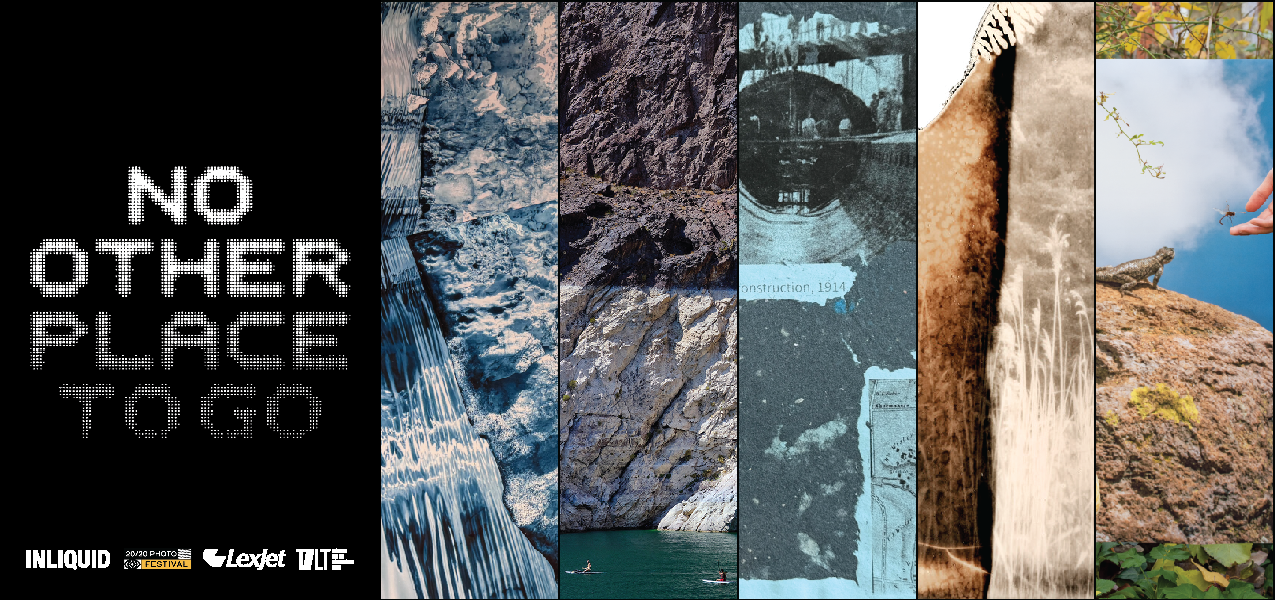
No Other Place to Go
Guest Curator: Katie Tackman
Featuring Artists: Anita Allyn, Richard Boutwell, Laura Krasnow, Kaitlin Pomerantz, Emma Ressel
Photography has long occupied a unique position at the intersection of art and evidence, making it one of the most powerful tools for documenting climate change. A medium rooted in observation; photography records environmental transformation—retreating shorelines, altered river systems, industrial intervention, deforestation, and ecological loss—while also translating these changes into visual forms that can be felt as much as they are understood.
This exhibition No Other Place to Go considers how photography reflects the psychological weight of climate change, shaped by collective anxiety, grief, and uncertainty. The featured work by Anita Allyn, Richard Boutwell, Laura Krasnow, Kaitlin Pomerantz, and Emma Ressel exemplifies photography’s capacity to show what is happening in a world undergoing rapid climatic and ecological change. By bringing data into dialogue with experience, inviting viewers to see not just what has been lost but why it matters—and how the consequences of climate change ripple through ecosystems and human communities alike. These images affirm that evidence and emotion are not opposing forces, but complementary forms of knowledge—together shaping how environmental realities are seen, remembered, and acted upon.
Anita Allyn
Bio
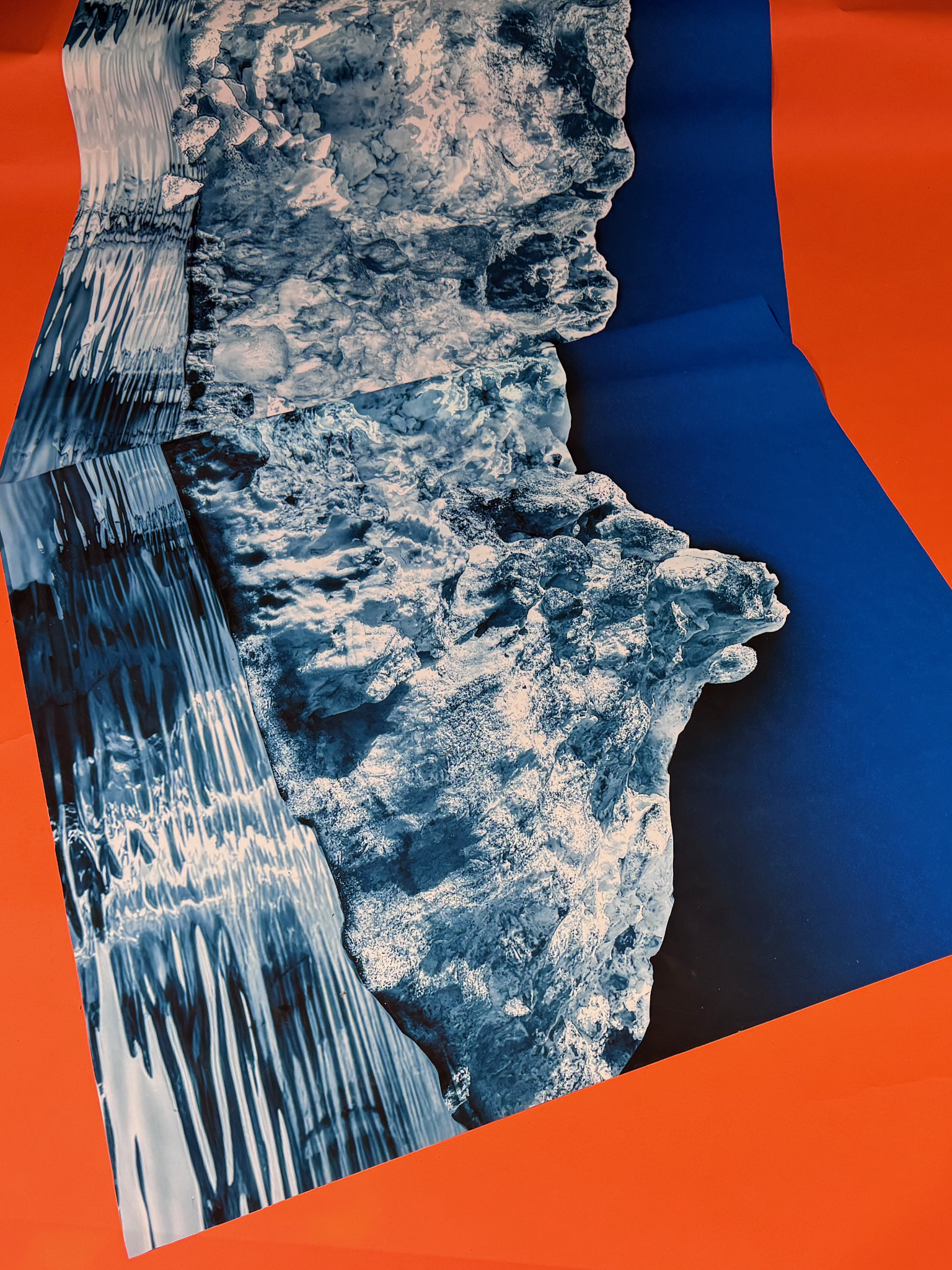
Anita Allyn is an interdisciplinary artist whose work examines the shifting relationships between photography, landscape, memory, and environmental change. Working across photography, installation, video, and artist books, she investigates how images function not simply as records of the world but as systems that shape what we recognize, remember, and value. Her recent projects explore the landscape as an archive, questioning the ways photographic representation constructs ideas of nature in the Anthropocene. Combining field research with material experimentation, Allyn's installations often transform photographs into sculptural objects, exposing the physical and conceptual structures through which ecological knowledge is produced and preserved.
Allyn has exhibited and screened her work nationally and internationally at venues including Tate Modern (London), the National Centre for Contemporary Arts (Moscow), the International Photography Biennial Medellín (Colombia), MASS MoCA, the Institute of Contemporary Art (Philadelphia), Vox Populi, the Museum of Fine Arts, Boston, and the University of Pennsylvania. Her work has also been presented in exhibitions throughout Europe, including Vienna, Lisbon, and Luxembourg.
Born in Scotland and based in New Jersey, Allyn is Professor of Visual Art at The College of New Jersey, where she teaches photography, video, and critical theory. Her current research focuses on photography, ecology, and archival practices, exploring how photographic images actively construct environmental narratives rather than merely document them.
Statement
Photography has been understood as a tool for documenting the natural world, yet it also determines how ecosystems are recognized, classified, remembered, and ultimately valued. My practice examines the spaces at which nature intersects with systems of display. I make photographs, installations, and site-specific works, focusing on the ways images circulate alongside archives, museum displays, scientific systems, and public space. Landscape, in this context, is never simply encountered; it is continually constructed through the visual and institutional frameworks that shape how nature is seen.
Research is central to my practice. Drawing from environmental history, photography, museum display, and material culture, I investigate how photography, collection, and exhibition shape ecological knowledge. Moving between documentation and fiction, my work questions photography's authority while asking how images shape what we recognize, preserve, and ultimately value as nature.
Richard Boutwell
Bio
Richard Boutwell, originally from Joshua Tree, California, is a photographer and print-maker based near Philadelphia, Pennsylvania.
His work is based around aspects of archaeology, family history and myth, and the influence of spirituality, technology, and social media on how we interact with the natural environment. Through it, he examines his personal connection to the greater cultural, industrial, and environmental history of the landscape—mostly involving issues of water rights and the impact of recreation in the desert landscapes of the Southwest. In addition to his traditional landscape photography, he is now combining his photographs with 3D scans of the environment, found objects, historical materials, and appropriated mapping and scientific data.
Boutwell began photographing in college in the year 2000 while studying music and pursuing a career as a jazz bassist. Shortly into his first darkroom course and being exposed to the beauty and creative possibilities of fine-art photographs, he dropped all his music classes and devoted himself to studying the history and craft of photography. Instead of pursuing a formal fine-arts degree, he relocated to Bucks County, Pennsylvania to enter an intensive long-term apprenticeship with the photographers Michael A. Smith and Paula Chamlee. He worked as their darkroom, studio, and field assistant from 2002 until 2008, and then became their full-time printer and ran the scanning and digital studio at their photography book publishing company, Lodima Press, until 2015.
In balance with his family life and fine-art practice, he teaches photography and fine-art printing privately through https:/www.bwmastery.com. Boutwell also created specialized software that helped advance the craft of digital black-and-white and historic-process printing now used by photographers worldwide.
His photographs have been included in national and international group exhibitions and are in private and public collections. He has served as a guest lecturer on the history of landscape photography at mid-Atlantic colleges and universities.
Statement
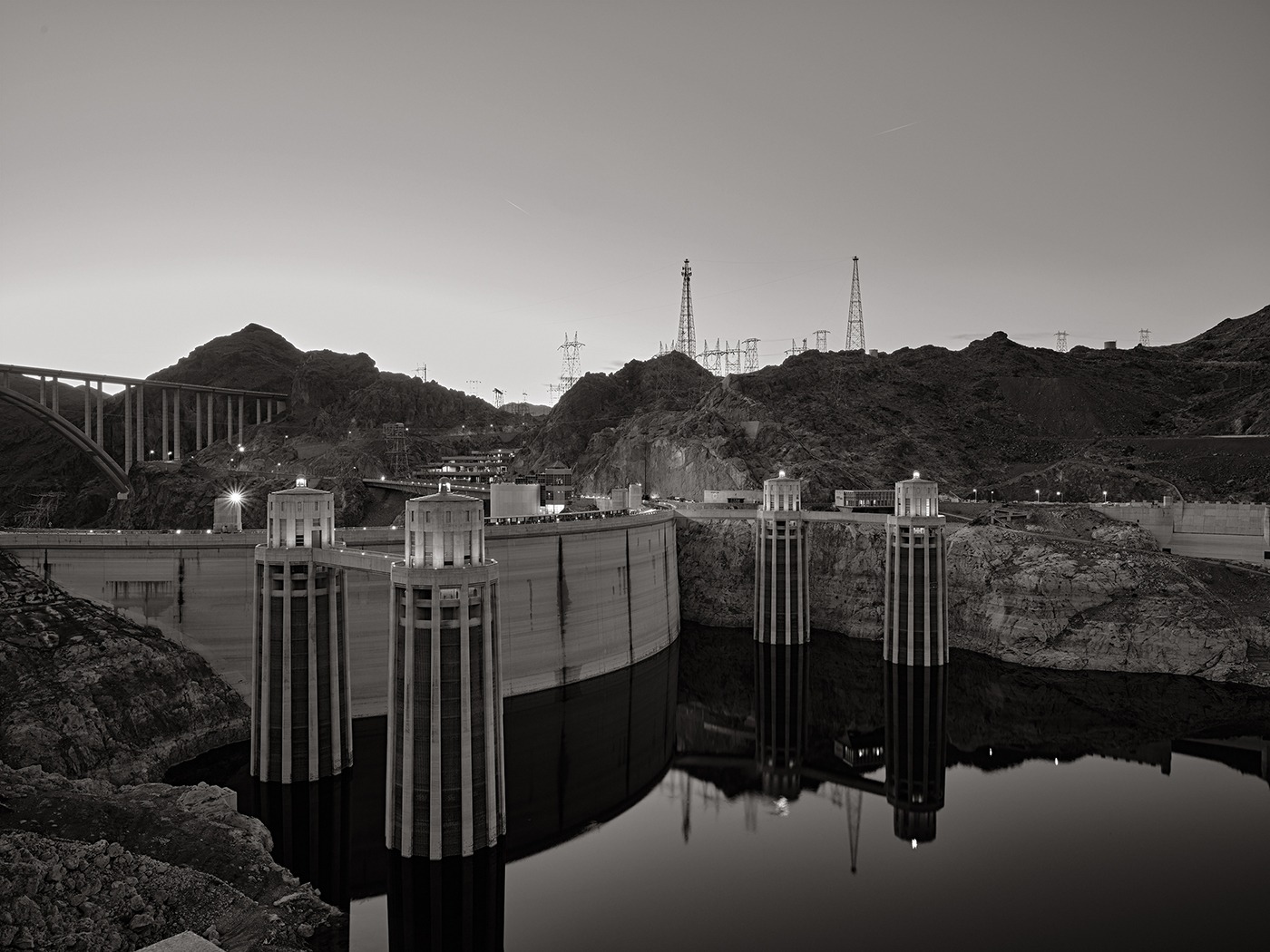
“Mark Twain may have said, "Whiskey is for drinking, and water for fighting over." But, during a presentation to 1893 irrigation conference, John Wesley Powell said it more clearly. “You are piling up a heritage of conflict and litigation over water rights, for there is not sufficient water to supply the land.” The Colorado River has been the center of that struggle for over 100 years. To coincide with the 100th anniversary of the 1922 Colorado River Compact, my ongoing multi-part project, Reclamation, examines the history and future of the Colorado River and settlement in the Southwest.
Deadpool focuses on the nation's largest reservoir, Lake Mead, and uses the bathtub ring, the 160'-180' tall white mineral deposit left by the declining lake elevation, as a symbol for the inescapable reality of the accelerating impacts of climate change. Along with my photographs, I use geographical information software to create custom maps from remote sensing imagery and elevation data.
Underlying this project are Powell's recommendations for how to structure the settlement in the arid regions and the late 19th and early 20th-century politicians' willingness to ignore science and the reality of how much water the Colorado River could supply. The project links the long history and almost supernatural draw of the Southwest, how 20th-century reclamation projects made living there possible, and how climate change now threatens the future of the 40 million people dependent on the Colorado River for water and power.”
Kaitlin Pomerantz
Bio
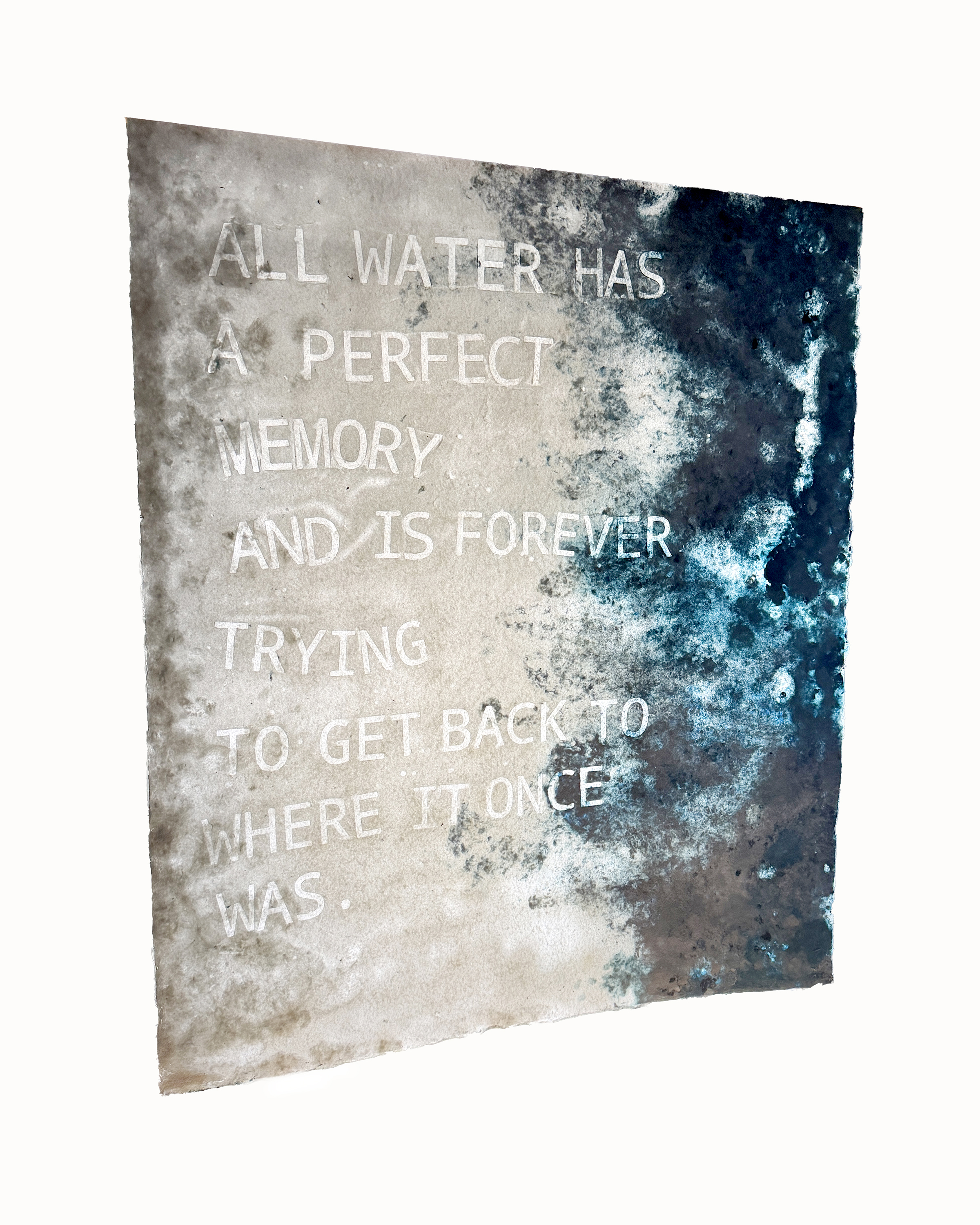
Kaitlin Pomerantz (she, they) is an interdisciplinary artist and educator based in Philadelphia and New York. Pomerantz works across forms with purposeful materials to pose questions about ecological relations under extractive systems, land use an mis-use, consumption and discard, materials, and the way people and places create one another.
Pomerantz’s work has been supported by Monument Lab, Pew Arts and Heritage, Philadelphia Mural Arts, Sachs Arts and Innovation and other cultural organizations and foundations. They have most recently shown work at Cantor Fitzgerald Gallery at Haverford College, Buoy Gallery in Maine and Automat in Philadelphia. Pomerantz has recently held residencies at Surf Point (Maine), the Church (Sag Harbor, NY) and Officina Stamperia Notaio (IT). Pomerantz is a recent recipient of a Leeway Foundation Art + Change grant.
Pomerantz is a critic in the interdisciplinary MFA program at the School of Visual Arts and a lecturer in Fine Arts and Visual Studies at the University of Pennsylvania. Pomerantz holds a BA in Art History from the University of Chicago, an MFA from the University of Pennsylvania in Interdisciplinary Art and an ED. M From Harvard University Graduate School of Education. Pomerantz is the founder of MATTERS, an educational initiative connecting art and design materials to labor and land, supporting creative practices rooted in awareness, repair and care.
Pomerantz also curates exhibitions, writes and tends to oysters.
Statement
“My practice is driven by inquiry into the poetics and peculiarities of place, how people and places create one another, and what this means in our contemporary climate. Anchors of my artistic thinking include philosopher Edward Casey’s claim that “before we are human beings or earth-lings, we are place-lings,” geographer and writer Yi-Fu Tuan’s theory of topophilia: the emotional bonds formed between humans and their environments, and the socialist Jewish Labor Bund concept doikayt, Yiddish for "here-ness." When places are formed and de-formed by extractive systems and logics—how can art act as a catalyst and coping mechanism for reconnection, reclamation, and remembering? How can it support people-powered initiatives for new or renewed "place-ial" relationships?
My work is an active search for answers to these questions, through objects, installations, site interventions, pictorial explorations, and socially engaged co-creations. With a project-based approach, I begin with a material observation or question, followed by interdisciplinary research and creative moves tailored to each investigation. Materiality is crucial to my practice as materials themselves are fragmented vectors of place. Plants, fibers, earthen matter like clay, and waste stream discards are recurring in my work, and I employ and mix practices culled from materially based craft traditions including papermaking, printmaking, ceramics, and sculpture. I frequently utilize the photographic image, video, printed textual matter, and book forms as a kind of meta-interpretive device within my work and to create indexical offerings for audiences to take away. While I exhibit in galleries and traditional arts spaces, my work is frequently site-based, engaging with what Gilles Clément calls “third landscapes”—residual, ruderal terrains like vacant lots and remediated waste spaces that “belong to everyone, because they belong to no one” .
A current studio-based project, Viriditas ("the force that causes the greening of the earth"), researches the design history of the US dollar, specifically plant motifs incrementally eliminated from the dollar over the past century. Treating the pictorial space of the dollar as symbolic of this nation’s spatial ecology, this project involves archival research, papermaking, and ceramic vessel-building. It includes interviews with leaders in Land Back and reparations initiatives, leading toward an artist book with Seaton Street Press in 2027 and an exhibition focused on economic and ecological repair at a major venue in Philadelphia (to be announced). A second current project, Watermark, resulted in the WaterShed, a brick and mortar community climate resilience hub in Philadelphia supported by the Water Department, the Academy of Natural Sciences, and the William Penn Foundation. As a founding artist on this project, I co-conceptualized this space and its design. Within it, I created an installation of handmade, watermarked paper featuring narratives from residents who experienced flooding, illuminating the ties between local papermaking history, waterways and climate concerns today. This space is now being widely used by community members for a variety of organizing, skill sharing and co-teaching purposes.
My previous projects include salvaging demolished masonry to rebuild stoops for dialogues on buried, marginalized histories; a 16-foot trompe l'oeil painting of a factory addressing urban development; a series of cyanotype-printed science fiction text about solar power and environmental greed; imprinted magnolia petals commenting on corporeal fragility of during the Covid-19 quarantine, and more. My works are idiosyncratic and poetic material gestures with strong conceptual underpinnings, offering avenues for speculation and mourning. My practice draws influence from works by foundational artists I associate with the Land Art legacy and its margins: Beverly Buchanan and her frustulas, Nancy Holt and Robert Smithson’s earthworks, Gordon Matta-Clark’s Conical Intersects and Fake Estates, Mel Chin’s remediation fields, and Noah Purifoy’s worldbuilding from discarded materials. Indigenous thinkers and artists who offer eco-relational frameworks have deepened my understanding of resilience under collapse: Kim TallBear, Robin Wall Kimmerer, and Leanne Betasamosake Simpson, and the work of artists Alan Michelson, Duane Linklater and the collective PostCommodity. I am indebted to artists carefully engaging waste materials and logics like Mierle Laderman Ukeles and Song Dong, and the scholarship of discard studies anthropologists Robin Nagle and Max Liboiron. My work is further shaped by friends and mentors: David L. Johnson, fields harrington, and Kristen Neville Taylor, Sharon Hayes, Karyn Olivier, and Tomashi Jackson. A forever-favorite artist is Zoe Leonard, whose distinctive projects– Strange Fruits, camera obscuras, the Niagara Falls postcard series– affirm my sense of the importance of thematic improvisation and honoring material and inquiry specificity over a set, repeatable “style”.
Through this weaving of influences and interdisciplinary methodologies, my practice is, to use Donna Haraway’s word, an effort to build a “tentacular” testament from within our contemporary climate. Whether I am analyzing the design of currency or archiving community narratives through watermarked paper, my work is an act of bearing witness, questioning power, and inspiring alternatives. I am committed to using art to move beyond representation toward the difficult, hopeful labor of ecologic and social accountability, re-connection and reimagining. My own form of “here-ness,” my work is a protean set of responses to an urgent cascade of eco-social and cultural conditions, inviting audience engagement and connection.”
Laura Krasnow
Bio
Laura Krasnow, born in New York City, has lived and traveled throughout the United States, Canada, Europe, and Australia.
In addition to being a freelance photographer, she has worked as an assistant editor in feature films, and been trained in film preservation and restoration. Her artwork has been exhibited throughout the United States and Europe, and is in the permanent collection of The Museum of Modern Art, and The Brooklyn Museum.
Her passion is art, science and technology. After obtaining an MFA at the School of the Art Institute of Chicago, she returned to school to study math, physics and computer science. Laura has attended seminars at the Perimeter Institute of Theoretical Physics, and the Centre for Brain and Mind, both in Canada.
Statement
“I am predominantly a visual artist, using the medium of photography to explore the connections between the artistic and scientific realms of inquiry.
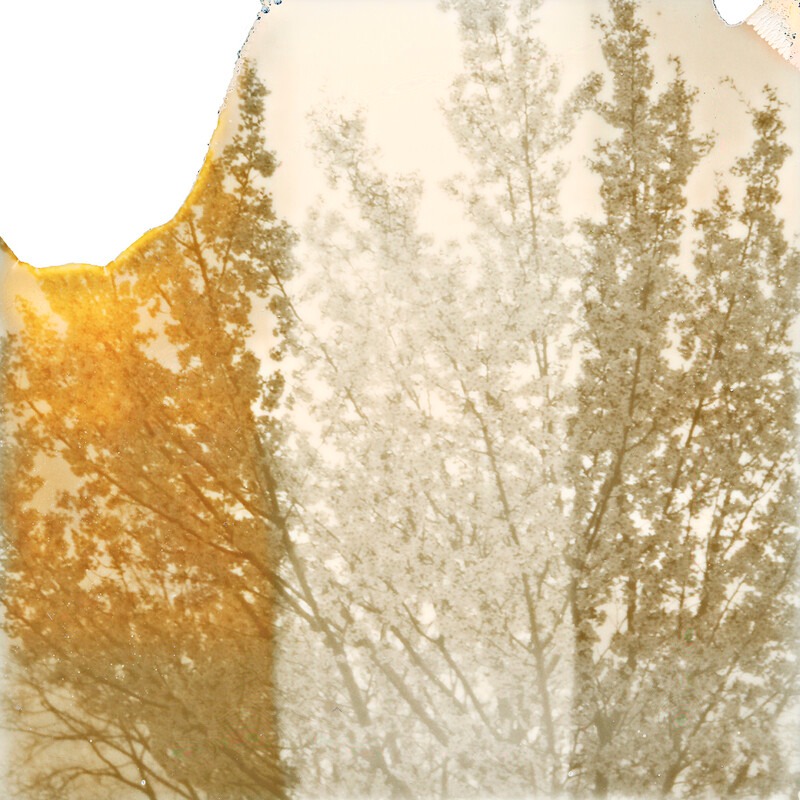
Working with traditional and non-traditional art making tools, including printmaking, digital photography, film and Polaroid film, drawing and paint, I seek to interpret theories of physics, math and neurological research, to reconstruct individual recollections of time, place, and space.
I use the photographic images, with embedded marks and symbols, to construct a specific viewpoint. In the construction of the works, I have been influenced by geographical maps, weather maps, blueprints, ancient symbolic and pictorial written languages, NASA photography, photographs outside the normal human visual range, visual database design, and the use of grids within archeological drawings... with these grids representing both the physical relationship between the found objects, and their spatial relationship over time.
For me, defining a sense of place is the allure of the photographic image... the instant, when time and place seem to merge to catch a moment. It is the imperceptible connections I seek to define...when something catches your peripheral vision but is gone when you turn for a longer glimpse. My photographs aim to force the viewer to look beyond the obvious... to reveal the essence beyond the normal visual spectrum.”
Emma Ressel
Bio
Emma Ressel is an artist and researcher from Bar Harbor, Maine working with large format film photography, re-photography, and archives. Her current work with natural history collections examines how we describe nature to ourselves over vast timescales.
Emma received her BA in Photography at Bard College and her MFA from the University of New Mexico. Her MFA thesis project, Extant Erosions, has been exhibited in solo shows at the New Mexico Museum of Natural History and Science and at the Houston Center for Photography, and was shortlisted for the 2025 Aperture Portfolio Prize. An installation of the work was also included in the group show Photography and Excess at the Philadelphia Museum of Art.
Emma has published three books, Olives in the street in 2017, Glass Eyes Stare Back, self-published in 2024, and Extant Erosions in 2025. She is a cofounder of Printer Jam, a book arts collective and production studio in Albuquerque, New Mexico. Emma is currently completing a postdoctoral fellowship at the Center for Regional Studies at the University of New Mexico, where she is conducting research into photographic slide archives at science and history museums throughout the state of New Mexico. She lives and works in Albuquerque.
Statement
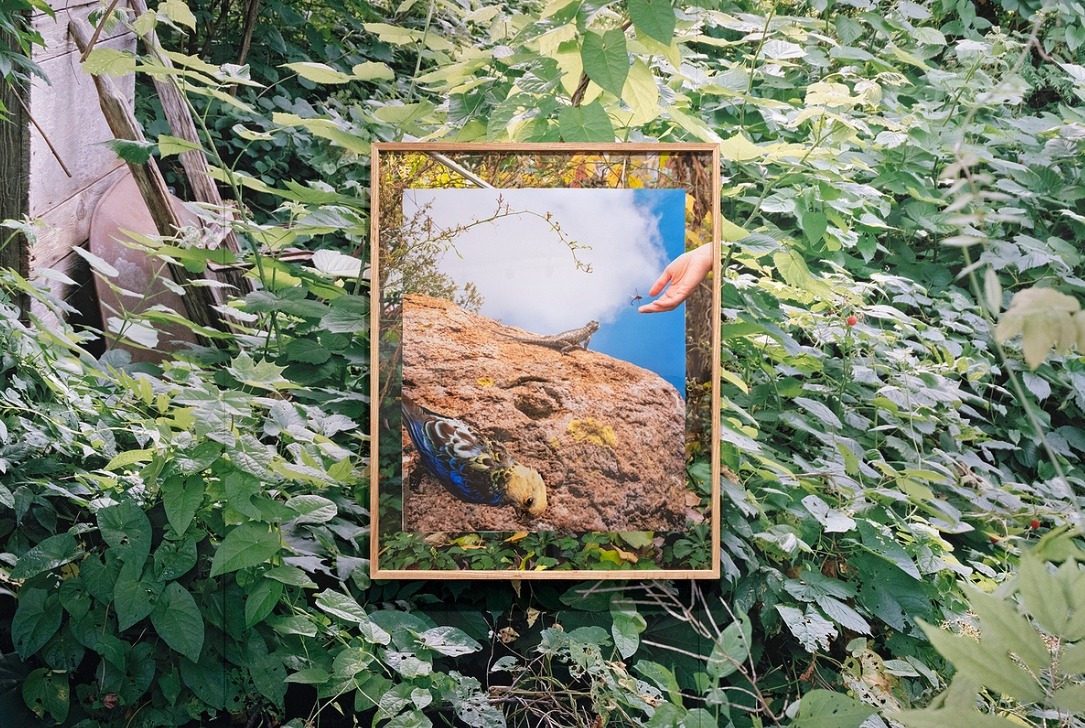
“In Glass Eyes Stare Back, I nod toward the precarity of our damaged ecosystems and my fears about environmental catastrophe by looking closely at the eerie magnetism of preserved animals. To make my images, I position specimens and printed backdrops before my camera to construct still life tableaus that I call fictional habitat dioramas. I build my wood frames to reference museum cases, and my installations involve layering my framed photos with printed wallpapers and enclosed dioramas. My images reconcile my fear about our environmental futures with a sense of sublime awe about the mystery of what’s to come.
My pictures argue that animals preserved for science occupy a third space between life and death—neither alive nor gone, but still functional and serving a purpose. A second life in a museum hall is much longer than the first. Biologists collect, catalog, and store species for use in studies that will hopefully help answer some of the existential questions we face about the future of biodiversity. Collections in natural history museums and research facilities speak to our human desire to draw nature closer and to create encounters with animals, even if highly staged.
Like photography, animal preservation distorts time and creates an approximate experience. From our awkward place existing both within and outside of the natural world, we long to be connected with the things we are destroying. With my camera, I seek to fulfill my urge to witness nature in proximity, as well as question my desire for that proximity. Both in terms of large format film photography and animal preservation, this work is about things slipping away and our gestures to hold on.”
This exhibition takes place in part with 20/20 Photo Festival, a celebration of photography that brings together the Philadelphia photo community through city-wide exhibitions, educational programming, and a book fair. Learn more at www.2020photofestival.org


