

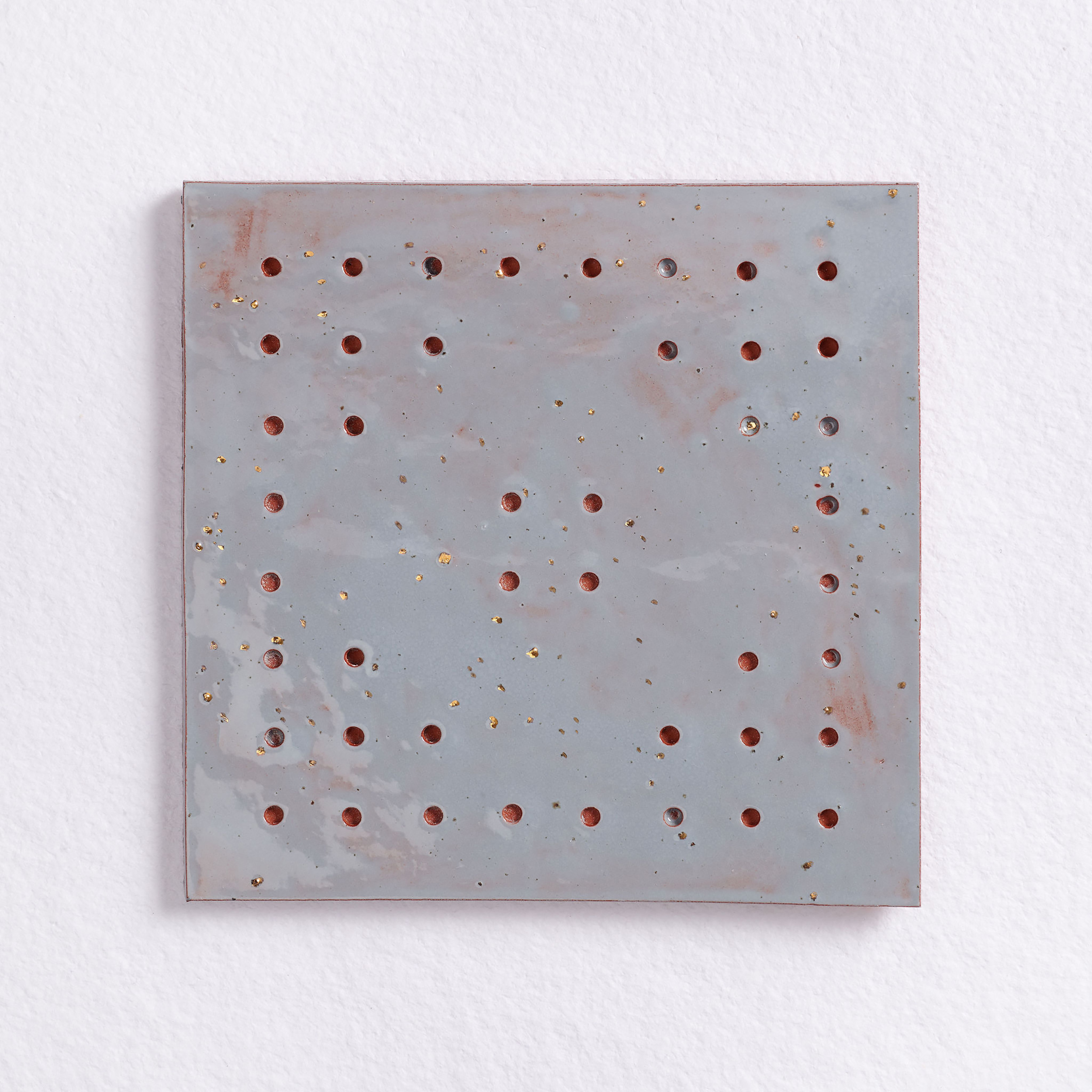
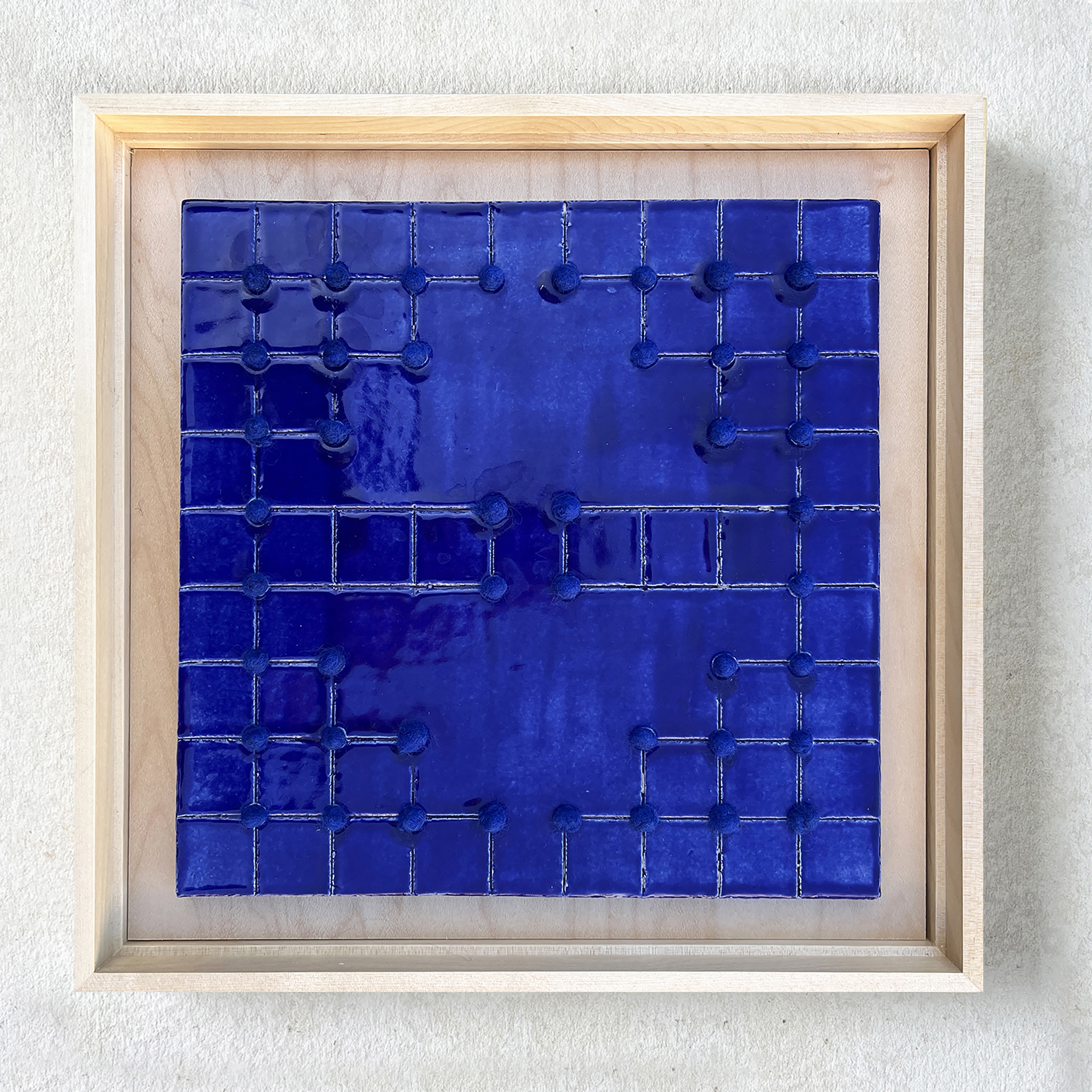
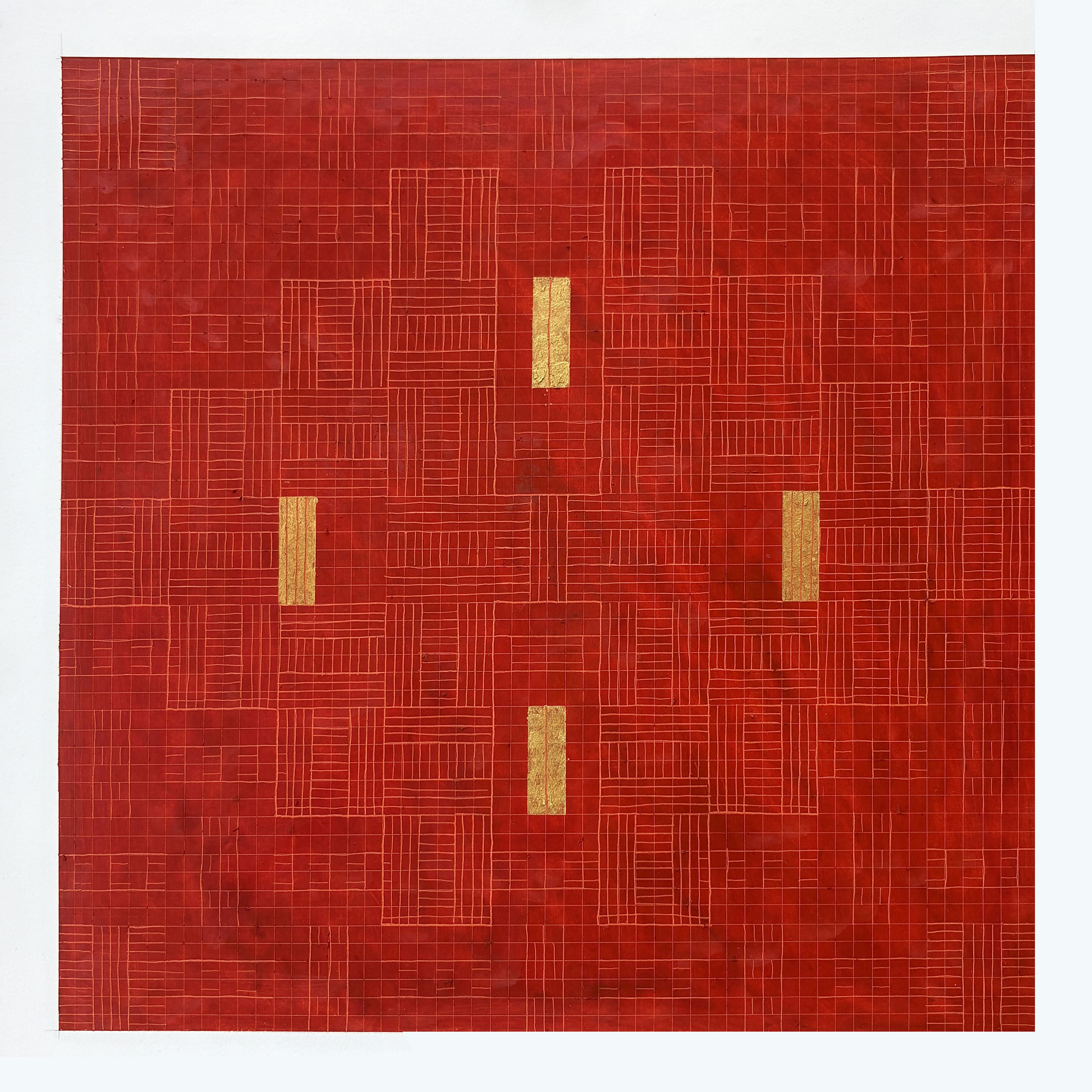
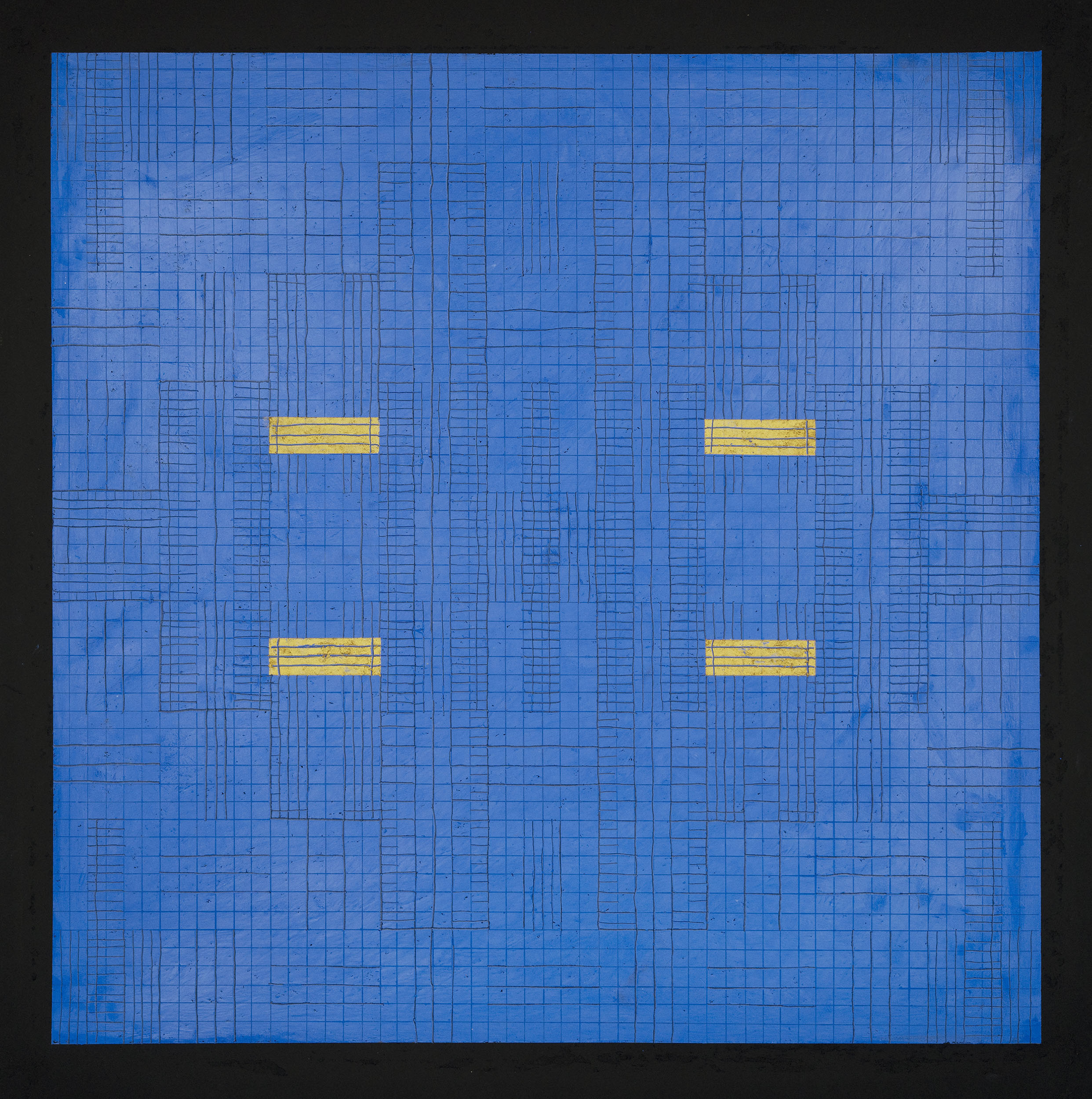
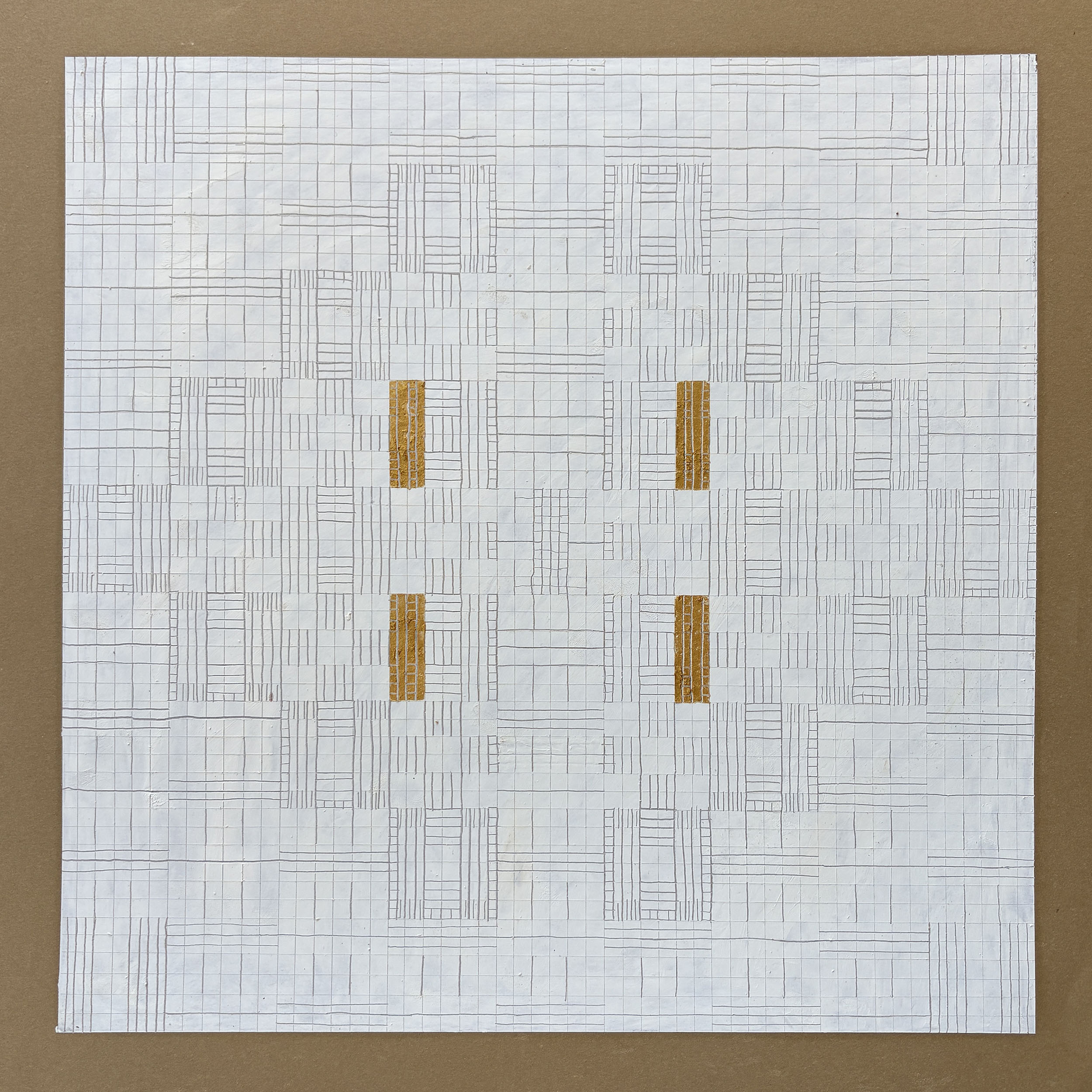
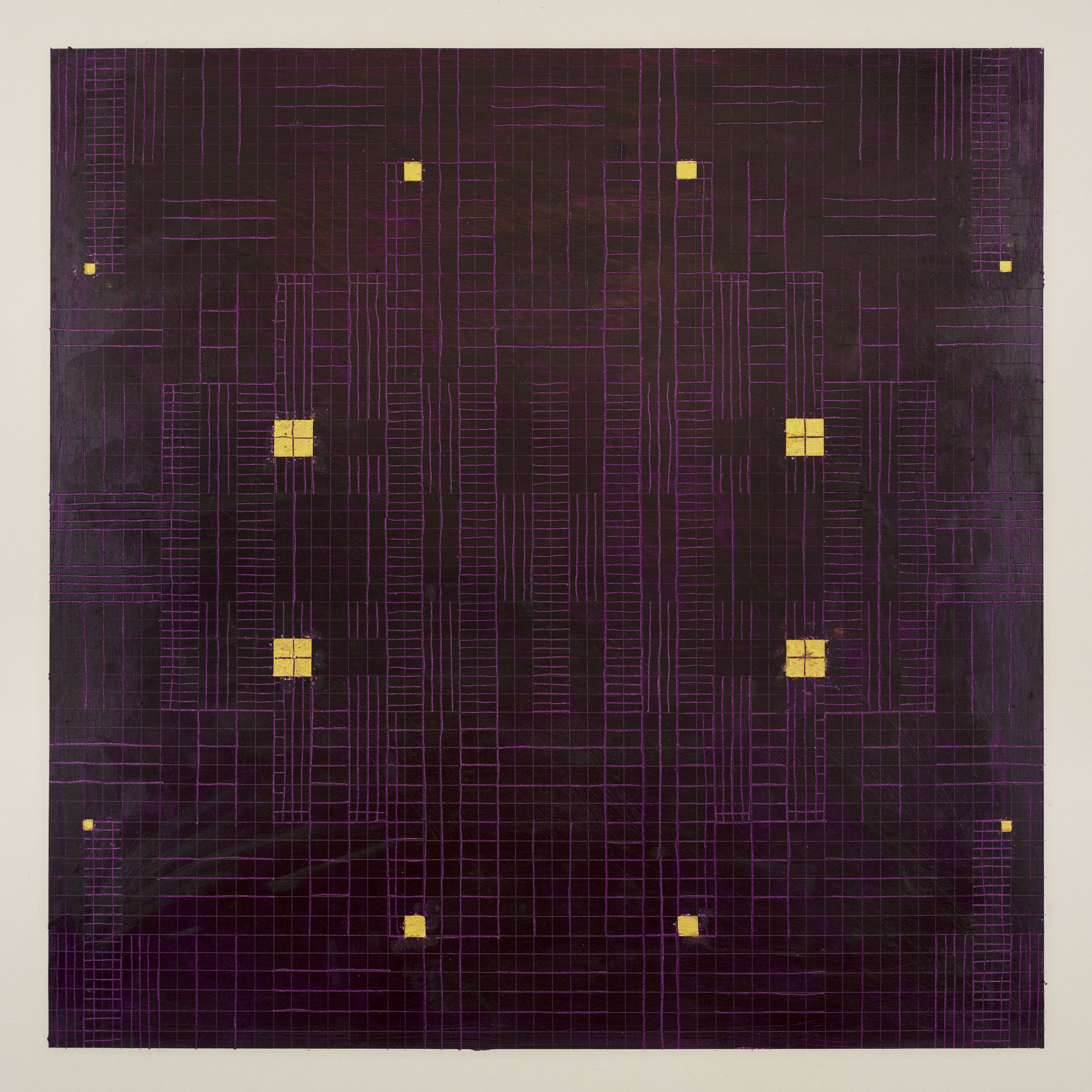
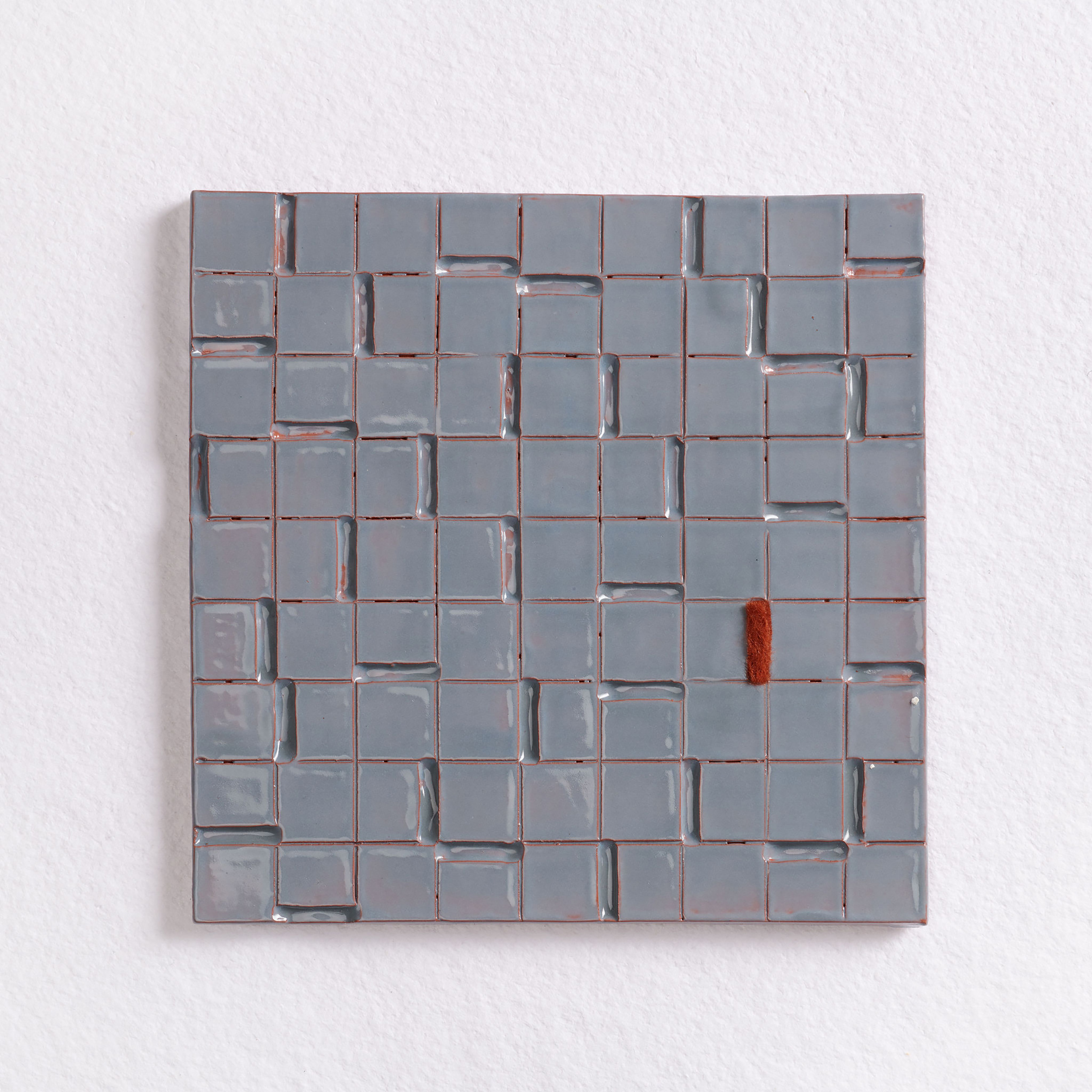
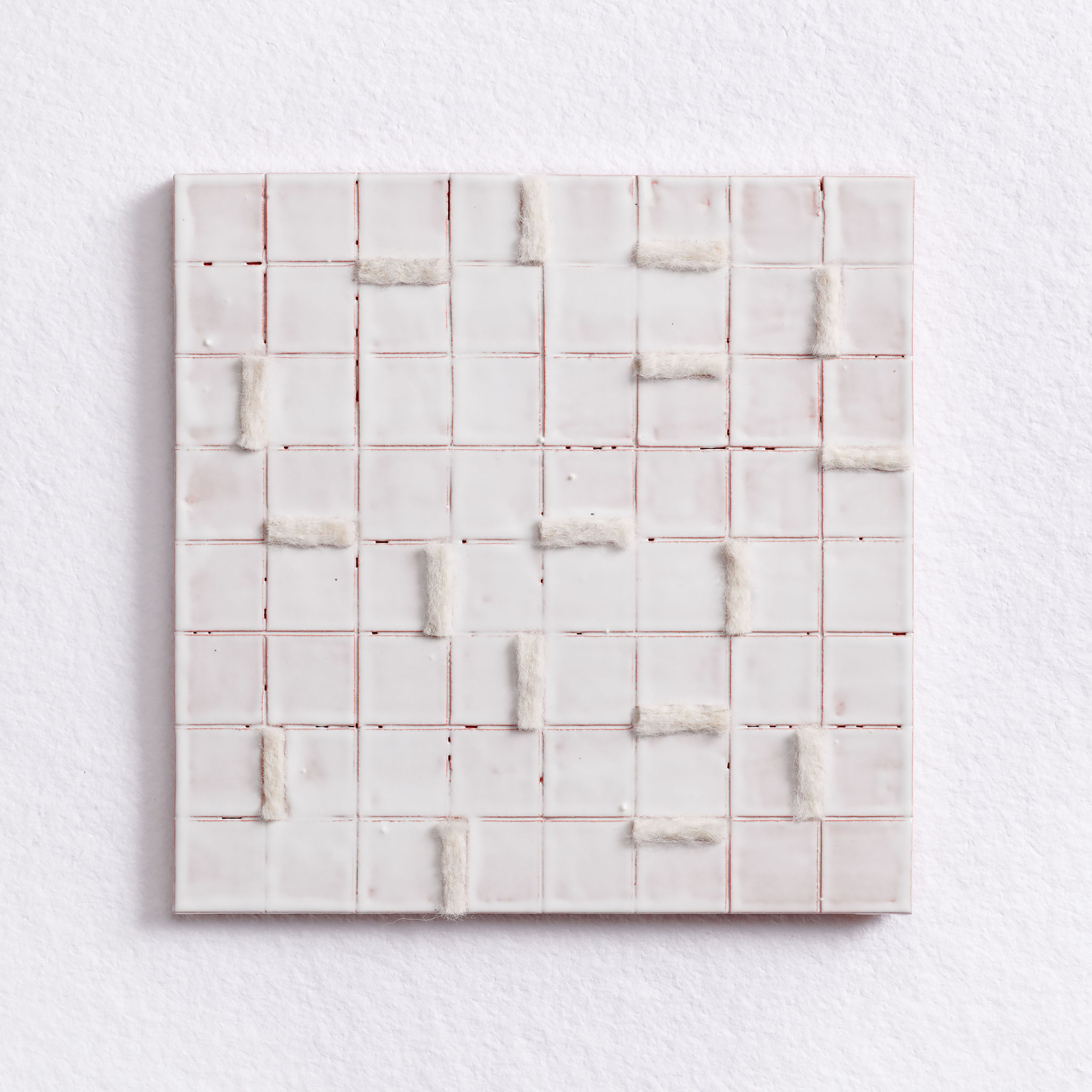
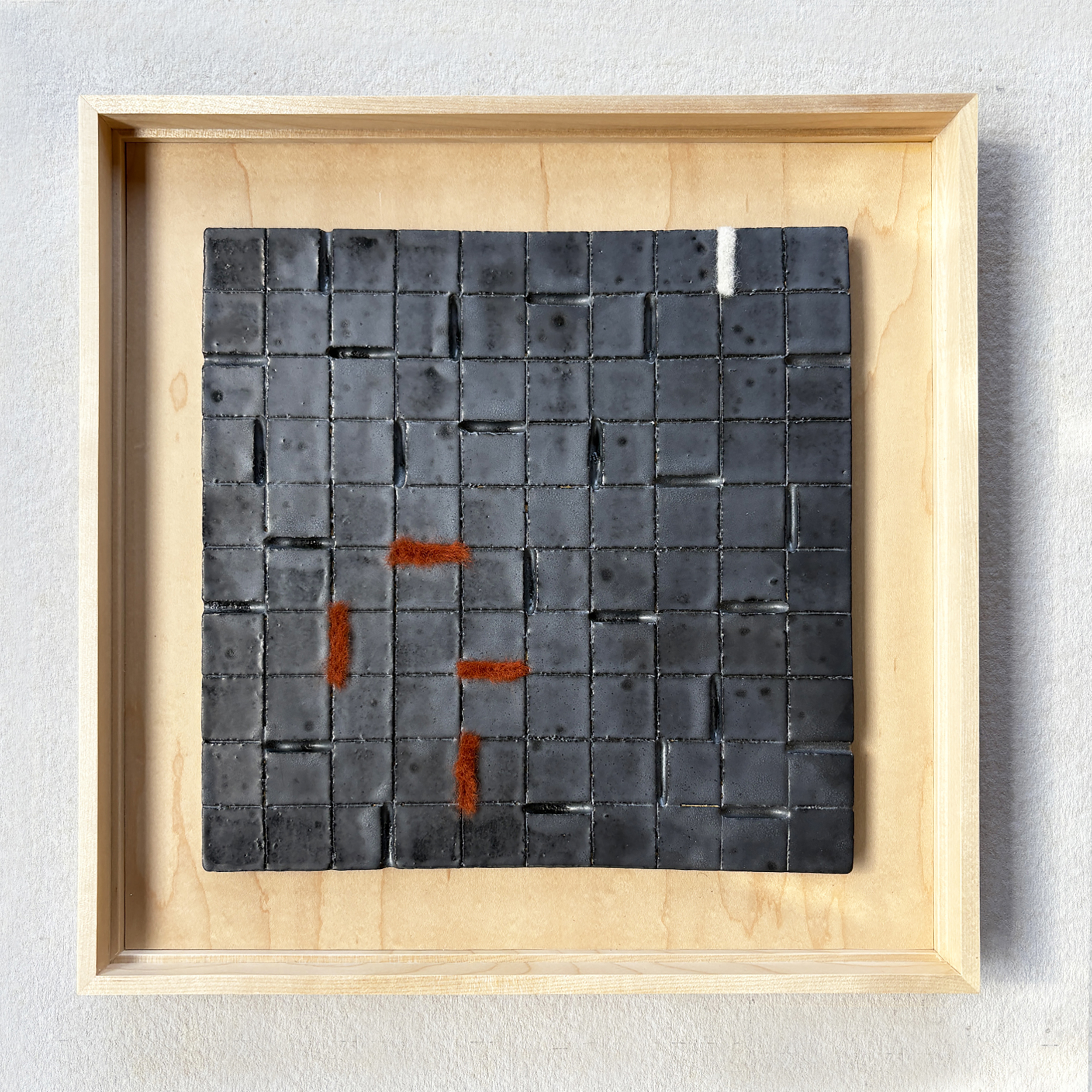
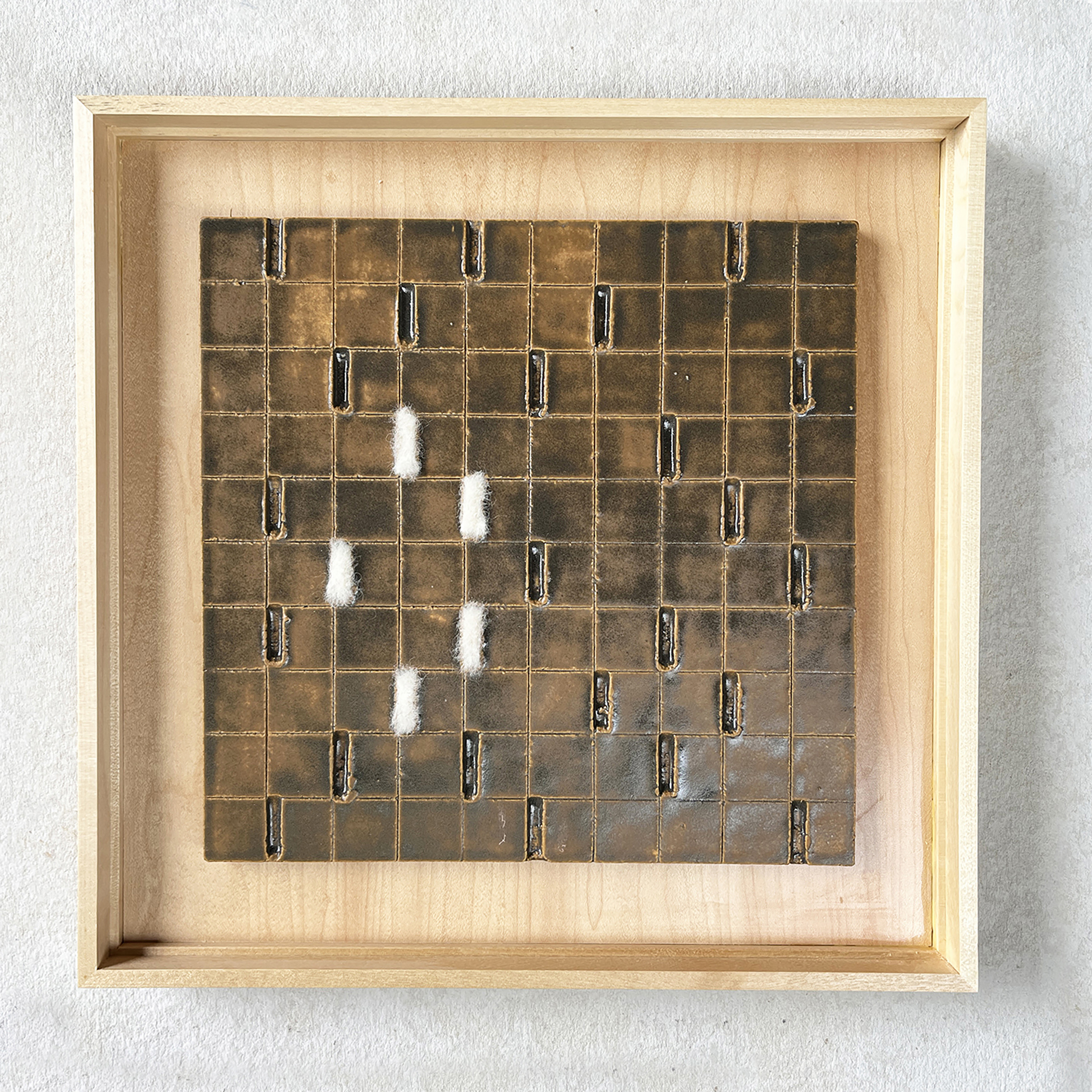
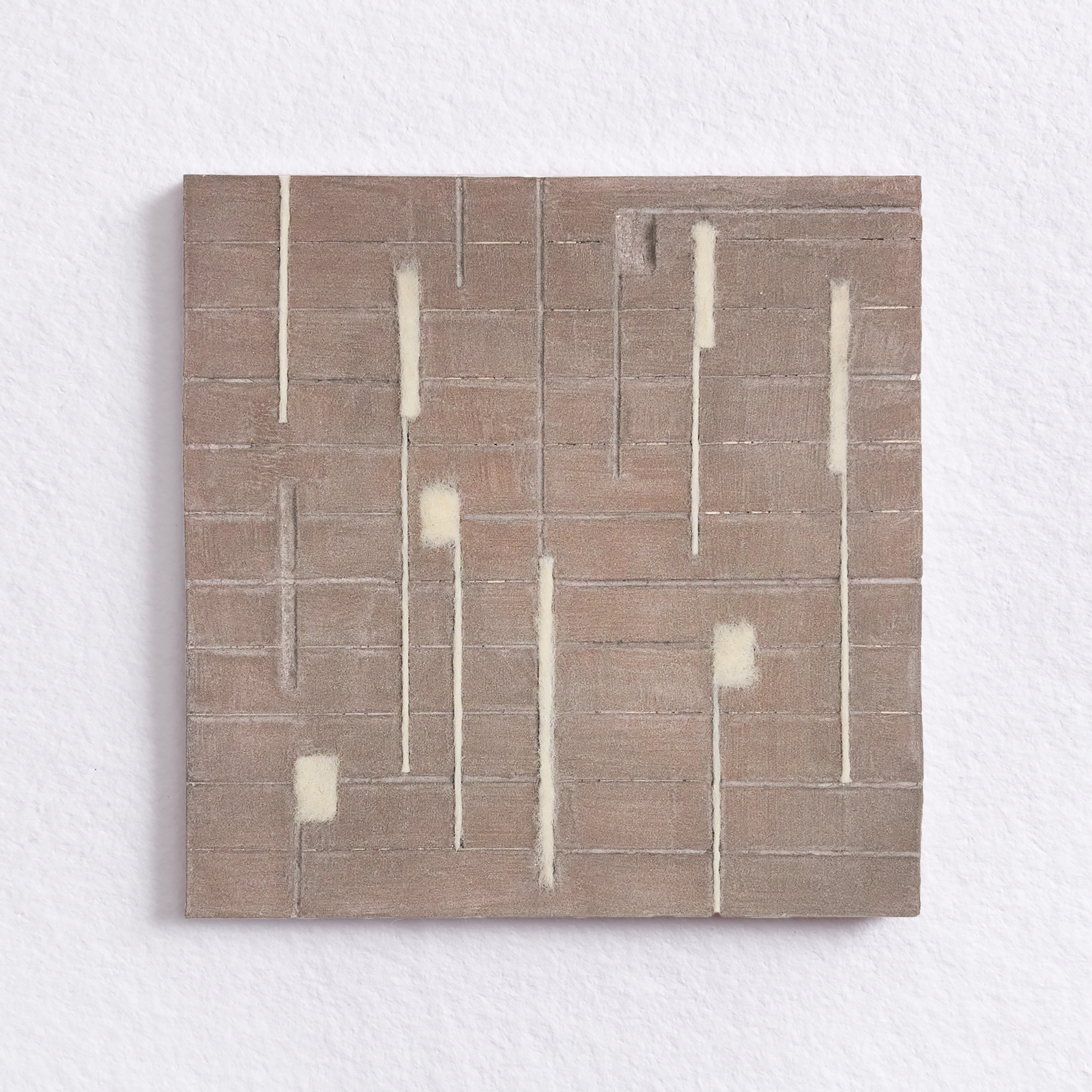
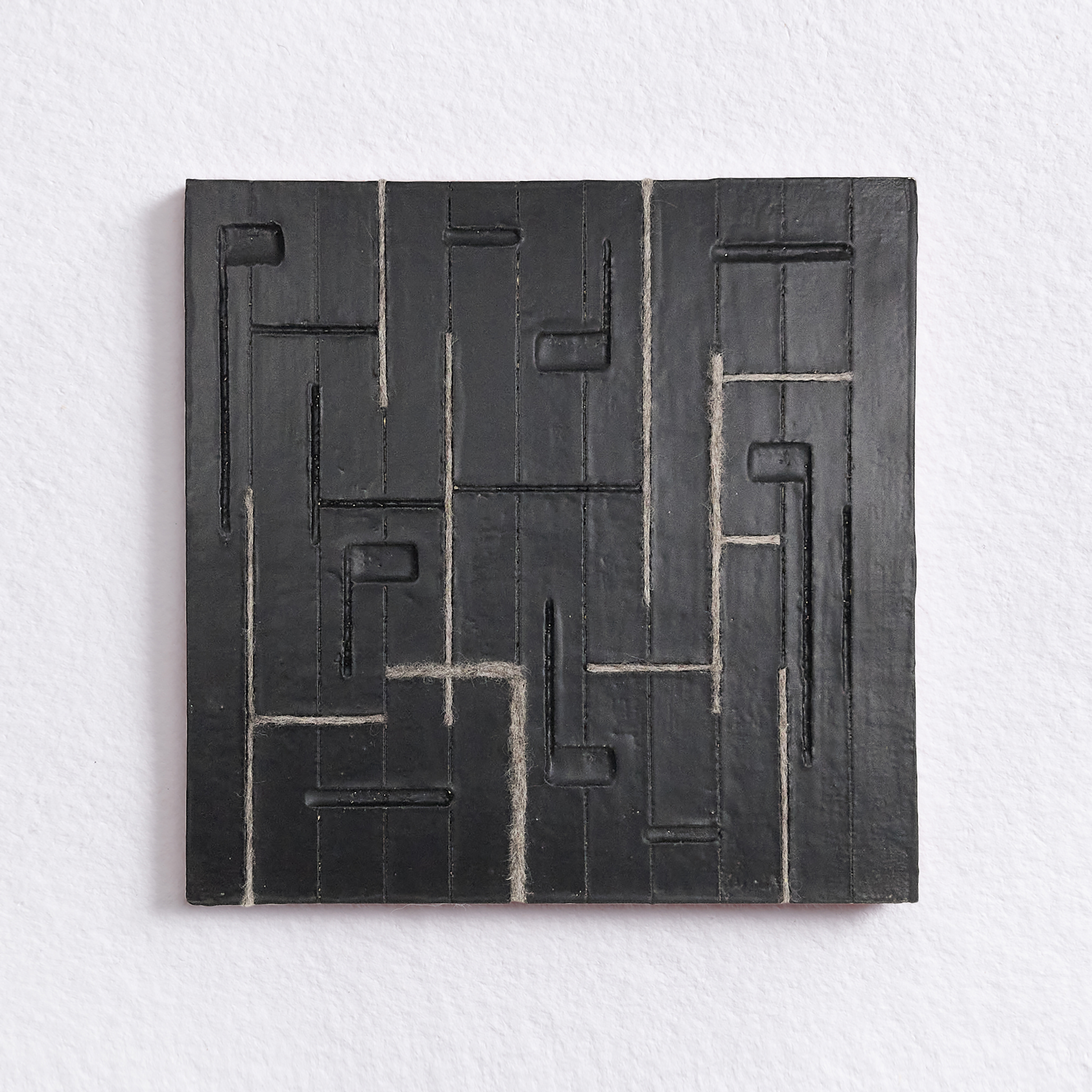
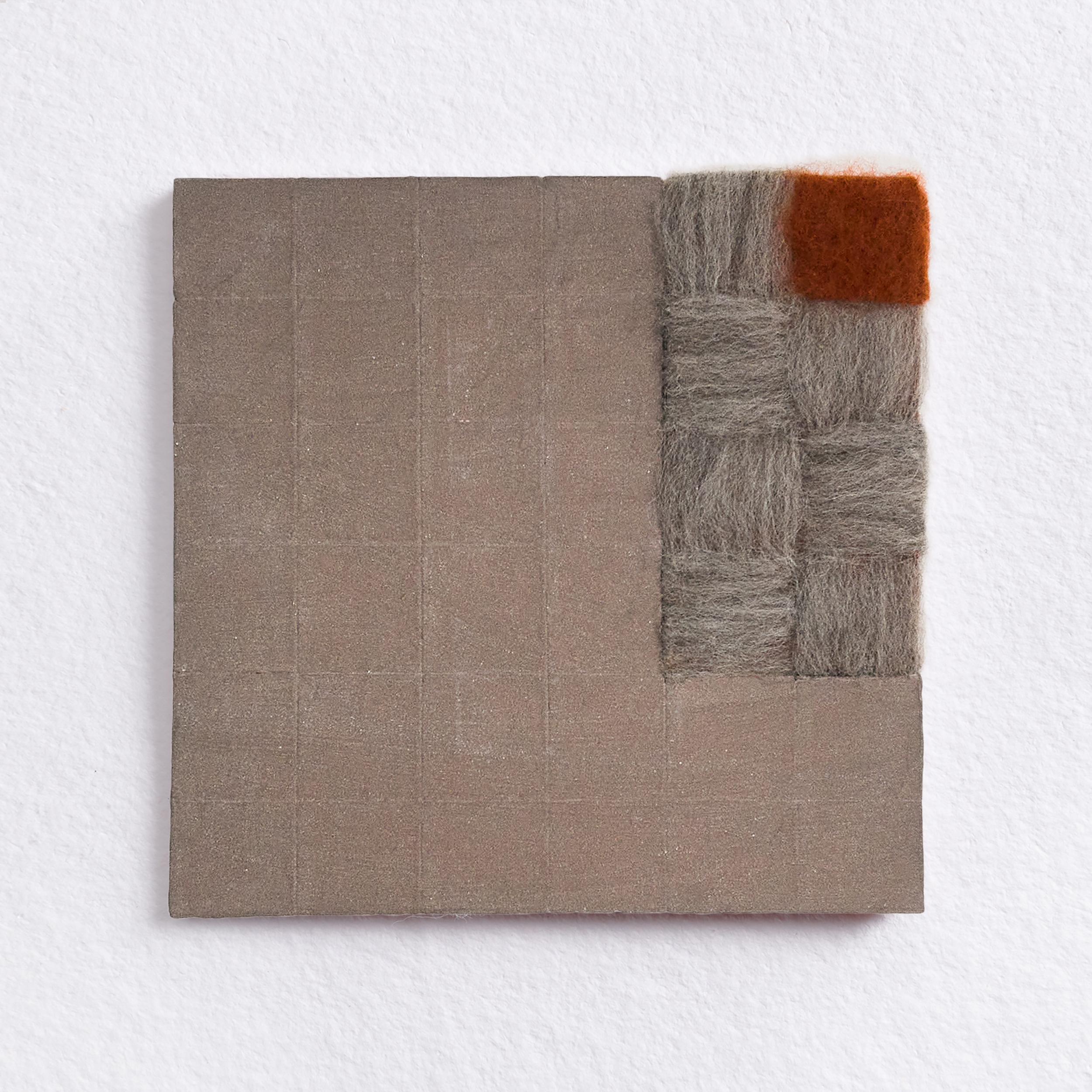
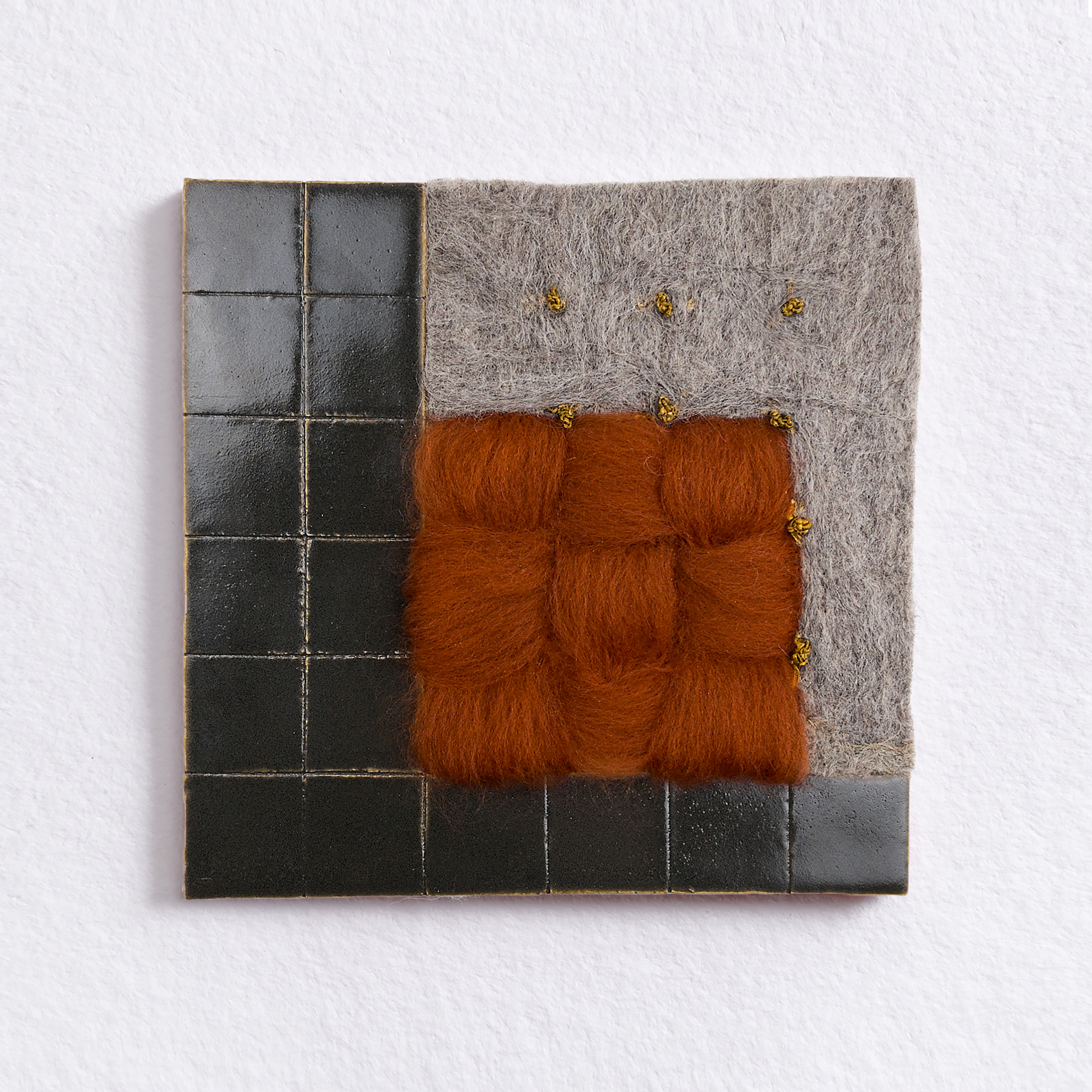
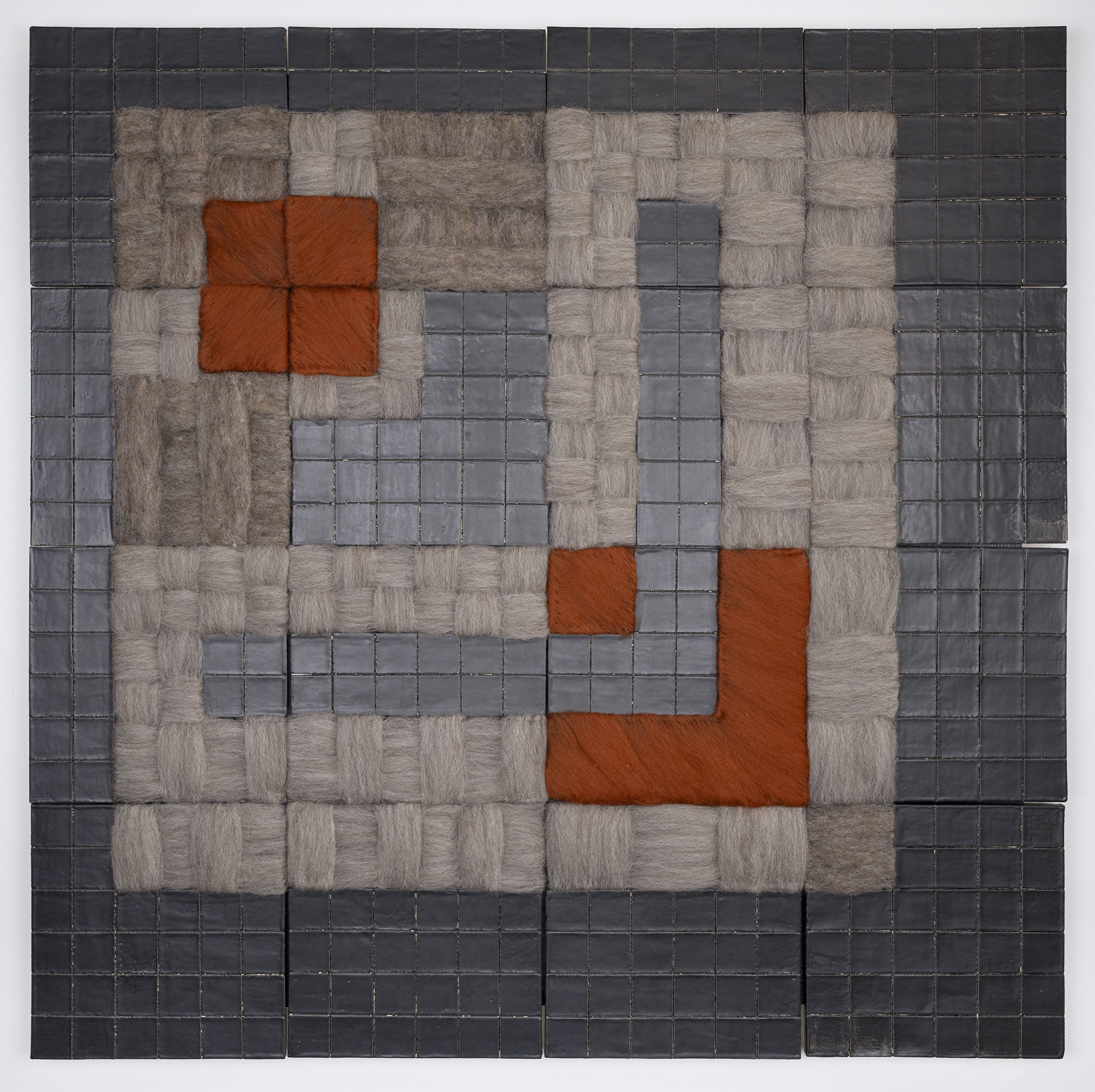
My work plays with the push and pull between following rules and breaking free from them. I’m drawn to patterns that mix opposing ideas and show that things aren't always as simple as they seem. Much of what I make comes from experimenting with materials, weaving my personal history into formal structures.
I make wall pieces pairing clay and wool—materials both timeless and ancient—that connect me to the material culture of my birthplace, Turkey. I grew up surrounded by mesmerizing kilims and exquisite tiles. While my work doesn’t conform to any single tradition, it is grounded in reimagining this heritage.
Each piece begins with the precise construction of a rule-bound, geometric order on a ceramic surface. I then follow intuition to find moments of idiosyncratic expression, iteratively exploring variations in the color and texture of needled or wet-felted wool. This interplay of structure and spontaneity produces a sensory-rich contrast of visual and tactile impressions. I approach oil pastel drawings with a similar sensibility, using the sgraffito technique to complement and expand my sculptural language.
My training and practice as an architect continue to shape how I think about systems, space, and form. Over time, I came to understand the remnants of architectural heritage I studied not only as historical structures, but as charged spaces of longing—sites where memory, imagination, and material intersect. In my work, these echoes of past cultures become frameworks for exploring multiplicity and transformation, offering the viewer a grounded experience that bridges the real and the imagined, the present and the remembered.
Seher Erdoğan (b. 1982, she/her) is a Turkish artist, architect, and educator based in Philadelphia. Her sculptural wall pieces combine clay and wool—materials that echo the material culture of her birthplace, Istanbul—and explore the interplay between structure and intuition.
She holds undergraduate and graduate degrees in architecture from Yale University, and practiced in New Haven and New York before shifting her focus to teaching and visual art. After years of experimentation across media, she began to concentrate on her current creative practice in 2019.
Seher has exhibited her work locally and produces commissions for private clients across the United States. She continues to teach architecture at University of Pennsylvania and works out of her studio in Philadelphia’s Germantown neighborhood.
2009
M.Arch., Yale School of Architecture, Yale University, New Haven, CT, USA
2004
B.A. in Architecture, Yale University, New Haven, CT, USA
2023 - present
Lecturer and Coordinator in Architecture, University of Pennsylvania, Philadelphia, PA
2015 - 2022
Assistant Professor of Architecture, Tyler School of Art and Architecture, Philadelphia, PA
2013 - 2015
Instructor, Architecture Department, Kadir Has University, Istanbul, Turkey
2011 - 2013
Architect, Rogers Marvel Architects, New York, NY
2009 - 2011
Architectural Designer, Apicella Bunton Architects, New Haven, CT
2004 - 2006
Architectural Designer, Robert A.M. Stern Architects, New York, NY
2025
Placings, miniMAC, Philadelphia, PA
2024
SWITCH: Small Works, CFEVA, Philadelphia, PA
2023
American Craft Emerging Artist Program, Online Exhibit
2022
American Craft Made Baltimore Show, Baltimore, MD
2020
The 44th Annual Philadelphia Museum of Art Craft Show, Philadelphia, PA
“Hypermodels: Architectural Production in Virtual Spaces,” Modelwork: Material Culture and Modeling in the Humanities. Edited by Martin Brueckner, Sandy Isenstadt and Sarah Wasserman. University of Minnesota Press. (October 2021).
“Designing Stone: Temporal Representation of a Timeless Material,” Design, History and Time: New Temporalities in a Digital Age. Edited by Zoe Hendon and Anne Massey, 11-21. London: Bloomsbury Visual Arts, 2019. Print.
“More than Meets the Eye: What Can Virtual Reality Reveal to Architects?” in Journal of Architectural Education, no:71:1, (March 2017).
Brough, John Capen., Seher Erdogan, and Parsa Khalili. Perspecta 43: Taboo, The Yale Architectural Journal. Cambridge: MIT, 2010. Print.


